


Ready to hit the trails with your tiny trailblazer? Woohoo! The most important piece of gear for a happy family hike is a pair of fantastic toddler hiking shoes. These aren't just mini versions of adult boots; they're magical kicks designed to give wobbly walkers the confidence, grip, and support they need to conquer every pebble and root.
Why Happy Feet Make for Happy Trails
Hey there, adventurous parents! If you're dreaming of sunny trails and puddle-stomping fun with your mini-explorer, let's talk about the real secret to a successful outing: their shoes.
Swapping everyday sneakers for proper toddler hiking shoes is a total game-changer. It’s about so much more than just preventing tired feet. A great pair of hiking shoes is like a superpower for your little one, giving them the stability and grip to tackle new terrain with giggles instead of hesitation.
Think of it this way: the right shoe is the foundation for a lifelong love of the outdoors. It builds confidence, one sturdy step at a time!
Building Confidence and Safety
Little feet are still developing, and the right footwear plays a huge role in their physical confidence. A shoe designed for the trail helps support their rapidly growing bones and muscles. It’s a concept we take seriously, and you can see why proper footwear supports healthy little feet backed by Harvard experts.
Here’s what makes a difference:
- Superb Grip: Specialized soles act like monster truck tires, grabbing onto dirt, grass, and rocks to prevent slips and slides.
- Sturdy Support: They offer a secure fit that helps keep ankles stable on wobbly, uneven ground.
- Trail-Ready Durability: They’re built to withstand the scuffs, scrapes, and endless curiosity of a toddler on a mission.
Of course, happy trails also mean healthy feet. A huge part of that is learning some simple strategies for preventing blisters before they even start.
The goal isn't just to get from point A to point B. It's to make the experience so fun that they can't wait for the next adventure. Happy, comfortable feet are the first step.
Decoding the Perfect Toddler Hiking Shoe
So, what exactly turns a regular toddler shoe into a trail-ready sidekick? It's not as complex as it seems. Let's break down the key features that really matter when you're looking for the right pair to support your little adventurer.
Think of the shoe's sole as its tires. For hiking, you want something with deep, grippy grooves—that's what we call traction. Good traction helps their little feet hold onto the ground, whether they're scrambling up a dusty incline or navigating a path that's a bit slick. It's the secret ingredient for confident steps and fewer tumbles.
But the sole is just the beginning. The whole shoe works together as a team!
Built for Wobbly Adventures
A little bit of ankle support can be a game-changer on the trail. It acts like a gentle hug for their ankles, giving them extra stability on bumpy, uneven terrain. This helps prevent wobbly moments and keeps them moving forward safely.
At the same time, the shoe needs to be flexible. While support is important, a stiff, rigid shoe will just get in the way of their natural movement. A good shoe bends and moves right along with their foot. You can learn more about why this is so critical for healthy development by exploring the benefits of flexible shoes for toddlers.
This simple map shows how all these pieces—safety, support, and confidence—come together to create happy feet on the trail.
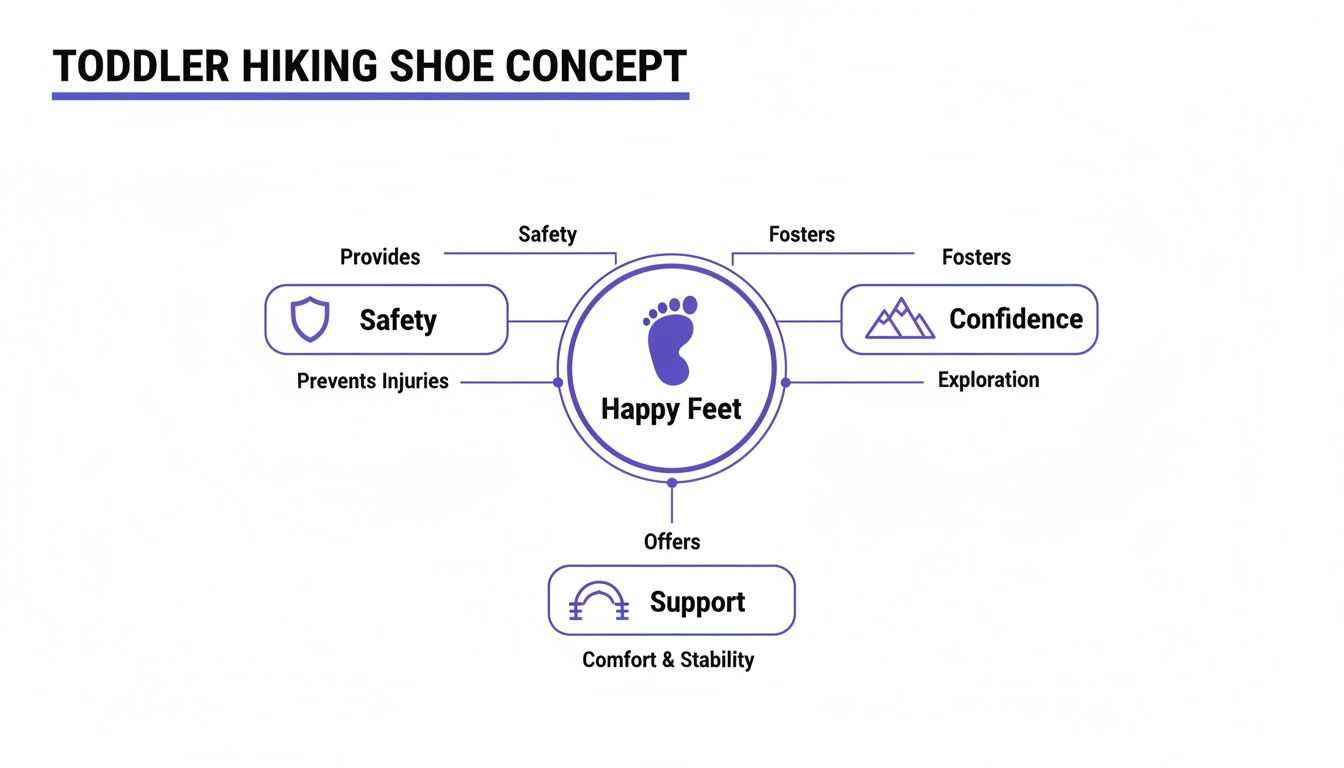
As you can see, it's all connected. The right shoe doesn't just protect their feet; it empowers them to explore.
Puddle-Proof and Breathable Materials
Now, let's talk materials! Toddlers are experts at finding every single puddle, so their shoes need to be ready for anything.
Here are a few things to look for:
- Breathable Mesh: This helps keep their feet cool and dry, which means fewer sweaty, cranky toes on a warm day.
- Water-Resistant Finishes: A shoe that can handle an unexpected splash is a must. It keeps their socks from getting soaked and their spirits high.
- Durable Toe Caps: A reinforced toe area is like a tiny helmet for their feet, protecting them from bumps against rocks and roots.
This quick-reference table breaks down the most important features at a glance.
Key Features at a Glance
| Feature | Why It Matters for Toddlers | What to Look For |
|---|---|---|
| Excellent Traction | Prevents slips and falls on uneven or slick surfaces, building confidence. | Deep, multi-directional grooves (lugs) on a durable rubber outsole. |
| Ankle Support | Provides stability for wobbly ankles on rocky or root-filled trails. | A mid-height cut or a well-structured heel cup for a secure fit. |
| Flexibility | Allows the foot to bend and move naturally, which is crucial for development. | A sole that bends easily at the ball of the foot, not in the middle. |
| Breathable Materials | Keeps feet cool and comfortable, preventing blisters and overheating. | Uppers made with mesh panels or other breathable fabrics. |
| Durability | Protects little feet from trail hazards like rocks and roots. | Reinforced toe caps and high-quality materials that can withstand scuffs. |
Finding the right shoe is like picking the perfect adventure buddy for your child—one that's tough, supportive, and always ready for fun. For more intense outings, like junior outdoor survival experiences, investing in a quality pair becomes even more important.
With these features in mind, you're all set to spot a great pair of hiking shoes that will keep your little explorer safe, comfortable, and smiling on every adventure.
Finding the Perfect Fit for Little Feet
Alright, let's get into the nitty-gritty of finding the perfect fit. It can feel like a quest, but getting the size right is one of the most important things you can do to make sure your little one loves their time on the trail.
A poorly fitting shoe can turn a fun family outing into a meltdown in minutes. But don't worry, we'll make it simple.
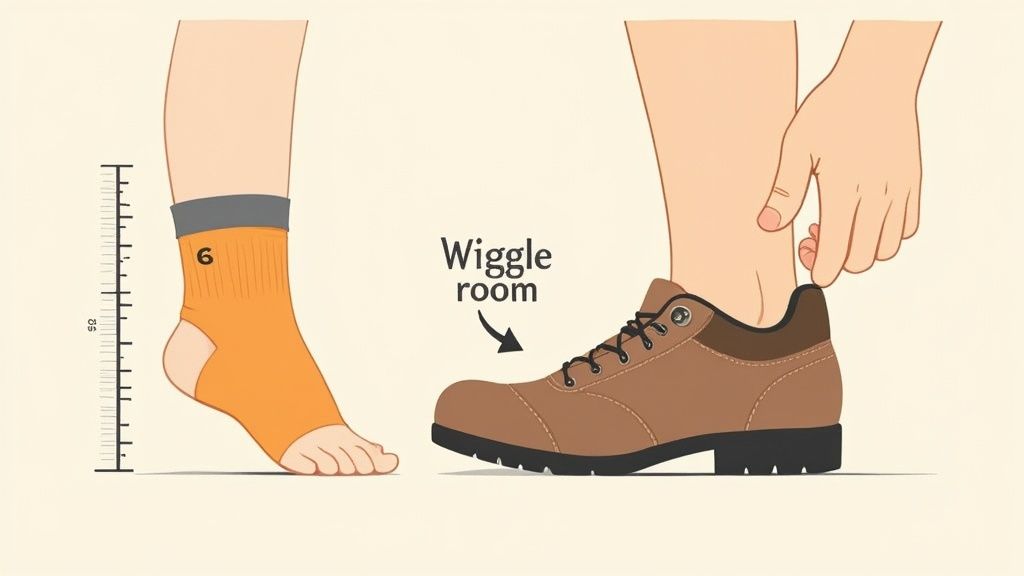
The golden rule here is what I call the "Wiggle Room Rule." When they’re standing up, you want about a thumb's width (that’s roughly half an inch) of space between their longest toe and the tip of the shoe. This little bit of extra room is crucial—it lets their toes spread out naturally as they walk, grip, and balance.
Tips for a Meltdown-Proof Fitting Session
Trying on shoes with a toddler can be... an event. To make it a whole lot easier on everyone, here are a few pro-parent tricks to take the guesswork out of the process. A happy fitting session almost always leads to happy hiking!
- Try On in the Afternoon: Little feet swell throughout the day, just like ours do. Fitting shoes in the late afternoon or evening gives you the most accurate size.
- Bring Their Trail Socks: Don't just grab any old pair from the drawer. Have your toddler wear the same thicker socks they'll have on the trail. This simple step guarantees you're getting a true-to-life fit.
- Have Them Stand and Walk: Once the shoe is on, make sure they stand up tall. Let them take a few steps, or even a little hop, to see how the shoe moves with them.
For an extra hand, check out our comprehensive Pediped sizing guide to help you measure their feet accurately right at home.
Watch for These Red Flags
Even if a shoe seems to be the right size, there are a few warning signs that it’s not the right match. Keep an eye out for these common issues to avoid trouble down the road.
A shoe that pinches or rubs in the store will only feel a hundred times worse on the trail. Trust their reactions—if they say "ouch" or try to pull the shoe off immediately, it’s a definite no-go.
Pay close attention to these signals:
- Heel Slippage: A tiny bit of movement is fine, but if their heel is constantly slipping out, the shoe is either too big or the wrong shape for their foot.
- Red Marks or Pinching: After they've worn the shoes for a few minutes, take them off and do a quick check. Any angry red spots are tell-tale signs of a pressure point that will lead to blisters.
- Sudden Clumsiness: If they start tripping more than usual, the shoes might be too heavy, clunky, or just plain uncomfortable.
Matching Shoes to Your Little Hiker's Style
Let's be honest, not all toddler hikes are the same. A wobbly adventure across a grassy park is a world away from a brave trek down a bumpy forest path. The real secret to happy little hikers is matching their shoes to their skill level and the trail they’re about to conquer.
Think of it like choosing the right tool for the job. You wouldn't use a sand pail to dig a giant hole, right? It's the same idea with your toddler’s footwear—it should be perfectly suited for their unique stage of exploration.
For the Wobbly First-Steppers
Is your little one still in the "mastering gravity" phase? For new walkers, the best shoe is one that’s incredibly flexible and lightweight. These early adventurers are learning so much from the ground beneath them—every bump and texture helps them build balance.
A shoe with a thin, pliable sole lets them feel the ground more naturally, almost like being barefoot but with a layer of protection. Our Grip ‘n’ Go line, for instance, is designed for this exact stage, offering a soft, flexible rubber sole that supports natural movement.
For the Confident Trail-Tacklers
Once your toddler has graduated from wobbly walks to confident sprints, their hiking needs a little upgrade. For these seasoned explorers, a more structured and durable shoe is the way to go.
Look for features that offer a bit more protection and support:
- Sturdier Soles: A slightly thicker, more rugged sole gives them better protection from sharp rocks and poky sticks.
- Enhanced Durability: These shoes are built to withstand non-stop running, climbing, and curiosity.
- Secure Fit: A more robust design, like in our Flex line, keeps their feet securely in place as they tackle more challenging terrain.
This progression ensures that as their skills grow, so does the level of support in their footwear. If you're looking for more guidance, our guide on adaptive shoes for kids offers some great insights into getting that perfect fit.
More and more families are getting outside, and it's easy to see why. Tiny hikers are a big part of the fun, spurring a kids' hiking sub-market that's growing at 7.8% annually. You can discover more insights about the hiking footwear market and its trends.
The right shoe doesn't just fit their foot—it fits their adventure. Matching the shoe to their stage and the trail ahead sets them up for a joyful, successful, and fun-filled experience every time.
Keeping Their Kicks Ready for the Trail
So, you've found the perfect pair of hiking shoes for your little adventurer! Hooray! Now, let's keep them ready for all the muddy, dusty, puddle-jumping fun to come. A little TLC goes a long way.
It all starts with a simple cleanup after each hike. Don't let mud and grime make themselves at home. A quick brush-off once they're dry is usually all it takes to keep them looking fresh.
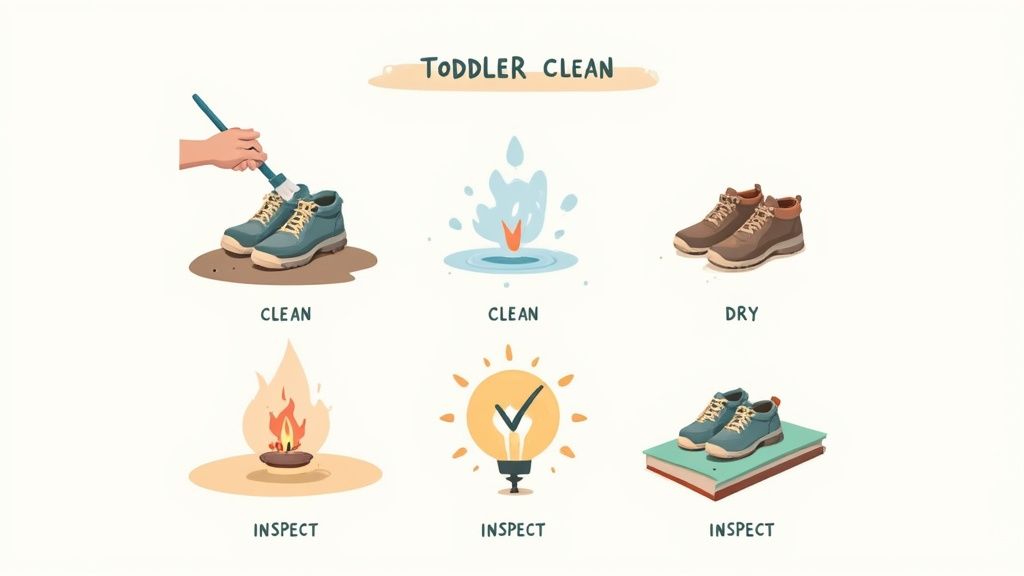
Simple Steps for Sparkling Shoes
For those really messy outings, a slightly deeper clean might be in order. The good news? You don’t need any fancy equipment. Think of it as a mini spa day for their hardworking little shoes!
Here’s all you need:
- An Old Toothbrush: This is your secret weapon for scrubbing dirt out of the soles.
- Mild Soap and Water: A gentle, bubbly lather is all you need to clean the shoe's upper.
After a good scrub, rinse them, and let them air dry completely. Whatever you do, don't put them in a dryer or near a heater—direct heat can warp the materials.
Pro tip: Stuffing the shoes with newspaper is a classic parent hack for a reason! It helps absorb moisture and keeps the shoes from losing their shape as they dry.
When to Say Goodbye
It’s a good idea to give their shoes a quick check-up before each hike. Keep an eye out for soles separating, tread that's worn smooth, or any holes that might let in pesky rocks.
Knowing when it's time to retire a pair is just as important as knowing how to care for them. For specific advice, you can find detailed Pediped shoe care instructions to keep every pair looking its best.
Your Top Toddler Hiking Shoe Questions Answered
Gearing up for a family adventure and have questions? You're in good company! Let's tackle some of the most common questions we get. Think of this as a friendly chat to help you feel totally confident. Ready?
How Often Should I Check My Toddler's Shoe Fit?
This is a great question because little feet grow at warp speed! It’s a good habit to check the fit of their hiking shoes at least once a month. Seriously, they can jump a size in the blink of an eye.
The easiest method is the good old 'thumb test.' Have your toddler stand up, then press your thumb at the very front of the shoe. You’re looking for about a half-inch of wiggle room—roughly your thumb's width.
Are Waterproof Toddler Hiking Shoes Really Necessary?
Ah, the great waterproof debate! Honestly, it depends on where you explore. If your adventures are mostly on sunny, dry trails, you can probably get by without them.
But if your toddler is a certified puddle-magnet, waterproof shoes are a lifesaver. They keep tiny feet dry and warm, which is the secret to preventing a trail-ending meltdown.
A happy toddler is often a dry toddler. Water-resistant shoes can be the difference between a joyful splash-fest and a soggy, grumpy walk back to the car.
Can My Toddler Just Wear Regular Sneakers for Hiking?
For a quick stroll down a paved park path, sneakers are totally fine. But once you step onto a “real” trail—with rocks, roots, and uneven dirt—a dedicated pair of toddler hiking shoes makes a huge difference.
Think of it this way: sneakers are your family sedan, perfect for smooth roads. Hiking shoes are like a mini 4x4, built for off-road fun! They have better grip, more support, and are way tougher.
When Is My Toddler Ready for Their First Hiking Shoes?
The best time is when your little one is a confident, steady walker. You want to see that they’ve really mastered walking on flat ground before you add the exciting challenge of a trail. Once they are walking easily without frequent tumbles, they are absolutely ready to start their hiking adventures!
Which Shoe Stage Is Right for My Hiker?
Choosing the right shoe for your toddler’s stage is so important. Here's a little guide to help you match the right shoe to your little hiker’s needs.
Toddler Shoe Stage Guide
| Walking Stage | Best Pediped Line for Hiking | Key Benefit for Trails |
|---|---|---|
| New Walker (Just getting steady) | Grip ‘n’ Go | Ultra-flexible sole allows them to feel the ground, building balance and confidence. |
| Confident Walker (Running & Climbing) | Flex | Sturdier, more durable sole provides extra protection and support for more rugged adventures. |
At Pediped, we design shoes that are just as ready for adventure as your child is. By choosing the right stage, you're giving them the support they need for every step of their journey.
Ready to find that perfect pair? Explore our collections of Grip ‘n’ Go for new walkers and Flex for confident explorers to get set for your next family outing.
Leave a comment