


Trying to find the right shoe size for a toddler who’s more interested in wiggling than sitting still? Yep, we’ve all been there. It can feel like an impossible quest! Thankfully, a good toddler foot size chart is the secret weapon every parent needs. It’s a super simple way to turn that squiggly foot measurement into the perfect US, UK, and EU shoe size, taking all the guesswork out of the adventure.
Your Go-To Guide for Tiny Toes
Welcome to your new cheat sheet for those rapidly growing feet! We know that keeping up with your little one is a full-time job. One minute their favorite sneakers fit perfectly, and the next, you're left wondering how they grew an entire size seemingly overnight. It’s a whirlwind, and we're here to make it a little less chaotic and a lot more fun.
Think of this guide as your quick-glance resource for every growth spurt. Instead of wrestling with confusing conversions or dealing with the frustration of online returns, you’ll have exactly what you need to pick comfy, supportive shoes for your little explorer’s next adventure. After all, happy feet lead to happy adventures!
The Magic of a Perfect Fit
So, why all the fuss about getting the fit just right? A well-fitting shoe does so much more than just look cute; it’s crucial for supporting healthy foot development, improving balance, and giving your toddler the confidence to run, jump, and play without any ouchies.
- Supports Natural Growth: The right fit allows their delicate bones and muscles to develop correctly without being squished or constricted.
- Encourages Confident Steps: Shoes that are too big can cause tripping and stumbling, while shoes that are too small can be painful and hinder their movement.
- Keeps Them Comfortable: From the playground to preschool, comfortable feet mean your little one can focus on what’s really important: having fun!
Did you know a newborn's foot is typically around 3.5 inches (8.9 cm), but by the time they’re 18-24 months old, it can reach 5 inches (12.7 cm)? That’s a massive jump from a US size 1 to a US 5.5 in what feels like the blink of an eye. This incredible growth is exactly why measuring often is so important. For more great brand-specific advice, you might want to check out our very own Pediped sizing guide to ensure a perfect match.
How to Measure Toddler Feet Without Tears
Let's be real—getting a toddler to stand still for more than three seconds is a parenting superpower. So, when it's time to measure their squirmy little feet, the whole process can feel a bit... chaotic. But what if you could turn this tricky task into a fun little game? With a few simple tricks, you can get an accurate measurement, avoid the drama, and maybe even share a few giggles.
Forget trying to wrangle a wiggly child. All you really need is a piece of paper, a pencil, and your go-to ruler or tape measure. We're about to become foot-tracing artists, and this simple, tear-free method works like a charm.
Your Step-by-Step Measuring Game
Ready to play? Let's make this quick and easy. The most important thing is to measure their foot while they are standing up. Their feet naturally splay and get a little longer when they bear weight, so this step is key for an accurate size.
- Trace the Footprint: Have your toddler stand on a piece of paper. You can make it a game—tell them you’re making a special footprint to send to Grandma! Carefully trace around their foot, holding the pencil straight up and down. Make sure to do this for both feet, since it's very common for one to be slightly bigger.
- Measure the Masterpiece: Now that you have your artwork, grab your ruler. Measure the tracing from the very back of the heel to the tip of the longest toe. It’s a good idea to jot down the measurement in both inches and centimeters.
- Use the Longest Measurement: Always, always use the measurement from the larger foot when you look at a toddler foot size chart. This ensures a comfortable fit and prevents one foot from being squished.
This simple process is all it takes to go from measuring at home to finding that perfect pair.
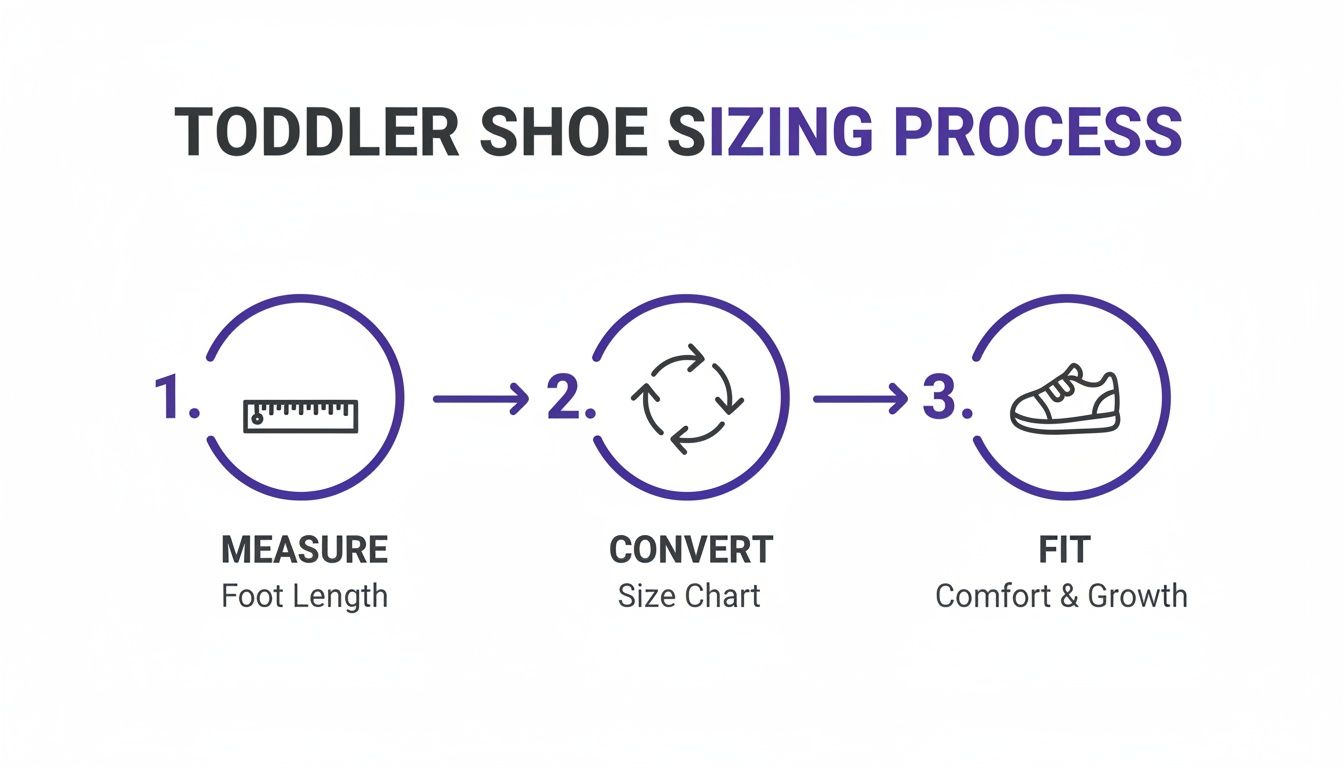
It really boils down to three simple steps: measure accurately, use a chart to convert the size, and then double-check the fit once the shoes are on.
Making It Extra Fun
A little creativity can make all the difference. If your toddler is having an extra wiggly day, try measuring their feet during a quiet moment, like when they’re focused on a snack or captivated by their favorite show. A quick distraction is often the secret weapon you need.
Pro Tip: After you’ve traced their feet, let them decorate the outlines with crayons or stickers! It instantly turns a chore into a fun craft and helps build a positive connection to getting new shoes. It's a win-win.
Once you have your measurement, you're all set to find shoes that will support every run, jump, and wobble. Choosing the right footwear is especially crucial for those just starting their walking adventures. If you’re wondering what to look for, our guide on the best shoes for a baby learning to walk has some fantastic expert tips to get you started.
The Complete International Shoe Size Guide
Venturing into online shopping or getting adorable shoe gifts from relatives abroad is so much fun, but it can also feel like you need a secret decoder ring for all the different sizes! US, UK, EU... it's enough to make any parent's head spin.
Don't worry, we've got you covered. Think of this section as your personal global sizing translator. We’re breaking down the differences in a simple way, so you can shop confidently for that perfect pair from anywhere in the world.
Why Sizes Are So Different
Ever wondered why a size 7 in the US isn't the same everywhere else? It all comes down to history. Different countries and regions developed their own sizing systems long ago, often based on completely different units of measurement like inches, centimeters, or even an old unit called a "barleycorn" (seriously!).
- US Sizes: Based on the length of a shoe last (a model of a foot) in inches.
- UK Sizes: Also based on inches, but the numbering system starts differently from the US.
- EU Sizes: Based on centimeters, using a system called the Paris point.
Because of this, there's no perfect one-to-one conversion, and sometimes brands add their own little quirks. But a good conversion chart gets you incredibly close to the perfect fit.
The speed of their growth is another huge factor. In an almost unbelievable stat, toddlers aged 1-3 years see their foot length surge from 5 inches (12.7 cm, US 5.5, EU 21) to 6.75 inches (17.1 cm, US 11, EU 28) in just 24 months. This is why 60% of parents find themselves replacing shoes 4-6 times a year!
Podiatrists emphasize that having enough toe room—about 12-17 mm—is critical, as not having it can lead to gait issues. You can learn more about the fascinating world of toddler foot growth and sizing and why it matters so much.
Your International Sizing Cheat Sheet
Ready to decode those international tags? This chart is your new best friend for finding the right size, no matter where the shoes are from. Just find your little one's foot measurement and follow the row across to see the corresponding sizes.
International Toddler Shoe Size Conversion Chart
| Foot Length (CM) | US Size | UK Size | EU Size | Japan Size | Australia Size |
|---|---|---|---|---|---|
| 13.0 | 6.5 | 5.5 | 22 | 13.5 | 5.5 |
| 13.8 | 7.5 | 6.5 | 24 | 14.5 | 6.5 |
| 14.7 | 8.5 | 7.5 | 25 | 15 | 7.5 |
| 15.5 | 9.5 | 8.5 | 26 | 16 | 8.5 |
| 15.9 | 10 | 9 | 27 | 16.5 | 9 |
| 16.8 | 11 | 10 | 28 | 17 | 10 |
| 17.2 | 11.5 | 10.5 | 29 | 17.5 | 10.5 |
| 18.1 | 12.5 | 11.5 | 30 | 18.5 | 11.5 |
| 18.5 | 13 | 12 | 31 | 19 | 12 |
Remember: Always use the measurement from the larger foot! It's super common for one foot to be slightly bigger than the other, and you always want to size up for comfort.
With this handy guide, you're now a global shoe-shopping pro! Whether you’re browsing online boutiques or have family overseas, you can confidently pick the right size. For a closer look at styles available in these ranges, you can explore our full collection of Pediped toddler shoes in sizes 7.5T-13.5T that are designed with healthy development in mind.
Finding the Perfect Pediped Fit
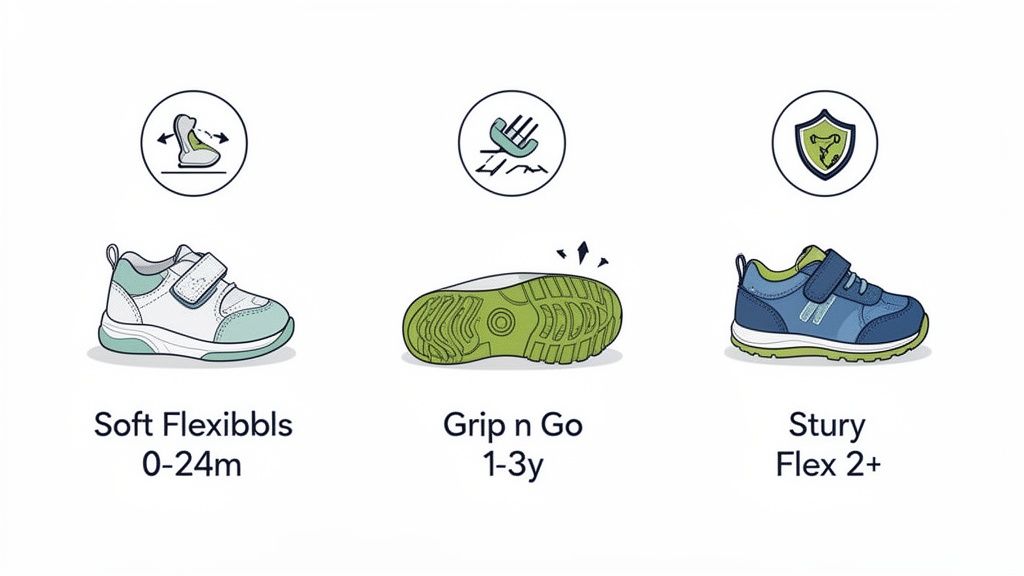
So, you’ve managed to measure those wriggly little feet and you’re ready to find the perfect pair of shoes. Awesome! But at Pediped, we know it's not just about the size—it's about finding the right shoe to support your child's specific stage of development. From those first tentative steps to confident runs on the playground, there's a Pediped shoe designed just for them.
Think of this as your personal guide to our three signature lines. We'll walk you through what makes each collection special, so you can choose the right pair for your little one's next big adventure.
Originals For First Steppers
Let's start with our Originals line, designed for the tiniest feet from 0-24 months. These are the ultimate first shoes. Seriously. They have super-soft, completely flexible leather soles that give that "next-best-thing-to-barefoot" feeling.
There’s a reason for this. Pediatricians often recommend that being barefoot is best for helping little ones develop muscles and find their balance. Our Originals protect their toes without hindering that all-important natural movement.
- Best For: Crawlers, cruisers, and brand-new walkers.
- Key Feature: An ultra-flexible, diamond-tread leather sole for a barefoot feel.
- Sizing Tip: These shoes are designed to be roomy to let little feet splay naturally. Just stick to their current size on the toddler foot size chart and you'll get a great fit.
Grip ‘n’ Go For Toddlers on the Move
Once your wobbly walker has become a full-fledged runner, it's time for Grip ‘n’ Go! These are perfect for toddlers aged 1-3 years and are the ideal transitional shoe. They have soft, flexible rubber soles that offer way more traction and durability for all their outdoor exploring.
The Grip ‘n’ Go line keeps the rounded edges and flexibility needed for healthy foot development but adds that extra grip for toddlers who are busy climbing, running, and discovering the world. They’re truly built for action!
If you're wondering why this flexibility is such a big deal, you can learn all about the importance of flexible shoes for toddlers and how they support every step of the journey.
Flex For Confident Big Kids
Last but not least, meet our Flex line, made for active kids from 2-10+ years. These are the big-kid shoes ready for any adventure, whether it’s a game at the schoolyard or a family hike. The Flex line has our most durable rubber soles, all designed to give maximum flexibility and support for confident walkers and runners.
One of the best parts is the Flex Fit System®, which gives you a customizable fit. Each pair comes with an extra insert you can take out to create more room, extending the shoe's life by almost half a size. Smart, right?
- Best For: Preschoolers and school-aged kids who are always on the go.
- Key Feature: The Flex Fit System® for a longer-lasting, adjustable fit.
- Sizing Tip: This feature is a lifesaver for kids in between sizes. Start with the insert for a snug fit, and then remove it as their foot grows.
Spotting the Signs They Need New Shoes
Is your little one suddenly taking more tumbles than usual? Or maybe they’ve started pointing at their feet, trying to pull their shoes off the second you put them on? These aren't just quirky toddler moments—they're often tell-tale signs that their shoes are getting a bit too snug for their next adventure.
You don't need to be a mind reader to figure this out. With a few simple checks, you can become an expert at spotting when it's time to size up, ensuring those tiny feet stay happy, healthy, and ready to explore.
How to Check the Fit
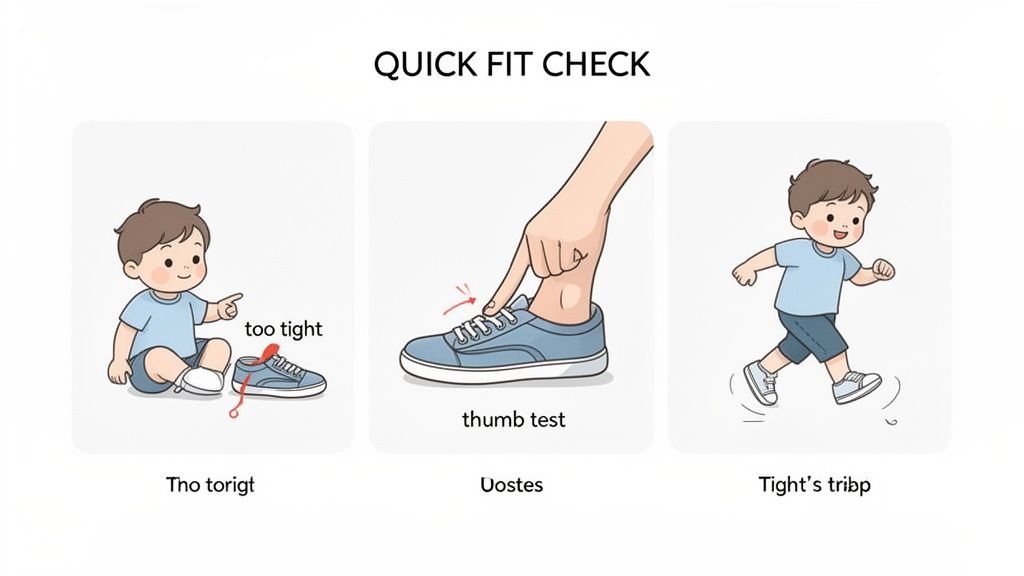
Toddler feet grow astonishingly fast, sometimes jumping a size every two to four months. A shoe that fit perfectly last month might be too tight today. Luckily, staying on top of it is easy with these simple checks.
Here are the key clues to watch for:
- The Thumb Test: This is the go-to method for a reason. Have your toddler stand up straight and press your thumb down at the front of their shoe, just over their longest toe. You should feel about a thumb's width (roughly half an inch) of space. If their toe is pressing right up against the end, it’s time for a new pair.
- Check for Red Marks: When you take their shoes off after a day of play, give their little feet a quick inspection. Any persistent red spots or indentations are a clear sign that the shoes are rubbing or putting too much pressure on their feet.
- The "Shoe Rebellion": If your toddler suddenly fusses when it's time to put on their shoes or tries to yank them off constantly, they might be telling you something important. A sudden aversion to their favorite pair often means they've become uncomfortable.
Quick Tip: Always, always check the fit while your child is standing! Feet spread and lengthen under their body weight. Checking while they’re sitting down can be misleading, making you think there's more room than there actually is.
Ensuring a proper shoe fit is one of the most important things you can do for your child's developing body. You can learn more about how the right footwear supports healthy little feet from Harvard experts and why it matters so much. Frequent checks will make sure every step they take is a comfortable one.
Common Shoe Fitting Mistakes to Avoid
We’ve all been there—standing in the shoe aisle, holding up a tiny sneaker that’s one size too big, thinking, “Perfect! They can grow into it!” It seems like a smart way to save a little money, but buying shoes for your toddler isn't quite the same as buying a sweatshirt they can wear for two seasons.
Let’s chat about a few super common shoe-fitting oopsies that nearly every parent makes. No judgment here, just friendly advice to help keep those little feet developing comfortably and naturally. Think of this as your cheat sheet for making every shoe purchase a roaring success!
The "Grow Into Them" Trap
Buying shoes that are too big is probably the most common slip-up. While a little extra room is essential, too much can lead to some clumsy consequences. A shoe that's overly large can cause your toddler to trip, stumble, or even change their natural gait as they try to keep the shoes from slipping off.
Instead of buying a full size up, focus on getting the right amount of wiggle room—about half an inch, or a thumb's width, is the sweet spot. This gives their toes space to grow without turning their shoes into clown shoes!
Playful Tip: To avoid oversized shoes, always have your toddler try them on and take a little walk around the store. If their heel is constantly slipping out, the shoe is too big, no matter how cute it is.
Forgetting About Width
It's so easy to get laser-focused on the length of a shoe that we completely forget about its width! Toddler feet come in all shapes and sizes—some are slender, and some are adorably chubby. Squeezing a wide foot into a narrow shoe is a recipe for discomfort.
Look for signs that a shoe might be too narrow:
- Red Marks: Check for red spots on the sides of their feet after wearing the shoes.
- Bulging: If the sides of the shoe look like they’re bulging or straining, it's a clear sign you need more width.
- Difficulty Putting Them On: While getting shoes on a toddler is never easy, if it feels like a real struggle every time, width might be the issue.
The Hand-Me-Down Dilemma
Hand-me-downs are amazing for so many things, but shoes can be tricky. A shoe molds to the foot of the child who first wore it, creating a unique wear pattern. When another child wears that same shoe, it can force their foot into an alignment that isn't natural for them.
If you do go the hand-me-down route, make sure the shoes show very minimal signs of wear. Check that the insoles are still flat and the soles aren't worn down unevenly. A gently used pair can be okay, but a shoe that’s been well-loved by another little adventurer might not offer the right support. Making sure you use an accurate toddler foot size chart for every new pair, whether new or used, will help ensure a healthy fit.
Quick Sizing Q&A
Got a question? We've got a quick answer! Here are some of the most common puzzles parents face when trying to find the perfect shoe fit for their toddler.
How Much Growing Room Do Toddler Shoes Really Need?
Great question. The golden rule is to leave about a thumb's width of space between your little one's longest toe and the end of the shoe. That’s roughly half an inch or 1.3 cm.
This little bit of wiggle room is the sweet spot. It gives their feet space to grow and move naturally without the shoe being so loose that it causes trips and tumbles. Too snug can pinch their toes, but too much room makes walking awkward.
Are Toddler Sizes and Baby Sizes Different?
Yes, they're completely different categories. Think of it this way: baby sizes (often called "crib" shoes and marked with a "C") are for those tiny, soft feet just starting to explore. Toddler sizes (marked with a "T") pick up right where baby sizes leave off, typically around a US size 4 or 5.
This shift happens right when your child transitions from crawling to full-blown walking, running, and jumping. The toddler foot size chart reflects this move to more structured, supportive footwear designed for active little feet.
Expert Tip: Try not to get hung up on the number. Always measure your child's feet and double-check the brand's specific size chart. Sizing can vary quite a bit, so a size 6 in one style might fit differently than a size 6 in another.
Why Do Their Feet Grow So Unbelievably Fast?
It’s not just your imagination—they really do! A toddler's foot can grow a half size or even more every two to four months.
This rapid growth happens because their bones are still soft and developing. All that running and playing is literally helping their feet grow stronger, and their shoes need to keep up.
Ready to find the perfect, pediatrician-approved fit for your little one's next adventure? At Pediped, we make it simple. Shop our collections today!
Leave a comment