


Get ready for one of the most heartwarming, can't-stop-watching-it moments in parenting: your baby's first wobbly steps! It's an incredible milestone, but picking out the right babies walking shoes can feel surprisingly high-stakes. Don't you worry, we're here to cut through the noise and make it super easy. Think of this as a fun little chat with a friend who’s already navigated this adorable, sometimes tricky, stage.
Your Guide to Those Adorable First Steps
We’re going to skip the complicated jargon and get right to what matters for your tiny explorer—keeping those little feet happy, healthy, and ready for adventure! Those first steps are so much more than a cute photo opportunity; they represent a huge leap in your child's development. Every single teeter, stumble, and proud strut helps build strength, coordination, and a whole lot of confidence.
The goal here isn't just to cover their feet. It's to support them on this amazing new journey. You aren’t just buying a pair of shoes; you're investing in a tool that helps them learn to master their world. And it's a big deal for parents everywhere! The global baby shoe market hit a value of around USD 12.4 billion in 2024, which shows just how much we all want to get this right.
Why the Right Shoe Matters So Much
Choosing the right footwear in these early days is about so much more than looks. A great pair of first walking shoes offers protection from the outside world without interfering with how their feet are naturally supposed to grow. To turn you into a baby shoe expert in about two minutes, we're going to cover a few key things:
- Supporting Natural Development: We'll look at the features that actually help their feet develop properly.
- Getting the Perfect Fit: You'll master a few simple tricks to get a giggle-proof fit every time.
- Balancing Protection and Freedom: We’ll figure out how shoes can keep them safe outdoors while still feeling as close to barefoot as possible.
Of course, these physical milestones are just one part of their incredible growth. Understanding the broader importance of early childhood education can help you see how these small steps fit into their much bigger world of learning and discovery.
The best baby walking shoes act like a supportive friend for their feet—they offer a little protection and a lot of freedom to move, wiggle, and grow naturally.
Let's get your little one started on the right foot, turning those first tentative steps into confident adventures!
What Makes a Great First Walking Shoe
So, what’s the secret recipe for the perfect pair of baby walking shoes? It's not as complicated as you might think! The whole point is to find a shoe that acts like a second skin—offering just enough protection for their little adventures while mimicking the freedom of being barefoot.
It all comes down to letting their feet do what nature intended.
Think about it: those tiny feet are still learning the ropes, feeling the ground, and figuring out this whole balance thing. A heavy, clunky shoe is like asking them to learn to dance in ski boots. It just gets in the way! That’s why the best first shoes are incredibly lightweight, letting your little one focus on walking, not on lifting heavy weights on their feet.
The Big Three of Baby Shoes
When you're on the hunt, there are three non-negotiables to keep in mind. Get these down, and you'll be a baby-shoe-shopping pro.
- Super Flexibility: A great first walking shoe needs to bend and twist with ease. If you can't easily bend the shoe in half with your own hands, it's far too stiff for their developing feet.
- Feather-Light Design: Pick it up. Does it feel like you're holding almost nothing? Perfect. Heavy shoes can throw off their natural gait and make walking feel like a chore instead of an exciting new skill.
- Grip for the Trip: A non-slip sole is your new best friend. It provides just enough traction to help prevent tumbles on slippery surfaces, like the kitchen floor or shiny hardwood.
This simple infographic really drives home just how crucial that flexibility is for their little feet.
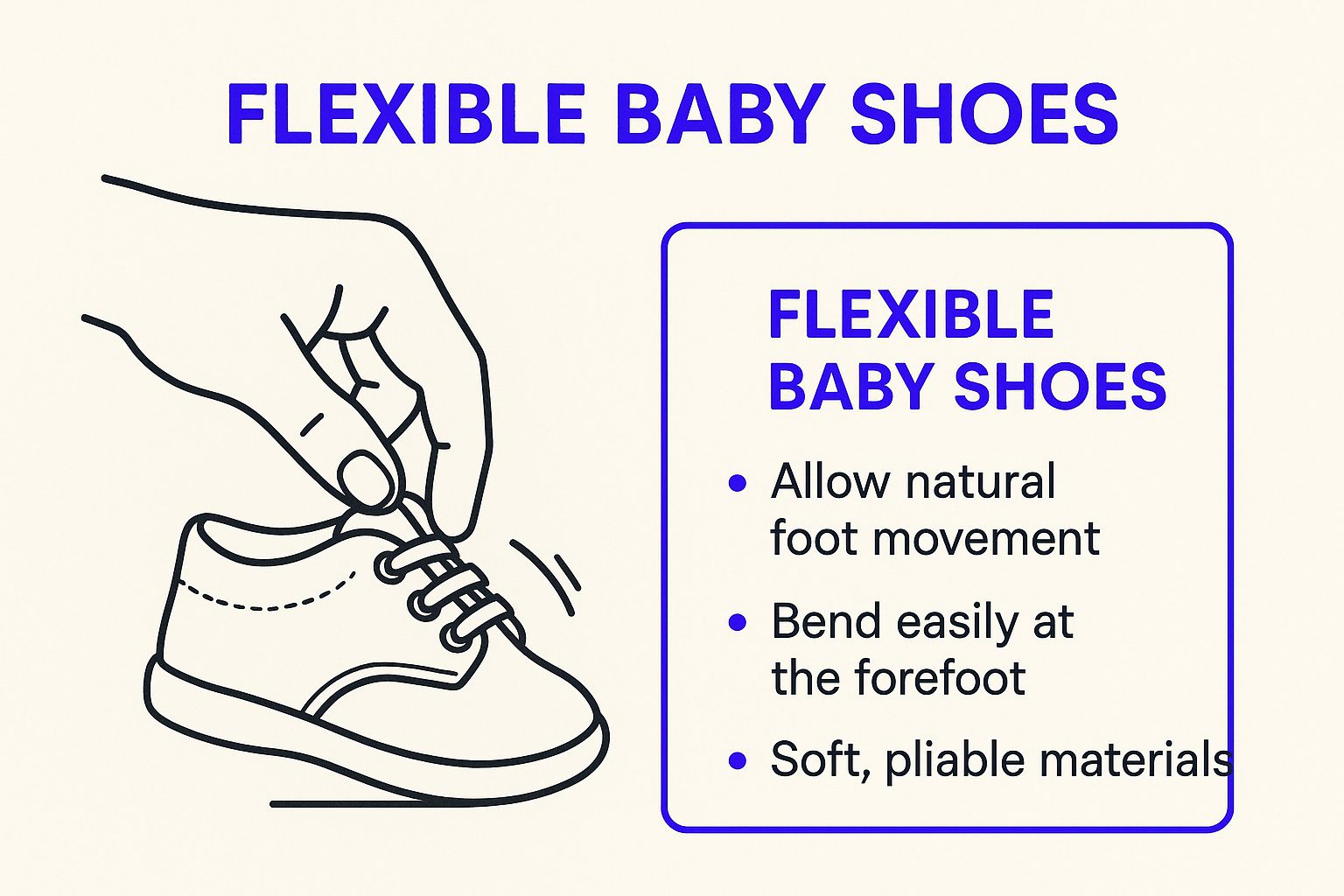
This visual shows exactly what you’re looking for—a shoe that effortlessly flexes right where their foot naturally bends, supporting every step and stumble.
To make things even easier when you're in the store, here's a quick checklist to run through.
First Walking Shoe Feature Checklist
| Feature | Why It's a Must-Have | Parent-Friendly Tip |
|---|---|---|
| Flexible Sole | Allows for natural foot movement and muscle development. | The "Taco Test": If you can't bend the shoe into a taco shape, it's too rigid. |
| Lightweight Materials | Prevents fatigue and lets them learn to walk without being weighed down. | Hold one shoe in each hand. If they feel heavy to you, imagine how they feel to a baby. |
| Non-Slip Grip | Provides traction on smooth indoor surfaces, reducing slips and falls. | Look for a rubber sole with a textured pattern. Smooth, plastic-like soles are a red flag. |
| Breathable Fabric | Keeps little feet from getting sweaty and uncomfortable, which helps prevent blisters. | Natural materials like leather or canvas are great. Mesh panels are a bonus for airflow. |
| Wide Toe Box | Gives toes room to splay out naturally, which is critical for balance and stability. | Press on the front of the shoe. There should be about a thumb's width of space. |
Think of these features as the foundation for happy, healthy little feet.
Why Quality Matters More Than Ever
Getting these features right isn't just a trend; it's becoming a major focus for parents, and shoe brands are finally catching on. The demand for specialized babies walking shoes is growing fast, with the market expected to be worth between USD 3.0 to 3.7 billion by 2033.
This boom is driven by parents who get it—investing in proper footwear is an investment in their child's early mobility and confidence. You can read more about these market trends and see for yourself how much attention is being paid to healthy first steps.
Remember, the perfect first shoe doesn't restrain the foot; it frees it. It should be a barely-there sidekick that protects from pokes and scrapes but lets them feel every new texture on their journey.
Ultimately, you’re looking for a shoe that supports natural movement. It's not about forcing their foot into a specific shape, but about giving it a safe space to grow strong, balanced, and ready to take on the world—one wobbly, wonderful step at a time.
How to Find the Perfect Fit Every Time
Okay, let's get real about the biggest challenge in buying baby walking shoes: getting the size right without a full-blown meltdown (yours or theirs!). It can feel like you're trying to put socks on a tiny, wiggly octopus. But don't worry, I've got some simple, parent-tested tricks to nail the perfect fit, every single time. Forget the stress—this can actually be a fun little game.
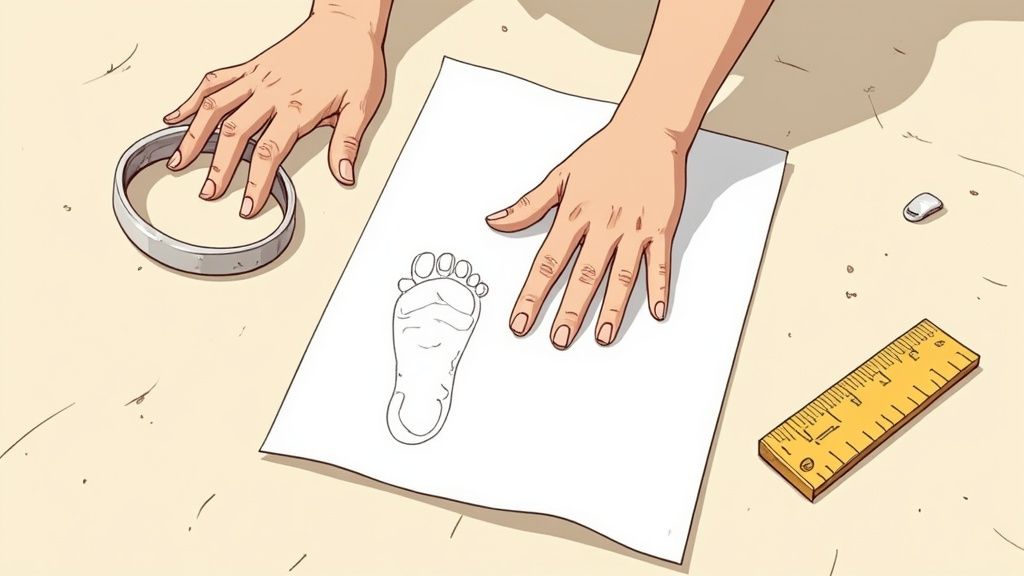
The secret is to always measure their feet while they're standing up. When your little one puts their weight down, their foot naturally splays out, getting a bit longer and wider. If you measure while they're sitting, you'll get an inaccurate size and end up with shoes that are too snug from the very first wear.
The Trace and Measure Method
This is my go-to, the easiest and most reliable way to get an accurate measurement right at home. It’s a quick little project that only takes a minute!
- Get Set: Grab a piece of paper, a pen (or crayon!), and a ruler. Have your little one stand on the paper. A favorite toy or a silly song works wonders for distraction!
- Trace Away: Quickly trace around their foot. It doesn’t have to be a perfect work of art, just a clear outline.
- Measure Up: Now, use your ruler to measure from the very back of the heel to the tip of their longest toe. Make sure to do this for both feet—it's super common for one to be slightly bigger. Always go with the measurement of the larger foot!
Once you have your number in inches or centimeters, you can confidently check it against brand-specific size charts. Many brands even offer printable guides to make it a breeze; for example, you can see how it works with this helpful Pediped sizing guide.
The All-Important Thumb Rule
So you've got the shoes, but how can you be sure they really fit? Time for the classic "thumb rule."
Once the shoe is on their foot (and they’re standing up again!), press your thumb down on the front of the shoe, right above their longest toe. You should feel about a half-inch of space—roughly the width of your thumb.
That little bit of wiggle room is everything! It gives their toes space to move naturally and gives their feet room to grow, which they do at an astonishing rate. Too little space squishes their toes, but too much can cause them to trip.
Finally, check the heel. A great walking shoe should have a snug fit around the heel and midfoot so their foot doesn’t slip around inside. You should just be able to slide your pinky finger between their heel and the back of the shoe. That snugness is key for stability, helping them feel secure with every new step. Getting that perfect balance of toe room and heel security is the secret to a happy little walker.
Soft Soles vs. Hard Soles Explained
So, you've reached the great baby shoe showdown: soft soles versus hard soles. It can feel like a big decision, but it's simpler than you think. When your little one starts pulling up, cruising along the furniture, and taking those first wobbly steps, the ground beneath their feet is their best friend and teacher.
This is where soft-soled shoes are the undisputed champions.
Think of soft soles as cozy slippers with a very important job. They're designed to be super flexible, almost like a protective second skin. This allows your baby to actually feel the texture of the floor, the grass, or the carpet. That sensory feedback is pure gold for their developing brain, helping them master balance, strengthen all those tiny foot muscles, and figure out how to coordinate those adorable little legs.
The Magic of Soft Soles
For those precious early walking days, a soft, flexible shoe is exactly what you need. The whole point is to mimic that "barefoot is best" feeling while adding a layer of safety from things like splinters or chilly floors.
You’re not trying to restrict their foot; you’re giving it the freedom to move, wiggle, and grip naturally. This stage is all about learning the ropes of walking, and soft soles are the perfect training partner.
- Sensory Connection: They let your baby feel the ground, which is crucial for building balance.
- Muscle Development: A flexible sole encourages the natural movement of the foot, helping build up strength.
- Lightweight Freedom: They won't weigh down your little walker, making those first steps feel fun and effortless.
The importance of this kind-of-barefoot approach is huge, and you can see it in the market. Industry reports project that by 2030, the global soft sole baby shoe market alone will approach USD 2.5 billion. You can discover more insights about these children shoe trends on marketreportanalytics.com and see just how much focus there is on healthy first steps.
When to Bring in the (Slightly) Tougher Guy
So, when do hard soles enter the picture? First off, the term "hard sole" can be a little misleading. For a new walker, you never want a shoe that's stiff as a board.
Instead, think of it as a structured-yet-flexible rubber sole. This is your go-to once your toddler becomes a confident, steady walker and is ready for bigger adventures outside.
A shoe with a slightly firmer rubber sole is perfect for protecting their feet from rocks, hot pavement, and uneven ground at the park. It provides durability without sacrificing the flexibility they still need.
You'll know it's time to transition when their walking is less wobbly and their explorations are getting more rugged. For more experienced walkers who are ready for that next level of support for all-day play, you can explore fantastic options like the Pediped Flex collection, which absolutely masters that balance between protection and flexibility.
Choosing Breathable Materials for Happy Feet
Have you ever noticed just how sweaty those tiny baby feet can get? It's not your imagination! A baby's internal thermostat is still a work in progress, and their feet are packed with sweat glands. This is precisely why the material of their first babies walking shoes is such a big deal.
Think of their shoe as a little house for their foot. You want that house to have plenty of open windows to let a nice breeze flow through, right? Stiff, non-breathable materials like certain synthetics are like a house with all the windows sealed shut. It gets hot, stuffy, and uncomfortable in a hurry. That trapped moisture can lead to irritation and some surprisingly stinky feet!
What to Look For on the Label
To keep those feet cool and happy, you'll want to become a bit of a material detective when you shop. Luckily, the best options are usually the most classic ones. Natural fabrics are your best friends here because they let air move freely, which is key to keeping feet dry and comfy all day long.
Look for these superstars of the baby shoe world:
- Soft Leather: It’s tough enough for playtime but also molds beautifully to their foot and lets air circulate.
- Lightweight Canvas: There's a reason it's a classic for summer sneakers! Canvas is light, airy, and perfect for active little ones.
- Breathable Mesh: This one is the champion of airflow. Shoes with mesh panels are fantastic for letting heat escape, making them ideal for your little explorer.
When you're checking out a pair of shoes, just flip it over and look at the tag. If you see leather, canvas, or mesh listed, you know you're on the right track. These materials work hard to keep your baby's feet feeling fresh, from the sandbox to the living room.
Choosing a breathable shoe isn't just about comfort—it's about creating a healthy environment for their growing feet. Happy, dry feet are less prone to blisters and irritation, which means more smiles and more confident steps for your little one.
So, the next time you're admiring a cute pair, give the material a quick check. Your baby’s happy, comfortable, and sweet-smelling feet will thank you for it.
Finding Styles That Are Cute and Practical
Let’s be real for a second. Half the fun of shopping for babies walking shoes is finding a pair that is just ridiculously cute. But who says you have to pick between practical and adorable? The best first walking shoes are the ones that make you go "aww," are a piece of cake to get on a wiggly toddler, and—most importantly—actually stay put.
Getting shoes on a squirmy baby can feel like wrestling a tiny, surprisingly strong octopus. That's why the closure system on a shoe is an absolute game-changer for parents. It’s not just about aesthetics; it’s about making your daily routine a little less chaotic.
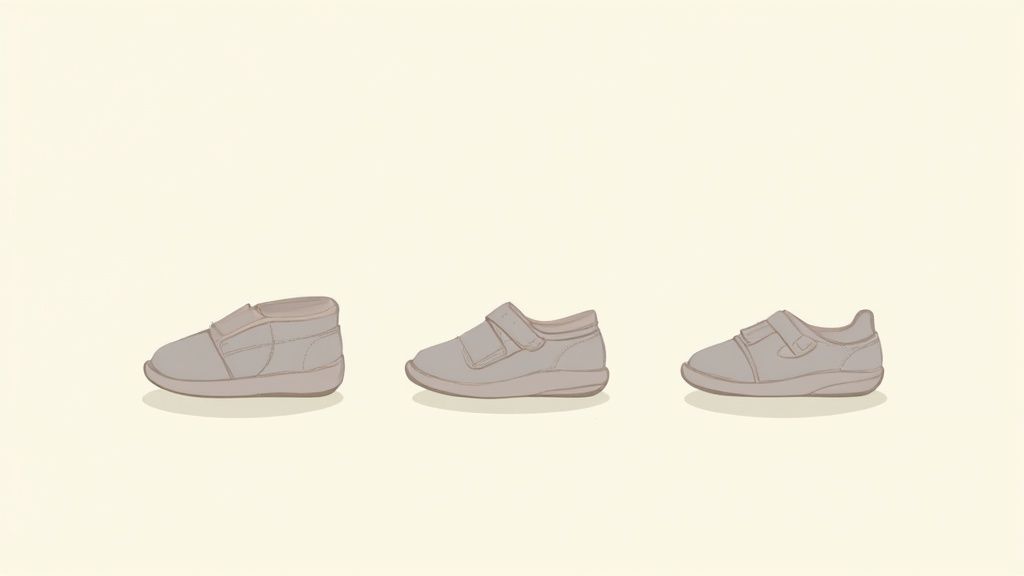
Closures That Make Life Easier
When you're out shopping, you’ll see a few common closure types. Each one has its own little superpower, perfect for different kinds of tiny feet.
- Velcro Straps: These are the undisputed champions of the baby shoe world, and for good reason. They are incredibly adjustable, which is a lifesaver for those adorably chubby baby feet or a higher instep. Plus, they give toddlers a head start on independence when they inevitably want to try putting on their own shoes!
- Slip-On Designs: For the parent who’s always in a rush, you just can't beat a great slip-on. Look for styles with a bit of elastic around the ankle or over the top of the foot. This helps create a snug, secure fit that’s surprisingly tough for little escape artists to kick off.
- Pull Loops: This little detail is a lifesaver. A simple loop stitched onto the back of the heel gives you something to grab onto, making it so much easier to slide the shoe over their foot.
The real secret is finding a shoe that opens up nice and wide, so you're not trying to stuff their foot into a tiny hole. A wide opening combined with a secure closure is the winning formula.
Finding that perfect pair that both you and your little one love feels like a major win. You want a shoe that not only looks amazing in all those first-step pictures but also gives them the practical support they need for their new adventures. Luckily, many brands have nailed this balance. You can find a whole world of adorable and parent-approved footwear for babies 0-24 months that check all the right boxes.
At the end of the day, the best style is the one that fits your child’s foot shape, supports their wobbly first steps, and doesn’t add any extra stress to your get-out-the-door routine.
Common Questions About Baby Walking Shoes
Feeling a little overwhelmed with all the choices out there? Take a deep breath! You're definitely not alone. It’s a huge, exciting milestone, and it’s totally normal to have a few lingering questions. Let’s clear up the most common curiosities.
Think of this as our little parent-to-parent chat. We're here to tackle those last-minute "wait, but what about...?" thoughts so you can shop with total confidence.
When Should My Baby Start Wearing Shoes?
This is the number one question on every parent's mind! The best thing for your new walker is to be barefoot indoors as much as possible. This helps them really feel the ground, build up all those tiny foot muscles, and master their balance.
It's time to introduce shoes when their adventures take them outside or onto surfaces that could be rough on their tiny feet—think hot pavement or a splintery deck. Shoes are their trusty sidekicks for outdoor exploration, not an everyday indoor requirement.
How Often Will I Need to Buy New Shoes?
Get ready for some rapid growth! Baby feet grow at an astonishing rate, so you'll want to check the fit of their shoes about every 6 to 8 weeks.
A fantastic and easy way to check the fit is using the "thumb rule." With your baby standing, you should be able to press your thumb (which is about a half-inch wide) between the tip of their longest toe and the end of the shoe. Once that space disappears, it’s officially time for a new pair!
Are Expensive Baby Shoes Really Better?
Not necessarily! A higher price tag doesn't automatically mean a better shoe. Instead of getting caught up in brand names or cost, focus on the features that truly matter for healthy foot development.
The best baby walking shoes will always have these three things:
- A super flexible sole
- A lightweight, barely-there feel
- Breathable materials
Plenty of wonderfully affordable brands check all these boxes. The perfect shoe isn't the most expensive one; it's the one that lets your little one's feet move and grow naturally.
Beyond just the shoes themselves, parents often have questions about maintaining the cleanliness and hygiene of all their baby's belongings. For some helpful tips, check out this a simple guide to cleaning infant items, which offers great advice.
Ready to find the perfect pair that combines pediatrician-approved design with adorable style? The Pediped collection is crafted to support every wobbly step and confident stride. Explore our award-winning shoes at https://www.pediped.com and give your little adventurer the best start.
Leave a comment