


Splish, splash, let's make a dash! As a parent and a total shoe nerd, I've learned that finding the best toddler water shoes is all about a few key things: an awesome grip for slippery spots, quick-drying magic to dodge meltdowns, and a snug fit that actually stays on their wild feet.
The right pair is a total game-changer, guarding those tiny toes from hot sand and poky rocks. It turns every trip to the pool, beach, or splash pad into pure, non-stop fun. Let's dive in!
Ready for Your Toddler's Next Water Adventure?
Welcome to the ultimate parent's guide for finding the perfect kicks for your little explorer! Forget scrolling through a million options—we're jumping straight to what really matters: keeping your toddler’s feet safe, comfy, and ready for action.
Whether you're planning a beach day, hitting the local pool, or just prepping for a wild run through the sprinkler, the right shoes make all the difference. I'll break down the must-haves without any boring jargon, so you can feel awesome about picking a pair that will survive every single splash and stomp. Let's make sure you're focused on making memories, not chasing lost shoes!
Why the Right Water Shoe Matters
Think of great water shoes as your toddler's superhero gear, not just another pair of summer shoes. They offer way more protection and comfort than flip-flops or bare feet ever could.
Here’s the scoop:
- No More Slips! Wet surfaces are basically toddler magnets. Pool decks and splash pads can be super slippery, so a grippy sole is a total must-have for keeping your little one upright.
- Ouch-Proof Toes: Between scorching sand, sharp shells, and mystery stuff lurking underwater, there are plenty of things that can make them say "ouch!" A shoe with a covered toe is like a little shield for their delicate feet.
- All-Day Happy Feet: Nothing ruins a fun day faster than a grumpy toddler. Soggy, heavy shoes are a recipe for fussiness, so lightweight, quick-drying materials are key to keeping them happy.
As more families get outside, the demand for awesome kids' gear is blowing up! In fact, the global water shoes market is projected to grow from USD 171.9 million in 2025 to a whopping USD 247.2 million by 2035. It’s clear parents everywhere know how important these shoes are.
Of course, a great day on the water involves more than just shoes. If you're planning bigger adventures, it helps to know what to wear for snorkeling to keep everyone safe and comfortable.
And when you're ready to find that perfect pair, you can check out our fantastic range of water-friendly shoes, designed specifically with little feet in mind and trusted by parents for every adventure.
Finding the Perfect Fit for Wiggly Feet
Let's be real, getting shoes on a wiggly toddler is an Olympic sport. When it comes to the best toddler water shoes, getting the fit just right is super important for keeping them safe. A shoe that’s too loose can slip right off in the water (goodbye forever!), while one that's too tight can cause painful blisters and ruin a perfectly good day of fun.
But don't worry, you don't need any special gadgets. A few parent-tested tricks are all you need.
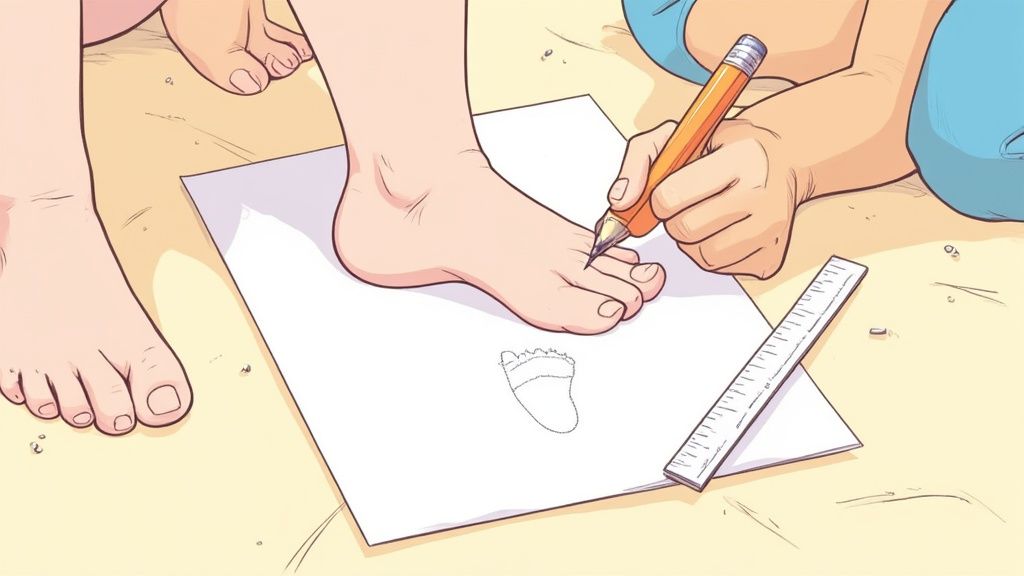
The Trace-and-Measure Trick
Trying to measure a squirmy toddler's foot feels impossible, right? The secret is to turn it into a quick art project.
- Grab a piece of paper and a crayon.
- Get your toddler to stand on the paper—this might require a well-timed snack or their favorite show for a few seconds of cooperation!
- Quickly trace an outline around their foot.
- Once they've zoomed off, you can measure the tracing from the tip of the longest toe to the back of the heel. Voilà! You have a measurement you can trust.
This simple method is a real game-changer. For more help getting that perfect measurement, you can also check out our official Pediped sizing guide, which we designed to make parents feel like sizing pros.
The In-Store Fit Check
Whether you've measured at home or are trying on shoes in a store, it’s time for a few final checks.
- The Thumb Rule: This classic tip is still the best. Press your thumb at the tip of the shoe. You want to feel about a half-inch of space—roughly the width of your thumb—between their longest toe and the end of the shoe.
- The Ankle Snug Test: Make sure the shoe fits snugly, but not too tightly, around the ankle. This is key to preventing a shoe from being gobbled up by the ocean!
- The Pinky Test: Try to slip your pinky finger between your child’s heel and the back of the shoe. If it slides in with just a little resistance, you’ve probably found the perfect fit.
A proper fit does so much more than just prevent blisters; it’s a critical part of supporting healthy foot development. Getting it right helps set them up for a lifetime of happy, healthy feet.
The demand for well-designed kids' shoes has been growing quickly, with the children's footwear market projected to increase by USD 19.62 billion between 2025 and 2029. This boom shows just how much parents are prioritizing features like water resistance and flexible designs. With these fitting tips, you'll be ready to navigate all the great options out there like a pro.
Prioritizing Grippy Soles and Quick-Dry Materials
Let's get into the two things that make or break a great toddler water shoe: the materials and the sole. These are your absolute must-haves for preventing slips, soggy feet, and the dreaded mid-adventure meltdown.
A shoe that soaks up water becomes a heavy, sloshy anchor on your toddler’s foot. It's not just uncomfortable; it can lead to grumpy kids and painful chafing. This is where smart, water-friendly materials come to the rescue!
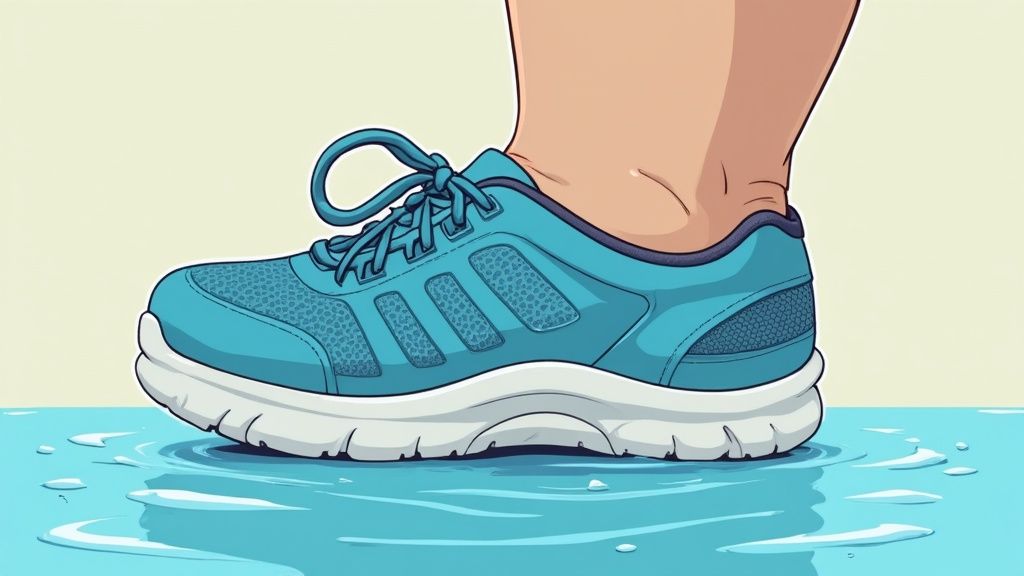
The Magic of Quick-Dry Fabrics
When you're hunting for the best toddler water shoes, look for fabrics that are made to get wet and dry out in a flash.
Here are the top materials to look for:
- Neoprene: This is the same soft, flexible stuff used in wetsuits. It’s fantastic because it dries super fast and won't rub against their skin.
- Mesh: A total winner for water shoes. Mesh is super lightweight, letting water drain right out while letting air flow in. No more swampy feet!
- EVA Foam: You'll often see this in clogs and sandals. EVA is a waterproof, cushioned foam that’s super easy to wipe clean and dries in minutes.
The goal is to find a shoe that feels almost as light when it's wet as it does when it's dry. That’s your sign that you’ve found a winner!
Why a Grippy Sole is Non-Negotiable
Okay, now for the most important part: the sole. This is your child’s only defense against slippery surfaces. From slick pool decks to mossy rocks, a toddler's world is one big potential slip-and-slide.
A great water shoe will have a soft, flexible rubber sole that can bend with their foot while still providing awesome traction. When you have a pair in your hands, look for deep grooves and fun tread patterns—think of them like tiny tire treads designed to grip the ground.
A shoe's traction is everything. It’s the difference between a confident "I got this!" and a surprising slip. A flexible, rubbery sole gives your toddler the stability they need to explore their watery world safely.
For toddlers who are still mastering walking, this is a huge deal. The right grip helps build their confidence. It's why Pediped's Grip 'n' Go line has a special G2 Technology—a soft rubber sole with rounded edges that mimics their natural foot shape, helping them feel the ground and improve their balance.
Matching the Right Shoes to Your Adventure
Not all water adventures are created equal, and neither are toddler water shoes! A sandy beach day calls for a totally different shoe than a rocky creek expedition. Let’s play matchmaker and find the perfect pair for whatever fun you have planned.
Think of it this way: you wouldn’t wear rain boots to ballet class, right? Picking the right style makes sure your little one is comfy, safe, and ready to explore without any "ouchies" slowing them down.
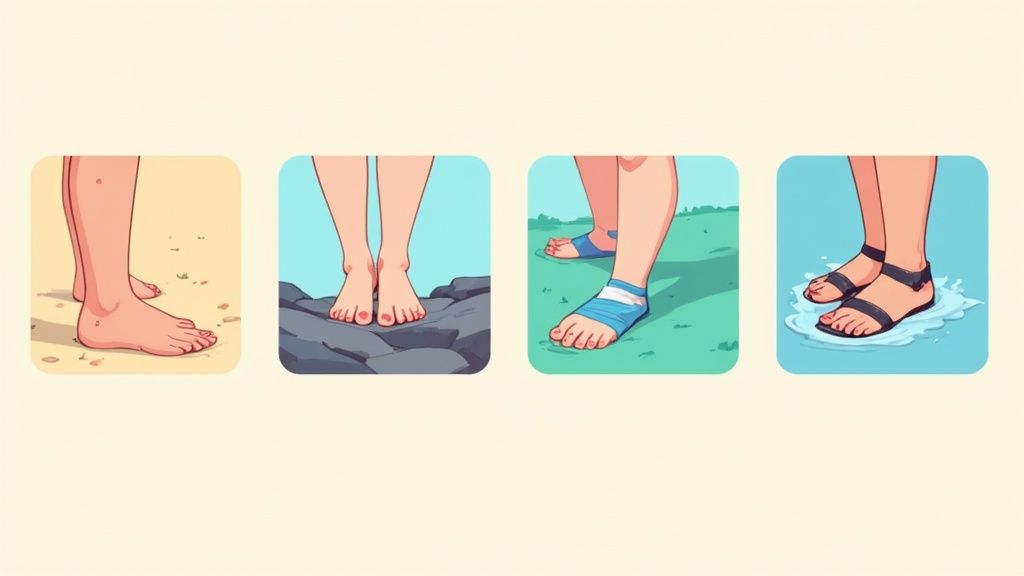
For Sandy Beach Days and Splash Pad Fun
When you’re hitting the beach or the local splash pad, you’re dealing with two main things: sand getting everywhere and super slippery surfaces. The mission is to find a shoe that solves both problems.
For these outings, look for a shoe that’s more like a sock or a slipper.
- Closed-Mesh Design: You want a style that lets water drain right out but keeps that pesky sand from sneaking in. A fine, breathable mesh is perfect for this.
- Maximum Flexibility: For splash pads, a lightweight, super-flexible shoe with amazing grip is the clear winner. It lets them move naturally while keeping them steady on slick concrete. Our guide on flexible shoes for toddlers breaks down why this is so important.
- Easy On and Off: Let’s be real, you’ll probably be taking these on and off a bunch. A simple slip-on style is your best friend here.
For Rocky Creeks and Lake Explorations
If your family loves exploring nature, you'll need a shoe that’s a bit more rugged. Creek beds and lake shores are full of poky rocks and mystery twigs. This is where protection is priority number one.
A reinforced toe cap is a must-have for rocky adventures. It’s like a tiny helmet for their toes, guarding against stubs and scrapes that can quickly end a day of fun.
Look for a water shoe that has more of a sandal or sneaker feel. A thicker, more durable rubber sole will protect the bottom of their feet, while a sturdy toe guard keeps those little piggies safe. Adjustable straps are also a huge plus for getting a secure fit on tricky terrain.
With more families heading outdoors, it’s no surprise that the toddler water shoe market is growing so fast. In fact, forecasts show a strong growth rate of around 6.1% to 6.2% from 2025 to 2033. Parents are clearly seeing the value in specialized, protective gear for their kids. You can find more details in this market research on water shoes for toddlers.
How to Keep Water Shoes Clean and Fresh
You did it! You found the perfect pair of water shoes, and your little one is ready for every puddle, pool, and sprinkler in sight. But after a day of glorious, splashy fun comes the inevitable: the soggy, slightly sandy, and potentially stinky aftermath.
Don't worry, keeping those shoes fresh is way easier than you think. A few quick habits can prevent that dreaded mildew smell and make sure they’re always ready for the next adventure.
The Post-Adventure Rinse Down
The most important step is also the easiest: a quick rinse! As soon as your water warrior is done for the day, give their shoes a good spray with a hose or a swish in the sink. The goal is to wash away the yucky stuff before it can cause trouble.
- Chlorine and Salt: These can break down the shoe's materials over time.
- Sand and Grit: Tiny particles of sand can get trapped and cause uncomfortable rubbing later.
- Muck and Mud: This is the stuff that really leads to stinky situations if left to hang out.
Just a 30-second rinse is all it takes to get ahead of the game. It’s a tiny step that makes a huge difference.
Pro Tip: Make rinsing a part of the "clean up" routine. When you're hosing down the splash toys or rinsing off sandy legs, give the shoes a quick blast too. It’ll become a habit in no time!
Drying Done Right
Now for the secret weapon against smelly shoes: proper air drying. Tossing damp shoes into a dark closet is a one-way ticket to mildew city. Bacteria loves dark, damp places, so your mission is to do the exact opposite.
Always let the shoes air dry completely in a well-ventilated spot. It's best to keep them out of direct, harsh sunlight which can cause some materials to fade or become stiff.
If they have removable insoles, take them out to dry separately—this speeds up the process and ensures everything gets thoroughly dry.
For those extra messy days that require a deep clean, many water shoes are machine washable! Just be sure to check the brand's recommendations first. For a detailed guide, check out our official Pediped care instructions for expert tips.
My Final Buying Checklist
Alright, feeling ready to find that perfect pair? I know we've covered a lot, but I want to make sure you feel totally confident when you're shopping.
Think of this as your quick-glance cheat sheet. Whether you're browsing online or holding a pair in the store, run through this list to make sure you’re picking a winner.
| Must-Have Feature | Check! | Parenting Pro-Tip |
|---|---|---|
| Grippy, Flexible Sole | ☐ | Flip the shoe over. You want to see deep treads and feel flexible rubber that will bend with their foot, not fight it. |
| Quick-Drain Design | ☐ | Look for plenty of mesh, side vents, or actual drainage holes. Soggy shoes are a recipe for blisters and grumpiness. |
| Closed-Toe Protection | ☐ | A sturdy toe bumper is a must-have for preventing stubbed toes on rocks, pool edges, and everything in between. |
| Easy On & Off | ☐ | Can you get it on a wiggly foot in under 30 seconds? Look for a wide opening, a single strap, or stretchy pull-tabs. |
| Lightweight Materials | ☐ | The shoe should feel almost weightless. Heavy, clunky shoes will just slow them down. |
With these key points fresh in your mind, you're more than ready. You'll be able to spot quality, safety, and all-day comfort in seconds. Happy splashing!
Common Questions from Fellow Parents
Still have a few questions? I get it! Here are some of the most common things I hear from other parents.
Should My Toddler Wear Socks with Water Shoes?
That’s an easy one: definitely not! Water shoes are designed to be worn right against bare skin for the best comfort and drainage.
Putting socks inside a water shoe is like adding a tiny sponge. They’ll soak up water, get heavy, and almost guarantee uncomfortable rubbing and blisters. The whole point is to let water in and out, and socks just get in the way.
Parenting Pro-Tip: The number one job of a water shoe is to get wet and dry out fast. Socks totally defeat the purpose. Keep it simple and let their little feet go bare!
How Often Should I Check the Fit?
Toddler feet grow unbelievably fast—I swear you can blink and they've gone up a size! I recommend checking the fit of their water shoes every month or two, especially during summer when they’re wearing them all the time.
A classic sign they're getting tight is seeing little red marks on their feet after you take the shoes off. Once their toes are bumping right up against the front, it's officially time to size up for the next round of adventures!
Can My Toddler Wear Water Shoes as Everyday Shoes?
It’s tempting, especially when they love them, but it’s best to keep water shoes just for water play. They are perfect for splash pads and pools, but they usually don't have the structured support that little feet need for a full day on hard surfaces.
The super-flexible soles are great for navigating wet ground, but they don't offer enough cushion for a long day of running on a playground or sidewalk. Think of them as special gear for water fun, and stick to a sturdier sneaker for daily wear.
Ready to give your little one the best in comfort and protection for every splash? Check out the full collection of pediatrician-approved footwear at Pediped.
Leave a comment