


The secret to the best shoes for healthy feet? They get out of the way! Seriously! The perfect pair should be lightweight, flexible, and have a roomy, wide toe box that lets your kiddo's foot move and grow just like nature planned. For kids, this means finding footwear that protects their feet from the yucky stuff on the ground without squishing them—basically, mimicking the awesome freedom of being barefoot.
Your Super Fun Guide to Happy, Healthy Little Feet
Welcome to the super exciting—and okay, sometimes a little overwhelming—world of tiny shoes! Let’s be real, it’s so easy to get swept up by the adorable designs and fun colors. But behind all the cuteness, choosing the right footwear is one of the most important things you can do for your child’s awesome growth.
Think of this as your simple, stress-free playbook for finding that perfect pair. We’re cutting through the confusing jargon to get straight to what really matters for those busy little feet. Whether they’re taking their first wobbly steps or already sprinting across the playground, the right shoes make all the difference.
Why the Right Shoe is a Really Big Deal
A kid's foot isn't just a mini version of our own; it's a delicate structure of soft cartilage and bones that are still growing and forming. Squeezing those developing feet into shoes that are too stiff, narrow, or unsupportive can actually get in the way of their natural development. Yikes!
That’s why the best shoes for healthy feet almost always share these key features:
- Flexibility: The shoe should bend easily right where your child's foot naturally bends. Let those feet move!
- A Wide Toe Box: Toes need plenty of room to wiggle, spread out, and grip. This is super important for building balance and strength.
- Lightweight Design: Heavy, clunky shoes can throw off a child's natural gait and make walking feel like a chore! Light and zippy is the way to go.
- Breathable Materials: Happy feet are dry feet. Materials like genuine leather or canvas keep things comfy and help prevent sweaty messes.
A shoe's real job is simple: protect the foot from glass and gravel, not try to change how the foot works. The goal is to find footwear that supports natural development, giving those tiny feet the best possible start for a lifetime of adventure.
Ultimately, choosing the right shoes is a huge piece of your child's well-being. By focusing on fit, flexibility, and function, you're setting them up for a future of happy, healthy movement. You can learn even more about what the experts say are the key elements for healthy little feet backed by Harvard experts in our detailed article. Now, let’s get you ready to pick the perfect pair with total confidence!
The Secret Recipe for a Great Kids' Shoe
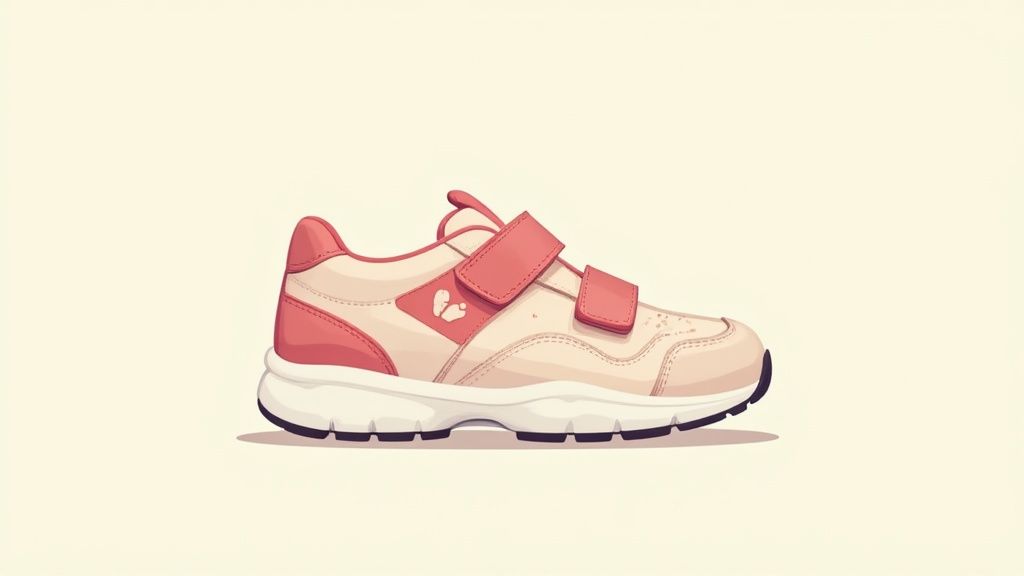
Alright, let's get into the good stuff. When you're staring at a wall of kids' shoes (or scrolling through pages online), how do you tell the difference between a truly great shoe and one that just looks cute?
It all comes down to a few key ingredients. Think of it like a recipe for happy feet—get these elements right, and you’re setting your child up for success with every step.
Bendy, Flexible Soles for the Win!
First up: the sole. A kid's shoe needs to be a trusty sidekick, protecting their feet from hot pavement or a stray rock while still letting them feel the ground. This feedback is super important for developing balance and coordination.
The perfect sole should be flexible enough to bend and twist with their natural foot movements.
If you pick up a shoe and can’t easily bend it in half where their toes would be, it’s too stiff. A rigid sole is like strapping a tiny board to their foot—it restricts natural movement and can get in the way of healthy development.
Materials That Let Little Feet Breathe
We've all had that feeling of peeling off stuffy shoes on a hot day. Kids' feet get just as sweaty, and that trapped moisture is a recipe for blisters and stinky shoes. No thanks!
That’s why the "upper"—the part of the shoe that covers their foot—needs to be made from soft, breathable materials.
We recommend looking for:
- Genuine Leather: It’s naturally breathable, soft, and durable enough for the playground.
- Canvas: A great lightweight option that lets air flow freely, perfect for warm-weather fun.
- Performance Mesh: You'll see this in athletic shoes for good reason; it's designed for maximum ventilation.
Think of these materials as a built-in air conditioning system that keeps their feet cool, dry, and comfy all day long.
The Non-Negotiable: A Roomy Toe Box
This one is a dealbreaker. The single most important feature of any shoe for a growing foot is a wide, roomy toe box. A child's toes need space to splay out, wiggle, and grip the ground. This is how they build strength, stability, and balance.
A narrow, tapered toe box squishes those little toes together, forcing the foot into an unnatural shape. This can actually get in the way of muscle development and even throw off their gait. The best shoes will always respect the natural, fan-like shape of a child's foot.
Here's the bottom line: the inside of the shoe should let a foot be a foot! Give those toes the freedom they need to do their job. You can learn more about why this is so critical in our post on flexible shoes for toddlers.
Closures and Support
Finally, let’s talk about how the shoe stays on and gives their foot a gentle, supportive hug. A firm heel counter, the piece that cups the back of the heel, is awesome for a bit of stability. It prevents their foot from sliding around without being restrictive.
The closure system is where you can really customize the fit for your child's age and independence level!
- Velcro Straps: A lifesaver for toddlers and preschoolers. They’re easy for little hands to manage and offer fantastic adjustability.
- Laces: The go-to for older kids who need a super secure, dialed-in fit for sports and running around.
- Slip-Ons: Great for convenience, but make sure they have a snug, secure fit so they don’t fly off at the playground.
The right closure makes getting out the door just a little bit easier while ensuring the shoe fits just right.
Choosing the Right Shoes for Every Stage of Fun
Just when you think you've mastered the midnight feeding schedule, your little one hits you with the next challenge: they start growing! And as they grow, their footwear needs change faster than you can say, "growth spurt." It’s a bit of a whirlwind, but we’ve got your back.
Think of shoe shopping as a fun little adventure that evolves right alongside your child. The super-flexible booties that are perfect for a wobbly new walker simply won't be the right sidekick for a playground-conquering preschooler. Each stage brings new milestones and new demands!
From Wiggles to Wobbles: Babies and Early Walkers
For the littlest feet in your family, the best "shoe" is often no shoe at all! That's right—barefoot time is king for babies and those just starting to pull up and cruise around the furniture. Feeling the floor, the grass, or the carpet helps them build the tiny muscles in their feet and ankles, develop their arches, and truly master their balance.
When you do need to cover their little feet for warmth or protection, think soft, minimal, and barely there. You’re looking for something that acts more like a cozy sock with a purpose.
- Feather-Light and Flexible: The shoe should be so soft you can easily bend and twist it in one hand.
- Soft Soles: Look for suede or thin, pliable rubber that allows their feet to move naturally and feel the ground beneath them.
- Secure but Gentle Fit: A gentle elastic ankle or a soft hook-and-loop strap keeps the shoe on without ever restricting movement.
At this stage, the goal is simple: protect their feet without getting in the way. You want to give their feet the freedom to develop just as nature intended. For a deeper dive, we have a whole guide on finding the best shoes for a baby learning to walk.
Conquering the World: Toddlers on the Move
Once your little one graduates from wobbly first steps to a full-on toddler trot, their shoe game needs an upgrade. They’re walking, running (in their own adorable way), and exploring with a newfound confidence. Now, their shoes need to offer a bit more protection while still prioritizing that all-important flexibility.
The focus shifts to finding a shoe that can keep up with their boundless energy. The best shoes for healthy feet at this age are still lightweight and have non-slip soles, but most importantly, they feature that roomy toe box for wiggling toes.
Your toddler is a little explorer mapping out their universe one step at a time. Their shoes should be trusty companions that support this adventure, not heavy anchors holding them back.
Think of it this way: their shoe should be a barely-there shield, protecting them from rough surfaces but allowing for maximum natural movement. A lightweight, flexible shoe with good grip gives them the stability they need to tackle new terrain, from the living room rug to the local park.
The Playground Pro: Preschoolers and Big Kids
Hello, non-stop action! The preschool and early school years are a blur of running, jumping, climbing, and constant motion. These little adventurers are tough on their shoes, so durability now joins flexibility at the top of your checklist.
At this stage, their feet are still developing, but their activities have become much more demanding. You'll want a shoe that can withstand the rigors of the playground while still promoting healthy foot function.
- Reinforced Durability: Look for features like reinforced toe caps (a total game-changer for kids who drag their feet!) and high-quality stitching that can handle daily wear and tear.
- Support for Activity: While still flexible, the shoe might have a slightly sturdier sole to cushion their feet during high-impact play like jumping and sprinting.
- Activity-Specific Choices: This is where you might start thinking about different shoes for different occasions. A supportive sneaker is perfect for sports and P.E. class, while a comfy, easy-on shoe works great for everyday school wear.
Even as they get older and more active, the core principles stay the same. The shoe must bend where their foot bends, the toe box must be wide, and the materials should be breathable. No matter the age, you're always looking for footwear that lets their feet do their natural, amazing thing.
How to Get the Perfect Fit Every Single Time
Alright, let's tackle the trickiest part of shoe shopping: getting the fit just right. It often feels like a total guessing game, doesn't it? You hold up a tiny shoe, do your best to eyeball it, and just hope for the best. But a shoe that doesn't fit properly can lead to blisters, crankiness, and unhappy little feet.
The good news is that finding that perfect, comfortable fit isn’t about luck. With a couple of simple tricks, you can confidently choose the right size every single time. It's time to take the guesswork out of shoe shopping for good.
The Golden Rules of Sizing
First thing's first: when you measure matters. Try to check your child's foot size in the afternoon or evening. Just like adults, kids' feet swell a bit as the day goes on, especially after a lot of running and playing. Measuring later in the day ensures the shoes will be comfortable from sunup to sundown.
Here’s another crucial tip: always measure both feet! It’s completely normal for one foot to be a little bigger than the other. When you find that's the case, always choose the size that fits the larger foot. This prevents any painful squishing or pinching.
To make things super easy, you can use our handy printable sizing guide from pediped.com to get a precise measurement before you even begin your search.
Master the Famous Thumb Test
This is the classic, time-tested method that parents and shoe-fitters have relied on for generations. Why? Because it works.
After your child has a shoe on, have them stand up nice and straight. Then, press your thumb down at the very front of the shoe, right above their longest toe (which isn't always the big toe!).
You’re looking for about a thumb's width of space—that's roughly half an inch—between the end of their toes and the tip of the shoe. This little bit of wiggle room is essential. It gives their feet the space they need to move naturally and grow without feeling cramped.
Next, check the width by feeling along the sides of the shoe. It should feel snug and secure, but never tight. If you notice the sides of the shoe bulging, that’s a clear sign it’s too narrow.
As your child grows, their footwear needs will change dramatically. This is a journey from soft, flexible booties for babies to more structured, supportive sneakers for active big kids.
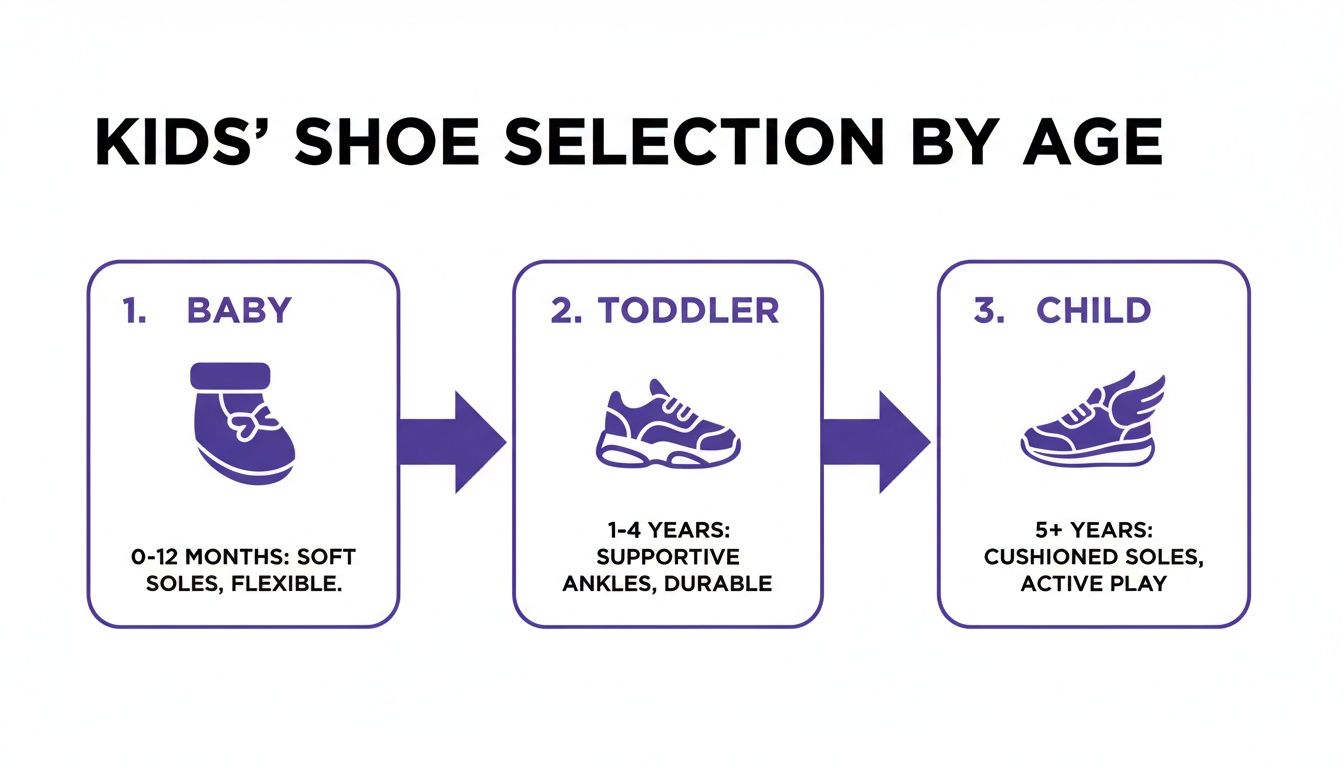
This guide shows that while shoe styles evolve, one thing remains constant: a proper fit is the cornerstone of healthy foot development at every single stage.
Keeping Up with Growth Spurts
Kids' feet grow incredibly fast, so it’s important to check their shoe size on a regular basis. Here’s a quick cheat sheet to help you stay ahead of those growth spurts:
- Under 3 years old: Check the fit every 2-3 months.
- Ages 3 to 6: Check every 4-5 months.
- Ages 6 and up: Check every 6 months.
Getting the fit right is about more than just comfort—it's about supporting their health and activity.
Finding the Best Shoes for Outdoor Adventures
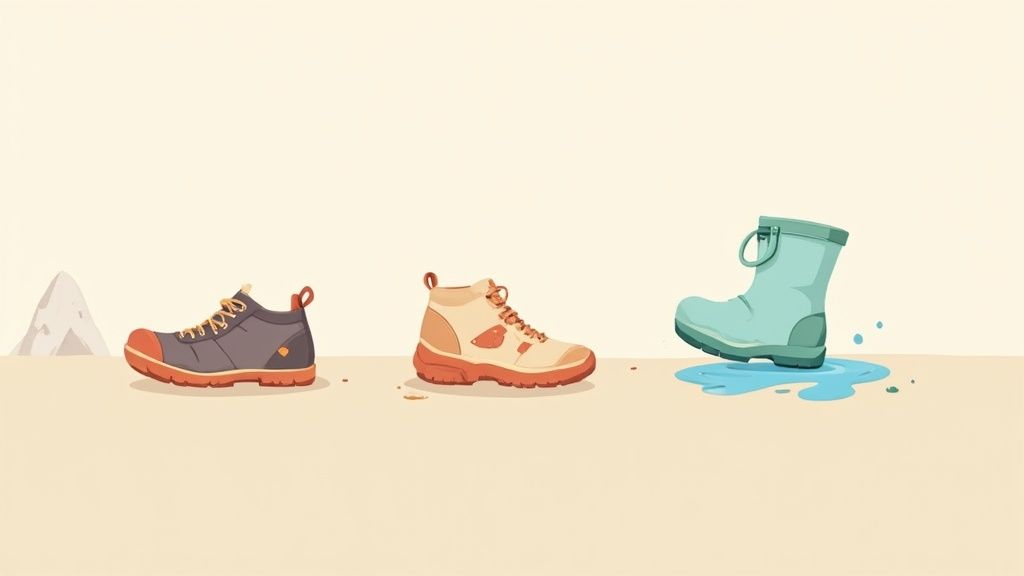
Ready for an adventure? Whether you’re planning a family hike, a beach day, or just some good old-fashioned puddle jumping, the right shoes are the secret ingredient to a great day. Let's be honest, nothing ends the fun faster than sore, uncomfortable feet!
For families who love to get out there, specialty footwear isn't just a nice-to-have; it's a must. Matching the shoe to the adventure keeps your little explorer’s feet protected, supported, and ready for whatever Mother Nature has in store.
Hitting the Trails and Tackling Terrains
When you’re heading out on a nature walk or a more ambitious hike, those everyday sneakers might not be up to the task. Uneven trails, sneaky roots, and loose gravel demand a shoe with a bit more grit.
This is where a solid pair of hiking shoes shines. Look for styles with excellent traction—we’re talking deep, grippy grooves on the sole—to keep them steady and prevent slips. A little extra ankle support is also a game-changer, adding stability on wobbly ground. These features are exactly what makes them the best shoes for healthy feet when you're off the beaten path.
Think of it like this: You wouldn't take a scooter on a mountain bike trail. The right shoes are simply the right tool for the job, keeping your child’s adventure safe and focused on the fun, not on their feet.
Splish, Splash, and Sunny Days
From sandy beaches to the neighborhood pool, water adventures call for their own kind of footwear. Hot sand, sharp shells, and slippery pool decks can be a real buzzkill for tiny feet.
Water shoes to the rescue! Here’s what makes them perfect for watery fun:
- Quick-Drying Materials: They’re made to get soaked and dry out fast, so no one’s stuck with that soggy, squishy feeling.
- Protective Soles: A sturdy rubber sole is like a shield, protecting their feet from hot surfaces and hidden sharp objects.
- Secure Fit: Look for styles with straps or a snug, sock-like fit to make sure they stay on, even when the waves are splashing.
And what about those wonderfully muddy, rainy days? A great pair of rain boots is essential. Just make sure they’re lightweight enough for easy stomping and have a good grip so that every puddle jump ends upright! For all the other active days, check out our collection of durable and supportive running shoes designed for every kind of play.
Sizing and Fit are Everything
Getting the right fit isn't just about comfort—it's absolutely critical for your child's developing feet. A shoe that's too tight can restrict growth and cause problems, while one that's too loose can lead to trips, blisters, and an unnatural gait.
Think of it this way: their feet are growing at an incredible pace. It’s a marathon of growth, and we need to keep up.
How to Measure for the Perfect Fit
You don't need fancy equipment to get a great measurement at home. Just a piece of paper, a pencil, and a ruler will do the trick.
- Step 1: Trace Their Foot. Have your child stand on a piece of paper (make sure their weight is evenly distributed). Carefully trace the outline of their foot. It’s best to do this at the end of the day when their feet are slightly swollen.
- Step 2: Measure Length and Width. Use a ruler to measure the distance from the heel to the tip of the longest toe. Then, measure the widest part of the foot.
- Step 3: Add Wiggle Room. Kids need about ½ inch (or a thumb’s width) of space between their longest toe and the end of the shoe. This gives them room to move and grow.
- Step 4: Use Our Sizing Tool. Once you have your measurements, plug them into our pediped® Sizing Tool to find their perfect size.
Don't forget to measure both feet! It's totally normal for one foot to be slightly larger than the other. Always buy shoes to fit the bigger foot.
Signs of a Poor Fit
Kids aren’t always great at telling you their shoes are uncomfortable. You have to become a bit of a detective. According to the experts at Facaros Foot & Ankle, here’s what to look for:
- Red marks or indentations on their feet after taking the shoes off.
- Blisters or calluses forming.
- Your child frequently taking their shoes off.
- Reluctance to walk or play, or complaining that their feet hurt.
- Toes that are curled or cramped inside the shoe.
If you spot any of these signs, it's time for a new pair. Checking the fit every couple of months is a great habit to get into.
Leave a comment