


Hey there, superstar parents! Let's talk about those ten tiny toes you can't get enough of. Sometimes, those adorable little feet need a bit of extra love and support as they grow, and that’s where infant orthopedic shoes come in. Think of them less as medical devices and more like supportive little buddies for your baby’s biggest adventures.
Giving Your Baby The Best Start
Watching your little one get ready for those first wobbly steps is pure magic, isn't it? As a parent, you want to give them the best possible foundation to explore the big, wide world. This guide is your friendly map to understanding what makes these special shoes a game-changer for healthy development.
We're skipping the complicated jargon and focusing on practical, feel-good advice. Our goal is to empower you with the confidence to choose the perfect pair, making sure those happy feet have everything they need to start their journey on the right foot—literally!
Why Are These Shoes Getting So Much Attention?
You're not alone in thinking about your child's foot health. In fact, more parents and doctors are recognizing just how important early support is.
The global market for children's orthopedic shoes was valued at around USD 1.2 billion in 2023 and is projected to more than double by 2032. This isn't just a trend; it's a movement driven by the understanding that early support for conditions like flatfoot or clubfoot can prevent bigger issues down the road.
This growing focus means we're seeing more research, better technology, and cuter designs than ever. It's a fantastic time to be a parent looking for supportive solutions.
Building A Foundation For A Lifetime Of Happy Wandering
Think of your baby’s feet like the foundation of a new house. A strong, well-aligned base ensures everything built on top is stable and secure for years to come. Infant orthopedic shoes are engineered to provide exactly that kind of stability during the most critical stages of growth.
"Our body alignment is built from the ground up. We need a stable, well-aligned base to support a growing skeleton."
This early support helps encourage a natural walking pattern, strengthens tiny muscles, and guides the foot’s development from day one. It’s all about creating a healthy blueprint for a lifetime of movement.
Of course, when you're a new parent, shoes are just one piece of the puzzle! You're also building up a whole list of newborn clothing essentials to get ready. It's a lot, but every little bit of preparation helps.
The journey with supportive shoes is all about gentle guidance, not rigid correction. For many little ones, they're just a temporary tool that makes a lasting difference. If you're starting to look around, browsing collections of shoes specifically designed for babies 0-24 months is a great place to begin your research: https://www.pediped.com/collections/babies-0-24-months.
They help set the stage for countless happy steps, from that first wobbly stand to confident running across the playground.
What Makes These Special Shoes Different
So, what's the big difference between infant orthopedic shoes and those adorable, squishy little booties you see everywhere? It all comes down to purposeful design.
Think of a regular baby shoe as a cozy sock—it's soft, cute, and mostly there for looks. An orthopedic shoe, on the other hand, is engineered to give your little one’s foot a gentle, structured hug. Its entire purpose is to support healthy, happy foot development.
These aren't just scaled-down adult shoes. They have specific features that work together to guide each wobbly step, giving your baby a stable foundation as they learn to stand, cruise, and eventually tear around the house.
The Superpowers of Supportive Shoes
The best way to think about these shoes is that they have a few secret ingredients that really set them apart. Each part plays a specific role in giving your child’s feet the backup they need during these crucial early years. It’s like a tiny support team for their toes, arches, and ankles!
Let's break down the three superstars of the orthopedic shoe world.
-
The Ankle's Bodyguard (Firm Heel Counter): Feel the back of a standard baby shoe—it’s usually pretty soft. An orthopedic shoe has a firm heel counter, which is basically a sturdy, built-in cup at the back. It acts like a little bodyguard for the ankle, keeping it from rolling too far inward or outward and holding the foot in a stable, healthy position.
-
The Gentle Guide (Supportive Arch): While it's true that baby feet are naturally flat at first, a well-designed shoe offers gentle arch support. This isn't about forcing an arch, but rather guiding the foot's natural shape as it grows. It’s like a subtle roadmap that helps the foot form its own strong, supportive structure over time.
-
The Smart Foundation (Sturdy Yet Flexible Sole): The sole is where the magic really happens. It needs to be tough enough to protect those little feet from a bumpy sidewalk but flexible enough to bend exactly where the foot naturally does. That flexibility is absolutely key for strengthening foot muscles and letting your child feel the ground, which is a huge part of learning to balance.
This infographic really breaks down the core features of an infant orthopedic shoe, showing how each part works to support your little one's feet.
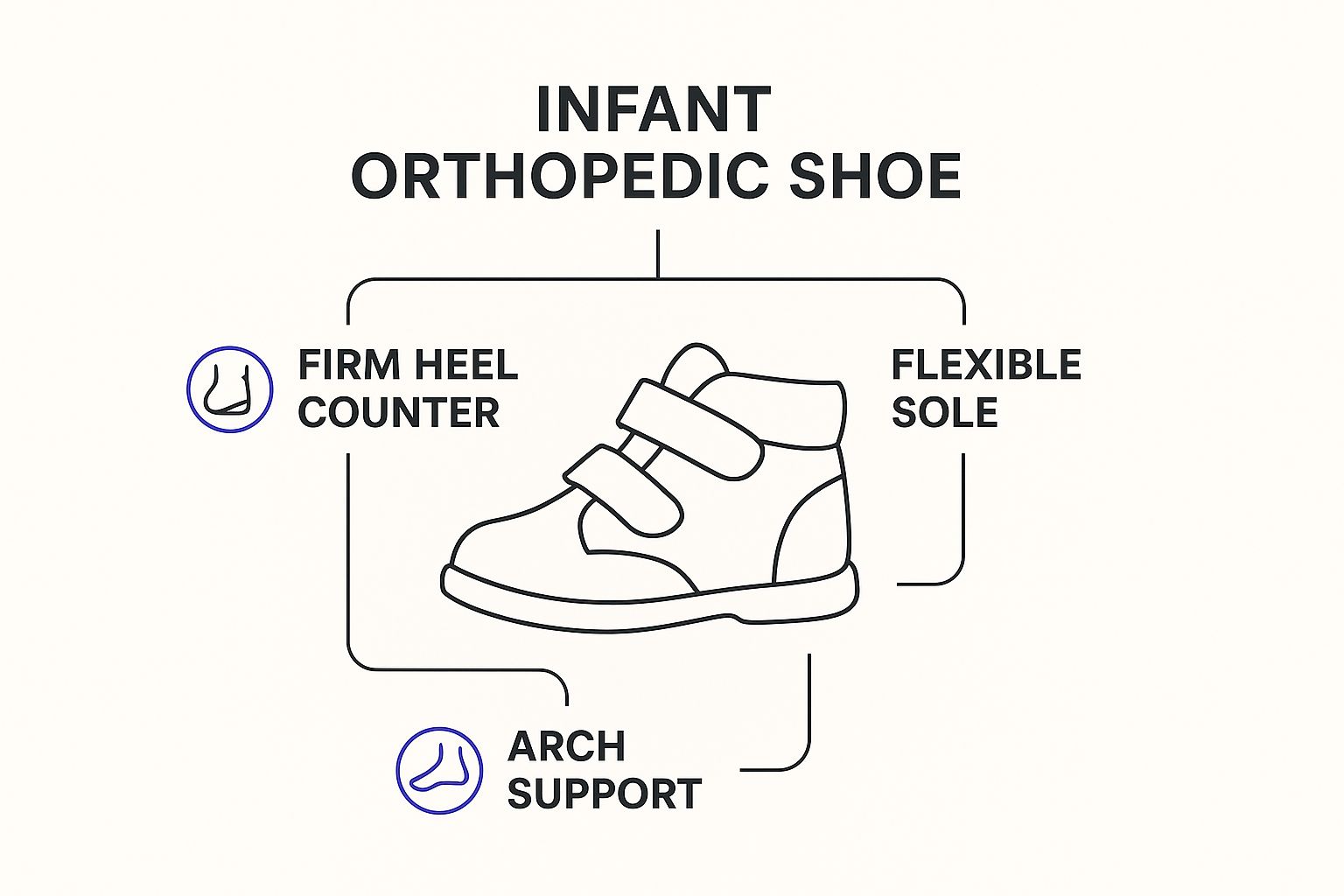
As you can see, every element is designed to work in harmony, creating a secure and encouraging environment for those growing feet.
More Than Just a Shoe
Beyond these main features, other small details add to their effectiveness. A wide toe box is non-negotiable; it gives those little toes plenty of room to wiggle and splay out, which is vital for both balance and muscle development. You'll also notice secure closure systems, like velcro straps or laces, which ensure a snug fit and stop tiny feet from sliding around inside the shoe.
A pediatric physical therapist will tell you that a shoe should be flexible enough to bend in half, bringing the toe and heel up together. This shows it can move with the foot, not against it.
This thoughtful combination of features is what turns a simple piece of footwear into a powerful developmental tool. It’s all about creating an environment where a child's foot can grow correctly and confidently. These shoes aren’t meant to be restrictive; they're designed to be freeing, allowing your child to explore their world safely and comfortably while nature does its amazing work.
Spotting the Signs: Does Your Little One Need Extra Foot Support?
So, how can you tell if your child’s tiny feet might need a little extra backup? It's much simpler than it sounds. You're already an expert at noticing every little giggle and wiggle, and this is just another part of that incredible journey.
Think of it less like looking for problems and more like learning to read the clues your child’s body is giving you. It's all about feeling empowered to have a confident, productive chat with your pediatrician if you see something that makes you go, "Hmm."
Your doctor is your ultimate partner, but being an observant parent gives everyone a great head start. Let's walk through some common signals that might suggest a pair of supportive infant orthopedic shoes could be a fantastic idea.
Decoding Your Toddler's Gait
As your baby starts moving and grooving, their walking patterns will tell you a lot. Some quirks are totally normal parts of development, while others might just be a sign that a bit more structure could help them feel steadier on their feet.
Here are a few things to keep an eye on—no stress, just observation:
-
Inward Ankle Roll (Overpronation): Ever notice your little one's ankles seem to collapse or roll inward when they stand? This is incredibly common and often part of what's called developmental flat feet. While most kids grow out of it, a supportive shoe can provide the stability to help guide their feet into a healthier alignment during these crucial early months.
-
The Tiptoe Dancer (Consistent Toe-Walking): A little bit of tiptoeing is a classic, and often perfectly normal, part of learning to walk. But if you notice your child is spending most of their time up on their toes long after they've mastered walking, it's worth bringing up with your doctor. Sometimes, a shoe with a firm, flat sole can gently encourage them to use their entire foot.
Remember, seeing these signs isn't a red flag—it’s just a prompt to start a conversation and explore your options.
Your Pediatrician Is Your Partner
Your pediatrician is your number one resource for all things related to your baby's development. If you notice any of these little quirks in your child's walk, mention them at your next visit. Taking a quick video on your phone can be a huge help!
Your doctor can tell you if what you're seeing is just a typical phase or something that could benefit from early support. And when it comes to foot health, early action can make all the difference. In fact, orthopedic shoes for infants are crucial in early intervention for foot deformities, aiming to foster healthy development and head off long-term issues. The market is also seeing exciting growth thanks to new materials and custom-fit technology, which you can learn more about over at Research Nester.
Being proactive about your child's foot health is one of the best gifts you can give them. It’s about providing a stable base so they can build a lifetime of confident, happy movement from the ground up.
Think of yourself as the CEO of your child’s wellness team. You bring the day-to-day observations, and your doctor provides the expert guidance. Together, you can decide if infant orthopedic shoes are the right next step for your little explorer.
The Ultimate Guide to Finding the Perfect Pair
Alright, let's get this done. Shopping for your little one's first real shoes is a big deal, and when we're talking about orthopedic shoes, you want to get it just right.
Think of yourself as a detective on a mission for the perfect fit. The prize? Your baby's happy, healthy, and well-supported feet. It’s actually a lot simpler than it sounds once you know what to look for.
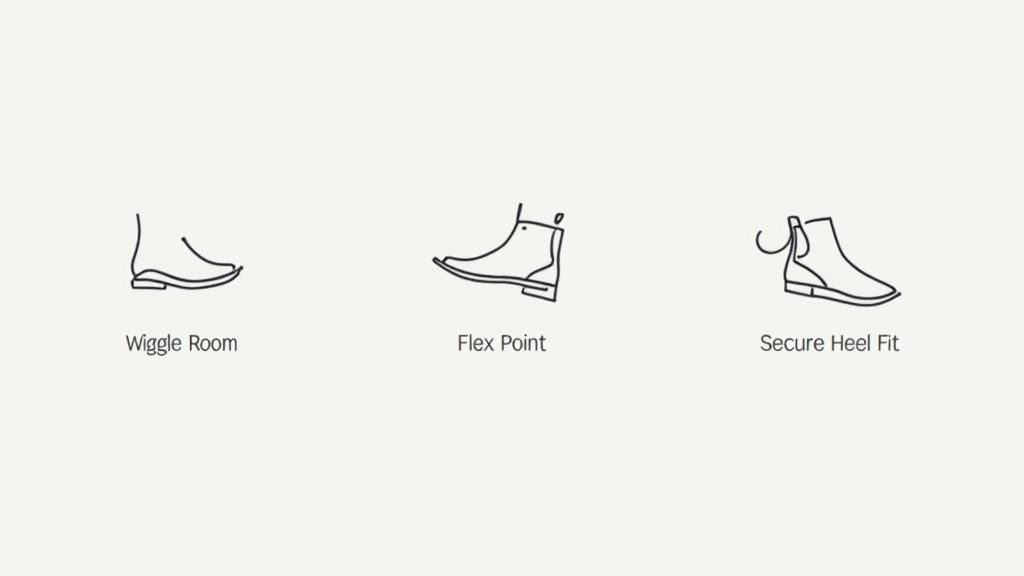
Ready to become a shoe-fitting pro? Let’s walk through a few simple checks that will help you pick a pair that’s both effective and comfy.
The Foolproof Fit Checklist
When you've got a potential pair in your hands, it's time to put them to the test. These quick checks will tell you everything you need to know.
-
The Wiggle Room Test: This is the golden rule of shoe fitting for a reason. Once the shoe is on (make sure your little one is standing up to get the true size), press your thumb down between the tip of their longest toe and the end of the shoe. You’re looking for about a thumb's width of space—that's the sweet spot for growth and comfort.
-
The No-Slip Heel Check: Have your baby stand and gently hold the back of the shoe. Their heel should be snug and shouldn't pop out when they take a step or lift their foot. If it stays put, you know that firm heel counter is doing its job to support their ankle.
-
The Flex Point Check: A good shoe needs to move with your baby's foot, not fight against it. Hold the shoe and try to bend it. It should flex easily right where the ball of the foot would be, not stiffly in the middle of the arch. This flexibility is what helps build those strong little foot muscles.
Getting the size spot-on is the most critical part, and let's be honest, it can feel a bit tricky with wriggly feet. If you need a little backup, a reliable sizing chart is your best friend. This Pediped sizing guide is a great place to start.
Why Materials Are a Bigger Deal Than You Think
Beyond a great fit, the stuff the shoe is made of plays a massive role in your baby’s comfort. Just imagine wearing heavy, stuffy boots on a warm day—no thanks! It’s the same for our little ones.
A lightweight design is absolutely essential. Heavy, clunky shoes can turn learning to walk into a real chore. You want something so light they barely notice it’s there, encouraging those natural, wobbly first steps.
Breathability is another non-negotiable. Baby feet can get surprisingly sweaty! Look for shoes made from breathable materials like genuine leather or a quality mesh fabric. This helps keep their feet dry and comfortable, which is key to preventing blisters and irritation.
The best shoe is one your child forgets they’re even wearing. It should feel like a natural extension of their foot, giving them support without getting in the way of all that important business of playing and exploring.
Picking a well-made shoe is an investment in your child's development, and it’s a choice more and more parents are making. The global orthopedic shoes market was valued at around USD 4.36 billion in 2025 and is projected to climb to nearly USD 10.7 billion by 2035. That's a huge leap, driven by parents who prioritize foot health from day one. You can read more about this growing trend over at Future Market Insights.
To make shopping even easier, here's a quick reference table of what to look for.
Key Features to Look For When Shopping
This little checklist will help you cut through the noise and zero in on the features that truly matter for your baby's developing feet.
| Feature | Why It's Important | Pro Tip for Checking |
|---|---|---|
| Firm Heel Counter | Provides critical stability for the ankle and heel, preventing pronation (inward rolling). | Squeeze the back of the shoe. It should feel sturdy and not collapse easily under pressure. |
| Wide Toe Box | Allows toes to splay naturally, which is crucial for balance and proper foot development. | Look at the shoe from the top. It should be rounded and spacious, not narrow or pointed. |
| Flexible Sole | Lets the foot bend naturally, strengthening muscles and promoting a proper gait. | Try to bend the shoe with your hands. It should flex at the ball of the foot, not in the middle. |
| Breathable Materials | Prevents moisture buildup, keeping feet dry, comfortable, and free from irritation. | Look for natural materials like leather or high-tech mesh. Check the product description. |
| Arch Support | Helps guide the development of a healthy arch and ensures proper foot alignment. | Feel inside the shoe. You should notice a gentle, supportive curve where the arch will be. |
By keeping these key points in mind, you can feel confident that you’re not just buying a tiny pair of shoes, but making a great choice for your child’s long-term foot health.
Introducing Your Child to Their New Shoes
So you did it! You’ve found the perfect pair of infant orthopedic shoes for your little one. High five! Now for the next step: making these new shoes feel like a normal, happy part of their world.
Getting your child comfortable with their new kicks is all about positive vibes. The idea is to make shoe time feel like playtime, not some weird new chore. With a bit of patience and a dash of fun, they’ll be cruising around in their supportive new footwear before you know it.
Making a Fun First Impression
First impressions matter, even for babies. Instead of just popping the shoes on and calling it a day, turn the moment into a little celebration. Let them touch and explore the shoes first. Make happy sounds and use a playful tone—your energy is totally contagious!
The key here is to start slow and steady. Think of it as a mini-adventure, not a race to the finish line.
- Start with Short Bursts: For the first few days, just aim for 15-20 minutes of shoe time while you're indoors. Have them wear the shoes during a favorite activity, like playing with blocks or having a snack in their high chair.
- Connect Shoes with Fun: It's all about association. If they only wear their shoes during playtime, their brain will start linking "shoes" with "fun." Try putting them on right before you head to the park or for a stroller walk.
- Sing a Silly Shoe Song: Make up a goofy little song that you only sing when it's time for the orthopedic shoes to go on. A simple tune can work wonders, turning the process into a game and distracting them from any "what is this new thing?" hesitation.
How to Be a Comfort Detective
Once the shoes are on, it’s time to put on your detective hat. Your little one can't exactly tell you if something is pinching or rubbing, so your eyes are the best tool you have. Checking for comfort is super simple and only takes a few seconds.
After each wear, especially at the beginning, take the shoes off and give those tiny feet a quick look-over. You’re scanning for any little red marks or indentations, particularly around the heel, ankle, and the top of the foot. A little bit of pinkness that fades in a few minutes is totally normal, but bright red spots that stick around are a clue that an adjustment might be needed.
If you keep seeing red marks in the same spot, it’s a good idea to double-check the fit or have a quick chat with your pediatrician or the shoe specialist. A tiny tweak can make a huge difference in their comfort.
Keeping Those Super Shoes in Tip-Top Shape
Taking care of their supportive shoes is really easy and helps them last longer—all while keeping your baby’s feet healthy and happy. A little bit of regular upkeep goes a long way.
Simple Cleaning and Care Tips
- Wipe Down Daily: Grab a damp cloth and wipe away any dirt or spills from the day's adventures. For leather shoes, a quick wipe keeps them looking fresh.
- Air Them Out: After they're done playing, let the shoes air out completely. If the insoles are removable, take them out to help everything dry thoroughly and keep odors away.
- Spot Clean Stains: For tougher spots, a gentle soap and water solution on a cloth usually does the trick. Try to avoid harsh chemicals or tossing them in the washing machine, as this can damage the special supportive structures inside.
By making the introduction fun and keeping the shoes clean, you’re doing more than just putting on footwear—you’re setting your child up for a happy, comfortable, and confident start to their walking journey.
Common Questions from Parents
We get it. You've got questions buzzing around, and that's a good thing! Being curious is part of what makes you a great parent. So, let's sit down and talk through some of the most common things we hear about infant orthopedic shoes to get you some clear, simple answers.
Think of this as a friendly chat to clear up any worries. You've got this, and we’re here to help.
Will My Baby Wear These Forever?
This is the big one, and the answer is almost always a sigh of relief: almost certainly not! For the vast majority of kids, these shoes are a temporary sidekick, not a permanent fixture.
Think of them as training wheels for their feet. They're just there to offer a bit of extra stability and guidance while your little one’s muscles, bones, and walking patterns are developing at warp speed. It’s all about giving them the right kind of support when they need it most.
As your child gets older and their feet get stronger, that need for extra support usually just fades away. Your pediatrician is your best guide here—they'll keep an eye on your child's progress and let you know when their feet have "graduated" and are ready to rock standard shoes all the time.
Where Should I Buy The First Pair?
In a world where you can buy practically anything with a click, it’s so tempting to just grab shoes online. But for that very first pair of orthopedic shoes, we're big believers in doing it the old-school way: get an in-person, professional fitting.
Why? Because a perfect fit is everything. A trained specialist at a specialty shoe store does more than just measure length. They’ll watch how your baby stands and moves, making sure the shoe supports their foot in all the right places. The right fit is what makes the shoe work and, just as importantly, keeps your little one comfortable.
After you've had that first expert fitting and you know the exact brand, size, and style that works, then ordering future pairs online becomes a great, convenient option.
Think of it like this: that first professional fitting is the blueprint. It gives you the confidence you're building their happy walking foundation on solid ground.
Do Orthopedic Shoes Still Look Clunky?
Let's bust this myth right now: the days of clunky, corrective-looking shoes are long gone! Today's designers know you want your little one to look as cute as they feel. Style and support absolutely go hand-in-hand now.
You can find infant orthopedic shoes in tons of adorable, modern designs that look just like popular sneakers, sweet sandals, or cool little boots. Honestly, no one will even guess they're "special" shoes—they'll just see your kiddo rocking a super cute pair of kicks.
They're made from lightweight, flexible materials and come in every color you can imagine. It’s the best of both worlds: you get peace of mind, and your child gets fun, fashionable shoes ready for any adventure.
How Do I Know When It Is Time For A New Size?
Babies grow in the blink of an eye, and their feet are no exception! It can feel like you just bought a new pair, and suddenly they’re snug. Staying on top of their shoe size is crucial for keeping their feet happy.
We suggest checking the fit of their shoes at least once a month. The classic "thumb test" is a quick and easy way to do it.
Monthly Fit Check Steps
- Have them stand up: Make sure your little one is standing with their full weight on their feet, since feet spread out a bit when they bear weight.
- Feel for the big toe: Press gently on the top of the shoe to find where their longest toe ends.
- Check the space: You should feel about a thumb's width of room between their toe and the end of the shoe.
If there's less space than that, it's time for a new pair! Checking regularly ensures their toes are never cramped and always have the wiggle room they need to grow. For more detailed questions, a comprehensive FAQ page for parents can be a great resource for a wide range of topics.
Can I Use Hand-Me-Down Orthopedic Shoes?
We love a good hand-me-down—it’s smart for the budget and the planet! But when it comes to orthopedic shoes, it's almost always best to start fresh with a new pair.
Here’s why: a shoe's supportive insole and structure gradually mold to the specific foot shape and walking style of the child wearing it. A shoe that's already "broken in" by one child just won't provide the unique, targeted support another child needs. It could even encourage an improper walking pattern.
It's like trying to use someone else's custom-molded pillow—it just wouldn't be as comfortable or supportive. Investing in a new pair makes sure the shoe is working specifically for your child's feet from day one. It’s one of those areas where a fresh start really matters.
At Pediped, we believe that every step matters. Our pediatrician-approved shoes are designed with love and science to give your child the comfort and support they need to explore the world with confidence. From their first wobbly stand to their first sprint across the playground, we're here to support their journey. Discover the perfect pair for your little one at https://www.pediped.com.
Leave a comment