


Woo-hoo! Get ready for the wobbly, wonderful, and totally heartwarming whirlwind of your baby's first steps! First walker shoes are a special kind of footwear designed to give your little adventurer the perfect mix of flexibility and protection as they learn to walk. They provide just enough support to help your tiny explorer navigate their brand-new upright world with a giant dose of confidence.
Welcome to the World of First Steps
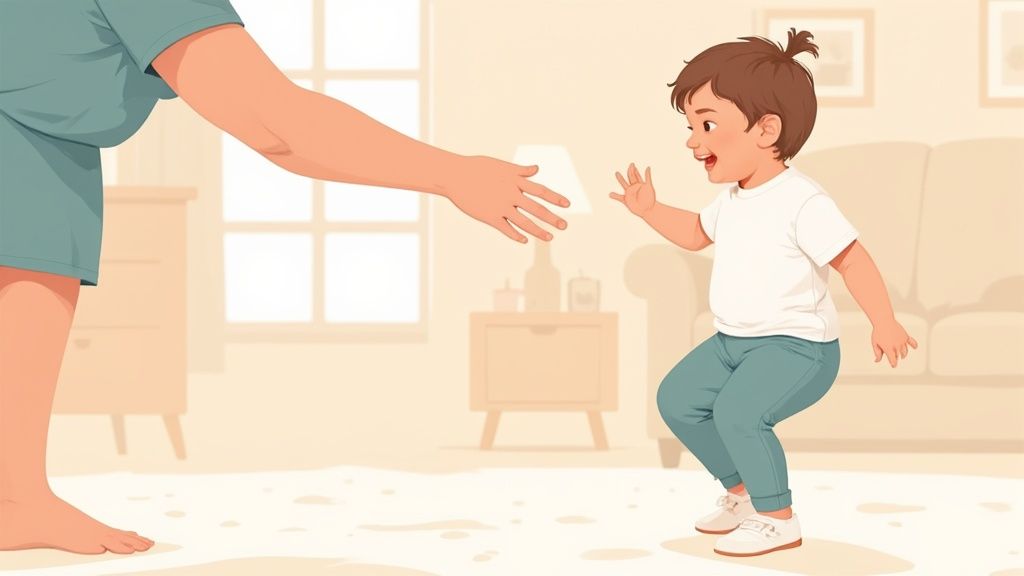
It’s happening! One minute they’re crawling up a storm, and the next, they’re pulling themselves up on the coffee table with a look of pure determination. Those first wobbly, uncertain steps are one of the most magical milestones you’ll ever witness. It’s a hilarious and heartwarming mix of pride and chaos as they figure out this whole walking thing.
This new phase isn't about perfection. It’s all about discovery, the occasional tumble, and those triumphant little stomps. Your job is simple: be their biggest cheerleader, offer a steadying hand, and enjoy the show. This is pure joy, not some stressful test you need to ace.
Gearing Up for the Big Adventure
As your baby goes from a furniture-cruising champ to an independent explorer, you’ll probably start thinking about shoes. While plenty of barefoot time indoors is fantastic for strengthening those little foot muscles and honing their balance, their adventures will soon lead them outdoors to conquer new terrain. That’s where the right pair of first walker shoes comes in.
Think of these tiny shoes as the perfect sidekick for their grand explorations. They aren't meant to "fix" how they walk, but to support their natural development. The real goal is to find a pair that protects their precious feet without getting in the way.
A great first shoe helps them by:
- Protecting their soles from ouchies like sharp rocks or hot pavement.
- Providing just enough grip to help prevent unnecessary slips and slides.
- Allowing their feet to bend, flex, and feel the ground beneath them.
Choosing the right first walker shoes isn't about rushing the process. It's about empowering their newfound independence and helping them explore their world with a huge, confident smile.
Ultimately, this is all about celebrating every stumble and stride. With the right gear, you’re simply giving them a safe and comfy foundation to begin their walking journey, turning every step into a happy memory. Let the adventure begin!
What Makes First Walker Shoes Different
So, what’s the big deal with first walker shoes? You might be wondering if they're just miniature versions of adult shoes. Not at all! Think of them as a dedicated support system for your little one's feet, specifically engineered to help them build strength, balance, and confidence as they take those first wobbly steps.
A regular shoe is often stiff and restrictive. A first walker, on the other hand, is all about freedom. It’s designed to feel as close to barefoot as possible while still offering that essential layer of protection for exploring the big, wide world. This allows your toddler's feet to flex, grip, and develop naturally, just like they do when they're padding around at home.
The Three Pillars of a Perfect First Walker
When you're faced with a wall of tiny, adorable shoes, it's easy to get sidetracked by cute patterns and bright colors. But beyond the glitter and cartoon characters, the best first walkers all share three core features. These are the non-negotiables that truly support your child's walking journey.
Let's break down this magic trio:
-
Amazing Flexibility: Imagine trying to walk on a stiff wooden plank. You wouldn't be able to bend your foot or feel the ground to balance, right? A great first walker has a super-flexible sole. It bends and moves with your child's foot, letting them feel the ground and make those micro-adjustments needed to stay upright. A simple test: you should be able to easily bend the shoe in half.
-
Feather-Light Design: Toddlers are already working overtime just to lift their feet and coordinate their movements. They don't need a pair of heavy shoes weighing them down like anchors! A lightweight design means less effort for them and more energy for important business like exploring, toddling, and chasing the dog.
-
Super-Grip Soles: New walkers are still learning how to navigate different surfaces. A non-slip sole provides just enough traction to help prevent tumbles on slick kitchen floors or dewy grass. This grip helps them feel more secure, turning potential "uh-ohs" into confident "I did it!" moments.
The perfect first walker shoe is a balance expert: flexible enough for natural movement, light enough not to interfere, and grippy enough for safe exploration. It's the ultimate sidekick for their first big adventures.
Knowing these key features makes a huge difference. When you're ready to find a pair that checks all these boxes, exploring collections of dedicated walking shoes can be a great place to start. Choosing a shoe with these pillars in mind means you're giving your little one the best possible foundation for a lifetime of happy, healthy walking.
How To Measure Your Toddler's Feet
Alright, let's play a game! It’s called "Measure the Wiggle Monster," and the prize is finding the perfect-fitting first walker shoes. Measuring a toddler’s feet can feel like trying to catch a speedy squirrel, but with a few playful tricks, you’ll be a sizing pro in no time.
All you need is a piece of paper, a crayon or pen, and maybe their favorite teddy bear for moral support! Getting this measurement right is a huge confidence booster. It means you can shop knowing you’re choosing a size that will be comfy, supportive, and ready for all their happy stomps.
Let's make this quick, easy, and totally tantrum-free.
The Super Simple At-Home Sizing Method
Ready to get that perfect measurement? Here's how to turn this little task into a fun moment.
- Set the Stage: Tape a piece of paper to the floor. This stops it from sliding around when your little one steps on it. Make it a game—"We're going to trace your super-foot!"
- Strike a Pose: Have your toddler stand on the paper. Distraction is your best friend here! Hand them a toy or sing a silly song to keep them steady and happy. It's crucial they are standing so their foot is fully splayed out with their weight on it.
- Trace Away: Quickly trace around their foot with a pen or crayon held straight up. A little tickle as you do it keeps things light and fun!
- Mark the Spots: After they’ve run off, take the paper and draw a straight line from the very tip of their longest toe to the back of their heel. This length is your magic number!
This simple process gives you a great visual guide to compare against sizing charts. To dive deeper into specific brand measurements, checking out a detailed online sizing guide can be incredibly helpful for matching your tracing to the right shoe size.
The All-Important Wiggle Room Check
Once you have shoes in hand, there’s one final, golden rule to follow: the thumb test!
Gently press your thumb at the front of the shoe, right above their longest toe. You should feel about a thumb's width of space—roughly half an inch—between their toe and the end of the shoe.
This little bit of wiggle room is essential! It gives their toes space to move and their feet room to grow, which they do at an astonishing pace.
A little space at the toe is the secret to a comfortable fit that lasts. It ensures their feet aren't cramped and gives them the freedom to grip and balance as they explore.
This simple check ensures their new first walker shoes won’t pinch and will provide the perfect environment for healthy foot development. Remember that the best shoes work with your toddler, not against them, on their walking journey.
Here's a handy checklist to run through every time you're trying on a new pair.
First Walker Shoe Fit Checklist
| Check Point | What To Look For | Why It Matters |
|---|---|---|
| Toe Room | About a thumb's width (1/2 inch) of space at the front. | Allows for natural foot growth and toe splay for balance. |
| Heel Fit | The heel should be snug and not slip out when they walk. | Prevents blisters and provides stable support. |
| Width | No red marks or pinching on the sides of the foot. | Ensures proper circulation and prevents discomfort. |
| Instep | The shoe shouldn't dig into the top of their foot. | Accommodates different foot shapes for a comfortable feel. |
Using this quick checklist will help you feel confident that you've found the perfect fit for your little adventurer's feet.
Below is a quick visual recap of the key features to keep in mind, flowing from flexibility to grip.
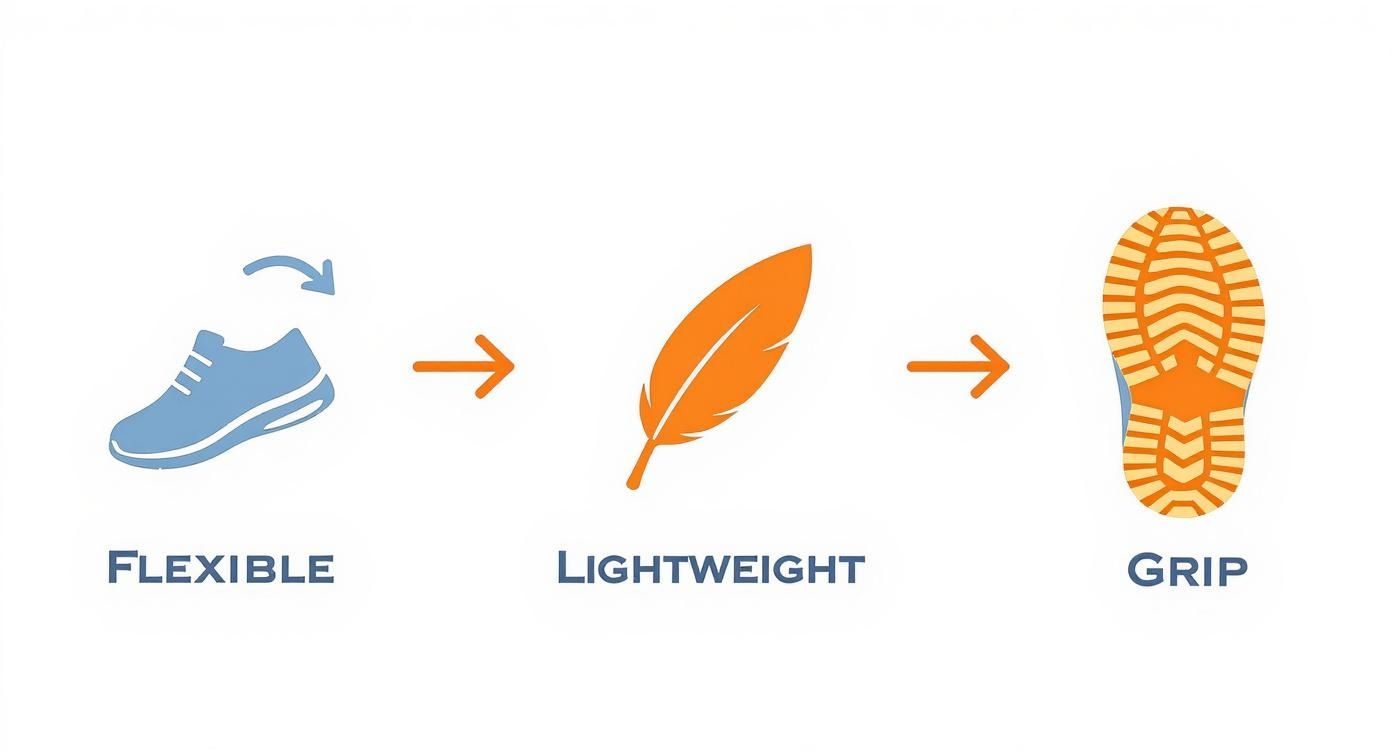
This process highlights how a flexible, lightweight shoe with great grip creates the ideal foundation for a new walker.
Why Barefoot Time Is Still Important
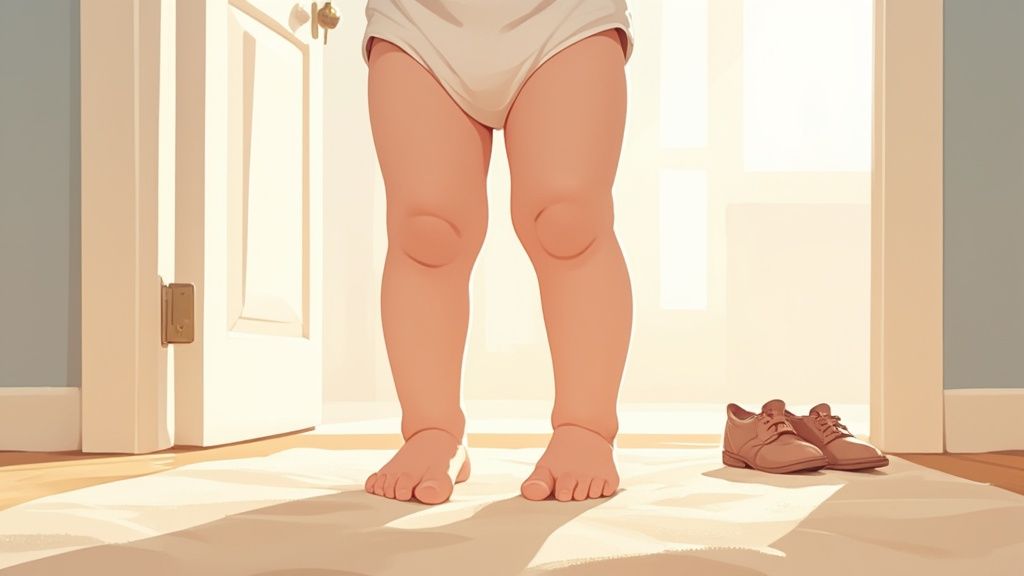
Okay, now that you're practically an expert on fitting those tiny shoes, let’s talk about the absolute best thing for your toddler’s feet: nothing at all!
That’s right. Letting your little one toddle around barefoot inside the house is like a developmental superpower. It's one of the most beneficial things you can do for them.
When your child pads around shoeless, their feet are firing on all cylinders. They're feeling the subtle texture changes from the rug to the kitchen tiles, and their brain is processing all that information to make micro-adjustments with every single step. This sensory feedback is pure gold for developing their balance and coordination from the ground up.
Think about it: their toes are gripping the floor, their arches are getting a natural workout, and all those little muscles are learning to work together. This is simply nature’s perfect design for building a strong, stable foundation for a lifetime of walking, running, and jumping. There is absolutely no reason to have them in shoes 24/7.
Shoes Have a Superpower, Too
So, if barefoot is the gold standard, where do first walker shoes come in? While your home is a safe barefoot playground, the great big world outside is a whole different story.
This is where first walker shoes shine. They’re like a trusty sidekick, ready to spring into action when adventure calls. Their job isn't to be worn all day, every day, but to protect those precious feet when it matters most. Shoes are the barrier between your toddler’s soft soles and the not-so-soft world.
Consider these classic shoe-worthy moments:
- The Park Explorer: Keeping feet safe from poky sticks, sharp little rocks, or surprise bits of mulch.
- The Sidewalk Adventurer: Providing a shield against hot pavement in the summer or chilly concrete in the fall.
- The Daycare Dynamo: Protecting feet and keeping them clean in shared spaces where you can’t control the environment.
Finding the Perfect Balance
It all comes down to finding that sweet spot. A good rule of thumb is a "shoes off" policy for indoors and a "shoes on" rule for outdoor explorations. By giving them tons of barefoot time at home, you’re helping them build strength and confidence. Then, when it's time to head out, a great pair of first walker shoes offers the protection they need to explore the world safely.
The goal isn’t to keep your child in shoes constantly. It’s to use shoes as a smart tool for safe exploration, allowing their feet to develop as naturally as possible while protecting them from ouchies.
This approach truly gives your little one the best of both worlds! For more great tips and insights on your child's walking journey, you can always check out a parent-focused footwear blog for extra guidance.
Embracing both barefoot freedom and shoe-clad adventures will have them stomping, striding, and smiling every step of the way.
A Brief History of Protecting Our Feet
Watching your little one take those first wobbly steps is more than just a milestone—it's a glimpse into a deeply human desire to explore. And for as long as we've been exploring, we've been figuring out how to best protect our feet along the way. It’s a tradition that goes back further than you might think.
Believe it or not, our ancient ancestors were concerned with footwear long before the first playground was ever built. Evidence suggests humans started wearing shoes as early as 40,000 years ago! Ancient explorers needed something to shield their feet from rough terrain, just like your toddler needs a little protection from poky mulch at the park. You can read more about these ancient findings on Live Science.
This isn't just a random history lesson; it's a beautiful link to our past. That powerful urge you feel to find the perfect pair of first walker shoes is part of an ancient story. It’s the very same instinct that led our ancestors to wrap their feet in animal hides so they could safely discover the world around them.
From Survival Gear to Celebration
For thousands of years, shoes were purely about function. They were simple, practical tools designed for survival—footwear that could handle jagged rocks, thorny bushes, and cold ground. Sound familiar? It’s not all that different from what your little adventurer needs today.
But over time, something amazing happened. Shoes became more than just protection. They transformed into symbols of culture, status, and even joy. From the simple sandals of ancient Egypt to the elaborate slippers of royal courts, footwear began to tell a story about who we are.
This evolution mirrors your own journey as a parent. Your toddler’s first shoes aren't just practical gear; they’re a celebration. They represent a huge leap into independence and a new chapter of discovery.
Connecting the Past to Your Toddler's First Steps
When you slip that first pair of shoes onto your little one’s feet, you’re taking part in a tradition tens of thousands of years in the making. The core need has never changed: providing a safe, supportive foundation for exploration.
Today’s first walker shoes are the modern expression of that ancient instinct. They’re designed with incredible care to do what those first primitive coverings did—protect precious feet—but with the added benefit of understanding how little feet actually grow and move.
The love and care you put into choosing the perfect first walker is a direct link to our shared human history. It’s a timeless act of ensuring our little explorers can step out into the world with comfort and confidence.
So, as your toddler takes off running (or wobbling) across the lawn, take a moment to smile. You’re not just chasing a tiny human in tiny shoes. You’re continuing a legacy of love, protection, and adventure that is as old as humanity itself.
Your First Walker Questions Answered
Have a few questions swirling around about first walker shoes? You're definitely not the only one. It’s a milestone that brings up a lot of new territory for parents, but we've got the simple, straightforward answers you're looking for.
Think of this as a quick chat to clear up all the common concerns. We want you to walk into that shoe store (or browse online!) feeling totally confident.
When Should I Buy First Walker Shoes?
This is easily the most-asked question we hear! The sweet spot is right when your little one is consistently pulling up to stand, cruising along the furniture, and starting to take those first brave, unassisted steps.
There's no rush at all. In fact, when they're still inside, letting them go barefoot is fantastic for their development. The idea is to have a great pair of first walker shoes ready for their first adventures outside, not for their first wobbly steps across the living room carpet.
Do First Walker Shoes Need Arch Support?
This is a big misconception we’re always happy to clear up. The best shoes for new walkers are actually flat and incredibly flexible. It might seem counterintuitive, but babies are born with the most adorable, flat little feet.
Their arches develop naturally as they begin to walk, run, and play. All that movement is what strengthens the tiny muscles in their feet, building the arch over time. A stiff, built-in arch support can actually interfere with that crucial process.
A flexible, flat sole allows your toddler's foot to bend and grip the ground—which is exactly what they need to build balance and strength. It’s like letting their feet do their own natural workout!
How Often Should I Check The Shoe Fit?
Those little feet grow astonishingly fast! It’s a smart habit to do a quick fit-check about once a month. It sounds frequent, but it only takes a moment.
Just use the good old "thumb test":
- Have your toddler stand up straight, putting their full weight on their feet.
- Press your thumb down at the very front of the shoe, right over their longest toe.
- You should feel about a thumb's width of space between their toe and the shoe's end.
If it’s feeling snug, you know it’s time to size up. That little bit of wiggle room is essential for their comfort and healthy foot growth.
Are Hand-Me-Down Baby Shoes Okay?
We’re huge fans of hand-me-downs for almost everything, from onesies to toys. But shoes are the one area where we strongly recommend buying new for each child.
Here’s the thing: a shoe literally molds to the foot of its first owner. The insole gets compressed and the materials stretch in very specific ways based on that child's unique foot shape and walking style.
When you use a pre-worn shoe, it can subtly guide your child's foot to conform to someone else's footprint, which isn't ideal for their own gait and development. Think of a new pair as a clean slate for their walking journey—a small investment that gives them the best possible start for a lifetime of happy, healthy steps.
Ready to find the perfect pair for your little explorer's first steps? At Pediped, we craft shoes that are pediatrician-approved and designed to support healthy foot development with every wobble, step, and run. Explore our collections and give your child the comfort and confidence they deserve.
Leave a comment