


Figuring out how to tell if shoes fit properly is a parenting superpower you’ll use all the time. The quickest trick in the book? The classic 'thumb's width' rule! You're looking for about half an inch of space between your little one's longest toe and the tip-top of the shoe. That little gap is the secret sauce for happy, healthy feet, giving them just enough room to wiggle and grow without being squished.
The Secret to a Perfect Fit Every Time
Let’s turn shoe shopping from a tricky chore into a quick, confident win! Getting the right fit isn't just about comfort—it's about supporting healthy foot development for all their big adventures. With little feet growing so unbelievably fast, a simple check can prevent discomfort and ensure they're ready to run, jump, and play all day long.
Believe it or not, studies show a huge number of people are walking around in shoes that don't fit correctly, which can lead to everything from pesky blisters to long-term foot woes. For kids, a good fit is even more crucial. A properly fitting shoe should leave that thumb's width of space at the front, which helps prevent jammed toes and keeps them comfy on the move.
This simple guide breaks down the three key steps to checking your child's shoe fit.
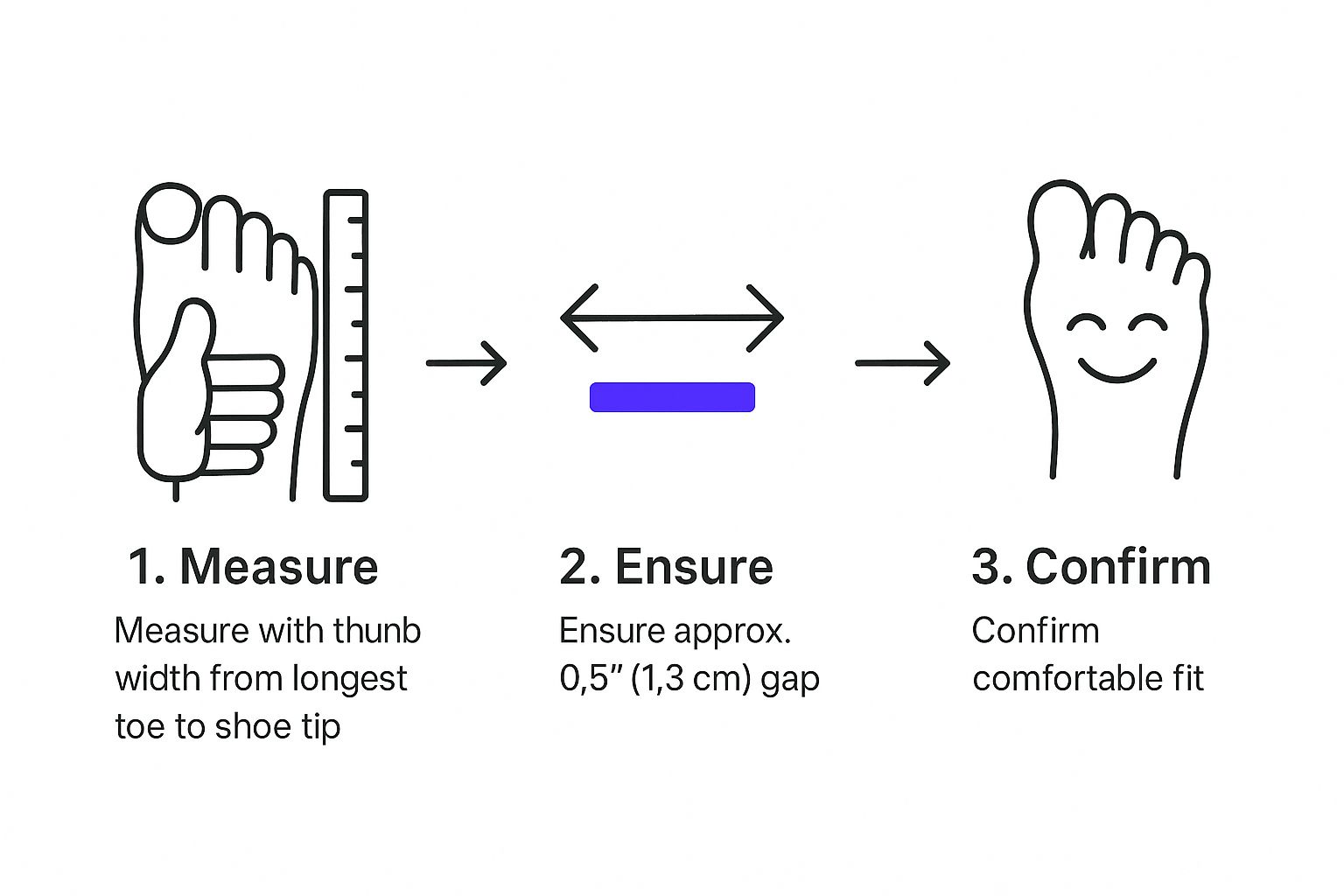
As you can see, the goal is to confirm there's enough space for growth without the shoe being so loose that it causes trips and slips.
The 30-Second Shoe Fit Check
Sometimes you just need a super-quick way to know if you've got a winner. Use this little cheat sheet to get a read on the fit in less than a minute.
| Fit Check Area | What You Want to See | Watch Out For These Red Flags |
|---|---|---|
| Length (The Toe Wiggle Test) | About ½ inch (a thumb's width) of space at the front. | Toes touching the end, or way more than a thumb's width of space. |
| Width (The Pinch Test) | The shoe material feels snug over the widest part of the foot but isn't pulling tight. | The outline of their foot is straining against the side. |
| Heel (The Walk Test) | The heel stays mostly in place while walking, with just a tiny bit of lifting. | The heel pops out completely with each step. |
Getting these three areas right is the key to a shoe that supports them on every adventure.
Key Fit Checks for Happy Feet
Here’s a quick rundown of what to keep in mind for that perfect fit:
- Growing Room is Gold: That half-inch gap is non-negotiable! It gives those toes the freedom they need.
- No Heel Slippage: A little movement is totally fine, but their heel shouldn't be popping out with every step they take.
- Comfort From the Start: A great shoe feels good right away—no "breaking in" period needed!
For more detailed measurements and tips, you can always check out our guide on the pediped sizing chart.
Time for the Wiggle Test & Width Check
Okay, we've got the length sorted. Now for the fun part. I like to call this the "Wiggle Test," and it's your new secret weapon for checking the fit.
The mission, should you choose to accept it, is to see if your little one can easily wiggle all of their toes inside the shoe.
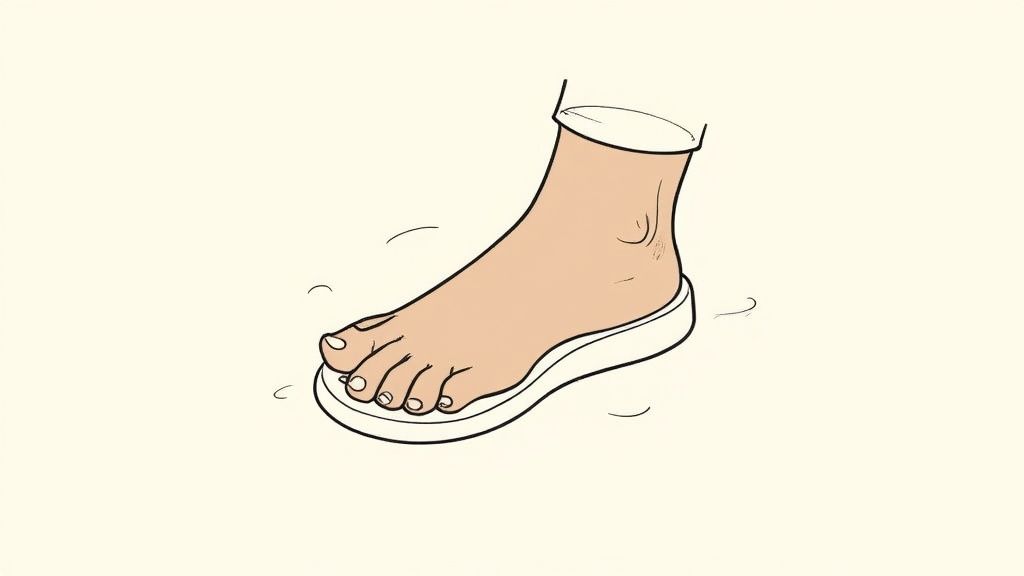
If they can play a little "toe piano" without any fuss, that’s a fantastic sign. It tells you there's enough space up front for their toes to move naturally and do their thing.
Once the wiggle test is passed, we need to check the sides. This is all about making sure the shoe isn't squeezing their foot.
Follow the No-Bulge Rule
Take a moment to feel along the sides of the shoe, paying close attention to the widest part of their foot. You're looking for any noticeable bulging where their foot seems to be pushing the material out. That's a classic red flag that the shoes are too narrow.
Parenting Pro-Tip: A perfectly fitting shoe should feel like a gentle hug, not a constricting squeeze. This comfy fit is key for healthy foot development and, honestly, it's the only way you'll get straight answers from your kid about how the shoes really feel.
Getting the width right is just as important as the length, but it's often overlooked. Shoes that are too tight can compress the toes and even affect circulation. On the flip side, shoes that are too loose can lead to blisters, friction, and even falls.
It's a surprisingly common issue. Some studies show that 55% of shoppers skip crucial steps like measuring their feet or trying shoes on with the socks they'll actually wear, which often leads to a poor fit. If you're curious, you can find more consumer footwear insights from Simon-Kucher.com that highlight just how common these fitting mistakes are.
How to Secure the Perfect Heel Grip
Alright, let's talk about the heel. This is a big one. You know how to tell if shoes fit properly when you can conquer that annoying heel slippage! We’ve all seen it: a kid runs by, and their shoe is practically flapping off their heel with every step. That's exactly what we want to avoid.
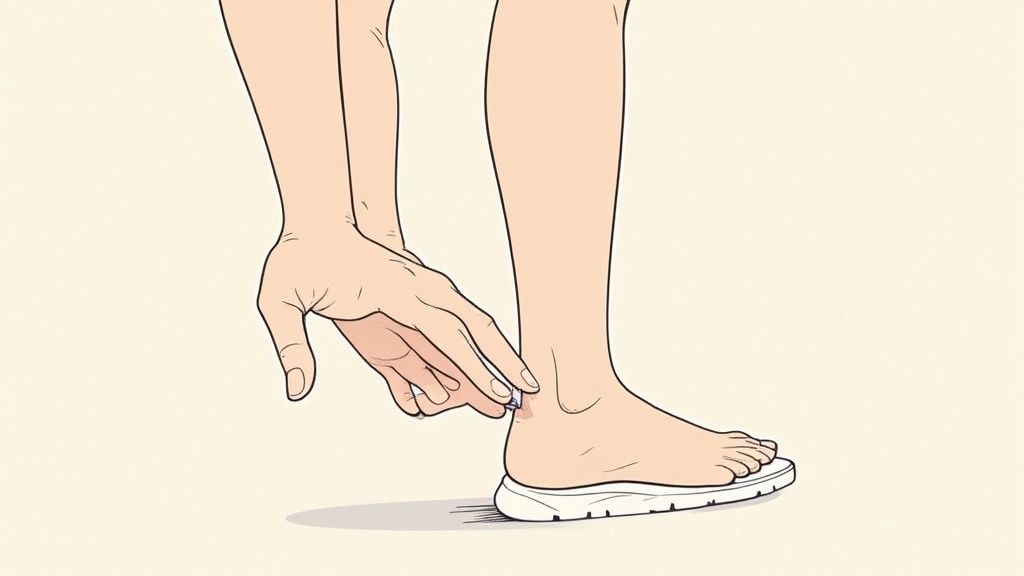
Now, a little bit of movement in the heel is perfectly normal and even expected. What we’re looking out for is excessive sliding—the kind where their heel lifts completely out of the shoe with every stride.
Think of it as a firm but gentle hug for their heel. It needs to feel secure, not squished or trapped. If there's too much room, all that rubbing is a one-way ticket to blister-ville. And nobody has time for that.
The One-Finger Test
Here’s a quick little trick I’ve used for years. Have your child stand up straight, putting their full weight on their feet. Now, try to slide your index finger between their heel and the back of the shoe.
It should be a snug fit. You want to feel a bit of resistance as you slide your finger in. If it goes in way too easily, or worse, you could fit a second finger in there, the shoe is too big. This is a major trip hazard waiting to happen.
Getting the heel grip right is a game-changer. A secure heel provides crucial ankle stability and gives your child the confidence to run, jump, and play without their feet fighting to stay inside their shoes. When their heel is locked in, their foot can move the way it's supposed to.
Time for the Official Test Run
Alright, the shoes are on, but we're not done yet. A shoe can feel totally fine when your little one is sitting still, but the real test happens when they start moving. This is the moment of truth.
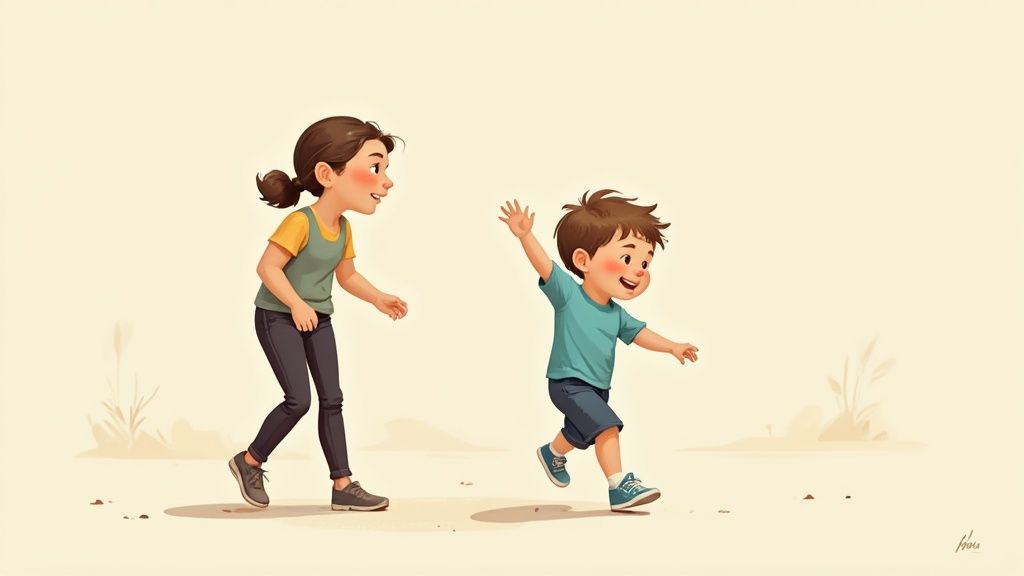
Get them up on their feet! Ask them to walk back and forth, maybe do a little jump, a skip, or even show you their silliest dance moves. It's fun, but it's also a critical part of making sure the shoes are a good match for their feet.
How's Their Walk?
Keep a close eye on their gait. Do they look comfortable and natural, or is something a bit... off? Any sign of hesitation, a slight limp, or complaints about something pinching are big red flags. The fit isn't right.
A shoe that fits well should support their natural stride, letting their foot land flat without creating any awkward pressure points. It's a bigger deal than you might think; studies have found that gait problems from a poor shoe fit can actually increase the risk of slips and falls by 14% to 20%. If you're curious about the tech behind better footwear, this research from Data Bridge Market Research is a fascinating read.
The Takeaway: If the shoes change how your child walks, they're not the right ones. Good shoes should feel like a natural extension of their feet, not something they have to fight against.
This final check ensures their new kicks are truly ready for the playground, school, and all the adventures ahead. Good shoes shouldn't need a "breaking-in" period—they should feel great right out of the box.
Smart Shopping Tips from Seasoned Parents
Ready to shop like a pro? Over the years, parents pick up some seriously clever tricks for finding that perfect shoe fit. These are the game-changers that make shoe shopping way less of a headache and much more of a success.
Let's get into the insider secrets!
First up, timing is everything. Try to plan your shoe-shopping adventure for the afternoon. Just like for adults, kids' feet naturally swell a tiny bit as the day goes on. Measuring them later in the day gives you the most accurate size, ensuring the shoes won't feel too snug by dinnertime.
Another pro move? Always bring the right socks! It sounds simple, but think about it—a thick, cozy winter sock takes up way more space than a thin summer one. Having them try on new shoes with the exact socks they'll be wearing is a small step that makes a huge difference in getting the fit just right.
The Two-Foot Rule
Did you know it's super common for one foot to be slightly bigger than the other? It’s true for most of us, kids included, which is why you should always, always measure both feet.
Parenting Pro-Tip: When you find that one foot is a little larger, buy the size that fits the bigger foot. This prevents squished toes on one side and ensures all-day comfort. A little extra room in one shoe is much better than a cramped fit in the other.
This simple check prevents a world of discomfort. Once you know their correct measurement, finding the perfect pair becomes so much easier. If you're looking for styles designed with growing feet in mind, you can explore a great collection of shoes for kids aged one to six years to find your next perfect fit.
Common Questions About Kids Shoe Fit
Wondering how to spot the perfect fit for growing feet? You’re in good company—every parent has wrestled with that endless “Is this pair too tight?” debate. Let’s tackle the most frequent fit questions and make your next shoe trip a breeze.
How Often Should I Check My Child's Shoe Size
Kids' feet can surprise you—overnight they go from snug to downright cramped. To stay ahead of those sudden growth spurts, try this schedule:
- Toddlers (Under 3): Check every 2-3 months.
- Preschoolers & School-Aged Kids: A quick look every 4-6 months usually does the trick.
A simple thumb test every few weeks helps you catch growth before it gets uncomfortable.
Are Hand-Me-Down Shoes A Good Idea
Hand-me-downs feel economical, but shoes hold the memory of their first owner. The insole and tread adapt to one child’s gait, which might not suit the next pair of feet.
- Inspect the sole for uneven wear.
- Peek inside for flat spots or compressed cushioning.
If either shows serious wear, it’s better to start fresh than risk poor support.
Parenting Pro-Tip: Kids love bright colors and beloved characters—sometimes more than a proper fit. Always trust the thumb test, heel hold and width check over their enthusiastic thumbs-up.
Should I Buy Shoes A Little Big To Grow Into
Buying big to grow into seems practical, but it can backfire fast. Aim for about half an inch of space beyond the longest toe—no more.
- Too much room invites stumbles.
- Loose fit offers little ankle or arch support.
Secure, snug, and just enough wiggle room is the sweet spot. For more answers, check out our helpful guide that addresses many more frequently asked questions about shoe fit.
At pediped, we design shoes that support every step, jump, and adventure. Explore our pediatrician-approved collections to find the perfect, comfortable fit for your little one's growing feet. https://www.pediped.com
Leave a comment