


A children's shoe size measurer is an absolute game-changer for parents. I know because I’ve been there—trying to trace a squirming little foot onto paper only to end up with a scribble that looks more like modern art. These super simple devices zap all the guesswork out of finding the right fit, turning a potentially frustrating chore into a quick, easy, and even giggle-filled activity.
Think of it as your secret weapon for making sure those tiny toes have all the room they need to grow, wiggle, and play comfortably!
End the Shoe Sizing Guesswork for Good
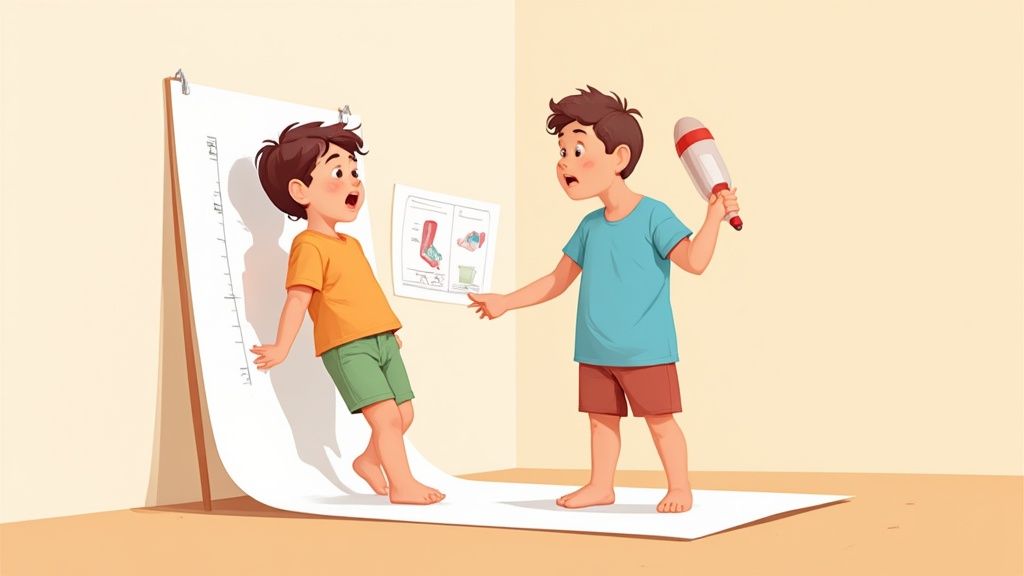
Let’s be real: measuring your kid's feet can feel like trying to catch lightning in a bottle. One second they’re standing perfectly still, and the next, they’ve wiggled away, leaving you with a half-drawn outline and zero confidence in what size to buy. Ugh!
This is where a proper measuring tool works its magic. It's time to say goodbye to those frustrating shopping trips and shoes that pinch just a week after you bring them home. We’ll show you exactly how to get that perfect, adventure-ready fit every single time. Let's do this!
Why a Perfect Fit Matters More Than You Think
Getting the right shoe size is about so much more than just comfort—it’s a huge deal for healthy foot development. A child's foot takes about 18 years to fully form, and those early years are the most important. The right shoes give their feet the support and freedom they need to grow strong and straight.
A great fit helps prevent common problems like blisters, ingrown toenails, and even wonky walking patterns. Think of it as a direct investment in your child's future mobility and comfort, one happy step at a time!
This growing awareness of foot health is a big reason why the children's footwear market is booming. The global market is projected to reach an incredible USD 86.32 billion by 2032—that's a huge leap driven by awesome parents who get just how much a great fit matters. This trend shows why accurate measurement tools have become a must-have for families everywhere.
Making Measurement a Breeze
Here’s a quick peek at the essentials for a super-successful at-home foot measuring party.
Your Quick Guide to a Perfect Fit
| Tool You Need | The Key Action | Parent Pro Tip |
|---|---|---|
| A children's foot measurer | Get a clear length reading while your child stands | Make it a game! "Let's see how long your super-fast feet are!" |
| A flat, hard surface | Make sure their weight is evenly spread for accuracy | Never measure while they're sitting or have their foot in the air. |
| A pen and paper | Jot down the measurement right away | Measure both feet; it's super common for one to be a little bigger! |
Think of this process just like how you might teach problem-solving skills to children—it’s about using the right tools and a little patience to get a fantastic result.
Our mission is simple:
- Zero Drama: We want to help you turn measurement into a fun, quick activity instead of a struggle.
- Total Confidence: You'll have the know-how to pick the right size, every single time.
- Happy Feet: We’ll help you ensure every pair of shoes is comfy and supportive, from their first wobbly steps to playground sprints.
Forget the guesswork. Let's make you a sizing pro, so you can spend less time worrying about shoes and more time enjoying the adventure.
Mastering the At-Home Measurement
Ready to tackle foot measuring at home? Let's turn what can feel like a tricky task into a quick, two-minute activity. You just need a piece of paper, a pencil, and your little one. We'll get this done in minutes, stress-free!
First, find a hard, flat surface—the kitchen floor is usually perfect. Have your child stand up straight with their heel right up against a wall. This is a crucial little trick; it keeps their foot from sliding and gives you a true, accurate starting point for your measurement.
Once they're in position, slide a plain piece of paper under their foot, making sure their heel stays right up against the wall.
The Tracing Game
Now for the fun part. Grab a pen or pencil and hold it totally upright—no slanting! Trace a clear outline all the way around their foot. I always find it helps to make it a game. Can they stand still like a statue while you draw their "superhero footprint"?
The goal here is to mark the longest point of the foot, which, surprise, isn't always the big toe! For many kids, the second toe is actually longer. You also want to get a clear mark at the very back of the heel.
Once you’ve captured the outline, your little one is free to go! Now, take a ruler or tape measure and measure the distance from the back of the heel mark to the tip of the longest toe. Write that number down right away so you don't forget.
Parent Pro Tip: Feet tend to swell a little throughout the day. For the most reliable measurement that accounts for a full day of play, try measuring in the late afternoon or evening.
Don't Forget the Other Foot
This is the one step you absolutely can't skip: always, always measure both feet. It's incredibly common for one foot to be slightly bigger than the other. In fact, it's more the norm than the exception!
Once you have both measurements, use the larger of the two to pick their shoe size. It's easy to add a small insole to the shoe on the smaller foot if needed, but you can't create more room in a shoe that's already too tight. This simple step is your best defense against pinched toes.
To easily translate your measurements into the right size, head over to the chart in our Pediped Sizing Guide. It takes all the guesswork out of converting those inches or centimeters into the perfect fit for their next favorite pair of shoes.
Decoding Sizing for Different Ages
Let's be honest—measuring a baby's squishy, wiggly foot is a completely different challenge than sizing up an active seven-year-old who just wants to get back outside. Every age brings its own unique hurdles, but with a few clever tricks, you can become a sizing pro at every single stage.
For the tiniest feet, timing is everything. The best time to measure an infant is when they’re relaxed or even fast asleep. A soft measuring tape works wonders here. Just a quick, gentle press from their heel to the tip of their longest toe, and you’re done before they even stir. For this delicate stage, you'll want shoes that are just as soft, which you can find in our collection of shoes for babies 0-24 months.
Making it Fun for Toddlers and Kids
Once they're up and running, it's time for a new game plan. For toddlers, the best approach is to turn measuring into a game. Lay a piece of paper on the floor and make it exciting: "Time for Stomp the Paper!" That enthusiastic stomp will plant their foot flat, giving you the perfect moment to trace around it.
As they get a little older, you can bring them into the process. School-aged kids are often curious and love to feel like they're helping out. Make them your official assistant, letting them read the numbers off the children's shoe size measurer right along with you. This small bit of involvement makes them feel important and keeps them from getting bored.
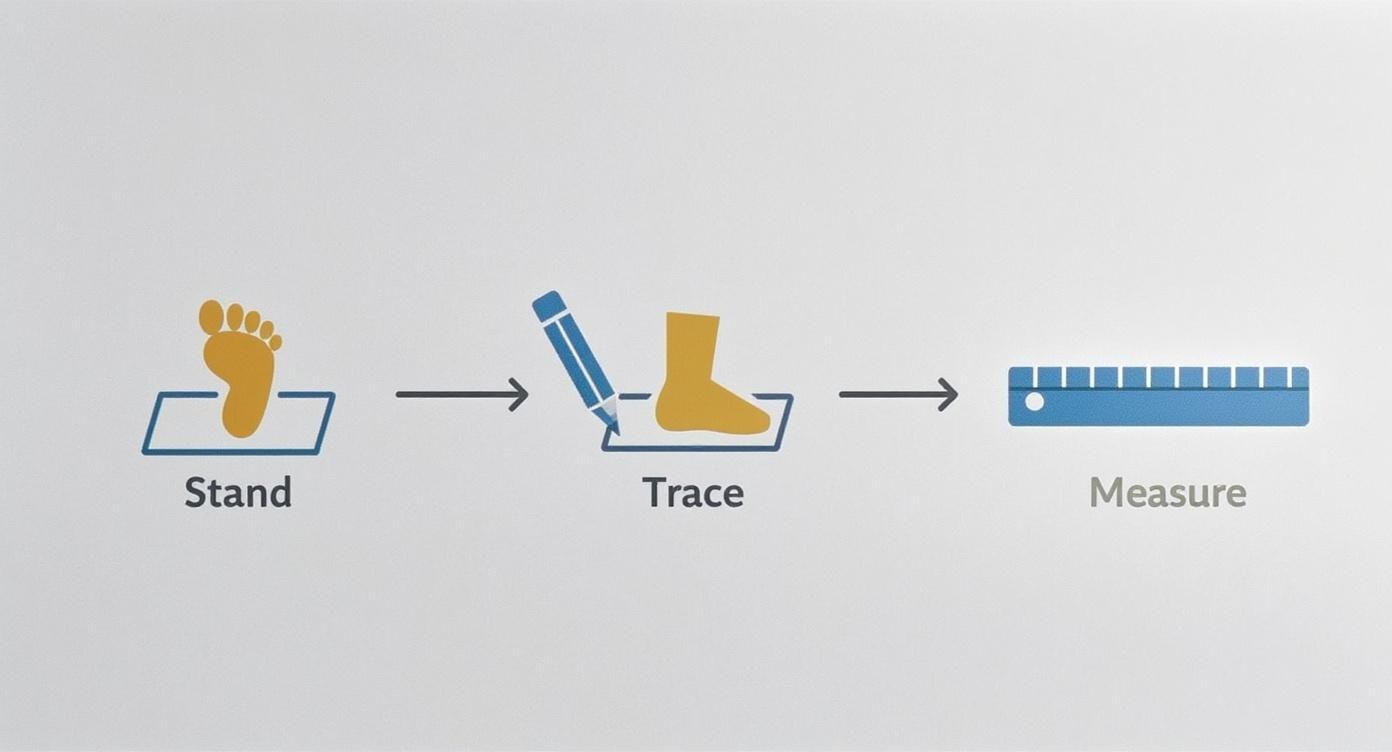
Just have them stand, trace their foot, and then measure the outline from heel to toe.
This focus on getting the right fit is a huge part of why the children's shoe market is growing so fast. The baby shoes segment alone brought in an incredible US$40.122 billion in revenue in 2023. And it's projected to climb to $82.92 billion by 2032, which just shows how much parents are investing in healthy foot development right from the start.
The Unbreakable "Thumb Rule"
No matter how old they are, there's one golden rule that never, ever changes: the "thumb rule." This is your secret weapon for ensuring a perfect fit that has just the right amount of room for them to grow.
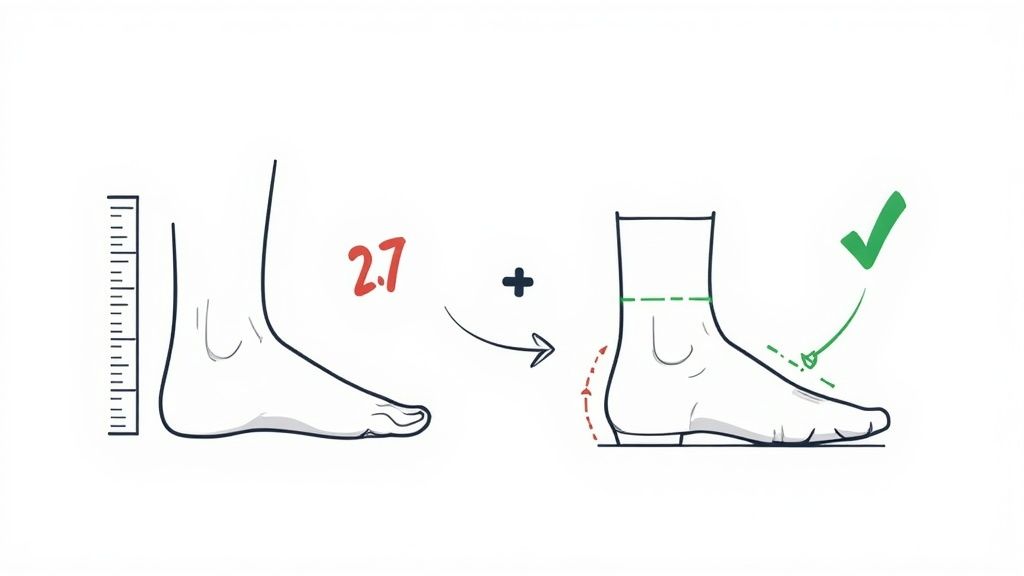
Always leave about a thumb's width (which is roughly half an inch) of space between your child's longest toe and the very front of the shoe.
This isn’t just about making the shoes last a little longer; it's absolutely essential for their foot health. That extra space is critical for natural foot movement and muscle development, giving their toes room to spread out and grip as they walk, run, and jump. It’s the wiggle room they need to move comfortably and the growth room that saves you from another shoe-shopping trip next month.
Turning Your Measurement Into the Perfect Shoe
Alright, you’ve wrestled the wiggles, wrangled the toes, and now you have that all-important number. High five! Now for the fun part: turning that measurement into a pair of shoes your little one will actually love to wear.
First things first, let’s talk brand loyalty. When it comes to sizing, it's best to forget it. Every single shoe brand fits a little differently—what’s a size 7 in one brand could easily be a 6 or an 8 in another. It’s their own little secret code.
Your measurement in inches or centimeters is your single source of truth. The next step is to head directly to the brand’s website and hunt down their specific sizing chart. Think of it as your decoder ring! It will translate your measurement into their unique sizing system, taking all the guesswork out of the equation.
Navigating the Sizing Chart Like a Pro
Once you pull up the chart, you'll see exactly how your child's foot length corresponds to a specific shoe size. It’s a simple but powerful step. It's so tempting to just grab the same size they wore last time, but kids' feet grow in the most surprising and unpredictable spurts.
So what happens if that measurement lands squarely between two sizes? It’s a common dilemma, and the answer is almost always the same: size up.
Going up to the next size is your best bet. It provides that essential wiggle room for their toes and gives them a little space to grow into, which means the shoes might just last more than five minutes!
Think of it this way: a shoe that’s slightly too big can often be managed (thicker socks for the win!), but a shoe that’s too small is a recipe for unhappy feet. Sizing up ensures comfort from day one. Some kids also have unique needs, and understanding how different styles can help is always a bonus. For more insight, check out our guide on adaptive shoes for kids, which covers style, comfort, and getting the perfect fit.
The "Wiggle and Stay" Fit Test
So, how do you know you've found the one? A truly great fit is all about balance. The shoe should feel snug and secure around the heel—no slipping or sliding when they walk, run, or jump. This secure heel fit is absolutely crucial for providing proper support.
At the same time, the front of the shoe should be a spacious playground for their toes. They need plenty of room in the toe box to wiggle, spread out, and grip the ground naturally. This freedom of movement is key for healthy foot development.
- Snug Heel: This prevents blisters and ensures the shoe actually stays on during those epic playground adventures.
- Wiggle Room: It allows for natural foot movement and accommodates those inevitable growth spurts.
This combination—a secure heel and a roomy toe box—is the magic formula for happy, healthy, and adventure-ready feet.
Knowing When It Is Time for New Shoes
Watching tiny feet stretch out and explore the world is pure magic. Yet, one day your child’s shoes fit just right, and the next they’re complaining that everything feels tight. That quick turn-around is a telltale sign of those fast-paced growth spurts.
For babies and toddlers under three, feet can grow half a size every two months. Measuring every two to three months ensures they’ve got enough room to wiggle their toes and find their balance. Once they hit preschool age, you can ease back to checking every four to six months—but stay alert. Growth isn’t always a straight line, and one big burst can change their shoe size overnight.
Spotting The Telltale Signs
Even with regular measuring, kids have their own ways of hinting it’s time for a new pair. Look and listen for:
- The “Ouchy” Report: Frequent complaints of pinching or squeezing
- Red Marks: Indentations or redness after playtime
- Scuffed Toes: Worn-down fronts that show their toes are jammed against the cap
Those snug shoes do more than make your child frown—they can alter walking mechanics and foot development. In fact, the global children’s footwear market was valued at USD 53,516.31 million in 2024 and is set to climb to USD 94,121.99 million by 2031. You can read more about these footwear market trends to see why getting the size right matters.
Staying ahead of growth spurts is your best defense against discomfort. A well-fitted shoe supports every leap, run, and adventure, allowing little feet to develop naturally.
You’re already on the right track by paying close attention. For even more tips on fostering healthy foot development, check out our article on healthy little feet backed by Harvard experts.
Quick Answers to Your Sizing Questions
Got a few nagging questions about getting the size just right? You're not alone. We've been at this a long time, and we've heard them all.
Let's run through some of the most common puzzles parents face when measuring for kids' shoes. Think of this as your personal cheat sheet for finding that perfect fit with total confidence.
Should I Buy Shoes a Little Big to Grow Into?
Ah, the age-old question! It's tempting to buy big to get more wear out of them, but the answer is yes, but only a tiny bit. You're not looking for clown shoes, just a little breathing room.
The sweet spot is about a thumb's width—roughly half an inch—of space between their longest toe and the end of the shoe. This gives those toes room to grow and spread out naturally. Any more than that and you're inviting trips, stumbles, and even blisters because the shoe can't provide proper support.
What Is the Best Time of Day to Measure?
Timing really is everything here. Hands down, the best time to measure your child's feet is in the late afternoon or evening.
Why? Because after a full day of running, playing, and generally being a kid, their feet will have naturally swelled a bit. Measuring them at their "biggest" ensures the shoes you buy will be comfortable from the moment they put them on in the morning until that last burst of energy before bed.
Think of it like this: you're planning for their most active moments. By measuring later in the day, you guarantee a fit that’s ready for anything, anytime.
My Child's Feet Are Two Different Sizes. Help!
First off, take a deep breath—this is completely normal! In fact, it's more common than you think for one foot to be slightly larger than the other.
The rule of thumb is simple: always buy shoes to fit the larger foot. You want to make sure the bigger foot isn't cramped or squished. If the shoe on the smaller foot feels a little loose, you can always add a thin insole to snug it up. You can't, however, magically stretch a shoe that's too small.
For more answers to specific situations, our Pediped FAQ page is a great place to look.
Are Printable Shoe Size Measurers Accurate?
They absolutely can be, but there's a crucial step you can't skip. When you print a sizing chart from online, you have to make sure your printer setting is on '100%' or 'actual size'.
Do not—I repeat, do not—use the 'fit to page' option. That setting will shrink the chart just enough to throw the entire measurement off. Most good printable charts include a small ruler graphic you can check against a real ruler to confirm it printed correctly. Get that right, and you've got a fantastic tool ready to go.
Ready to put your new sizing skills to the test? With these answers in your back pocket, you’re more than prepared to find that perfect pair. Explore the full collection of comfortable, stylish, and pediatrician-approved shoes at Pediped and give your child the gift of happy, healthy feet for every adventure that lies ahead.
Find your perfect fit at https://www.pediped.com.
Leave a comment