


Welcome to the shoe-wrangling club! If you've ever tried to measure a squirming toddler's feet, you know it can feel like a bit of a circus act. But what if we turned it into a fun game you can play right at home? Let's ditch the stress of a store visit and make your little one an excited partner in finding their next favorite pair of shoes. Let's do this!
Why Measuring Those Tiny Toes Matters
Tired of playing the "is this too tight?" guessing game every time you put on your child's shoes? You're definitely not alone. It's a real eye-opener, but a recent study found that 65% of parents don't get their child's shoe size right. Yikes! That means lots of kids are squishing their feet into shoes that are one, or even two, sizes too small.
Properly measuring their feet isn't just about avoiding a meltdown; it's a super important step for their comfort and healthy foot development. This is especially true for the tiniest toes, which is why exploring the right options for babies 0-24 months is such a smart move. A good fit now sets the stage for happy, healthy feet for life!
The Wiggle-Proof Measuring Method
Ready to get an accurate measurement, even with a super wiggly little one? I call this my "Trace & Measure" game—it’s a surprisingly simple way to capture the true size of even the squirmiest feet.
The secret to a perfect fit is measuring while your child is standing up. When they put their weight on their feet, their feet naturally spread out. Measuring them while they’re sitting down is a classic oopsie that often leads to shoes that are too tight.
You'll also want to measure both feet. It’s completely normal for one foot to be slightly bigger than the other! This quick game ensures you find the right size and account for that little bit of extra room they need to grow.
We’ll walk through a simple three-step flow: grabbing your gear, tracing the foot, and then measuring. Easy peasy!
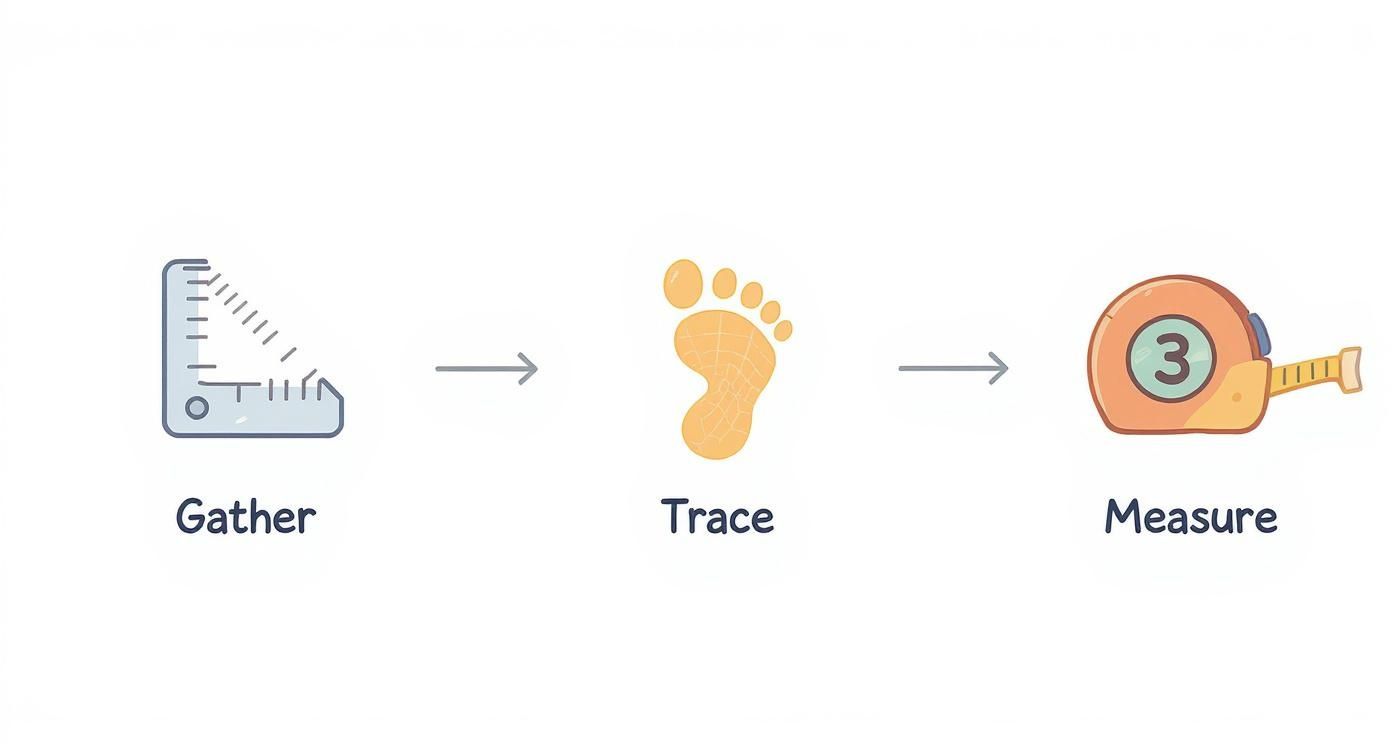
This turns a chore into a fun little activity. Plus, it guarantees you’re always choosing the shoe size that fits their bigger foot—a golden rule of kid's shoe shopping.
Making Sense of the Numbers
So, you’ve wrangled the kids and have your measurements. High five! Now comes the fun part: turning those inches or centimeters into an actual shoe size.
Don't be thrown if you find that a size 10 from one brand fits completely differently from another. That’s just the wacky world of kids' shoes! Sizing is notoriously all over the place, which is why having your child's exact foot measurement is your superpower.
Your child's precise measurement is your secret weapon. It cuts through the confusing world of brand sizing, zaps the guesswork, and saves you from the hassle of returns.
Most shoe brands provide their own sizing charts to help you out. For example, this pediped sizing guide is a great resource to have on hand. Always check the specific brand's chart before you buy!
A Quick Look at Measuring History
Ever wonder how our grandparents managed to get the right shoe size without all our handy tools? Before our simple tracing game, measuring children's feet was a tricky business, often resulting in shoes that pinched and squeezed. Ouch!
Things really took a leap forward in 1927 with a clever invention called the Brannock Device. This metal gadget was a total game-changer, able to precisely measure a foot's length, width, and even the arch. It quickly became the gold standard for a perfect fit, helping kids run and play in comfort.
This cool device laid the groundwork for how we approach shoe fitting today, keeping those little feet happy and healthy. You can dive deeper into the history of shoe fitting over on shoekid.ca.
Common Measuring Mistakes to Avoid
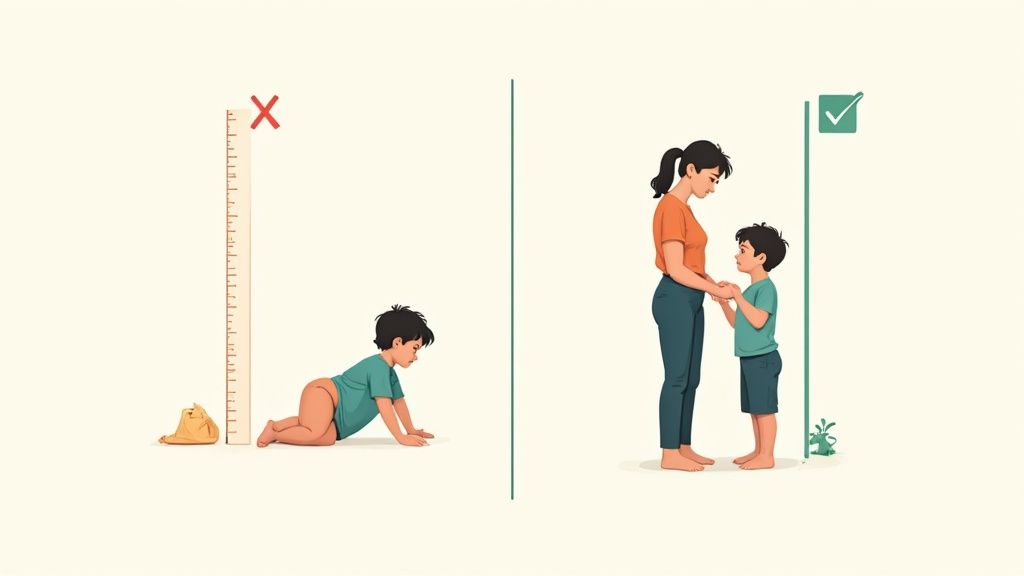
Even with the best intentions, it’s surprisingly easy to get an off measurement. Don't worry, we've all been there! Let's turn those potential slip-ups into pro tips so you nail it every time.
A classic mistake is measuring while they’re sitting down. A child’s foot actually spreads out and gets a bit longer when they stand on it. A sitting measurement can easily trick you into buying shoes that are too small from the get-go.
Pro Tip: Always measure both feet! It’s totally normal for one foot to be slightly bigger than the other. When you find a difference, always choose the shoe size that fits the larger foot for maximum comfort.
Frequently Asked Questions About Kids Feet
Age-Based Charts vs. Reality
Parents often wonder if those age-based sizing charts are reliable. They can give you a rough idea, but every kiddo is unique! One study of kids aged 6 to 15 found an average foot length of 21.35 cm, but the size range within the same age group was huge. You can check out more on these findings here: foot development research.
Toddlers grow at lightning speed—measure their feet every 2–3 months. Once school starts, checking every 4–6 months usually does the trick.
When Feet Are Different Sizes
It’s super common for one foot to be slightly bigger than the other. Always fit shoes to the larger foot. Here are a few quick tips:
- Leave about a thumb’s width of space from the tip of the shoe to the longest toe.
- Have your child stand and wiggle their toes while you check for snug spots.
- Slide your finger along the insole after they walk a few steps to feel for pressure points.
You can explore more tips for ensuring healthy little feet in our guide.
At pediped, we believe happy feet lead to confident steps. Find your perfect pair today at https://www.pediped.com.
Leave a comment