


Finding the perfect toddler summer sandals is all about that sweet spot where safety, comfort, and sunny-day style meet. The best pairs have a super flexible sole, easy-to-use adjustable straps, and a nice wide toe box that lets little feet grow and wiggle. Nailing these features means your toddler's feet stay cool, protected, and ready for every single adventure.
Your Guide to Happy Summer Feet
Welcome to the wonderful world of toddler summer sandals! That first warm day means one thing: it’s time for splash pads, park picnics, and non-stop outdoor fun. But swapping boots for open-toed shoes can feel a little daunting. You want something cute, obviously, but you also need sandals that are safe, tough, and actually good for your toddler’s developing feet.
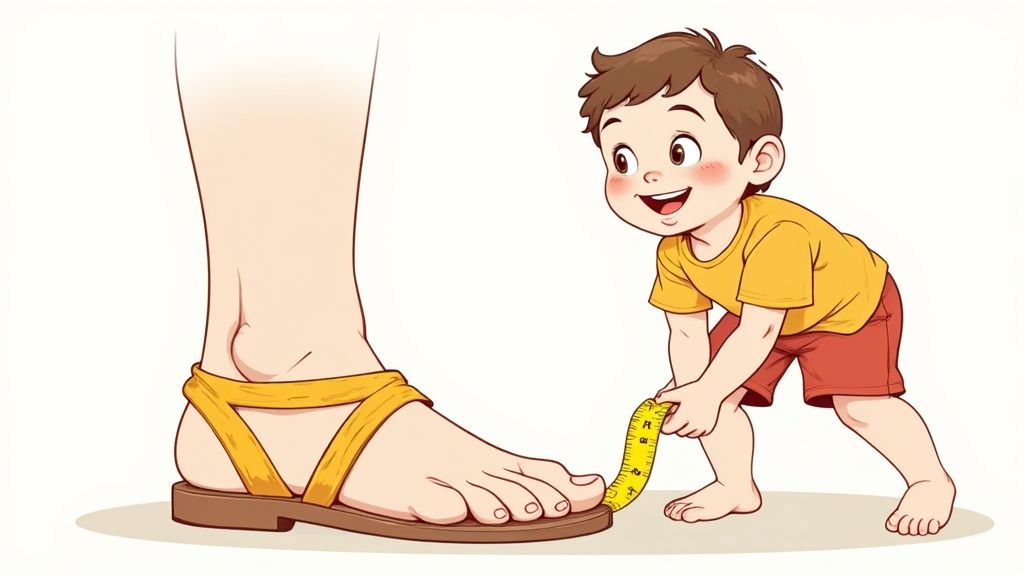
This guide is here to make that choice simple and stress-free. We’ll walk you through everything that matters, from how the right shoes support healthy growth to picking materials that keep little feet comfy and cool. Let's get you feeling confident about picking sandals that can keep up with every jump, run, and splash.
Why This Choice Matters So Much
A toddler’s foot isn't just a mini version of our own—it's a delicate structure of soft cartilage and bones growing at a mind-boggling pace. The shoes they wear are a huge part of their physical development. A great pair of sandals should feel like a partner on their journey of discovery, not something that holds them back.
Here’s what you’ll get from this guide:
- Confidence in Your Choice: Know exactly what to look for in fit, materials, and support.
- Peace of Mind: Understand how the right sandals protect your kiddo from slips and stubbed toes.
- Happy Toddler, Happy Parent: Pick a pair so comfy they'll forget they're even on, preventing blisters and meltdowns.
The market for children’s shoes is growing fast, and it’s because parents are more focused than ever on quality and safety. The global children's footwear market, which includes toddler summer sandals, was valued at over USD 53.5 billion and is expected to climb to around USD 94.1 billion by 2031. This boom shows just how much parents care about features like proper arch support, anti-slip soles, and easy-to-use straps. If you want to dive deeper, you can read the full research about children's footwear trends.
Think of the right sandal as the foundation for a summer of confident exploration. It’s the tool that lets your toddler interact with the world around them safely, from the hot pavement to the sandy shore.
Our goal is to make sure your little one’s feet are protected and comfortable so they can get back to what they do best: playing, exploring, and making those amazing summer memories. Let’s dive in and find that perfect pair.
Why the Right Sandals Matter for Growing Feet
Picking out a pair of toddler summer sandals might seem like a small task on your long to-do list, but for your little one's developing feet, it's a huge deal. A toddler's foot isn't just a tiny version of our own; it’s a delicate structure of soft cartilage and bones growing at a mind-boggling speed. Think of their feet like soft clay, easily molded by whatever they’re put in—especially their shoes.
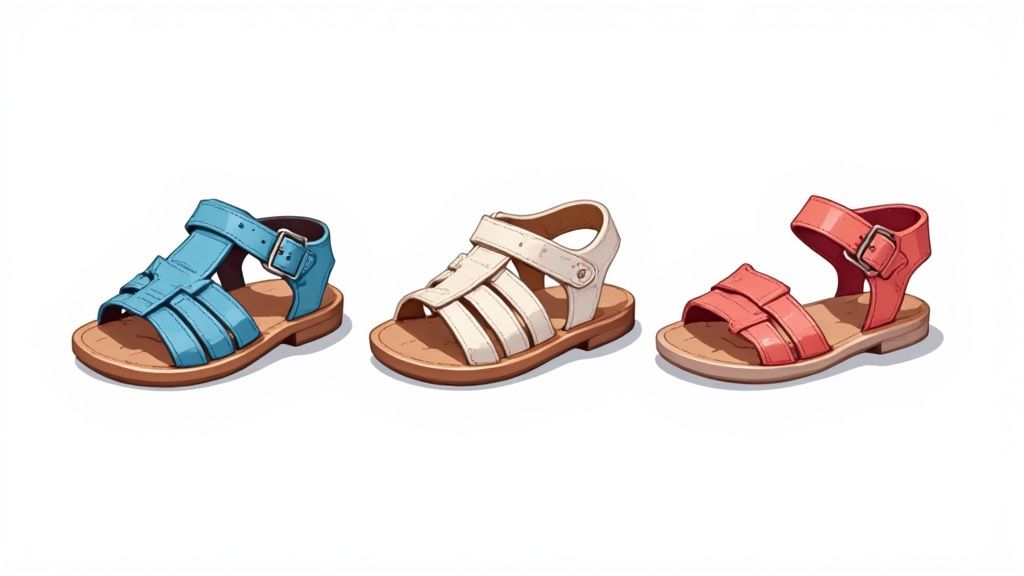
The right shoe acts as a gentle guide, supporting their natural growth. But the wrong pair? It’s like forcing that soft clay into a rigid, awkward mold. It can unknowingly get in the way of muscle growth, throw off their balance, and even impact how they walk for years. Becoming a bit of a shoe expert now is one of the best things you can do for their physical journey.
The Magic of Mimicking Barefoot Walking
The absolute gold standard for a toddler’s foot development is being barefoot. It lets them feel the ground, use all those tiny foot muscles to grip and balance, and develop a natural, healthy gait. But since barefoot isn't always safe or practical (hello, hot pavement and poky sticks!), the next best thing is a sandal that comes as close to that feeling as possible.
This is where a flexible sole is completely non-negotiable.
A stiff, plank-like sole forces your toddler to walk flat-footed. It completely restricts the natural bend and roll of the foot, which is essential for building strength in their arches and ankles.
Imagine trying to learn how to grip a ball while wearing thick, stiff mittens. That's what a rigid shoe sole does to your toddler's feet, preventing them from properly feeling and adapting to the world beneath them.
A flexible sole, on the other hand, lets their foot bend, move, and react. This sensory feedback is so important for developing coordination and balance. When they can feel the texture of the grass or the slight incline of a ramp right through their shoes, their brain gets the info it needs to make tiny adjustments, leading to a much more stable and confident stride.
Why Wiggle Room Is So Important
Ever watch a toddler stand? Their feet splay out and their toes spread wide to create a solid base. It's their natural instinct for staying upright as they master walking, running, and jumping. A narrow, pointy shoe works directly against that instinct.
A wide toe box is absolutely critical for healthy foot development. Here’s why it matters so much:
- Allows Natural Splaying: It gives their toes total freedom to spread out, which is key for balance. Cramped toes can lead to an unnatural gait and more tumbles.
- Prevents Future Foot Issues: Forcing chubby toddler feet into narrow shoes can contribute to long-term problems like bunions or hammertoes later in life. Giving them space now sets them up for a lifetime of happy feet.
- Encourages Muscle Growth: When toes can wiggle and grip, the small muscles inside the foot get a proper workout, which is essential for developing strong, healthy arches.
Simply put, a wide toe box lets their feet be feet! It respects their natural shape, allowing them to develop correctly without being squished or constrained.
Support That Guides, Not Restricts
Finally, let's talk support. For toddlers, "support" isn't about rigid arch inserts or stiff ankle casings like an adult might need. It’s about gentle stability that guides their foot without locking it down.
A good toddler summer sandal should have a firm but flexible heel cup. If you can pinch the back of the heel and it completely collapses, it’s too flimsy. If it feels like a rock, it’s too firm. You’re looking for that sweet spot in the middle—a structure that gently holds their heel in place to prevent it from sliding around, helping to align their foot as they move.
Ultimately, choosing the right sandals is about being an advocate for your child’s healthy development, one adorable step at a time. By prioritizing flexibility, plenty of toe room, and gentle support, you're not just buying shoes; you're investing in a foundation for a lifetime of confident, healthy movement.
A Parent’s Checklist for Picking the Best Sandals
Stepping into the shoe aisle for toddler summer sandals can feel a bit overwhelming, right? With so many options, how do you know which ones are actually built for your little explorer? Don’t worry, we’ve put together the ultimate checklist to turn you into a sandal-shopping pro.
Think of it as breaking down the anatomy of a great sandal, piece by piece. We’ll look at everything from the materials they’re made of to the way they fasten, so you can feel totally confident in your choice.
Mastering the Materials
The material a sandal is made of is its superpower. It determines everything from how breathable it is on a sweltering day to how fast it dries after an impromptu splash pad session. Since toddler skin is so sensitive, getting the material right is key to keeping their feet happy and free from irritation.
Here's a quick rundown of what you’ll usually find:
- Breathable Leather: This is a classic for a reason. Leather is tough, gives great support, and even molds to your child's foot over time. It’s perfect for all-day wear, but it's not the best friend of puddles and can take a while to dry.
- Water-Friendly EVA Foam: Think of those lightweight, squishy sandals you see everywhere. EVA is fantastic for beach days or poolside fun. It's completely waterproof, a breeze to clean, and dries in a flash.
- Flexible Mesh & Fabric: These materials offer amazing breathability, making them ideal for hot, dry weather. They’re super soft and often machine-washable, but they might not offer the same rugged protection as leather.
This simple decision tree can help you pick the right material in seconds.
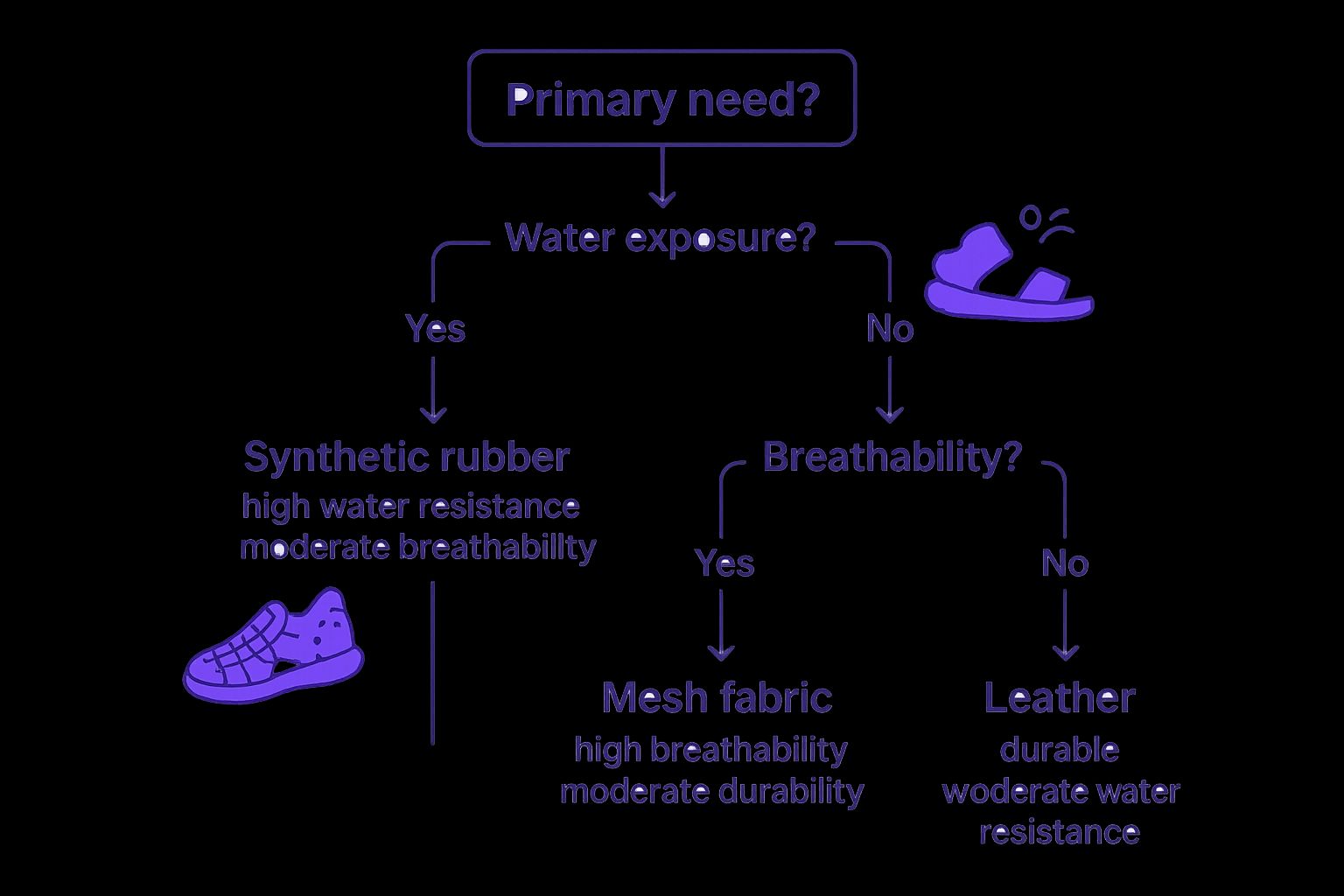
As you can see, if water is in the forecast, synthetics are your go-to. For dry land adventures, you can choose between breathable mesh or durable leather.
Closures That Make Life Easier
Next up: how the sandals fasten. When you’re trying to get a wiggly toddler out the door, the last thing you need is a complicated buckle. This is where easy-on, easy-off designs become a parent's best friend.
Honestly, Velcro straps are the undefeated champion in the toddler shoe world. They give you a secure, super-adjustable fit, which is crucial since toddler feet can be chubby, narrow, or somewhere in between. Better yet, they empower little ones to start putting on their own shoes—a huge step toward independence!
The Great Toe Debate: Open vs. Closed
Should you go for breezy open-toed sandals or protective closed-toe styles? The answer really just depends on what you have planned for the day.
An open-toe sandal is like a convertible on a sunny day—perfect for maximum airflow during casual strolls or relaxing at the beach. A closed-toe sandal is like a sturdy SUV—built to protect against bumps and scrapes on rugged terrain, like the playground or a nature trail.
For active toddlers who are still mastering their coordination, a closed-toe design with a rubber bumper is definitely the safest bet. It guards against stubbed toes on playground equipment, rocks, and that one toy you always trip over. Open-toe styles are fantastic for less intense activities where keeping cool is the top priority. Many parents find it helpful to have one of each to cover all summer scenarios.
To make things even clearer, here's a quick comparison of the features we've covered.
Toddler Sandal Feature Comparison
| Feature | Best For... | Pros | Cons |
|---|---|---|---|
| Leather Material | All-day dry wear, special occasions | Durable, supportive, molds to the foot | Not water-friendly, can be slow to dry |
| EVA/Synthetic Material | Beach, pool, splash pad, water play | Waterproof, lightweight, easy to clean | Can be less breathable in dry heat |
| Velcro Closure | Quick dressing, independent toddlers | Highly adjustable, easy for kids to use | Can wear out or collect debris over time |
| Open-Toe Design | Casual outings, hot weather, beach | Maximum breathability, keeps feet cool | Offers no protection for toes |
| Closed-Toe Design | Playgrounds, hiking, active play | Protects against stubs and scrapes | Can be warmer, less airflow |
This table should help you quickly pinpoint the right combination of features for whatever your summer holds.
Soles That Stick the Landing
Last but not least, flip that sandal over and check out the sole. A non-slip, grippy sole is absolutely non-negotiable. Toddlers are magnets for slippery surfaces, from dewy grass at the park to that tiny puddle of water on the kitchen floor.
Look for a sole with a good tread pattern—think grooves, bumps, and varied textures. This is what creates the friction and traction they need to stay upright during their energetic bursts of play. The sole should also be flexible enough to bend with their foot but still sturdy enough to protect them from whatever they might step on.
By checking these four key areas—materials, closures, toe design, and soles—you'll be able to confidently pick a pair of toddler summer sandals that are ready for any adventure.
How to Get the Perfect Fit Every Single Time
We’ve all been there. You buy a new pair of sandals, and what feels like five minutes later, your toddler’s toes are already crammed against the front. Their feet grow at lightning speed, making finding the right fit feel like trying to hit a moving target. But nailing the size isn't just about avoiding a quick return trip to the store—it’s crucial for their safety and healthy foot development.
A sandal that fits just right helps your little one move with confidence and cuts down on trips and falls. If it’s too big, they can easily stumble. Too small, and it can pinch their toes and get in the way of proper muscle growth. Let's walk through a super simple way to measure their feet at home so you can get it right every time.
The Foolproof At-Home Measurement Guide
You don’t need any fancy gadgets. All it takes is a piece of paper, a pencil, and a ruler. It’s that easy.
Here’s how to do it:
- Wait Until Evening: It's best to measure in the afternoon or evening. Just like our feet, a toddler's feet swell a tiny bit during the day, so measuring later gives you the truest size.
- Stand Up Straight: Have your child stand on the paper, making sure it’s on a hard, flat surface. You want them to put their full weight on their feet, which lets them spread out naturally.
- Trace Around the Foot: Carefully trace an outline around each foot. Don’t stress about making it a masterpiece! A simple outline is all you need.
- Measure Length and Width: Now, grab your ruler. Measure from the very back of the heel to the tip of their longest toe. It’s also a good idea to measure the widest part of their foot, since some little ones have chubbier feet that need a bit more room.
- Go with the Bigger Foot: It’s totally normal for one foot to be a little bigger than the other. Always, always use the measurement from the larger foot to pick their size.
To make it even simpler, we've put together a fantastic printable chart. You can find it and more detailed instructions in our complete sizing guide to take all the guesswork out of the process.
The "Rule of Thumb" and Other Quick Fit Checks
Once the new sandals arrive, there's one last check to do. It’s the classic "rule of thumb."
Have your toddler stand up in their new sandals. Gently press your thumb down in the space between their longest toe and the end of the shoe. You’re looking for about a half-inch of space—or about the width of your thumb.
That little bit of extra room is key. It's not really "grow room"—it's wiggle room that lets their foot move forward as they walk without their toes bumping the front.
Check the width, too. The straps should feel snug, but not tight. If you can't slide your pinky finger underneath, they're probably too tight. A dead giveaway is any red marks on their skin after wearing them for a few minutes. That’s your sign to size up or find a wider fit.
Why You Should Never Buy Shoes "To Grow Into"
It’s so tempting, right? Buy a size up and hope they last longer. But for toddlers, this is a big no-no. A shoe that’s too big won’t bend where their foot naturally does, which can lead to an awkward, stilted walk. Even worse, that extra length is a major tripping hazard—the last thing you need for a wobbly toddler who’s still mastering their balance. Always choose a perfect fit for right now. It's the best way to keep them safe and support their natural, healthy movement.
Pairing Sandals with Summer Adventures
Okay, now for the really fun part! Choosing the right toddler summer sandals goes way beyond just the technical stuff. It's about matching their shoes to the memories you're about to create. The perfect pair is a trusty sidekick for every sunny-day activity, whether they're conquering the playground climber or dipping tiny toes in the ocean for the very first time.
Think of their sandals in terms of the adventures they'll be going on. You wouldn't wear hiking boots to a pool party, right? It’s the same idea for your toddler—they need different styles for different kinds of play. Let's break down the essential categories for a summer packed with fun, function, and style.
The Playground Pro
For long days at the park, daycare, or on a little nature walk, protection is absolutely key. This is where a Playground Pro sandal really shines. These are the workhorses of their summer wardrobe, built to handle running, jumping, and the occasional tumble with ease.
You’ll want to look for these features:
- Closed-Toe Protection: A rubber toe bumper is a must. It's like a little helmet for their toes, guarding against stubs on climbing structures, stray rocks, and tricycle pedals.
- Durable, Grippy Soles: Traction is everything on slippery slides and loose mulch. A sturdy, non-slip sole gives them the confidence to stay on their feet during active play.
- Secure Straps: Adjustable velcro straps around the ankle and over the top of the foot make sure the sandal stays put, no matter how fast they're moving.
Think of these as the rugged SUVs of the shoe world, ready for any terrain your little explorer wants to tackle.
The Beach Explorer
When sand and water are on the agenda, you need a sandal that can handle the mess and clean up in a flash. The Beach Explorer is lightweight, waterproof, and made for splashing. These are the shoes you can rinse off under a tap and have them ready for the next adventure in minutes.
The best ones will have:
- Water-Friendly Materials: Look for styles made from things like EVA foam or other quick-drying synthetics. They won't get waterlogged, heavy, or cause nasty rubbing when they’re wet.
- Easy to Clean: A simple, molded design is a lifesaver. It means there are no little nooks and crannies for sand to hide in.
- Lightweight Design: They should feel like they're barely there, making it easy for your toddler to dash along the shoreline without being weighed down.
For a great selection of sandals built for water play, check out Pediped's collection of water-friendly styles.
Party-Ready Pairs
But what about those slightly dressier summer moments, like a family BBQ, a birthday party, or a nice dinner out? You don't have to choose between style and comfort. Party-Ready Pairs give you a more polished look without ditching the foot-healthy features your toddler needs.
These sandals prove that supportive footwear can also be completely adorable. They combine the solid structure of a great everyday sandal with sweet details like metallic finishes, floral accents, or classic colors that pull any summer outfit together.
The global market for kids' sandals was valued at about USD 3.85 billion and is expected to keep growing. That growth is all about parents wanting this exact mix of style and function. You can see more about this trend by checking out the full kids' sandals market report.
By having a go-to sandal for each type of adventure, you can be sure your toddler’s feet are always protected, comfortable, and ready for whatever fun the day brings.
Keeping Summer Sandals Fresh and Clean
Let's be real—summer fun is messy fun. And that’s a good thing! From muddy puddles to sandy beaches and the inevitable juice box spill, your toddler’s favorite sandals are going to see some action. Keeping their toddler summer sandals looking fresh is about more than just appearances; it's about good hygiene and making sure they last through all the adventures.
Think of it as a quick pit stop between play sessions. A little bit of care goes a long way, protecting your investment and keeping your little one's feet healthy and happy. Don't worry, it's way easier than convincing them to share their last cracker!
Simple Cleaning for Different Materials
You wouldn't use window cleaner on a wood table, right? The same idea applies here. Different sandal materials need different kinds of love. A one-size-fits-all approach can actually damage certain materials, so it’s always best to tailor your cleaning method.
Here are a few super simple steps for the most common materials:
- For Leather Sandals: Mix a tiny bit of mild soap with water. Dip a soft cloth into your soapy mix, wring it out really well, and then gently wipe away the dirt. Let them air dry completely, but keep them out of direct sunlight, which can make the leather dry out and crack.
- For Fabric or Mesh: Good news—many of these are machine washable! Always check the care tag first, but most can go right into a mesh laundry bag. Just toss them in on a gentle cycle with cold water and always, always let them air dry.
- For EVA Foam or Rubber: This is the easiest of all! Just rinse them under some cool water. For stubborn grime, use a soft brush or cloth with a little soap to give them a light scrub. They dry in a flash and are ready for round two.
For more detailed tips on specific materials and styles, our complete care instructions have everything you need to keep every pair in top-notch shape.
Spotting When It's Time for a New Pair
Toddler feet grow at the speed of light, and even the toughest sandals have a lifespan. Knowing when to retire a pair is just as important as keeping them clean, because worn-out shoes lose their support and can become unsafe.
A sandal's condition tells the story of every adventure it’s been on. When the tread is gone and the straps are frayed, it’s a sign that the shoe has done its job well. It's time for a new one to step in.
Keep an eye out for these key signs of wear and tear:
- Bald Soles: Flip the sandal over. If the tread is worn smooth, it's lost its grip, turning it into a slipping hazard.
- Frayed or Stretched Straps: Velcro that won't stick or straps that have stretched out can't hold the foot securely, which increases the risk of trips and falls.
- Compressed Cushioning: If the footbed looks flat and squished down, it’s no longer providing the comfort and support your child’s growing feet need.
This kind of attention to detail is part of a bigger trend we're seeing, where parents are more conscious than ever about their purchases. The global sandals market, which includes toddler summer sandals, was valued at a whopping USD 326 million and is expected to keep growing. This is partly because parents are looking for durable, high-quality options, including those made from sustainable materials. You can read more about the sandals market trends on congruencemarketinsights.com. By taking good care of your toddler’s sandals, you’re making sure they get every last bit of fun out of each pair.
Your Top Toddler Sandal Questions, Answered
When it comes to picking out summer sandals for your toddler, questions are bound to pop up! It’s only natural to want the absolute best for those tiny, developing feet. We get it. We hear these questions all the time from parents just like you.
Think of this as your go-to guide for those nagging concerns. We've rounded up the most common questions to help you feel totally confident in your choice.
Open-Toe or Closed-Toe: Which is Better?
Ah, the great sandal debate! The truth is, the best choice really depends on what your little one is getting into that day.
- Closed-toe sandals are your go-to for serious playtime. Picture them as a little bumper for your toddler's toes—perfect for the playground, daycare, or exploring a new trail where stubs and scrapes are part of the fun. They offer fantastic protection when your child is still getting the hang of their coordination.
- Open-toe sandals are amazing for those more laid-back moments. They’re just the thing for a casual stroll, a day at the beach, or hanging out by the pool where you want as much airflow as possible. They keep feet cool and are a breeze for water play.
Our rule of thumb? Protection for active play, open-air for kicking back.
How Often Should I Check the Fit?
Toddler feet grow at lightning speed—it can feel like they sprout a new size overnight! Make it a habit to check the fit of their sandals every 4-6 weeks. The easiest way is the classic "thumb test." Have your toddler stand up straight and press your thumb down at the very front of the sandal.
You're looking for about a half-inch of space, or roughly the width of your thumb, between their longest toe and the tip of the shoe. This isn't just for growth; it gives their foot the room it needs to move forward naturally with each step.
Also, keep an eye out for any red marks on their feet after they’ve taken their sandals off. That’s a tell-tale sign things are getting too tight and it’s time to move up a size.
Can I Buy Sandals a Size Up for Them to Grow Into?
It’s tempting to try and get ahead of the growth spurts, but it’s best to resist buying shoes that are too big. For a toddler who is still mastering balance and a steady walk, sandals that are too large can quickly become a tripping hazard.
An oversized shoe can also cause them to walk differently, often by curling their toes to keep the sandal on. This can get in the way of healthy muscle and arch development. For their safety and comfort, always stick with a pair that fits them perfectly right now.
Ready to find that perfect pair that ticks all the boxes for healthy development and summer fun? Check out the pediatrician-approved collections at Pediped, where every single sandal is designed with your little one’s happy, growing feet in mind. Find their next favorite pair at https://www.pediped.com.
Leave a comment