


Ready for an adventure? Finding the best toddler shoes can feel like a huge quest, but we're here to turn it into a fun treasure hunt! This guide is your map to finding comfy, tough, and perfectly fitting shoes that will keep your little explorer’s feet happy as they wobble, run, and jump through their amazing world.
Your Guide to Happy Little Feet
Choosing your toddler’s shoes is a pretty big milestone! It goes way beyond just picking out something cute (though that’s definitely part of the fun). It’s about giving their growing feet the right kind of support as they graduate from adorable wobbles to confident sprints across the living room.
Those tiny feet are still developing, and the right pair of shoes acts like a trusty sidekick on their journey of discovery.
Think of their first real shoes as the foundation for a lifetime of healthy walking. A good pair needs to be flexible enough to bend with their natural movement—almost like being barefoot—but tough enough to handle surprise encounters with mud puddles and sidewalk chalk masterpieces.
Let's skip the confusing charts and dense technical jargon. Instead, consider this guide a friendly chat, helping you spot the key features that make a shoe great for your little one.
What's Inside This Guide?
Here's a sneak peek at the treasure we'll uncover together:
- The Perfect Fit: Why getting the size just right is a superpower for tiny feet.
- Stage-by-Stage Support: How to match their shoes to their walking level.
- Decoding Features: We’ll break down what really matters, like flexible soles.
- Stress-Free Shopping: Tips to make finding shoes a tear-free (and maybe even fun!) experience.
The goal isn't just to cover their feet; it's to give them the confidence to explore their world. The right shoes protect, support, and empower them on every single adventure.
As you consider the best gear for your toddler's feet, you might also be thinking about other meaningful gifts. For some great ideas beyond the shoe box, you can discover other thoughtful non-toy gifts for kids.
And if you want to dive deeper into the science of it all, you can learn more about healthy foot development backed by Harvard experts.
Alright, let's get started on finding that perfect pair!
Why the Perfect Fit Is a Toddler Superpower
Let's talk about the secret to a great pair of toddler shoes. It’s not just about the cute design—it’s all about the perfect fit. This is so much more than a number on a box; it’s about giving those tiny, developing feet the freedom to wiggle, grow, and strengthen the way nature intended.
Think about trying to run a race in shoes that are way too big or painfully tight. You wouldn't get very far, right? It's the same for a toddler. A bad fit can throw off their balance and take all the fun out of exploring the world.
Getting the fit right is truly the most important step in finding the best toddler shoes for your little one.
Becoming a Pro Shoe Fitter
You don’t need any special equipment to become a shoe-fitting pro for your child. In fact, you can master the basics with a few simple tricks, even with a toddler who has a serious case of the wiggles.
Here are a few easy ways to check the fit:
- The Thumb Test: Once the shoe is on, press your thumb at the very front. You should feel about a thumb's width of space between their longest toe and the tip of the shoe. That's the sweet spot for growth and wiggle room.
- Check the Width: Gently squeeze the sides of the shoe. It should feel snug without being restrictive.
- The Pinky Test: Try slipping your pinky finger between your toddler’s heel and the back of the shoe. If it fits in easily, you've got a great fit!
For some extra guidance, especially when trying to measure a moving target, our online sizing guide to measure your child's feet is a total game-changer.
This focus on proper fit isn’t just a parent-to-parent tip; it’s a big deal. The global market for children’s toddler shoes was estimated at over $700 million in 2025 and is only expected to grow. You can read more about toddler shoe market trends to see just how much this industry is expanding.
A shoe that’s too big can cause tripping, while one that’s too small can restrict toe movement. Getting it just right gives your toddler the confidence to conquer their world.
And remember, those little feet grow fast! Make it a habit to check the fit every month or two.
Matching Shoes to Their Walking Stage
Watching your toddler learn to walk is an incredible journey, and just like any big adventure, they need the right gear. It's about matching the shoe to their specific stage of development.
Think of it this way: you wouldn't wear hiking boots to a ballet class. The same logic applies to your toddler's feet. Let's break down what those stages look like.
The First Steps: New Walkers
This is the magic moment! Your little one is just starting to take those first tentative, wobbly steps. Their feet are soft and working hard to build strength and balance. At this stage, the goal is to protect their feet while letting them feel the ground as much as possible.
- What it looks like: A few independent steps between furniture, lots of wobbling, and a look of pure concentration.
- The perfect shoe: Look for something lightweight with a super-flexible, soft sole. You want a shoe that mimics the freedom of being barefoot. Pediped’s Originals are designed for exactly this. To dive deeper, our guide on toddler soft sole shoes is a fantastic resource.
This timeline gives you a great visual of how a child's footwear needs change as they grow.
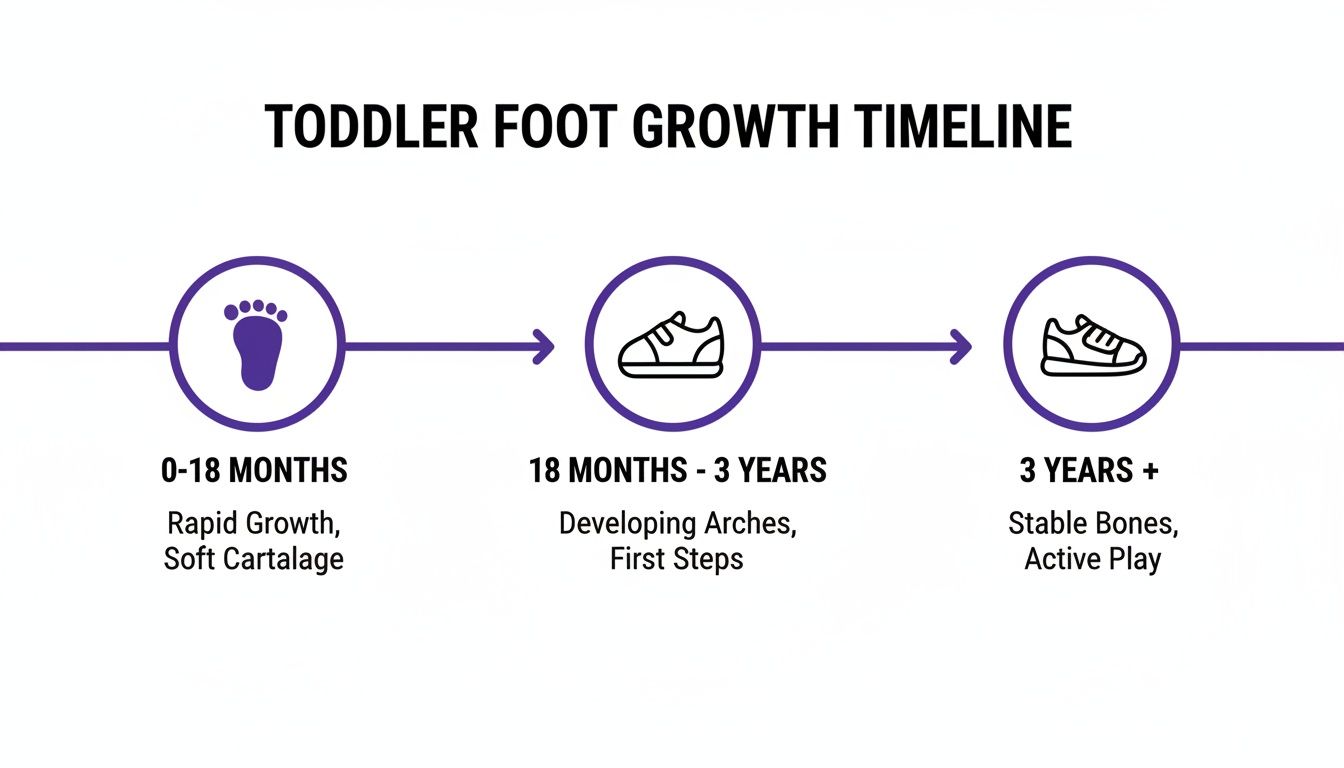
As you can see, their needs evolve quickly. A shoe that was perfect a few months ago might not be the right fit for their newfound skills.
Gaining Speed: Confident Cruisers
They're off! Your toddler is now walking with purpose and starting to pick up the pace. Now, they need a bit more durability and traction to prevent slips, but without sacrificing the flexibility that’s still so important for their developing feet.
Going Pro: The Experienced Runner
Welcome to the big leagues! Your toddler is now a seasoned pro at walking, running, jumping, and climbing. This is when support and durability become even more important. You need a shoe with a tough rubber sole that can handle all their adventures, but one that is still engineered to be flexible. Pediped's Grip 'n' Go and Flex lines are built for this.
Toddler Walking Stages and Their Perfect Shoe Match
| Walking Stage | What It Looks Like | Key Shoe Feature | Pediped Line Match |
|---|---|---|---|
| New Walker | Wobbly first steps, cruising furniture | Soft, flexible sole that mimics being barefoot | Originals |
| Confident Cruiser | More stable walking, starting to speed up | Flexible sole with added grip and durability | Grip 'n' Go |
| Pro Runner | Running, jumping, and climbing with ease | Durable, flexible rubber sole for support | Flex |
Using this chart can help take the guesswork out of shoe shopping, ensuring your little one always has the right foundation to explore their world with confidence.
Decoding Shoe Features That Actually Matter
Alright, let's cut through the noise. Once you know what to look for, finding the perfect pair becomes simple. We're going to focus on the features that truly help your little one’s feet develop and thrive.
First up, the most important test: flexibility. A toddler’s foot is still a work in progress, so their shoes need to bend and move right along with them. If a shoe feels stiff, just imagine how restrictive it feels on their tiny feet!
Here's a quick trick: try to bend the shoe in half. If it folds easily, you've found a great option. If you have to wrestle with it, it’s far too rigid.
The best toddler shoes should feel less like a hard shell and more like a protective second skin. This flexibility is what builds strong muscles and promotes good balance. For a deeper dive, our guide on flexible shoes for toddlers is packed with more great info.
The Material World and Wiggle Room
Next on our checklist is what the shoe is made of. Toddler feet can get incredibly sweaty! That’s why breathable materials are a must. Look for options like genuine leather or lightweight canvas that let air circulate.
Another non-negotiable is a wide toe box. A narrow, pointy shoe squishes those toes together, which can hinder healthy development. A roomy front gives them the space they need to grip the ground and build strength.
Closures That Click
Finally, let's talk about how the shoe stays on.
- Velcro Straps: These are a parent’s best friend for quick and easy mornings!
- Laces: Once your child gets a bit older, laces offer a super secure and adjustable fit.
The toddler shoe market alone was estimated to be worth over $8 billion in 2025, a clear sign that parents worldwide are prioritizing these key developmental features.
By keeping these essentials in mind—flexibility, breathable materials, a wide toe box, and smart closures—you’ll be able to spot the perfect toddler shoes like a seasoned pro. You've got this!
How to Make Shoe Shopping Fun and Easy
Alright, super-parent, you’re officially a toddler shoe expert! Now comes the real challenge: getting those perfect shoes on your little one’s feet without it turning into a wrestling match. Let's make the actual shopping trip a total breeze.
Forget the stress. We're turning this chore into a playful adventure. With the right game plan, you can make shoe shopping a cheerful memory instead of a tear-filled saga.
Timing Is Everything
Here's a pro tip: shop for shoes in the afternoon. Just like our feet, toddler feet swell slightly throughout the day. Measuring them when they’re at their biggest ensures you get a comfy fit.
Also, try to shop after a nap and a snack. A happy, well-rested toddler is a much more cooperative shoe model!
The Ultimate Try-On Game
Once you’ve got a potential pair, it's time for the "fun fit" test. Make it a game to see how the shoes really perform in action.
Here’s a playful checklist to run through:
- The Wiggle Test: Ask them to wiggle their toes. You should see a little movement, confirming the toe box is roomy.
- The Stomp and Jump: Encourage a few good stomps. Do the shoes stay securely on their feet?
- The Red Light, Green Light Walk: Have them walk a few paces. They should be moving naturally without tripping.
- The Dance Party Finale: Put on their favorite song! This is the ultimate test of flexibility and comfort.
After your try-on game, quickly slip the shoes off and check their feet. Look for any red marks or indentations. This is the quickest way to spot uncomfortable rubbing spots before they become a problem.
Finding the best toddler shoes doesn’t have to be a headache. By turning the process into a fun activity, you can find a pair that supports their every adventure.
Keeping Their Favorite Shoes Ready for Adventure
So, you’ve found the perfect pair! Now comes reality. Toddler shoes are basically magnets for mud, grass stains, and playground grime. But keeping them ready for the next adventure doesn't have to be a major headache.
A little TLC goes a long way in making those awesome shoes last until the next growth spurt. A simple wipe-down after a particularly messy day can work wonders.
Quick Cleaning Hacks for Busy Parents
A quick spot clean is often all it takes to erase the evidence of a fun-filled afternoon.
- For Leather and Synthetics: Your best friend here is a simple damp cloth. Gently wipe away any dirt and let the shoes air dry naturally.
- For the Canvas Crew: Bigger messes on canvas shoes can often be handled with a gentle wash, but always check the brand’s recommendations first.
- For Stinky Situations: The key to keeping shoes fresh is letting them air out completely between wears.
To keep their favorite shoes looking their best, check out this helpful material-specific guide on how to clean sneakers at home.
For instructions tailored specifically to our designs, don’t forget to visit Pediped’s official care instructions page. Just a few minutes of care ensures their best toddler shoes are always prepped for action.
Your Top Toddler Shoe Questions Answered
Still got a few questions bouncing around? Let’s clear up a few of the most common ones so you can feel like a shoe-shopping pro.
Think of this as a quick, friendly chat to iron out any lingering doubts. We want you to feel 100% confident and happy with your choice.
How Often Should I Measure My Toddler's Feet?
Toddler feet grow unbelievably fast! To keep up with those growth spurts and avoid cramped toes, it's a good idea to measure their feet every two to three months.
Don’t forget the thumb test we mentioned earlier, either. The moment you notice that wiggle room shrinking, you know it’s time to start looking for their next pair.
Are Hand-Me-Down Shoes a Good Idea?
We get it. The temptation to use hand-me-down shoes is strong! But when it comes to toddler shoes, it’s usually best to start fresh.
Shoes gradually mold to the unique shape and walking style of the child who wore them first. A shoe that’s already broken in by someone else might not give your little one the specific support their developing feet need.
The only real exception? If the shoes were barely worn and show zero signs of wear, they might be okay. But for their main, everyday shoes, new is almost always the best bet.
Is It Worth Investing in More Expensive Shoes?
When you see the price differences between shoe brands, it’s natural to wonder if that higher price tag really makes a difference. Investing in a well-constructed shoe from a brand like Pediped often pays for itself in the long run.
Here’s what you’re really paying for:
- High-Quality Materials: Think genuine, breathable leather and tough stitching.
- Thoughtful Design: Truly flexible soles and roomy toe boxes are engineered for development.
- Podiatrist-Approved: Trusted brands often work with foot health experts.
At the end of the day, the goal is to find the best quality shoe you can in your budget—one that ticks all the crucial boxes for fit, flexibility, and materials.
Ready to find the perfect pair that combines fun, playful style with podiatrist-approved design? Explore the full collection at Pediped and give your toddler the best foundation for a lifetime of happy, healthy steps. Find their next favorite pair at https://www.pediped.com.
Leave a comment