


Ready to find the absolute best sneakers for your little one? Let's turn this chore into an adventure! Think of it less like a shopping trip and more like outfitting a tiny explorer for their next grand quest. Because let's be real, the best sneakers for kids aren't just about style—they're about being flexible, durable, and fitting those constantly growing feet just right.
Your kiddo needs gear that gives them the support to conquer the world, without ever getting in the way of the fun. Let's do this!
Your Map to Happy Feet and Epic Adventures
Consider this your personal treasure map to the perfect pair of kicks. We’re skipping the boring stuff and getting straight to what matters: finding shoes that are comfy, tough, and awesome for healthy foot development. From those first adorable wobbles to full-speed playground sprints, we’ve got your back.
This is about more than just picking out cute shoes. It’s about giving your child the freedom to run, jump, and play with total confidence. You're not just a parent; you're the official outfitter for a little adventurer!
What to Expect on This Journey
Together, we’ll dive into why a super-flexible sole is a must-have and figure out exactly how much wiggle room their little toes really need.
Here’s a sneak peek at our adventure checklist:
- Growing Feet 101: We’ll decode what makes little feet so unique.
- Age-by-Age Sneaker Needs: From soft-soled shoes for new walkers to sturdy kicks for school-age pros.
- Mastering the Perfect Fit: Simple tricks to get the sizing right every time, stress-free!
- Caring for Their Kicks: Tips to keep those sneakers looking fresh and spotting when it’s time to size up.
For busy parents, here’s a super quick table to keep the most important points in mind.
Kid's Sneaker Essentials At A Glance
| Growth Stage | Key Feature Focus | Why It Matters |
|---|---|---|
| Infant/New Walker | Ultra-Flexible, Soft Soles | Mimics barefoot walking for natural muscle development. |
| Toddler | Good Grip, Lightweight, Easy On/Off | Supports balance for unsteady walkers; promotes independence. |
| Little/Big Kid | Durability, Supportive Cushioning | Withstands rough play and provides comfort for active days. |
This table is your cheat sheet, but we'll be diving deep into each of these areas.
By the end of this, you’ll feel like a shoe-shopping champion, ready to confidently browse our collection of kids' sneakers and find the perfect pair. This is going to be fun!
Understanding What Really Matters for Growing Feet
Alright, let's get down to what makes a great kids' sneaker. It's so much more than just a fun color or a cool character. To find the best shoes, you have to know what their busy, developing feet actually need. Think of the perfect sneaker as a trusted sidekick for your child's adventures—it’s there to support them, not get in the way.
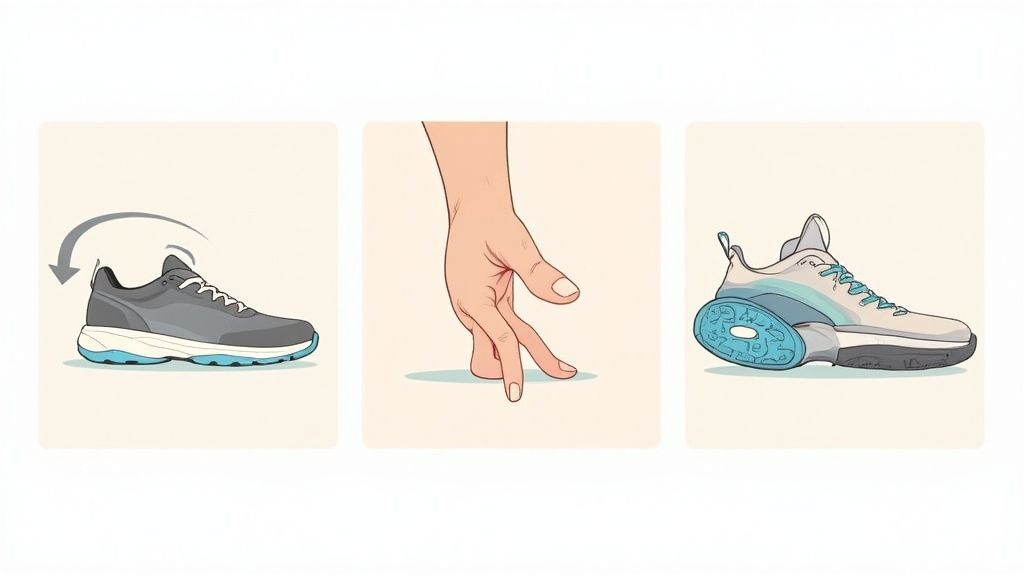
We're going to focus on the three golden rules of good footwear: Flexibility, Fit, and Function. Once you get these down, you'll be able to confidently find shoes that actually promote healthy foot development. And as you think about these, it's cool to remember the key milestones for when babies start walking, since this is where it all begins!
Bend and Flex: The First Golden Rule
Can you imagine trying to run in stiff wooden clogs? Ouch! That’s what a rigid shoe feels like to a little foot. Flexibility is completely non-negotiable.
A good kids' sneaker needs to bend easily where the foot naturally bends. This movement is critical because it lets all those tiny foot muscles get strong and develop the way they're supposed to.
Pro Tip: Give the shoe a quick "taco test!" If you can’t easily fold the sneaker in half, it’s going to be too stiff for a kid on the move.
This kind of flexibility is a cornerstone of healthy development. You can learn more about how expert-backed designs support this in our guide to healthy little feet.
Finding That "Just Right" Fit
Next up is getting the fit right, which can feel like hitting a moving target with how fast little feet grow! Shoes that are too snug can cramp their toes, but shoes that are too big are a serious tripping hazard.
Here's how you can nail the fit:
- The Famous Thumb Test: With the shoe on, have your kid stand up straight. You should feel about a thumb's width of space between their longest toe and the tip of the sneaker. That's the perfect amount of wiggle room!
- The Heel Check: Ask your child to slide their foot forward. You should just be able to slip your pinky finger between their heel and the back of the shoe. This confirms it’s not too loose.
- No Pinching on the Sides: The sneaker should feel comfy and snug, but never tight.
Function Over Flash: Grippy Soles and Smart Materials
Finally, let’s talk about function. A slick, smooth sole is a recipe for disaster on the playground. Excellent grip is a must-have to keep them steady on their feet.
The materials play a huge part, too.
- Breathable Mesh: This is a game-changer for active kids. It lets air flow freely, which keeps their feet cool and helps cut down on that classic sweaty-shoe smell.
- Durable Leather or Synthetics: These are champs when it comes to standing up to scuffs and scrapes from all that kid-level chaos.
By zeroing in on these core elements—flexibility, fit, and function—you’ll be ready to find the perfect pair for your kid’s happy, healthy feet.
Choosing the Right Sneakers for Every Age and Stage
Welcome to the sneaker breakdown! Let’s be real: a shoe that’s perfect for a wobbly baby is definitely not going to work for a grade-schooler tearing up the playground. Think of this as your personal cheat sheet for finding the best sneakers for kids, no matter their age.
We’ll walk through each stage, step by step, so you can feel like a total pro on your next shoe-shopping mission.
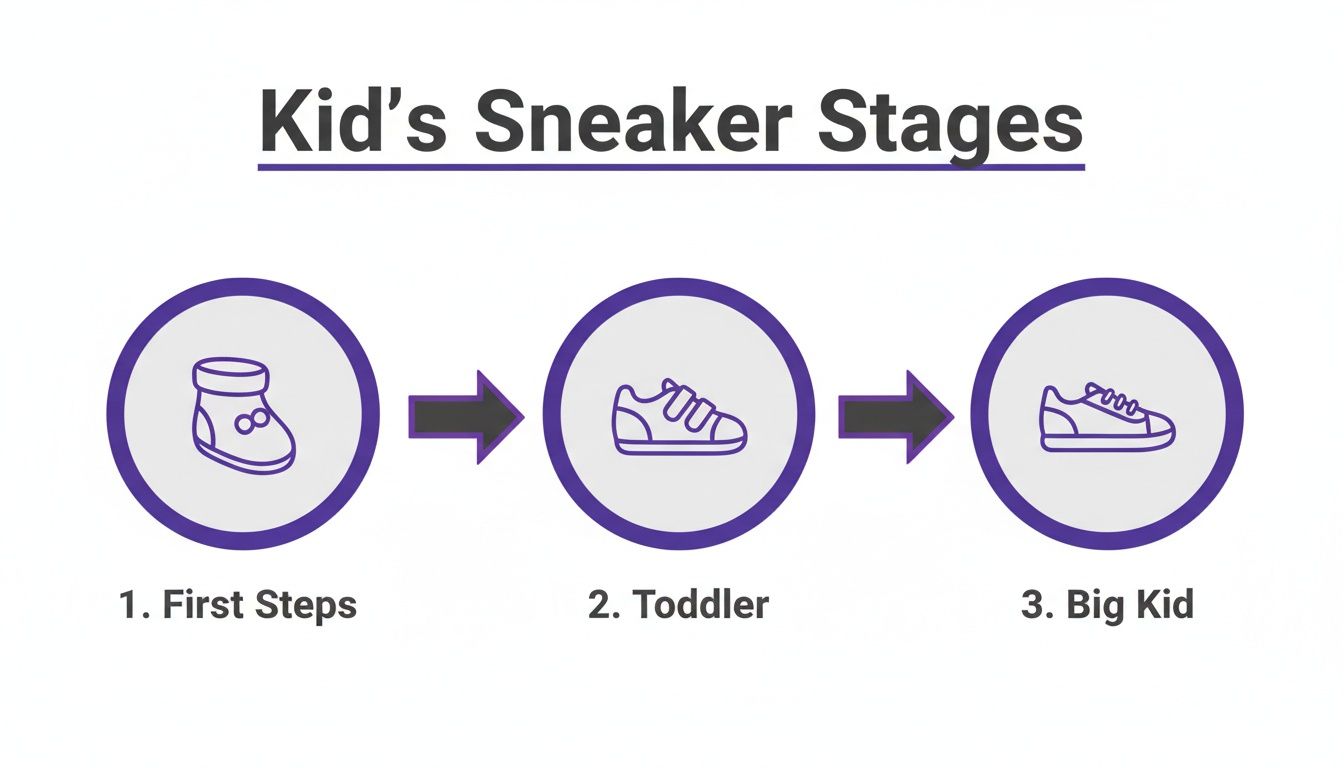
The First Steps Crew (Infants and New Walkers)
This is the wobbly, wonderful beginning of life on two feet! For babies and new walkers, the goal is a shoe that’s as close to barefoot as possible. Their tiny feet are still developing, and they need to feel the ground to build balance and confidence.
At this stage, you want sneakers that are incredibly lightweight with an ultra-flexible, soft sole. A soft, pliable shoe allows their foot to bend, grip, and move naturally.
- Look for: Buttery-soft materials and soles you can easily bend with one hand.
- Avoid: Heavy, rigid shoes that restrict that natural movement.
- Pro Tip: If you can’t easily fold the shoe in half (the taco test!), it’s probably too stiff.
This barefoot-mimicking approach is so important. If you're diving deep into this topic, our guide on the best shoes for a baby learning to walk has even more fantastic tips.
The Toddler Tornado Stage (Busy Toddlers)
Get ready for action! Toddlers are a whirlwind of pure energy, and their sneakers absolutely need to keep up. They're running, climbing, and exploring with serious gusto.
Now is the time for a shoe with a slightly firmer (but still bendy!) sole with great grip. Think of it as upgrading their tires for better traction. Durability also becomes a hero at this stage.
And let’s talk about a parent’s best friend: easy-on, easy-off closures! Velcro straps are an absolute game-changer. They save you precious time during those frantic morning rushes.
The Big Kid League (Preschool and School-Age)
Once they hit preschool and beyond, their sneaker needs shift again. These big kids are playing sports, navigating school hallways, and embarking on epic weekend adventures. Their sneakers need to be the ultimate all-rounders: tough, supportive, and comfy.
For this age group, look for features like:
- Reinforced Toe Caps: A must-have to protect against scuffs from playground antics.
- Supportive Cushioning: This helps absorb the impact of running and jumping.
- Breathable Materials: Mesh is perfect for keeping active feet cool and comfortable.
At this stage, their sneakers are essential equipment for school, sports, and just being a kid. You’re not just buying sneakers; you’re fueling their next big adventure!
How to Master the Perfect Fit Every Single Time
Let’s be honest, the dreaded shoe store meltdown is a parenting rite of passage. One minute you're browsing, and the next, you're trying to wrangle a wiggling foot into a tiny sneaker. We’ve all been there!
But what if you could turn that potential disaster into a quick, successful mission? Good news: you can. Getting the perfect fit isn't magic, just a few simple tricks that keep them happy and ready for adventure, minus the drama.
Nail the Measurement at Home
First, let's get an accurate measurement at home. It’s way easier than you think! All you need is paper, a pencil, and your little helper.
Here's how:
- Trace Their Foot: Have your child stand on the paper and quickly trace around their foot.
- Measure the Outline: Use a ruler to measure from the tip of the longest toe to the back of the heel.
- Add Wiggle Room: Take that measurement and add about half an inch (or 1.2 cm). This extra space is the secret to a great fit!
Now you have a reliable number. For even more detailed guidance, check out our complete Pediped sizing guide.
The 5-Step Perfect Fit Checklist
Once you have the shoes, it’s time for the final check. This quick checklist makes it easy to confirm you've found "the one."
| Checklist Step | Action To Take | What To Look For |
|---|---|---|
| 1. The Thumb Test | Have your child stand up. Press your thumb at the front of the shoe. | You should feel about a thumb's width of space. |
| 2. The Width Check | The shoe should feel snug, but not tight. | It should hug their foot without pinching. |
| 3. The Heel Grip | Ask your child to take a few steps. | The heel should stay put and not slip out. |
| 4. The "Walk It Out" | Let them walk, jump, and run a little. | They should move comfortably and naturally. |
| 5. The Comfort Question | Simply ask, "How do they feel?" | Listen for complaints about rubbing or tightness. |
Running through these steps takes less than a minute but guarantees you're making a choice that supports their active little feet.
Sizing Myth Buster! It’s tempting to buy shoes a full size up to "get more wear out of them." But shoes that are way too big can be a major tripping hazard. A proper fit is always the safest bet.
Two Final Tricks of the Trade
First, always try on shoes at the end of the day. Feet naturally swell after a day of playing, so fitting them in the afternoon ensures they'll still be comfortable.
Second, bring the right socks! Have your child wear the same type of socks they'll typically use with their sneakers. A thick winter sock versus a thin summer one can completely change the fit.
Caring for Kicks and Knowing When to Size Up
You did it! You’ve found the perfect pair of sneakers. Now, the next adventure begins: keeping those shoes looking fresh and knowing when it's time for the next size.
Think of this as your post-purchase playbook. We’ll cover how to handle everything from muddy mishaps to those inevitable growth spurts.
Keeping Those Sneakers Sparkling
Kids' shoes are magnets for dirt, but keeping them clean doesn't have to be a major chore.
- For Mesh and Canvas: A soft brush with a bit of mild soap and water is your best friend.
- For Leather and Synthetics: A quick wipe with a damp cloth is all you need to tackle most scuffs.
For a deeper dive, our complete Pediped care instructions have you covered.
The Great Stink and How to Stop It
Ah, the scent of a well-loved pair of kids' shoes. You don't have to surrender to it!
Try tucking a dry tea bag into each shoe overnight—they're amazing at absorbing odors. A sprinkle of baking soda works beautifully, too. Just let it sit for a few hours before tapping it out.
Spotting the Signs It’s Time to Size Up
This is a big one. Kids' feet grow incredibly fast! Shoes that are too small aren't just uncomfortable; they can hinder healthy development.
A good rule of thumb is to check the fit every 2-3 months. Pop a reminder in your phone!
Your child might not always tell you their shoes are feeling snug, so it's time to put on your detective hat. Here are the tell-tale clues:
- The Toe-to-Tip Test: Are their toes touching the very front of the shoe? There should always be about a thumb’s width of wiggle room.
- Red Marks and Imprints: After taking off their shoes, look for any red marks on their feet. These are classic signs of a shoe that’s too tight.
- Sudden Shoe Aversion: Is your kid suddenly fighting you when it’s time to put on their sneakers? It's often the first sign of a bad fit.
- Strange Wear and Tear: Notice any bulging on the sides? This can mean their foot is pushing the shoe out of shape.
Your Top Sneaker Questions Answered
Still have a few questions bouncing around? You're not alone! It's totally normal to have a few more things to figure out.
We've gathered the most common questions from parents just like you and answered them simply.
How Often Should I Replace My Kid's Sneakers?
This is less about a calendar and more about growth and wear. Little kids' feet grow so fast, it's smart to check the fit every 2-3 months. For school-aged kids, a good rule of thumb is every 4-6 months.
Beyond growth spurts, keep an eye out for a well-loved shoe that's run its course:
- Worn-Out Treads: If the bottom of the sneaker is smooth and has lost its grip, it’s time for a new pair.
- Flat Cushioning: Does the shoe look compressed? It's probably not giving them the comfort they need.
- Visible Damage: Holes, separating soles, or frayed seams are all clear signs a shoe has completed its mission.
Are Expensive Sneakers Really Better for Kids?
Not always! A higher price doesn't automatically mean a better shoe. Instead of getting caught up in brand names, just focus on the key features we’ve been talking about.
The most important things are a flexible sole, a roomy toe box, and durable, breathable materials. The best shoe is simply one that fits well and is ready for adventure!
My Kid Has Wide Feet—What Should I Look For?
Finding sneakers for wide feet is much easier these days. Many brands now offer dedicated wide-width sizes. When you're shopping, look specifically for a "W" next to the shoe size.
A common mistake is to just size up in a regular-width shoe. Please don't do this! It makes the sneaker too long, which can create an unsafe tripping hazard.
You should also look for shoes with a naturally rounded toe box and adjustable closures like velcro straps, which give you more control for a comfy, customized fit.
While the perfect sneakers are key, parents are often searching for other great resources, too. If you're looking for their next favorite read, consider this guide to the best kids books for their literary journey.
At Pediped, we’re passionate about creating footwear that supports every single adventure. Our sneakers are pediatrician-approved and designed with healthy foot development as our top priority. Explore our collection today!
Leave a comment