


Welcome to the wild, wonderful, and sometimes wacky world of toddler shoes! If you’ve ever found yourself staring at a wall of tiny sneakers feeling completely overwhelmed, you are SO not alone. It’s a parent rite of passage!
So, what are toddler shoe sizes? In a nutshell, they're a special category made for those constantly growing feet, bridging the gap between baby booties and big-kid shoes. These sizes usually zoom from US size 4T up to 12T, but with US, UK, and European numbers all in the mix, it can feel like a bit of a party trick to figure out!
Cracking the Code on Toddler Shoe Sizes
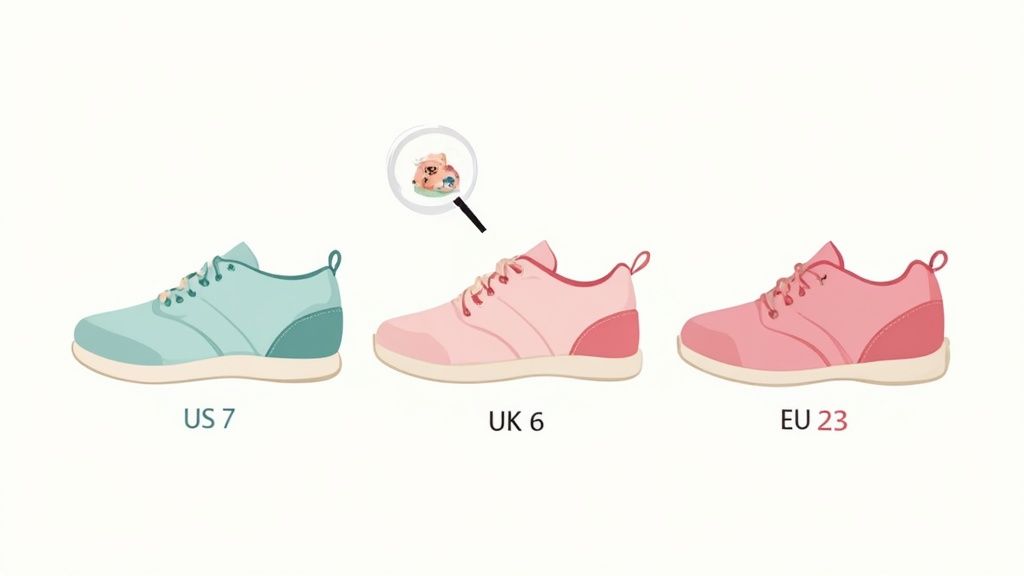
One minute you’re cheering on those first wobbly steps, and the next you're trying to figure out if your little one is a size 5T or a European 21. Let's make this whole thing way easier and a lot more fun.
Think of toddler shoe sizing as a secret language, and we're here to hand you the decoder ring! It’s a system designed for those whirlwind years when feet seem to sprout overnight.
Why Are Toddler Sizes So Different?
Unlike our adult shoes, which can stay the same size for ages (hooray!), toddler footwear is all about accommodating non-stop, super-fast growth. That’s why the system is a little unique.
It’s not just about length; it’s about giving them the right kind of space and support for feet that are still figuring things out. This is a huge deal for their comfort and stability as they learn to run, jump, and explore the world with that amazing toddler energy.
And it’s a big deal for the shoe industry, too! The global toddler footwear market was valued at a whopping US$44.80 billion in 2023, making up nearly 89% of all kids' shoe sales. This just proves how many of us are on this exact same journey! You can read more about these fascinating kids' shoes statistics on runrepeat.com.
So, what does this mean for you? It means you're part of a massive club of awesome parents navigating this adventure. The key is just knowing what to look for.
The goal isn't just to find a shoe that fits today, but one that supports healthy foot development for all their tomorrows. It’s about giving them a great foundation, one step at a time.
For those very first adventures, finding the best shoes for a baby learning to walk can make all the difference. Now that you know the basics, let's find that perfect pair!
How to Measure Wriggly Feet Accurately
Ready for a fun challenge? Measuring a toddler’s feet can feel like trying to pin down a giggly, wiggly worm, but I promise it can be more of a game than a chore! The secret is to make it quick and playful. Let's get that perfect measurement without any tears.
My favorite trick is what I call the 'Stand, Trace, and Measure' game. It turns a boring task into a mini art project! All you need is paper, a crayon, and a ruler. Make sure your little one is standing tall on the paper—this is super important because feet actually spread out a bit when they bear weight.
Then, the fun begins! Quickly trace an outline around each foot. You can make it silly by tickling them or letting them pick their favorite color crayon for the job.
The Two-Foot Rule
Now for a pro tip: always measure both feet! It’s a little-known secret, but it’s super common for one foot to be slightly bigger than the other. If you notice a small difference, don’t sweat it; it’s totally normal.
Just be sure to use the measurement from the larger foot when picking their shoe size. This ensures you're not accidentally squishing one set of toes!
Once you have your awesome foot outlines, here’s what to do:
- Measure the Length: Grab a ruler and measure from the back of the heel to the tip of the longest toe.
- Jot It Down: Write down the measurement for both feet.
- Use the Biggest Number: Pick the larger of the two. This is your magic number!
Master the Thumb Rule
After you've picked out a pair of shoes, there’s one final check: the 'thumb rule'. Once the shoe is on, gently press your thumb down on the front, right where their longest toe is.
You should feel about a thumb’s width of space—roughly half an inch. This little bit of wiggle room is exactly what growing feet need. It gives them space to move without the shoe being so loose that it causes trips and stumbles.
Getting the right measurement is all about making it fun and fast. A quick trace and a simple check give you total confidence that you’ve found the perfect fit for their next big adventure.
For even more help, you can use a printable guide. Check out our detailed and easy-to-use Pediped sizing guide to get the most accurate fit every single time.
Decoding US, UK, and EU Shoe Size Charts
Ever stare at a toddler shoe box and feel like you're trying to read ancient hieroglyphics? You see a US 8, a UK 7, and an EU 25 and wonder if they’re for the same kid. Don't worry, you’re not alone! Let's clear this up right now.
Shopping for little shoes, especially online, can feel like a total guessing game. A US size is almost always a different number than its UK or EU buddy. Think of it this way: they all measure the same adorable foot, but they use a different language to describe it.
The Great Sizing Mix-Up
So, what’s with all the numbers? It all boils down to history and how different parts of the world decided to measure things. Toddler shoe sizes are based on regional standards that, frankly, don't always like to share.
For example, the US system uses an old English unit called a "barleycorn" (seriously!), while European sizes use the metric system. You can get into the nitty-gritty of these formulas in this deep dive into shoe sizes if you're feeling extra curious!
This is exactly why a good conversion chart is a parent’s best friend. It’s your universal translator, turning that jumble of numbers into a clear, confident choice.
To get started, here’s a super simple, visual guide for getting that measurement right.
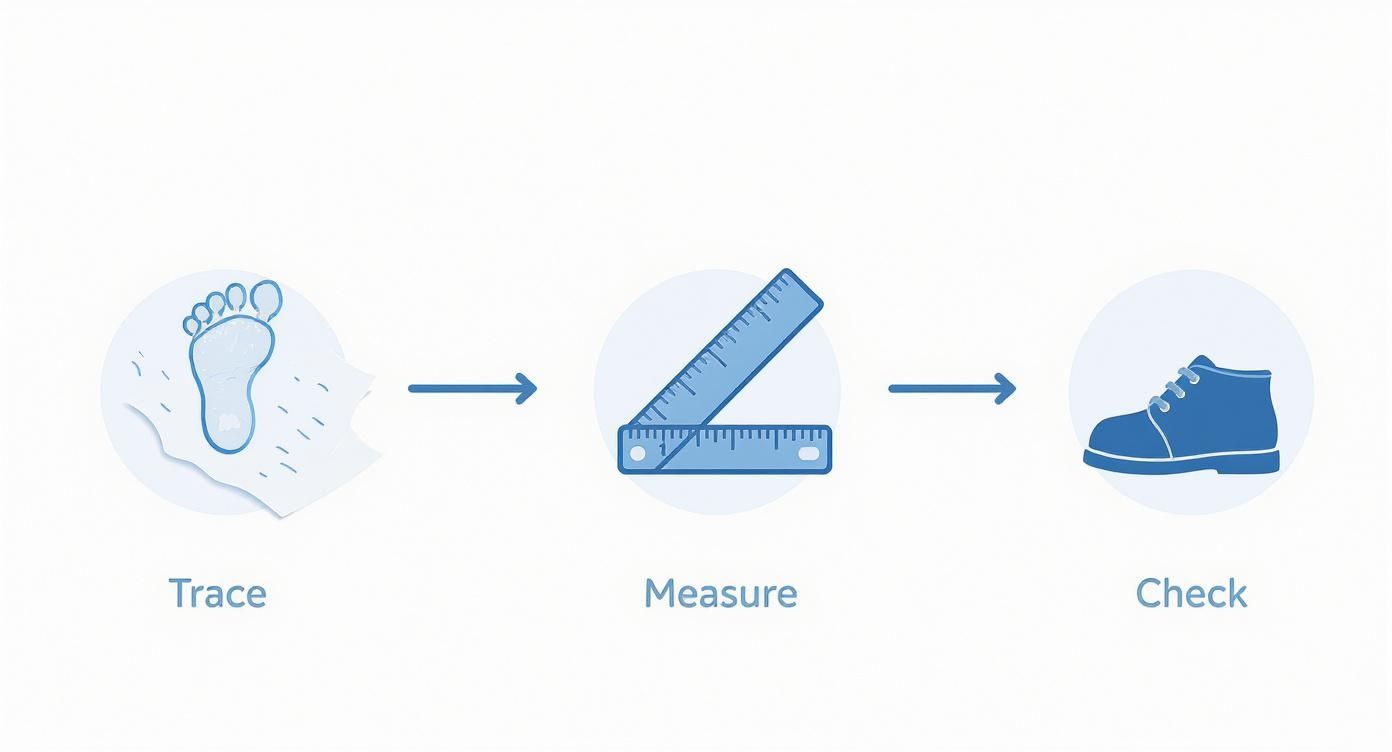
This easy three-step process—trace, measure, and check—is your key to getting an accurate size before you even start shopping.
Toddler Shoe Size Conversion Chart
Ready to make your life a whole lot easier? Here’s your ultimate cheat sheet! Just find your little one's foot measurement in inches or centimeters, then slide across to see the matching US, UK, and EU sizes. No more guesswork!
Parent Pro-Tip: When in doubt, always go by the foot measurement in inches or centimeters, not just the size number. It’s the most reliable way to shop across different brands!
This chart takes all the mystery out of figuring out what are toddler shoe sizes across the globe.
| Foot Length (Inches) | Foot Length (CM) | US Size | UK Size | EU Size |
|---|---|---|---|---|
| 4.5" | 11.4 | 4.5 | 4 | 20 |
| 4.75" | 12.1 | 5 | 4.5 | 21 |
| 5" | 12.7 | 6 | 5.5 | 22 |
| 5.25" | 13.3 | 7 | 6.5 | 23 |
| 5.5" | 14 | 8 | 7 | 24 |
| 5.75" | 14.6 | 8.5 | 7.5 | 25 |
| 6" | 15.2 | 9.5 | 8.5 | 26 |
| 6.25" | 15.9 | 10 | 9 | 27 |
| 6.5" | 16.5 | 11 | 10 | 28 |
| 6.75" | 17.1 | 11.5 | 10.5 | 29 |
| 7" | 17.8 | 12 | 11.5 | 30 |
With this handy guide in your back pocket, you’re officially a shoe-sizing superstar. Happy shopping!
Finding the Perfect Fit and Knowing When to Size Up
Okay, so you’ve measured those tiny feet and have your magic number. High five! But finding the right toddler shoe size is just part one. Now for the most important part: the fit check. This is where we make sure those new shoes feel as good as they look.
Think of it like being Goldilocks, but for toddler shoes. You don’t want them too tight, because ouch! And you don’t want them too loose, because that’s a trip waiting to happen. The goal is that sweet spot where their feet are supported, comfy, and have just enough room to grow.
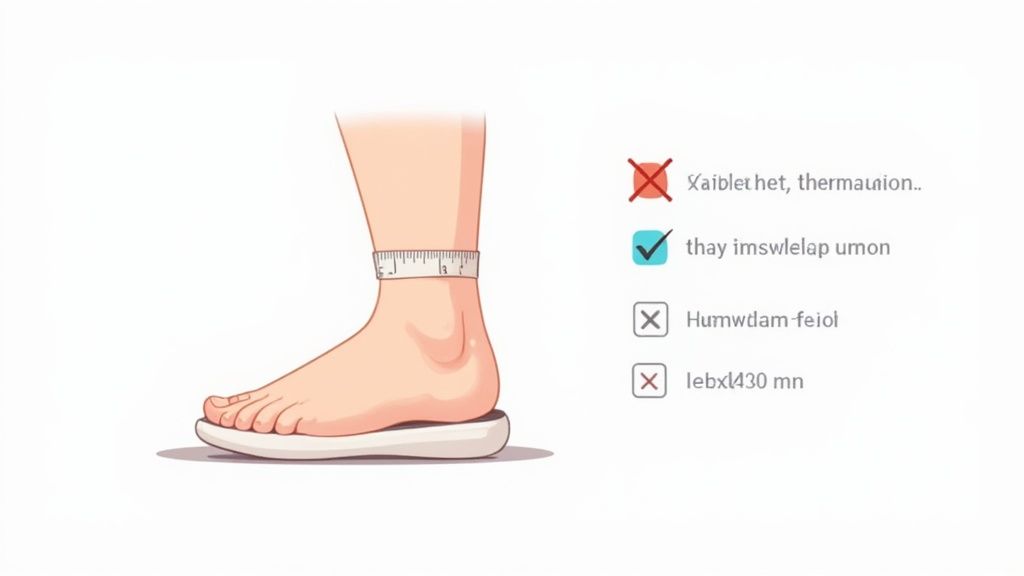
The Perfect Fit Checklist
When you slip a new pair of shoes on those adorable feet, just run through this quick mental checklist. It takes less than a minute!
- The Thumb Rule: This is the classic, can’t-fail trick. Gently press your thumb down at the front of the shoe. You should feel about a thumb's width of space—that’s roughly half an inch. This is the perfect amount of wiggle room.
- The Heel Check: Have your little one stand up and take a few steps. The shoe should gently hug their heel without any major slipping. If their heel is popping out, the shoe is too big.
- The Width Pinch: Lightly pinch the material on the sides of the shoe. It should feel snug, not stretched super tight. If their foot looks like it's bulging over the sides, you might need a wider fit. The right pair of flexible shoes for toddlers will often have a design that helps with this.
A perfect fit is more than just comfort—it’s about giving your little explorer the freedom to run, jump, and play without even thinking about their shoes. Happy feet make for happy adventures!
Signs It’s Time to Size Up
Toddlers grow at the speed of light, and their feet are no exception! It often feels like you just bought them new shoes, and suddenly, they’re snug. Staying ahead of those growth spurts is the name of the game.
Here are a few telltale signs it’s time for a shoe shopping trip:
- Red Marks or Blisters: When you take their shoes off, give their feet a quick look. Any red spots or indentations are a dead giveaway that the shoes are rubbing.
- Toes at the End: If you can see the outline of their toes pressing right up against the front, that precious wiggle room is gone.
- They Tell You!: Sometimes, the easiest sign is when your toddler starts taking their shoes off all the time or says their feet hurt. Listen to those little cues!
Keeping an eye out for these signs will ensure your toddler’s feet are always comfy and ready for their next big discovery.
Choosing the Right Shoes for Every Toddler Stage
Just when you think you’ve finally figured out sizing, your toddler’s needs change again! It’s all part of the fun. A wobbly new walker needs something completely different from a sprinting preschooler.
Knowing their shoe size is just the start. The real secret to happy feet is matching that size to the right kind of shoe for their stage. For those first adorable, uncertain steps, it’s all about letting them feel the ground. Shoes with super-flexible, soft soles are perfect for helping them build balance.
First Steps and First Shoes
When your little one first starts cruising along the furniture, the best shoe is often no shoe at all. But for outside adventures, their feet need protection that still feels like being barefoot.
This is where soft-soled shoes shine. Look for feather-light designs that bend and move with their foot. Pediped's Originals® line is a fantastic example, designed precisely for this stage. Our guide to the benefits of toddler soft sole shoes explains why this flexibility is so important.
From Walking to Running
Once your toddler is a confident walker and a constant blur of motion, it’s time for a footwear upgrade! They’re exploring, climbing, and running with pure joy, so their shoes need more durability.
This is the perfect moment to introduce a shoe with a soft but sturdy rubber sole. These provide the extra grip they need for playgrounds and sidewalks. Pediped’s Grip 'n' Go™ collection is built for this energetic stage, featuring rounded edges that help prevent stumbles.
It's no surprise the global demand for kids' footwear is huge—the market was valued at around USD 47.76 billion in 2024. A huge part of this is parents just like you, all looking for the right shoes for these critical stages. You can discover more insights about the kids' footwear market on fortunebusinessinsights.com.
Matching the shoe to the stage isn't just about size; it's about giving your child the right tool to confidently explore their world, one energetic step at a time.
For seasoned walkers and unstoppable preschoolers, you’ll want a shoe that can go the distance. The Flex® line offers the ultimate combo of sturdiness and flexibility, perfect for all-day adventures.
Quick Answers About Toddler Shoe Sizes
Have a few more questions buzzing in your mind? Awesome. Let's tackle some of the common mysteries that pop up when you're trying to find the right shoes for those tiny, always-growing feet.
It can feel like a moving target. Just when you think you've nailed their size, it's time for another one! We get it. Here are some of the most common questions we hear.
How Fast Do Toddler Feet Grow?
If you feel like you just bought new shoes and they're already too small, you're not imagining it! Toddler feet grow astonishingly fast.
Between ages 1 and 3, it's totally normal for their feet to grow about a half-size every two to four months. Of course, every kid grows differently, often in wild, unpredictable spurts. This is why checking the fit every few weeks is a total game-changer.
Do Toddler Shoe Sizes Run Small?
This is one of the biggest head-scratchers. You buy a size 6 from one brand that fits perfectly, but a size 6 from another is way too tight. It's incredibly common and a little frustrating!
So, yes, shoe sizes can feel all over the place. Here's why:
- Different Shoe Molds: Every brand uses its own "last"—the foot-shaped model a shoe is built around. These vary in shape and size, leading to different fits.
- Varying Styles: A chunky sneaker is built differently than a sandal. The design itself will affect how it fits.
- Global Sizing Quirks: As we've covered, US, UK, and EU sizes don't convert perfectly, adding another layer of fun to the mix.
Your best bet is to always, always rely on your child's actual foot measurement in inches or centimeters. That number is your single source of truth in the wild world of brand sizing!
When Do Kids Switch From Toddler to Kid Sizes?
Ah, the great sizing graduation! Toddler sizes usually wrap up around a US size 12 or 13.
Here’s the part that catches everyone by surprise: after they outgrow a size 13 toddler shoe, the very next size up is a size 1 in "little kid" sizes. The numbering starts all over again! So, once you're past a 13, you're officially shopping in the big kids' section. Welcome to the next level!
This switch usually happens around age four or five. For more answers like these, our team put together a fantastic resource; you can find more helpful info on our Pediped FAQ page.
Ready to find that perfect pair? At Pediped, we’ve designed our shoes to make every step of this journey easier and more fun for your little one. From their first wobbly steps to their non-stop adventures, we have a shoe that’s just right.
Explore our collections and discover pediatrician-approved footwear that supports healthy foot development without sacrificing style.
Leave a comment