


Hooray! You're diving into one of the most exciting adventures in parenting: your child's first steps! If you've found yourself searching for baby shoes orthopedic with a mix of excitement and maybe a tiny bit of worry, you're in exactly the right place.
Let's clear the air right away with a fun fact: True orthopedic shoes are a specific medical tool prescribed by a doctor to fix a diagnosed foot issue. But for almost all of our little explorers, what we're really looking for are "developmental" shoes—footwear designed to support natural, healthy foot growth, not force it.
Your Guide to Happy and Healthy Little Feet
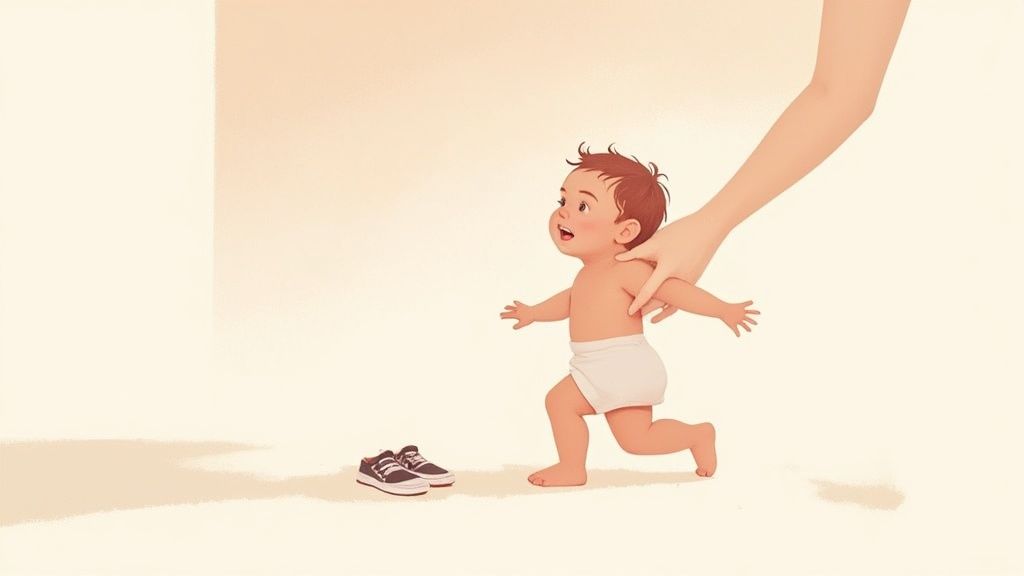
Watching your baby go from wiggles to wobbles to confident first steps is pure magic. It’s also when a million questions can pop into your head, especially about those tiny, perfect feet.
The term "orthopedic" can sound a bit clinical and serious. But here’s the secret: for most babies, the goal isn't to correct anything. It’s to cheer on what their feet are already designed to do!
Think of it this way: you wouldn't put a sapling in a rigid cast. You’d give it good soil and room to grow. That's exactly what a good developmental shoe does for your child's feet.
Orthopedic vs Developmental Shoes At a Glance
Here's a super quick cheat-sheet to break down the key differences.
| Feature | Medical Orthopedic Shoes | Developmental Shoes (The Fun Ones!) |
|---|---|---|
| Purpose | To correct specific medical conditions (e.g., clubfoot). | To support natural foot development and protect feet outdoors. |
| Prescription | Prescribed by a podiatrist or orthopedic specialist. | Available everywhere; no prescription needed! |
| Flexibility | Often very rigid and firm to control foot movement. | Super flexible to mimic barefoot walking and strengthen muscles. |
| Sole | Thick, heavy, and often specially modified. | Thin, lightweight, and bendy to allow for a natural ground feel. |
| Availability | Custom-made or from special medical suppliers. | Widely available from trusted children's shoe brands. |
Unless a doctor has identified a specific issue, your focus can be on finding a great pair of developmental shoes that let your child's feet do their thing.
What This Fun Guide Will Do For You
This guide is your friendly map to navigating the world of first footwear with confidence. We’re here to make things simple and fun!
Together, we'll explore:
- The Real Difference: We’ll dive deeper into what makes a shoe truly "orthopedic" and why most kids thrive in developmental styles.
- Signs to Watch For: Learn how to spot the difference between typical toddler wobbles and potential concerns without stressing.
- The Perfect Shoe Features: We’ll break down exactly what to look for in a shoe that feels almost like being barefoot but offers protection for big adventures.
Our goal is to give you peace of mind. After all, those little feet have a lifetime of exploring to do! It’s a philosophy backed by experts, and you can learn more about what they say about healthy little feet on the Pediped blog.
"Barefoot is best until your baby is walking independently in the community. Shoes are really for protection when walking outdoors—not for early standing practice."
This simple truth is our foundation. Let's find that perfect balance between barefoot freedom and real-world safety!
Decoding Orthopedic Baby Shoes
Heard the term "orthopedic baby shoes" and felt a little overwhelmed? You're not alone. It sounds so serious, but let’s have a friendly chat about what it really means.
Think of it this way: true, prescription orthopedic shoes are like braces for teeth. They’re a specific medical tool prescribed by a doctor to correct a diagnosed issue.
But here’s the big secret: this is NOT what most of us mean when we search for "orthopedic baby shoes." What you're actually looking for is what we call a developmental shoe. This is the fun, supportive best friend every little foot needs!
The Real Goal: Supporting Natural Growth
For the vast majority of babies and toddlers, their feet are developing perfectly. The goal isn't to correct anything but simply to protect and nurture that natural growth.
A great developmental shoe has a few key things going for it:
- Wiggle Room: It has a wide toe box that lets toes splay out and grip, just like when they're barefoot. No squished piggies here!
- Super Flexibility: The shoe should bend and twist easily. This helps your little one feel the ground, which is crucial for building good balance.
- Just-Right Support: It offers a touch of stability around the ankle but never restricts movement. Think of it as a gentle hug for their foot.
The whole idea is to mimic the barefoot experience while adding protection from ouchies like rocks or hot pavement. You can learn more about why this is so important in our guide on flexible shoes for toddlers.
Medical Tool vs. Everyday Champion
So, how do you know which one your child needs? It’s wonderfully simple.
A true orthopedic shoe is for a diagnosed medical need. A developmental shoe is the go-to choice for everyday wear to support a healthy, typical child’s foot.
Unless your pediatrician has specifically told you that your child needs corrective footwear, you can breathe a happy sigh of relief! Your fun new quest is to find the most comfortable, flexible developmental shoe for your child's journey from crawling to cartwheeling.
Watching Your Toddler’s First Steps
There’s nothing quite like witnessing those first few wobbly steps. It’s pure magic! As your little one figures out this tricky new skill, you’ll see all sorts of adorable stumbles. It’s all part of the journey.
While you're cheering them on, you can also play "foot detective" to make sure their development is on the right track. This isn't about diagnosing problems—let's leave that to the professionals! It’s just about getting to know your child’s walking style.
Your Friendly Foot Detective Checklist
Ready to play? Here are a few simple things you can keep an eye on. Remember, this is a fun observation guide, not a medical exam!
- Shoe Wear Patterns: Take a quick look at the soles of their shoes. Is one side wearing down way faster than the other? A little uneven wear is normal, but if it's very pronounced, it’s worth noting.
- Walking Style: How do they move? A bit of "pigeon-toeing" (feet turning in) or "duck-walking" (feet turning out) is incredibly common in new walkers.
- Arch Check: Have your child stand on a flat, hard surface. Toddlers have naturally flat feet, thanks to a protective fat pad in their arch that usually disappears between ages 2 and 3.
- Comfort Cues: Does your little one constantly try to rip their shoes off? Sometimes it's just a phase, but it can also be their way of telling you that their shoes don't feel right.
This chart helps show the difference between a developmental shoe choice and a situation that might require a doctor's input.

The takeaway is simple: unless a doctor has identified a specific medical need, the goal is always to choose high-quality, supportive developmental shoes.
Knowing What's Typical vs. When to Chat with a Doctor
Every child learns to walk on their own timeline. Some are steady right away, while others embrace the wobble for a bit longer. Both paths are perfectly normal!
You might see your toddler walking on their tiptoes for fun, or notice their ankles rolling inward slightly. These are common quirks that usually resolve on their own as their little leg and foot muscles get stronger. You can learn more about what to expect in our guide to the best shoes for baby learning to walk.
The vast majority of walking "quirks" in toddlers are just a normal part of their motor development. Their bodies are figuring out a complex new skill!
The goal isn't to worry. It's to build a baseline. If you see a pattern that persists or seems to be causing your child discomfort, you’ll have clear observations to share with your pediatrician. The global market for children's orthopedic footwear is expected to reach USD 2.5 billion by 2033, largely because of this growing awareness.
Ultimately, trust your gut. You know your child better than anyone. Keep celebrating every step!
Finding the Perfect Features for Toddler Shoes
Alright, let's get to the fun part: picking the perfect pair for your little one! Think of it less like a chore and more like choosing the right equipment for their next big adventure.
We're going to walk through the five key features that make a shoe both foot-friendly and ready for play.
It's All About the Bend and Flex
First thing's first: flexibility! A great toddler shoe should move with their foot, not against it. You should be able to easily bend the shoe in half with your hands.
This is a huge deal. A flexible shoe allows your child's foot to move naturally, building up all those tiny but mighty muscles. Stiff, rigid shoes are like trying to walk in tiny snow boots—clunky and no fun!
Getting a Grip with the Right Sole
Next up, let's flip the shoe over and look at the sole. A toddler shoe's sole needs to offer enough grip to prevent slips but stay thin enough so they can feel the ground.
A thin, grippy sole lets them feel the bumpy sidewalk or the soft grass. This sensory feedback is like a secret conversation between their feet and their brain, teaching them how to balance.
When choosing a shoe, the goal is to find one that offers protection but is flexible enough for your little one to feel surface changes. This helps strengthen the muscles needed for arches to develop.
Wiggle Room is a Must
Have you ever watched a baby grip things with their toes? It's not just cute—it's how they learn to balance! That's why a roomy, wide toe box is a must.
Those little piggies need plenty of space to splay out, wiggle around, and grip. Shoes that are too narrow squish the toes together, which can get in the way of healthy foot development. So, let those toes be free!
Just a Hug of Ankle Support
Ankle support is one of those areas where less is often more. For new walkers, we aren't looking for rigid, high-top support. What we really want is gentle, stable support that feels more like a reassuring hug around their ankle.
This provides a bit of stability as they master those early wobbles, but it's critical that it doesn't restrict their ankle's range of motion.
Happy Feet are Breathable Feet
Finally, let's talk about materials. Toddler feet can get surprisingly sweaty! That's where breathable materials like genuine leather or lightweight mesh come in. These fabrics allow air to circulate, helping to keep their feet dry, comfortable, and healthy.
As your child moves from wobbly steps to confident sprints, their footwear needs will change. That's why Pediped designs shoes for each developmental stage:
- Originals: Ultra-soft, flexible leather soles perfect for crawlers and new walkers (0-24 months).
- Grip ‘n’ Go: A soft rubber sole for more traction as they become confident toddlers (1-3 years).
- Flex: A durable, yet flexible rubber sole for your confident runner and jumper (2-10+ years).
How to Get the Perfect Shoe Fit Every Time
Alright, let's talk about the final boss of baby shoe shopping: getting the perfect fit on a wiggly toddler. It can feel a bit like trying to put socks on an octopus, but don’t worry! We have some super simple tricks to turn you into a shoe-fitting pro.
Getting the right fit is a huge part of supporting their healthy foot development. A shoe that’s too tight can restrict growth, while one that’s too big can cause stumbles.
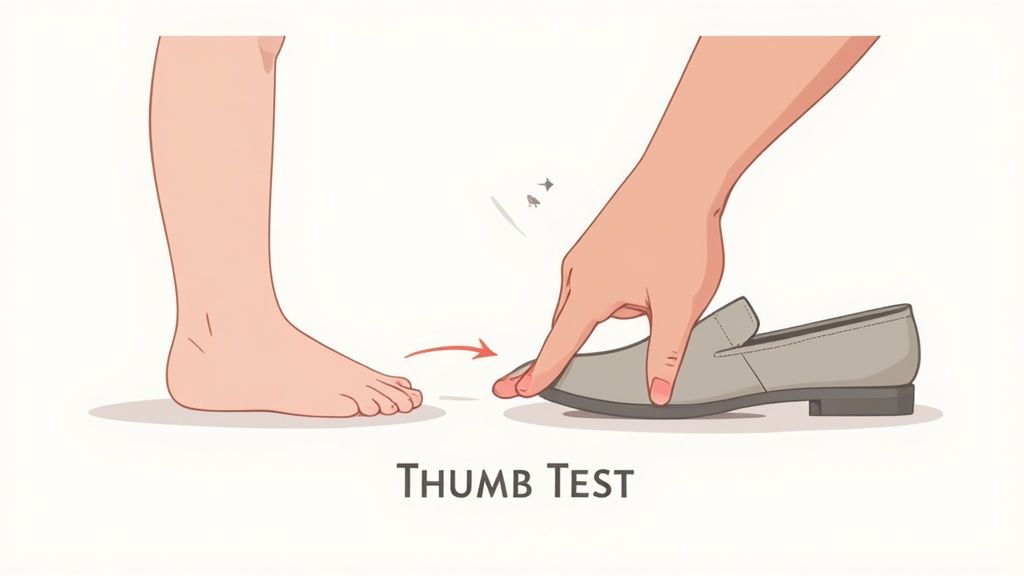
The Classic Thumb Test and Other Pro Tips
The thumb test is a classic for a reason! Here’s how to do it, plus a few other handy tricks.
-
Get Them Standing: First, make sure your child is standing up straight. Their feet spread out when they stand, so measuring while they're sitting can be inaccurate.
-
The Famous Thumb Press: Gently press your thumb at the very front of the shoe, right above their longest toe. You should feel about a thumb’s width of space. That's the sweet spot for wiggling and growing.
-
Check the Width: Feel along the sides of the shoe. It should be snug but not squeezing their foot.
-
The Pinky Test for Heel Slip: Try to slide your pinky finger between their heel and the back of the shoe. If it slips in easily but feels snug, you're golden.
Remember, a little resistance to new shoes is totally normal! But if they seem genuinely uncomfortable or you spot red marks on their feet after, it's a clear sign that the fit is off.
Measuring at Home Like a Champion
Can’t make it to the store? No problem. Measuring at home is easy. All you need is a piece of paper, a pen, and a ruler.
- Have your child stand on the piece of paper.
- Trace carefully around their foot.
- Measure the tracing from the heel to the tip of their longest toe.
- Do this for both feet—it's common for one to be slightly bigger!
Once you have that measurement, you can match it up with a brand’s sizing chart. For a super-helpful printable guide, you can check out our complete sizing guide here.
Don't forget to check their shoe size every two to three months! Little feet can hit a growth spurt overnight!
Matching the Shoe Stage to Their Adventure Stage
Just like kids graduate from a high chair to a booster seat, their shoe needs evolve as they become more confident.
- For Crawlers and First-Steppers: Soft-soled shoes are the best choice here. They are flexible enough to feel almost barefoot.
- For Confident Cruisers: As they get steadier, a shoe with a soft, grippy rubber sole helps prevent slips.
- For Pro Runners and Players: Once they're off to the races, a more durable rubber sole can handle all the running and jumping.
This growing focus on foot health is why the demand for high-quality children’s footwear is on the rise. The global market for orthopedic footwear was valued at around USD 3.48 billion, and the children’s market is a huge part of that growth. It’s all part of giving our kids the healthiest start possible.
Common Questions from Parents
You've got questions, and we've got answers! Stepping into the world of baby shoes can feel like a maze, but you're not walking it alone. We’ve pulled together the most common questions from parents just like you.
Let's dive in!
Do All Babies Need Orthopedic Shoes?
Absolutely not! This is probably the biggest myth we hear, and we're so happy to bust it.
Think of true baby shoes orthopedic styles as a special tool, like braces for teeth. They’re prescribed by a doctor for a specific, diagnosed medical condition.
The wonderful news is that the vast majority of babies have feet that are developing perfectly on their own! All they need are "developmental" shoes—fun, flexible footwear that gives their feet the freedom to grow strong naturally.
How Often Should I Check My Child's Shoe Size?
Little feet grow at lightning speed! For babies and toddlers, it’s a great idea to check their shoe fit every two to three months. A sudden growth spurt can turn a perfect fit into a too-tight squeeze almost overnight.
For preschoolers, checking every four to six months usually does the trick.
Fun Tip: Make it a seasonal ritual! Do a "happy feet check" at the start of every spring, summer, fall, and winter. It’s a playful routine that ensures their shoes are always ready for the next adventure.
This attention to early foot health is catching on. The market for children's developmental shoes is growing, with the under-5 age group making up a major portion of sales. You can learn more about these market trends and their impact on children's footwear.
Is Barefoot Better for New Walkers?
You bet it is! When your little one is indoors, barefoot is the absolute best. It lets them feel the floor, wiggle their toes, and use all those tiny foot muscles to develop amazing balance.
Of course, once you step outside, those precious feet need protection. That’s where a fantastic developmental shoe comes in. The mission is to find a shoe that’s the next best thing to being barefoot—one with a super soft, flexible sole that keeps their feet safe while still letting them feel connected to the ground.
What Is the Difference Between Shoe Stages?
Great question! It’s like leveling up in a video game—as your child's walking skills advance, their shoe needs change, too. That's why Pediped designs different "stages" of footwear.
Here’s a quick rundown of the adventure levels:
-
Stage 1 - Originals (For New Walkers and Cruisers)
The ultimate first-step shoes. They feature an ultra-soft, all-leather sole that’s as flexible as it gets, mimicking that amazing barefoot feeling. -
Stage 2 - Grip ‘n’ Go (For Toddlers Gaining Confidence)
Once your little one is cruising with more confidence, they graduate to Grip ‘n’ Go. These shoes introduce a soft, flexible rubber sole for a little more traction. -
Stage 3 - Flex (For Confident Walkers and Pro Runners)
For the little pros who are now running, jumping, and climbing, it’s time for Flex. These shoes have the most durable rubber sole in our lineup, designed to support active play.
Choosing the right stage ensures your child gets the perfect blend of freedom and support. If you have more questions, don't forget to check out our frequently asked questions page for even more helpful info!
Ready to find the perfect pair for your little explorer's next big adventure? At Pediped, we craft every shoe with love, care, and a deep understanding of what growing feet need to thrive. Explore our collections and give your child the foundation for a lifetime of happy, healthy steps.
Leave a comment