


Finding the perfect shoes for your little adventurer should be a breeze, not a chore! The secret? Measure their feet right at home and check that against a brand’s size chart. A few minutes of fun now saves you from the dreaded "my-toes-are-squished" dance later.
Your Guide To Happy Little Feet
What You’ll Learn
- The best time of day to measure those wriggly feet!
- Why one brand’s size 7 might be another’s 8 (sneaky, right?).
- How to spot a shoe that’s too tight, too loose, or juuust right.
Let's turn shoe sizing into a game! We're talking tickles, giggles, and high-fives instead of grumpy protests.
We’ve packed this guide with our best tips, all approved by the experts. For an even deeper dive into foot health, check out Healthy Little Feet: Backed by Harvard Experts.
Every leap, run, and skip is a grand adventure when their shoes fit perfectly, protecting those tiny feet as they explore the big, wide world.
Your Super-Fun, At-Home Foot Measuring Kit
Ready to nail the perfect shoe fit without even leaving the house? You don’t need any fancy gadgets—just a few simple things you’ve definitely got lying around.
Think of it as a mini art project! All you'll need is:
- A piece of paper
- A pencil or a fun crayon
- A ruler or measuring tape
And now, for the main event! Get your little one to stand on the paper. I always find making it a game of "statues" helps, especially with toddlers who have happy feet! Carefully trace around each foot.
It’s super important to trace both feet because, believe it or not, one foot is almost always a little bigger. It’s totally normal! You always want to pick a shoe size that fits their bigger foot.
This little flowchart makes the whole process a piece of cake.
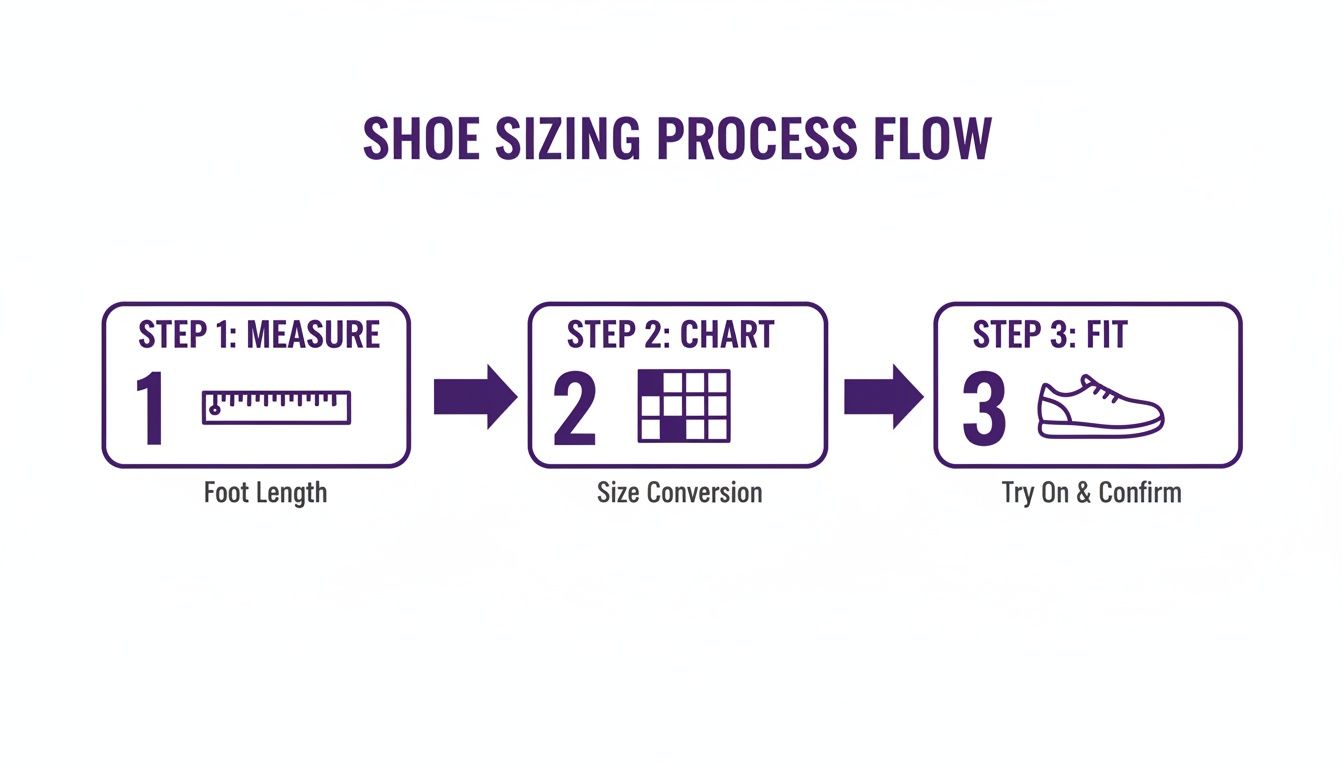
Once you have your tracings, you’ve got the ultimate map to the right size. For a little extra help, you can also download our awesome printable tool from the official pediped® sizing guide.
How to Crack the Kids' Shoe Size Code
Okay, you’ve got your measurement. Now for the moment of truth: turning that number into the perfect shoe size.
At first glance, a size chart can look like a secret code with all its columns for US, UK, and EU sizes. But don't worry, it's way easier than it looks. Just find your kiddo's measurement (in inches or centimeters) on the chart and follow it across to the right size.
A little insider tip: every brand is different. A size 7 in one brand might feel totally different in another. So, always, always, always use the size chart for the exact shoes you’re buying. It’s the only way to be sure!
The Golden "Thumb Rule"
Once you’ve found the size, the next step is adding that all-important wiggle room. This is where the classic "thumb rule" swoops in to save the day!
You’re looking for about a thumb’s width of space—that’s roughly half an inch—between the tip of your child's longest toe and the front of the shoe. That little bit of extra space lets their foot move naturally and gives them some growing room, too.
For a great peek at how this looks on real shoes, explore our collections for shoe sizes 7.5T-13.5T.
The "Perfect Fit" Checklist
Okay, the new shoes are on, and they look unbelievably cute. But how do they feel? Let's run through a few quick checks to make sure you've found the perfect partner for their adventures.
First up, the press test. Have your child stand up tall and gently press your thumb on the front of the shoe. You should feel about a thumb's width of space. That wiggle room is the secret ingredient for comfort and growth!
Next is the pinky test. Try to slide your pinky finger between their heel and the back of the shoe. It should feel snug, but not squished. Too much room means slippery heels and yucky blisters. Too tight means ouchy rubbing.
Pro Tip: After they’ve zoomed around in the new shoes for a few minutes, slip them off and check for any angry red marks. Those are little footprints left by a shoe that’s too tight or narrow.
A great shoe should feel like a high-five for their feet. Learning about flexible shoes for toddlers will help you find a pair that bends and moves right along with them.
Keeping Up With Those Speedy Growth Spurts
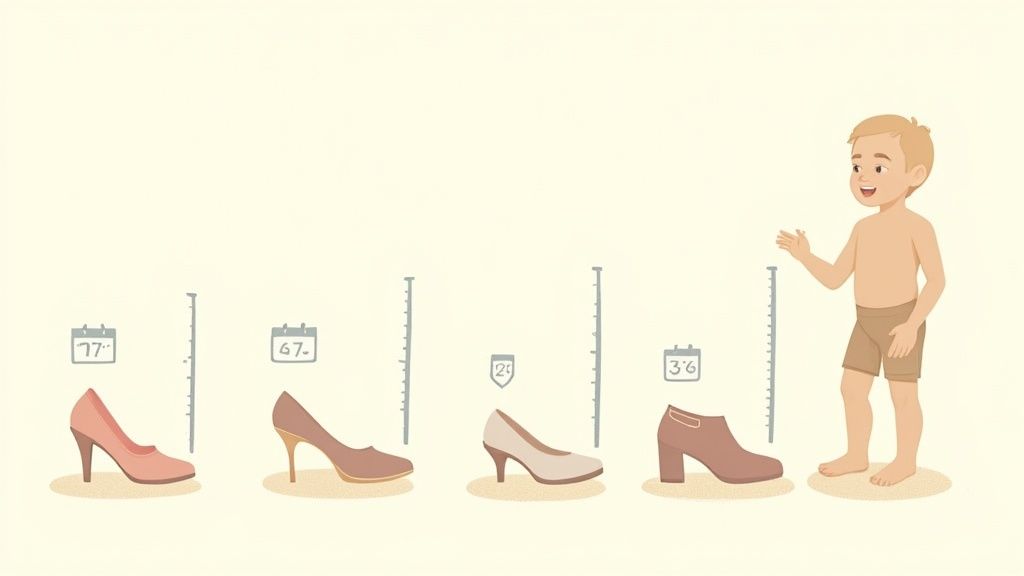
Just when you think you’ve nailed the perfect shoe size... poof! A growth spurt appears. It’s the circle of parent life! For toddlers, you'll want to measure their feet every two to three months—seriously, they grow at superhero speed.
I know it’s tempting to buy shoes a few sizes too big to make them last longer, but it can cause more trouble than it's worth. Shoes that are too big can lead to trips and stumbles, which is no fun for anyone.
This is especially true for those wobbly first steps. If you have a new walker on your hands, check out our guide on the best shoes for a baby learning to walk for more tips on finding that perfect, supportive fit.
Here’s something to remember: shoe sizes are not all the same! A size 6 in one brand might be a 7 in another, which is why having your child’s actual measurement is like a secret superpower.
The differences between US, UK, and European sizing can make online shopping feel like a total guessing game. It’s a huge reason why figuring out how to choose correct shoe size can be so tricky! Even for grown-ups, shoe sizes are all over the map. You can learn some fun facts from these women's shoe statistics.
Common Questions About Sizing Kids’ Shoes
Still have a few questions floating around? You’re not alone! Getting the right shoe size can feel like catching a butterfly when they’re growing so fast. Let's answer some of the top questions from parents just like you.
Should I Buy a Size Up for Them to Grow Into?
It’s so tempting, right? But trust me, it’s best to resist!
When shoes are too big, they can cause trips and stumbles because they don't give the right support. A shoe needs to bend where your child's foot bends, and an oversized shoe just won’t do that. Stick with a great fit now—with about a thumb’s width of wiggle room—for happy, steady little explorers.
Why Are My Child's Feet Different Sizes?
First off, don’t panic! This is totally normal. In fact, most people have one foot that’s a little bigger than the other. It’s one of those quirky things that makes us unique!
This is exactly why we always say to measure both feet. When you buy shoes, always pick the size that fits the bigger foot. A shoe that’s a tiny bit roomy on the smaller foot is way better than one that’s painfully squishy on the larger one.
How Often Should I Measure My Toddler's Feet?
Those little feet grow at lightning speed! For toddlers (1-3 years old), it’s a great idea to measure their feet every two to three months. It’s totally normal for them to jump half a size or even a whole size in that short time.
Once they get a bit older, you can stretch it to every four to six months. Making it a quick, regular habit helps you stay one step ahead of those surprise growth spurts.
A quick measure every so often saves you from those last-minute "my shoes are too tight!" meltdowns right as you’re trying to run out the door.
Does the Type of Sock They Wear Matter?
It totally does! A big, fluffy winter sock takes up a lot more space than a thin little ankle sock.
When you’re measuring or trying on new shoes, have your kiddo wear the kind of socks they’ll be rocking with that pair. It’s a super simple step that makes a huge difference in getting a fit that’s just right.
Ready to find that perfect, podiatrist-approved fit? At pediped, we make it fun and easy to find comfy, cool, and tough shoes designed for every hop, skip, and jump of your child's journey.
Explore our collections and find their next favorite pair at pediped.com.
Leave a comment