


Welcome to the wild and wonderful world of tiny shoes! Figuring out the right size for those adorable, wiggly feet can feel like a huge puzzle. But don't worry—we're here to make it a blast. This complete baby shoe size guide will turn you into a sizing superstar, ready to find the perfect fit with total confidence.
Kicking Off Your Perfect Fit Journey
Let’s be honest, those tiny toes are just about the cutest things on the planet. But they’re also growing at lightning speed, which makes finding the right shoes feel like hitting a moving target.
One minute a pair fits perfectly, and the next, you’re wondering how their feet grew overnight! This is where the fun begins. Forget stressful shopping trips and confusing charts. Think of this as your first playful mission in your baby's great adventure. We’re going to turn a potentially tricky task into a simple, happy moment between you and your little one.
Why The Right Size Matters So Much
A comfy, well-fitting shoe is more than just a cute accessory; it’s a crucial part of your baby’s healthy foot development. Their feet are soft, flexible, and still forming, so shoes that are too tight can squish their toes, while shoes that are too big can cause tripping and instability.
Here’s why nailing that perfect fit is so important from the get-go:
- Supports Natural Movement: The right shoe lets their foot bend and flex as it naturally would, which is essential for building strength in the tiny muscles of their feet and ankles.
- Encourages Confident Steps: When your baby feels secure and comfy, they’re more likely to explore with confidence, whether they’re crawling, cruising, or taking those incredible first steps.
- Prevents Discomfort: No one likes uncomfortable shoes, especially a little one who can’t tell you what’s wrong! A good fit means happy feet and a happier baby.
Finding the right first shoes is a game-changer. It sets the stage for healthy foot growth and gives your little explorer the stable, comfy base they need to take on the world, one wobbly step at a time.
Let’s Make It Easy And Fun
Ready to become a pro? We'll start with a super simple, can't-mess-it-up way to measure your baby's feet right at home—no fancy gadgets required.
Think of it as a fun little art project that ends with your baby having the coziest, most supportive shoes for their adventures. For the littlest feet, exploring options designed for their first year, like our collection for sizes 0-12 months, is a great place to start.
Let's get those little piggies ready for action!
How to Accurately Measure Baby Feet
Ready to measure your baby's squirmy, adorable feet? It can feel like trying to catch a tiny, wiggly fish, but I promise it's easier than it looks. We'll walk through a few simple, fuss-free steps to get that perfect measurement. Think of it less as a chore and more as a fun little moment together!
A key pro-tip is all about timing. Try measuring at the end of the day. After a full day of playing and exploring, their little feet will be at their largest, which helps you get the most accurate size for a comfortable, all-day shoe.
The Tracing Game: A Fun Way to Measure
This first method is a classic for a reason—it’s simple, surprisingly accurate, and you can even save the tracing as a cute keepsake. It’s basically a mini art project. You just need a piece of paper, a pen, and your little one.
Here’s how you do it:
- Get Set: Place a piece of paper on a hard, flat floor and have your baby stand on it. I know, this is the trickiest part! A favorite toy or a few silly faces can work wonders to keep them still for just a second.
- Trace Away: Carefully trace around their foot. The key here is to keep the pen as vertical as possible to get a true outline of their foot. If they wiggle, just laugh it off and try again!
- Measure the Masterpiece: Now, take a ruler and measure the outline from the very back of the heel to the tip of their longest toe. Write that number down!
Don't forget to measure both feet. It's totally normal for one foot to be a bit bigger than the other. You'll always want to use the measurement from the larger foot when picking out a shoe size.
The Ruler Technique: For Wiggly Wonders
Let's be real—sometimes a baby is just not going to stand still for a tracing session. And that's okay! For those extra-squirmy moments, using a ruler or a soft measuring tape directly on their foot is your best bet.
This method is easiest when they’re sitting down, either in your lap or a high chair. Just place a ruler or soft measuring tape right against the bottom of their foot.
Make sure their foot is flat and their toes aren't curled up. You might need to gently press on the top of their foot to help straighten it out. Measure from their heel to the tip of their big toe, and you’re good to go.
This visual really highlights why measuring both feet and leaving that all-important wiggle room is so critical.
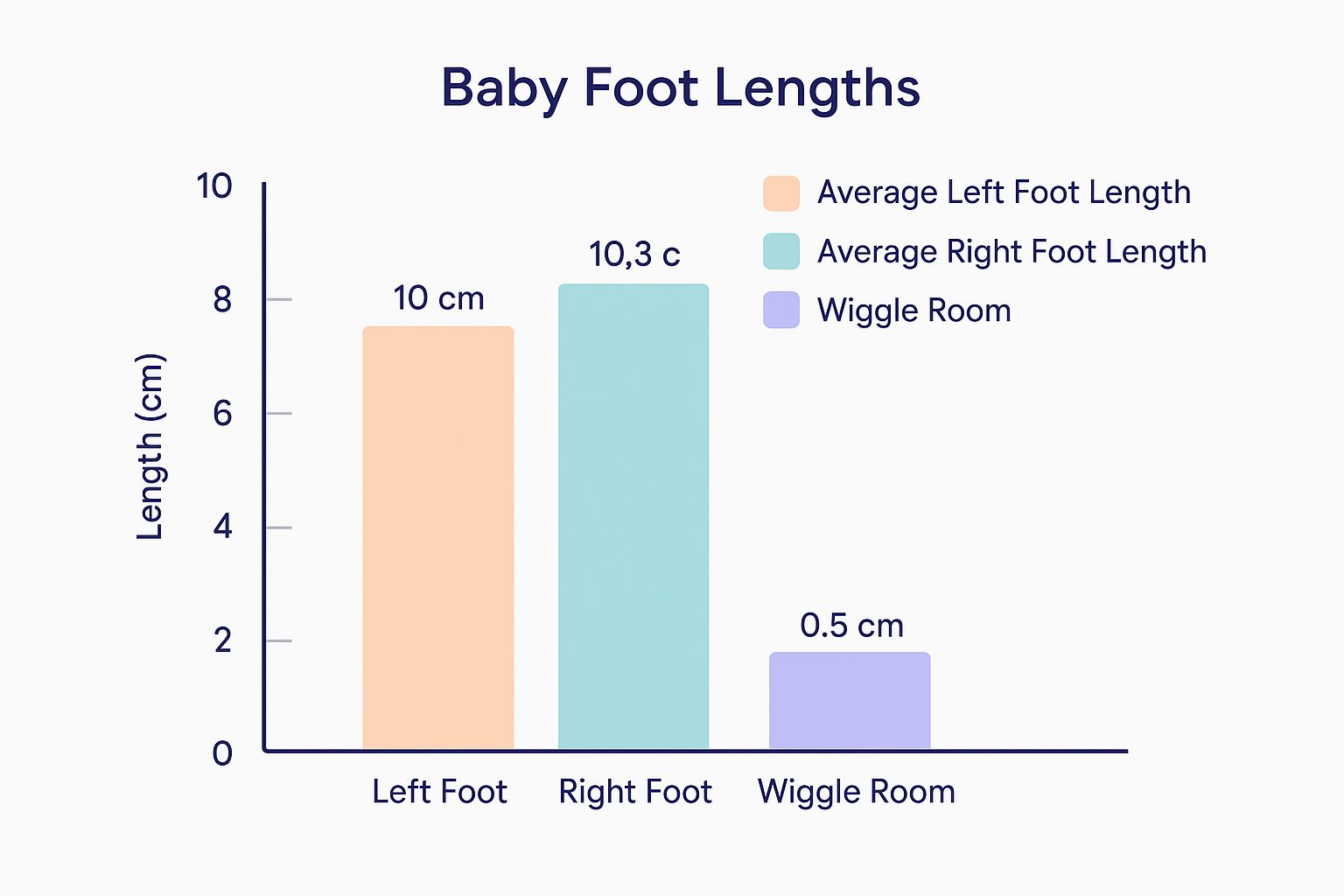
As the chart shows, not only can a baby's feet be slightly different sizes, but that little bit of extra space is just as important as the length of the foot itself.
Adding That All-Important Wiggle Room
Once you have your measurement in hand, there’s one final, crucial step. You need to add a little extra space for comfort, movement, and growth. This "wiggle room" is the secret to a perfect fit that doesn't feel tight after a week.
A good rule of thumb is to add about 1/4 to 1/2 inch (or 0.5 to 1 cm) to your measurement. This gives those little toes room to move and helps account for socks and those sudden growth spurts.
This extra space is non-negotiable for a few reasons:
- It prevents their toes from curling: Squished toes are a big no-no for healthy foot development.
- It allows for natural movement: Their feet can splay and grip the way they're supposed to as they crawl, toddle, or take their first steps.
- It extends the life of the shoe: That bit of extra room buys you precious time before they outgrow their new favorite pair.
And just like that, you're a pro! You've successfully measured those tiny feet and are ready to find a shoe that fits like a dream. Now you can move on to decoding those size charts with total confidence.
Understanding International Shoe Size Charts
Ever glanced at a baby shoe size tag and felt like you were trying to crack a secret code? You're not alone! Welcome to the slightly chaotic, globe-trotting world of baby shoe sizes, where a size 4 in the US is on a completely different adventure than a size 4 in the UK.
It can feel a little bewildering at first. But think of this section as your official decoder ring. We’re here to translate all that shoe-size jargon so you can shop with confidence, whether you’re browsing a local boutique or an adorable international brand online.
Why Are The Numbers So Different?
Honestly, it all comes down to history and tradition. Each region developed its own system for measuring feet, and they just never synced up. The US uses one system, the UK uses another, and Europe has its own unique method. It’s a lot like how we measure temperature in Fahrenheit while most of the world uses Celsius—different scales for the same thing!
The most important takeaway? Never assume a size number means the same thing from one country to the next.
Always, always, always start with your baby’s foot measurement in inches or centimeters. That measurement is your universal key.
Your Go-To Conversion Chart
Okay, let's get to the good stuff. This chart is about to become your new best friend for online shopping. Once you have your baby's foot measurement (plus that little bit of wiggle room we talked about), you can use this to find the right size in a flash.
Bookmark this page, take a screenshot, or print it out and stick it on the fridge. It’s the ultimate cheat sheet for your shoe-buying adventures.
Baby Shoe Size Conversion Chart (US, UK, and EU)
Here's a straightforward look at how the numbers line up across the three major sizing systems. Just find your baby's foot length to see the corresponding sizes.
| Foot Length (Inches) | Foot Length (CM) | US Size | UK Size | EU Size |
|---|---|---|---|---|
| 3.5" | 8.9 cm | 1 | 0.5 | 16 |
| 4.0" | 10.2 cm | 2 | 1.5 | 18 |
| 4.25" | 10.8 cm | 3 | 2.5 | 19 |
| 4.5" | 11.4 cm | 4 | 3.5 | 20 |
| 4.75" | 12.1 cm | 5 | 4 | 21 |
| 5.0" | 12.7 cm | 5.5 | 4.5 | 22 |
| 5.25" | 13.3 cm | 6 | 5.5 | 23 |
Just remember, this chart is a fantastic starting point. Every brand can have slight variations, so it’s always a good idea to check their specific guidelines if they’re available.
Navigating Brand-Specific Sizing
While a universal chart is incredibly helpful, some brands—like us here at pediped®—have spent years perfecting their own sizing to ensure the best possible fit for developing feet. This means it's always a smart move to double-check a brand's specific chart before you buy.
Think of a general size chart as a map of the world and a brand-specific chart as a detailed city map. Both are useful, but when you need to find a specific address—or in this case, the perfect shoe—the detailed map is your best guide.
To make things super easy, we’ve created our own detailed pediped® sizing guide. You can check out our comprehensive sizing guide to match your little one's measurements directly to our shoe styles. This helps take all the guesswork out of the process, ensuring you get that perfect, pediatrician-approved fit every single time.
With your measurement in hand and these charts as your guide, you're officially ready to conquer the world of baby shoe shopping. No more confusion, just the fun of picking out the cutest, comfiest shoes for your little adventurer's next big steps!
Finding the Right Fit Beyond the Size Number
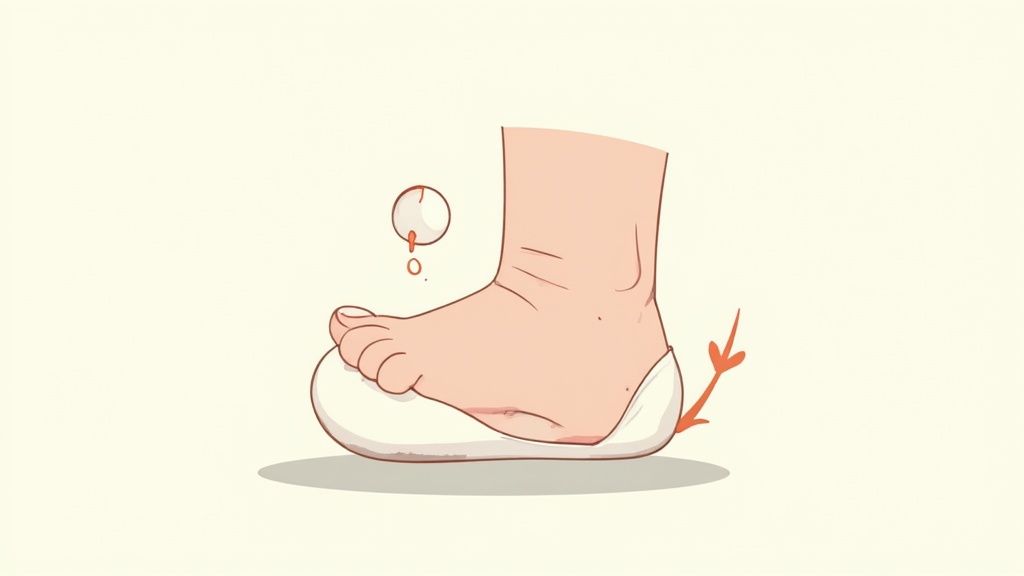
Okay, you've measured their feet, cross-referenced the charts, and landed on a size number. You’re almost there! But think of that number less as a final answer and more as your starting point.
A perfect fit is so much more than length. It's about creating a comfy, supportive little home for those tiny, developing feet—one that lets them wiggle, grow, and explore without a single pinch or slip.
The All-Important Wiggle Room Tests
So, how do you really know if the shoe is the one? It's time for a couple of classic, parent-approved fit tests. These are simple checks you can do in seconds.
First up is the legendary Thumb Test. With the shoe on your baby's foot, gently press your thumb down on the very front, right above their longest toe. You should feel about a thumb's width (around half an inch) of space. This is the sweet spot that gives them room to move and grow!
Next, check the heel with the Pinky Test. Just slide your pinky finger between your baby's heel and the back of the shoe. It should feel snug. If you can't get your finger in, they’re too small. If there’s tons of extra space, the shoe is too big and will probably slip off mid-adventure.
Beyond Length: The Deal with Width
Baby feet are famously chubby and cute, and that width is a huge piece of the fit puzzle. A shoe that’s the right length but too narrow will squish their feet, which is a major no-no for healthy development.
Watch for these signs of a width issue:
- Red Marks: After your little one wears the shoes for a bit, take them off and look for any red marks on the sides of their feet. That’s a telltale sign things are too tight.
- A Wrestling Match: If you feel like you’re struggling to get the shoe on their foot (even if the length seems right), it's probably too narrow.
- Bulging Sides: Look at the shoe from above. If the sides seem to be bulging out, their foot is begging for more room.
A shoe that is too tight in width can be just as problematic as one that's too short. It restricts the natural splaying of their toes, which is essential for balance and building foot strength.
Understanding the structural impact of footwear is crucial. For broader insights into foot health and optimal footwear, some fantastic resources dive much deeper into the science of happy feet.
Choosing the Right Shoe for the Right Stage
Not all baby shoes are created equal! The kind of shoe your little one needs changes as they grow and hit new milestones.
And it’s a big deal. The baby shoe market is a massive global industry—worldwide revenue hit about US$40.12 billion in 2023. This number shows just how critical it is for parents to get sizing right, especially when you learn that only about 33% of kids are actually wearing the correct size. Ill-fitting shoes can cause real discomfort and even developmental issues.
Here’s a quick breakdown of what to look for at each stage:
- Crib Shoes & Soft Soles (Newborns to Crawlers): These are all about protection and flexibility. They’re super soft, almost like cozy socks with a little more structure, perfect for keeping tiny feet warm without getting in the way of movement.
- First-Walker Shoes (Cruisers to New Walkers): As they start pulling up and taking those first wobbly steps, they need a bit more. These shoes still have flexible soles but offer more protection and grip to help with stability on different surfaces.
- Toddler Shoes (Confident Walkers): Once they're walking like a pro, their shoes can have a slightly sturdier sole. But flexibility is still king! You should always be able to bend a toddler's shoe easily.
No matter the stage, always look for two non-negotiables: flexible soles that allow natural foot movement and breathable materials (like leather or canvas) that keep those little feet cool and comfy. Get these details right, and you're not just buying a shoe—you're supporting every incredible step they take.
Common Shoe Fitting Mistakes to Avoid
Alright, you're armed with measurements and you’ve cracked the code on international size charts. You're ready to pick out those adorable little shoes with total confidence!
But before you click "buy," let's go over a few common pitfalls that can trip up even the most prepared parents. Think of this as a quick final check to make sure you absolutely nail the perfect fit.
Believing Age is Just a Number (Because It Is!)
One of the biggest traps in the baby shoe world is falling for age-based sizing. You'll see tags like "6-9 months," but these are often misleading. Every baby is wonderfully unique, and their feet grow at their own special pace.
A 9-month-old could easily have the same size foot as a 12-month-old! Those age ranges are just a rough guess. Always, always, always trust your foot measurement over the age on the box.
This is especially true when you consider how sizes vary globally. Your measurement is the one constant you can rely on. If you want to dive deeper into these conversions, you can explore more about international kid's shoe sizing.
Forgetting to Re-Measure (All the Time!)
Those tiny feet are on a mission to grow, and they grow fast. A pair of shoes that fit perfectly last month could be uncomfortably snug this month.
A huge mistake is assuming their size stays the same for long. Get into the habit of re-measuring your baby's feet every two to three months. Set a reminder on your phone or make it a fun little ritual. This simple step helps you catch growth spurts right away and keeps their feet from feeling cramped.
Frequent measuring isn't just about buying new shoes; it's about protecting their developing feet. A quick check every few months is the best way to ensure they always have the room they need to grow.
Choosing Style Over Substance
Oh, we get it. Those sparkly sneakers or miniature boots are almost too cute to resist. But when it comes to your baby's first shoes, function and comfort must always win the style contest. A stiff, poorly designed shoe—no matter how adorable—can get in the way of natural foot movement.
Always look for these key features:
- Flexible Soles: You should be able to bend the shoe easily. This mimics being barefoot and helps strengthen their little foot muscles.
- Wide Toe Box: Little toes need room to spread out for balance. Steer clear of shoes with pointy fronts that will squish their toes together.
- Breathable Materials: Stick with materials like leather, canvas, or mesh that let air circulate and keep their feet cool and dry.
The "Too Big" Problem
It seems like a savvy move, right? Buy shoes a little big so they can "grow into them." While a bit of wiggle room is essential, too much space is just as bad as a shoe that's too small.
Shoes that are excessively large can cause a whole host of issues:
- Tripping Hazard: That extra length at the toe can easily catch on things, leading to stumbles and falls.
- Heel Slippage: If their heel is constantly popping out, it can cause painful blisters and make them feel unsteady.
- Unnatural Gait: Your baby might start clenching their toes or walking differently just to keep the shoes on, which isn't great for their development.
Stick to the "thumb's width" rule for wiggle room and resist the temptation to size up too much. A proper fit today is far more important for their healthy development.
Your Top Baby Shoe Questions Answered
You’ve got questions, and we’ve got answers! The world of baby shoes can be a little confusing, but trust us, you’re not the first parent to wonder about these things.
Let's jump right into the most common questions we hear on the shoe-sizing journey. We’ll keep it quick and clear to give you that last little boost of confidence!
How Often Should I Measure My Baby's Feet?
This is the big one! Those little feet are in hyper-growth mode. To stay ahead of the game and keep those tiny toes from getting squished, you should get into the habit of measuring their feet every two to three months.
It might sound frequent, but a quick check ensures they’re always in a comfy, well-fitting shoe. A great little trick is to set a recurring reminder on your phone—think of it as a "happy feet check-up!"
Don't just rely on your little one to tell you their shoes are tight—they often can't! Regular measuring is your superpower for catching those sneaky growth spurts right when they happen.
This simple habit is truly the best way to make sure their footwear is supporting, not hindering, their healthy foot development.
Is It Okay to Use Hand-Me-Down Shoes?
Oh, the temptation of a cute pair of barely-worn, hand-me-down shoes is real! While it’s fantastic for saving money and the planet, this is one area where you’ll want to be a bit cautious.
A shoe actually molds to the foot of the child who first wore it. This means the inner sole and overall structure have already been shaped by another little one's walking patterns and foot shape. Putting a pre-worn shoe on your baby can sometimes affect their own gait and alignment.
So, what's the final word?
- Best Practice: If you can swing it, new shoes are always the ideal option. They provide a fresh, supportive foundation designed just for your baby’s feet.
- The Exception: If the hand-me-down shoes are from a high-quality brand and show virtually no signs of wear (the sole is flat, the inner lining isn't compressed), they might be okay. Just give them a very close inspection before you decide.
When Does My Baby Actually Need to Wear Shoes?
Believe it or not, barefoot is best for as long as possible, especially when your baby is indoors on safe surfaces! It allows their feet to feel the ground, which is incredible for developing balance, strength, and coordination.
So, when is it officially shoe time? The main reason to introduce shoes is for protection when they start exploring the great outdoors. Once your little one is cruising or walking in places where the ground might be rough, hot, cold, or sharp (think parks, sidewalks, or stores), it's time for their first pair.
What's the Difference Between Crib, Infant, and Toddler Shoes?
Navigating the different shoe categories can feel a bit overwhelming, but it’s really all about matching the shoe to their developmental stage.
- Crib Shoes: These are super soft, flexible, and more like a cozy slipper. They’re made for the tiniest, non-walking babies to keep their feet warm and protected without getting in the way of natural movement.
- Infant/First-Walker Shoes: Designed for crawlers, cruisers, and brand-new walkers! These shoes have soft, highly flexible soles but offer a bit more grip and structure to help with stability as they take those first wobbly steps.
- Toddler Shoes: For confident, on-the-go walkers. These shoes have a slightly more durable sole to handle all that running and jumping, but they should still be very flexible. You should always be able to bend a toddler shoe with ease!
Still have more questions buzzing around? We love curiosity! For even more answers, you can always check out our full FAQ page where we cover everything you could want to know.
Leave a comment