


Get ready, because your little one is officially on the move! Those first wobbly steps are one of the biggest milestones, bringing so much joy—and maybe just a little bit of panic, too. As your baby starts pulling up and cruising around the furniture, the big question pops into every parent's mind: is it time for their first pair of walking shoes baby?
Welcome to the Wobbly World of First Steps
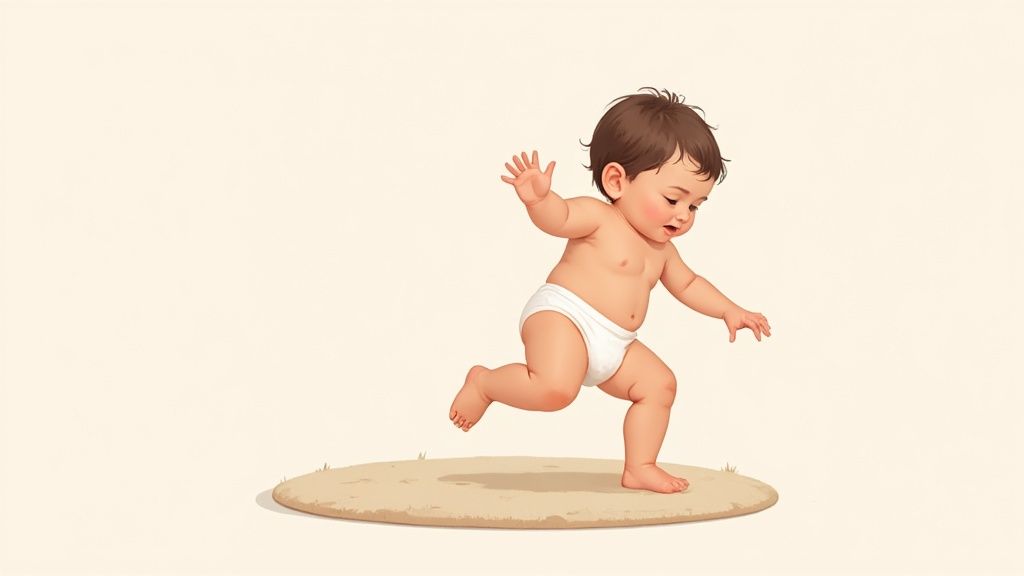
It’s one of the most magical, heart-stopping moments in parenting. You get to watch your baby transform from a happy little crawler into a tiny, teetering explorer. One minute they’re content on the floor, and the next, they’re using the coffee table to pull themselves up with a look of pure determination. This is it! The journey to walking has officially begun.
But before you rush out to buy the cutest miniature sneakers you can find, let's talk about what their little feet really need right now.
Barefoot is Best for Beginners
Believe it or not, the best "shoes" for your baby while they're learning to walk indoors are no shoes at all!
Going barefoot helps them feel the ground, which is incredibly important for developing balance and coordination. Their little toes can grip the floor, and their foot muscles get a fantastic workout, building the strength needed for confident steps.
Think of it like learning to ride a bike without training wheels. Being barefoot gives them direct feedback from the ground, teaching them how to adjust their balance with every wobble.
So, when do baby walking shoes come into play? Shoes are all about protection. When your little adventurer is ready to take their new skills outdoors—to the park, the backyard, or a trip to the store—that's when a good pair of shoes becomes their trusty sidekick. They shield those tiny feet from things like:
- Rough surfaces like pavement or gravel
- Pesky twigs or rocks in the grass
- Hot or cold temperatures on the ground
Choosing the Right First Shoes
As your little one starts this exciting journey, choosing the right footwear is so important. Specialized options like these infant first walkers are designed specifically to support their development. The goal isn't to force them to walk, but to protect their feet while allowing for the most natural movement possible.
It's clear that more parents are recognizing just how crucial the right footwear is. The global baby walking shoes market was valued at approximately USD 3.01 billion in 2025 and is projected to grow to USD 3.67 billion by 2033. This boom is fueled by a greater focus on child health and development, showing that a great first shoe is a priority for families everywhere.
Navigating this new world of footwear doesn’t have to be overwhelming. This guide is here to be your friendly co-pilot, helping you feel confident as you choose the perfect pair to support every toddle, tumble, and triumphant step.
Let the adventures begin
The Secret Ingredients of a Great First Shoe
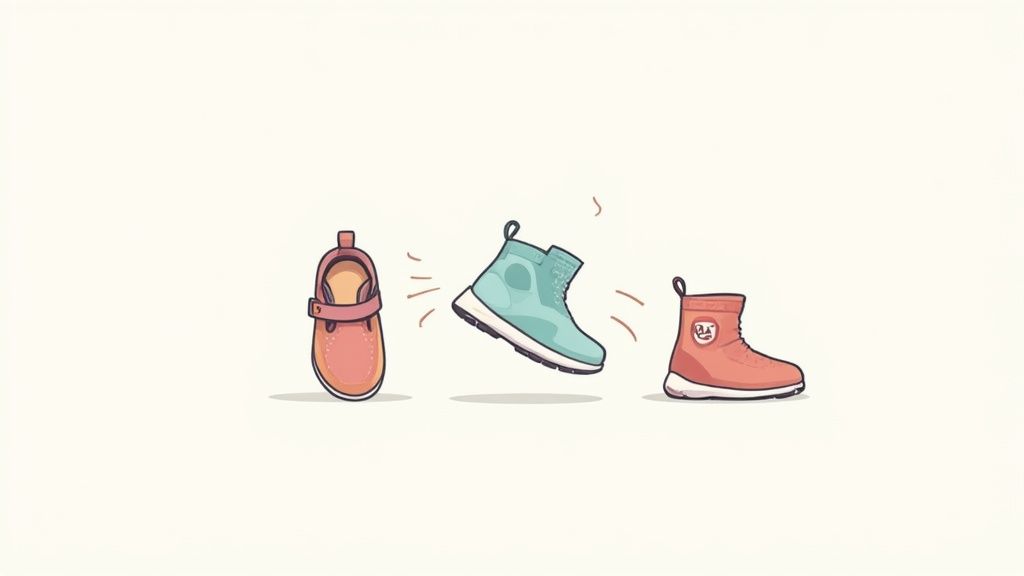
Alright, let’s get into what really separates a cute little shoe from the perfect shoe for your new explorer. It’s not magic, but it’s pretty close! When you’re on the hunt for the best walking shoes baby, there are three key things to look for: flexibility, fit, and feel.
Think of it like baking a cake. You need the right ingredients in just the right amounts. If you miss one, the whole thing falls flat. It’s the exact same story with your baby’s first pair of shoes.
Let's break down this simple recipe for happy little feet.
Let’s Get Flexible
The single most important feature of any great first walking shoe is flexibility. Seriously. If you can't easily bend the shoe in half with your own hands, it’s going to be too stiff for your little one.
Imagine trying to learn yoga while wearing a suit of armor—it just wouldn’t work! A stiff, rigid shoe is basically a suit of armor for your baby’s foot, restricting all the natural movements they need to build strength and find their balance.
A flexible sole lets your baby’s foot bend, grip, and feel the ground, almost as if they were barefoot. This sensory feedback is so important for developing their coordination and building confidence with every wobbly step.
A flexible shoe isn't just a feature; it's a tool for development. It helps strengthen the tiny muscles in the foot and ankle, which are essential for building arches and mastering higher-level motor skills down the road.
This kind of flexibility allows them to feel the world beneath their feet—a little bump in the sidewalk, the soft squish of grass—which helps them adjust their balance on the fly and become a more skillful walker.
The Goldilocks Fit: Not Too Tight, Not Too Loose
Next up is what I call the "Goldilocks" fit—it has to be just right. A shoe that’s too tight can be really uncomfortable and even restrict healthy foot growth. On the other hand, a shoe that’s too loose can cause blisters or, even worse, become a tripping hazard.
You're looking for a snug fit around their heel and ankle to keep their foot from slipping, but with plenty of room up front for their toes to wiggle and spread out. A wide toe box is absolutely non-negotiable for healthy foot development. When babies stand, their feet naturally splay out, and their shoes need space to let that happen.
Here’s a quick checklist to make sure you’ve found that perfect fit:
- Wiggle Room: You should be able to fit about a thumb's width of space between your baby's longest toe and the very end of the shoe. This gives them that crucial room to grow!
- Velcro for the Win: Adjustable straps, especially Velcro, are a parent’s best friend. They make getting shoes on and off so much easier and let you get a custom fit for your baby's unique foot shape—whether they have chubby, high-arched, or narrow feet.
- No Pinching: Always check for red marks or indentations on their feet right after you take the shoes off. That’s a tell-tale sign that the shoes are too tight somewhere.
All About the Feel: Lightweight and Breathable
Finally, let’s talk about the overall feel. The best baby walking shoes should be so lightweight and comfortable that your little one barely even notices they have them on. Heavy, clunky shoes can weigh them down and make practicing their new walking skills feel like a chore.
The materials matter a lot, too! Babies' feet sweat—a lot—so breathable fabrics like soft leather, canvas, or mesh are your best bet. These materials let air circulate, keeping those tiny feet cool, dry, and happy, which is key to preventing irritation and blisters.
Try to avoid stiff, synthetic materials that don't let their feet breathe. A happy foot is a dry foot, and keeping them comfortable means they’ll be way more excited to get up and go. This focus on healthy development is crucial, and you can discover more about why Harvard experts back these principles of healthy foot design.
By keeping these three key ingredients in mind—flexibility, a just-right fit, and a lightweight, breathable feel—you’ll be a total pro at picking out the perfect walking shoes baby will love. You’re not just buying a pair of shoes; you’re choosing a supportive little tool to help them on their wobbly, wonderful journey to walking.
Choosing the Right Shoe for Every Wobbly Stage
Just when you think you’ve mastered the art of the speedy diaper change, your little one starts moving in a whole new way! From those first heart-stopping, wobbly steps to confident stomps down the hallway, their footwear needs change fast.
Think of it like leveling up in a game. Each new stage of walking brings new skills and requires different gear. Let's break down the two main stages of early walking so you can choose the perfect walking shoes baby will thrive in.
The First Steppers Stage
This is that adorable, furniture-cruising, holding-your-hands-for-dear-life phase. Your baby is pulling up on everything, testing their balance, and taking those first shaky steps. It's an all-hands-on-deck (and feet-on-the-floor) learning experience!
At this point, their main job is to feel the. The best shoes for this stage are almost like not wearing shoes at all—but with a crucial layer of protection. You’re looking for a shoe that’s more like a super-powered sock.
Here's what to look for in a "First Stepper" shoe:
- Ultra-Flexible Soles: The sole needs to be incredibly soft and bendy. If you can’t twist and fold it easily, it’s too stiff. This lets their feet move naturally and grip the floor.
- Feather-Light Feel: The shoe should be so lightweight your baby barely notices it's there. Clunky shoes can throw off their delicate balance.
- Soft, Protective Materials: Look for gentle materials like soft leather or breathable canvas that shield their feet from ouchies without getting in the way.
Getting this right is on the minds of parents everywhere. The global baby shoes market was estimated to be worth a whopping USD 43.5 billion in 2025 and is projected to soar to USD 97.4 billion by 2035. This massive growth shows just how much we're all focusing on giving our little ones' feet the best start. You can discover more insights about the baby shoe market on Future Market Insights.
The Confident Cruisers Stage
Welcome to the next level! Your toddler isn't just experimenting anymore—they’re a walker. They are toddling with purpose, exploring confidently, and maybe even attempting a little run. Their world just got a lot bigger, and their shoes need to keep up.
Now, durability and protection become more important, especially for outdoor adventures. While flexibility is still king, you’ll want a shoe with a little more structure and a tougher sole for sidewalks, parks, and playgrounds.
Features for a "Confident Cruiser" shoe include:
- Flexible Rubber Soles: The sole should still bend easily but be made of a more durable rubber. This offers better protection from rough surfaces while letting their foot move naturally.
- Great Traction: Look for soles with grippy treads to help prevent slips and falls as they start moving a little faster.
- Supportive but not Stiff: The shoe should have a bit more structure around the heel for stability, but it should never feel rigid.
Parent Tip: A great way to check flexibility for this stage is the "bend test." If you can easily bend the shoe in half, bringing the toe toward the heel, it probably has the right amount of flex for a confident walker.
Choosing between stages can feel tricky, but we've got your back. To learn more about why this all matters, check out our guide on the importance of flexible shoes for toddlers.
Baby Walking Shoe Stages At A Glance
To make it even simpler, here’s a quick-glance table to help you spot the differences between the two stages.
| Feature | First Steppers (Grip 'n' Go) | Confident Cruisers (Flex) |
|---|---|---|
| Primary Goal | Mimics being barefoot while offering gentle protection. | Protects feet during outdoor play with more durability. |
| Sole Type | Ultra-soft and extremely flexible, often suede or thin rubber. | A durable but still very flexible rubber sole with good traction. |
| Weight | Feather-light, almost unnoticeable on the foot. | Still lightweight, but slightly more substantial for added protection. |
| Best For | Cruising furniture and those first wobbly indoor/outdoor steps. | Confident walking, running, and playground adventures. |
By matching the shoe to their developmental stage, you’re not just buying footwear—you’re giving them the perfect tool to explore their world with happy, healthy, and well-supported feet.
How to Measure and Fit Shoes Like a Pro
Alright, let's tackle the one thing that can make any parent break into a cold sweat: measuring a squirming baby’s feet. Don’t worry! This isn’t an Olympic sport, and you don’t need any fancy gear. We’re about to turn you into a shoe-sizing superstar with a few simple tricks (and maybe a well-timed snack for distraction).
Getting the right fit is a huge deal for your little one’s comfort and confidence as they start to walk. A perfectly fitted shoe gives them the stability they need without getting in the way of their natural, wobbly rhythm. Let’s make this process foolproof and, dare we say, even a little bit fun!
Your Super Simple At-Home Sizing Guide
Ready to get started? Grab a piece of paper, a pencil, and your little sidekick. Let’s do this!
- Stand Up Straight: Have your baby stand on a plain piece of paper. This is key because feet spread out and get a little longer when we put weight on them. If they’re sitting, you just won’t get an accurate measurement.
- Trace Those Toes: Gently trace an outline around each foot. Don't stress about making it a perfect work of art! You just need to capture the full length from the heel to the tip of their longest toe.
- Measure the Masterpiece: Now, use a ruler to measure the distance from the very bottom of the heel to the top of the longest toe on your tracing. A little pro tip: always measure both feet! It's totally normal for one foot to be slightly bigger than the other.
- Always Go with the Bigger Foot: When you’re ready to pick a size, use the measurement from the larger foot. This simple step ensures you won't have one squished little foot on your hands.
For an even easier time, you can use a tool designed just for this. Check out our super handy, printable Pediped Sizing Guide that makes the whole process a total breeze.
This infographic shows how shoe needs evolve as your baby moves from those early wobbly steps to confident cruising.
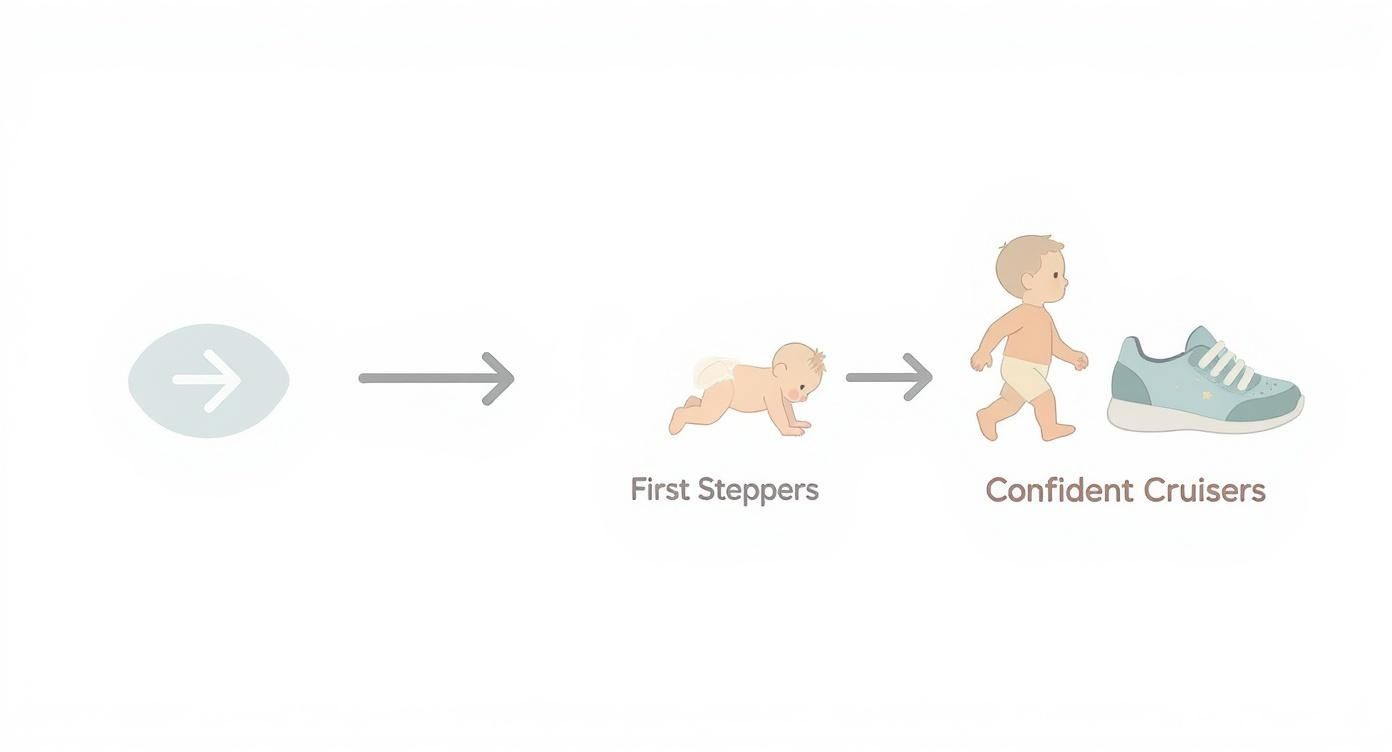
As you can see, the focus shifts from ultra-soft flexibility for "First Steppers" to more durable protection for "Confident Cruisers" who are out exploring the world.
The Famous Thumb Trick and Other Fit Checks
Once you have the shoes in hand (and on their feet!), it’s time for the final fit check. This is where you make sure you’ve found that "Goldilocks" fit—not too tight, not too loose, but just right.
The goal is to find a shoe that's snug enough to stay put but has enough room for those little feet to grow. A great fit supports their foot without restricting its natural movement, which is key for healthy development.
Here’s how to do a quick fit check like an expert:
- Do the Thumb Test: With the shoe on, press your thumb down at the very front, right above your baby's longest toe. You should feel about a half-inch of space—roughly the width of your thumb. This is the perfect amount of growing room!
- Check the Width: Gently squeeze the sides of the shoe. It should feel snug, but definitely not tight. You shouldn’t see any major bulging over the sides.
- The Pinky Test: Try to slide your pinky finger between your baby’s heel and the back of the shoe. It should fit snugly. If it’s too loose, the shoe might slip off, and if you can’t get your finger in at all, it’s probably too tight.
Common Fitting Mistakes to Sidestep
Even with the best of intentions, it’s easy to make a few common mistakes. Keep these in mind to avoid any shoe-fitting fumbles:
- Forgetting to Have Them Stand: Always, always, always check the fit while your child is standing up. Feet can be up to half a size smaller when they're sitting down.
- Ignoring the Socks: Make sure your baby tries on shoes with the same type of socks they’ll typically be wearing. A thick, fuzzy sock can make a huge difference in how a shoe fits compared to a thin one.
- Trusting the Number Alone: Shoe sizes can really vary between brands. Never just assume a size 4 in one brand will fit the same as a size 4 in another. Always do a quick physical fit check.
By following these simple steps, you'll be able to measure and fit your baby’s shoes with total confidence. You’ve got this
Keeping Those Tiny Shoes Looking Fresh and New
Let’s be real for a second: those adorable, brand-new walking shoes baby will last about five minutes before they meet their first puddle, spaghetti sauce, or mysterious playground substance. It’s a toddler’s world, and we’re just cleaning up in it!
But don’t worry, keeping those tiny kicks looking good doesn’t have to be a major chore. With a few simple tricks, you can extend their life and keep them ready for the next adventure.
Quick and Easy Cleaning Hacks
When messes happen (and they will!), you don’t need harsh chemicals or complicated routines. Different materials just need a little different TLC.
- For Canvas Cuties: A simple paste of baking soda and water works wonders. Just scrub gently with an old toothbrush, wipe clean with a damp cloth, and let them air dry. They’ll be bright and ready for action in no time!
- For Lovely Leather: Simply wipe down leather or faux leather shoes with a damp cloth and a tiny drop of mild soap. The key is to avoid soaking them, as too much water can make the material stiff.
For more detailed guidance on keeping every type of shoe in top shape, you can find specific, parent-friendly tips in our official Pediped care instructions. It’s your go-to guide for making shoe care a breeze.
The Regular Check-Up Your Baby’s Shoes Need
Beyond just cleaning, it's a great idea to give your baby's shoes a quick once-over every few weeks. This isn’t just about looks; it's about safety and comfort. Think of it as a mini-inspection to make sure their footwear is still up for the job.
Look for signs of serious wear and tear, like soles that are worn smooth or seams that are starting to come apart. A shoe with a worn-out sole loses its grip, which can easily lead to slips and tumbles for your newly confident walker.
The most important part of the check-up is watching for signs that your little one is outgrowing their shoes. Red marks on their feet, difficulty getting the shoes on, or your child pulling at their shoes are all classic clues that it’s time for the next size up.
Those little feet grow at lightning speed, sometimes seemingly overnight! A regular fit check ensures their toes aren't getting squished and their foot development isn't being restricted.
Returns and Exchanges Made Simple
We get it. Sometimes, despite your best measuring efforts, a pair of shoes just doesn’t fit right when they arrive. Or maybe your little one had a massive growth spurt the second you clicked "buy." It happens to all of us!
That’s why a parent-friendly return and exchange policy is so important. You should feel totally confident in your purchase, knowing that you have a safety net if things don't work out perfectly. A good policy gives you peace of mind, letting you easily swap for the right size so your little explorer can get back to their adventures without missing a beat.
Keeping your baby’s shoes in great shape is all about simple, consistent care. A little bit of cleaning and a quick regular check-in ensures their shoes are always safe, comfortable, and ready for whatever fun the day brings.
Common Questions About Baby Walking Shoes
You've made it this far, and you're practically an expert on picking out the perfect walking shoes baby will love. But let's be real—parenting comes with about a million questions, right? You are definitely not alone!
We've gathered some of the most common head-scratchers parents have when it comes to those tiny first shoes. Let's clear things up with some quick and friendly answers.
Should My Baby Wear Shoes As Soon As They Start Standing?
Great question! The short answer is: not necessarily. It’s actually fantastic for babies to be barefoot indoors while they're learning to stand, cruise along furniture, and take those first wobbly steps.
Going barefoot helps them feel the ground, which is super important for building balance and strengthening all those tiny foot muscles. Think of shoes as their trusty sidekick for outdoor adventures or for protection on surfaces that aren't so baby-foot-friendly. Once they're walking confidently outside, that’s the perfect time to introduce a great pair of flexible walking shoes.
How Often Do I Need to Buy New Shoes for My Baby?
Get ready, because those little feet grow at what feels like warp speed! In the first few years, you might find yourself buying new shoes every 2-4 months. Yes, you read that right!
It’s a good idea to check the fit at least once a month. Just use the simple "thumb test" by pressing on the front of the shoe while your baby is standing. You should feel about a half-inch of space (roughly your thumb's width) between their longest toe and the end of the shoe. If it’s feeling snug, it’s time for a size up!
A quick tip: Avoid the temptation to buy shoes that are way too big for them to "grow into." While it seems practical, overly large shoes can be a major tripping hazard and can actually affect how they learn to walk. A proper fit is always the safest and most supportive choice.
What Is the Difference Between Soft and Hard Soles?
This is a classic! The main difference is all about what stage of walking your little one is in.
-
Soft-soled shoes are incredibly flexible and designed to mimic the feeling of being barefoot. This makes them perfect for crawlers and early cruisers still spending a lot of time indoors. They offer a bit of protection without getting in the way of natural foot movement.
-
Harder, rubber-soled shoes offer much more protection and durability. These are the go-to choice for confident walkers ready to explore the great outdoors. They can handle sidewalks, playgrounds, and grassy parks with ease.
The best first walking shoes often hit that sweet spot right in the middle: a flexible rubber sole that protects their feet while still allowing for plenty of natural movement. It's truly the best of both worlds! For even more answers, you can always explore our Frequently Asked Questions page for extra guidance.
Are Expensive Baby Shoes Really Better?
The price tag doesn't always tell the whole story, but it often reflects the quality of the design and materials. Well-designed walking shoes baby will love are typically lightweight, super flexible, and made from breathable materials like genuine leather or mesh.
Cheaper shoes might be made from stiff, heavy plastics that don't let little feet breathe, leading to sweaty, uncomfortable experiences. So instead of focusing only on the price, zoom in on those key features we’ve talked about: awesome flexibility, a "just right" fit with a wide toe box, and lightweight, comfy materials.
Think of a well-made shoe not as an expense, but as an investment in your baby's comfort and healthy foot development. You're giving them a great tool to help them explore their world with happy, supported feet!
Ready to find that perfect pair? Pediped designs shoes that are pediatrician-approved and built to support every wobbly step and confident stride. Explore our collections and give your little one's feet the best start possible!
Leave a comment