


Guess what? The absolute best first walking shoes are... drumroll please... no shoes at all! That's right, when your little one is learning to walk, letting them go barefoot indoors is the way to go. It helps them grip the floor, find their balance, and build up all those tiny foot muscles for their big adventures ahead.
But when it's time to explore the great outdoors, you'll want a pair of shoes that are super lightweight, mega flexible, and have a grippy sole. The mission is to protect their precious feet without cramping their natural, wobbly style!
Embracing Those First Wobbly Steps
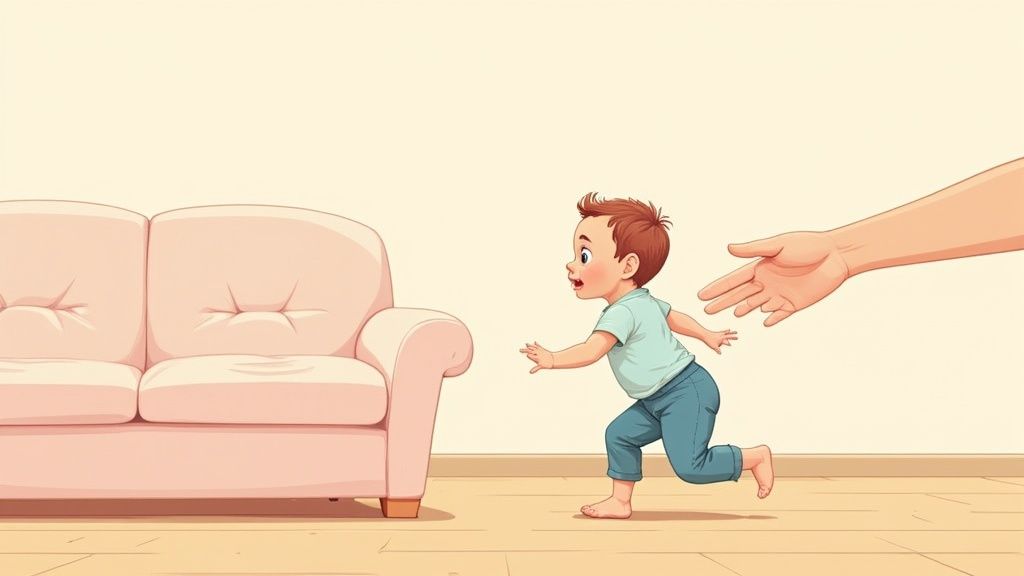
Get ready for one of the most heartwarming, hilarious, and slightly nerve-wracking milestones: your baby is officially on the move! Those first wobbly steps are a huge leap toward independence, and it’s totally normal to suddenly think, "Wait, do they need shoes for this?!" It’s a question every parent has asked since, well, forever!
Believe it or not, figuring out foot protection is an ancient human puzzle. Researchers think our ancestors started wearing shoes as far back as 40,000 years ago, all because their toe bones in fossils got a little smaller. This suggested their feet weren't working as hard, meaning shoes were already lending a helping hand! You can read more about these ancient footwear findings on Live Science.
When Are They Ready for Shoes?
Before you rush out to buy the cutest pair of tiny sneakers, let's talk timing. The best cue comes straight from your little explorer—forget the calendar and look for these awesome developmental signs!
Here are a few tell-tale signs to watch for:
- Pulling Up to Stand: They’re using everything—the couch, your legs, the dog—to hoist themselves up.
- Cruising with Confidence: They're shuffling along furniture, navigating the living room like a tiny, determined acrobat.
- Taking Independent Steps: They might be letting go for a second, taking a brave, wobbly step between the coffee table and the sofa.
These moves show you their muscles are getting stronger and their coordination is dialing in. This is the perfect moment to think about their first pair of walking shoes, mostly for outdoor fun.
Key Takeaway: Forget the calendar! Watch for physical milestones like pulling up and cruising. These are the real signs that your baby is getting ready for their walking journey.
The Magic of Going Barefoot
I know it sounds a little backward, but the absolute best thing for your new walker inside the house is to let them go barefoot. Woohoo!
Think of their feet as little sensors feeling the world. When they can feel the fuzzy carpet or the cool, smooth floor, they're getting tons of valuable sensory feedback that helps them:
- Develop way better balance and coordination.
- Strengthen the arches and muscles in their feet naturally.
- Improve their proprioception (their built-in sense of where their body is in space).
So, let those little piggies roam free at home! Shoes are for protecting their feet from hot pavement, chilly ground, or poky things outside. But inside? Barefoot is best for building a strong foundation for a lifetime of walking, running, and jumping.
What Makes a Great First Walking Shoe
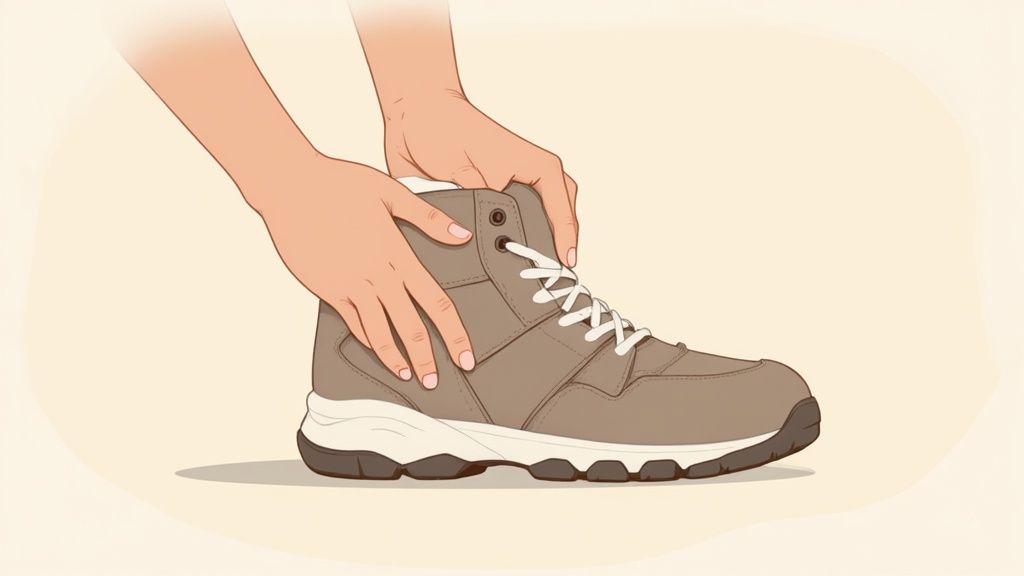
Okay, let's talk about what really matters when you're on the hunt for those first little shoes. It's so easy to get distracted by cute designs, but the secret to a great first walking shoe is that it should feel as close to being barefoot as possible, just with a little protection.
We're not trying to force their feet into a rigid structure. The goal is to find a shoe that moves, bends, and flexes with them. Think of it as a second skin for exploring the world!
Flexibility Is Your Best Friend
If there's one thing to remember, it's this: the sole has to be super-flexible. This is the number one rule! Pick up a shoe. Can you easily bend and twist it with one hand? If not, put it back. A stiff sole is like strapping tiny planks to their feet, which is no fun at all.
A bendy sole lets their foot grip and feel different textures, sending important signals to their brain that help with coordination. You want a shoe that mimics the freedom of bare feet while keeping them safe from hot pavement or prickly grass.
Let Those Piggies Wiggle
Ever worn shoes that were too tight? It’s the worst! Toddlers have naturally chubby, wide little feet that need to spread out. That’s why a wide toe box is an absolute must.
Look for a shoe with a rounded, roomy shape at the front. Pointy shoes might look chic, but they can cramp those developing toes and get in the way of healthy growth. Give those little piggies room to breathe and wiggle!
Quick Tip: When your toddler tries on a pair of shoes, have them stand up. Their feet naturally spread out under their weight. You should be able to feel a bit of wiggle room at the front, so you know their toes aren't squished.
Keep It Light and Breezy
Heavy, clunky shoes are a new walker's worst enemy. They can throw off a little one's delicate balance and make walking even more of a challenge. The best shoes feel almost weightless!
Look for lightweight and breathable materials that won't weigh them down or make their feet all sweaty.
- Soft Leather: It’s durable and molds beautifully to their foot over time.
- Canvas: A fantastic, lightweight option that lets air flow freely.
- Mesh: Super breathable and perfect for active kids on warm days.
These materials help them step more naturally and confidently. For some great examples, check out the award-winning walking shoes from Pediped. They are designed with all these principles in mind!
How to Measure Toddler Feet at Home
Alright, let's be real: measuring a squirmy, wiggly toddler’s foot sounds about as easy as herding cats. But I promise, you can totally do it at home and even turn it into a fun game!
The key is to make it playful. One of the easiest methods is the tracing game. Just grab a piece of paper, a crayon, and your little one. Have them stand on the paper—this part is super important because their feet spread out when they bear weight—and quickly trace an outline around each foot. They'll probably think it's hilarious!
Turning Wiggles into Measurements
Once you have your masterpiece outlines, the rest is simple. Use a ruler to measure from the very back of the heel to the tip of their longest toe (which isn't always the big toe!). Do this for both feet.
You'll often find that one foot is slightly bigger than the other. This is completely normal!
Parenting Pro Tip: Always, always use the measurement of the larger foot when buying shoes. This ensures you're not accidentally squishing the toes on their bigger foot, which is crucial for comfort.
This simple process shows how easy it can be to get a measurement at home.
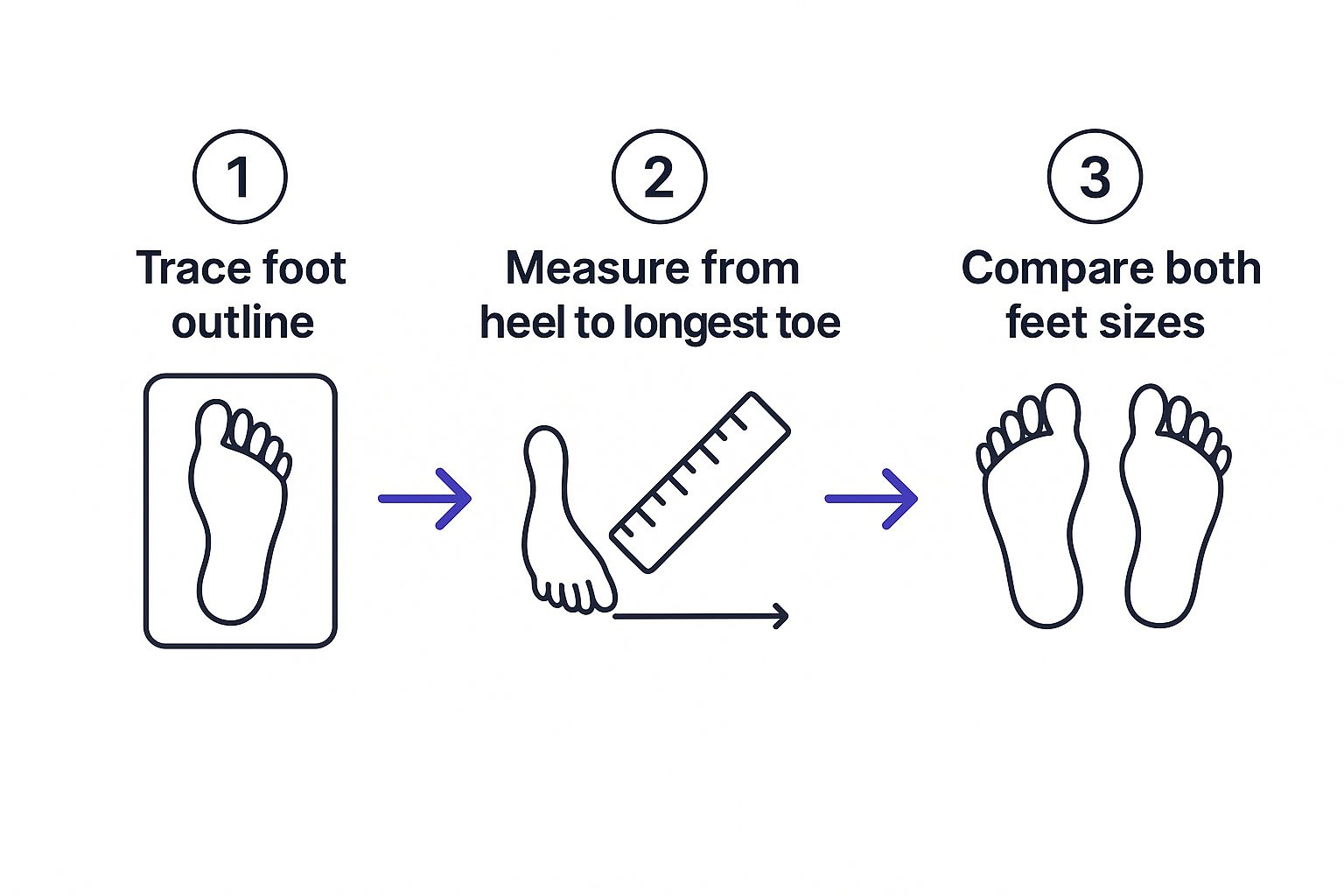
As you can see, tracing, measuring, and comparing is a straightforward way to get a reliable size before you shop for those perfect first walking shoes.
Toddler Shoe Size Quick Reference
Use this chart as a starting point to convert your measurement to a US toddler shoe size. But always double-check with the specific brand's sizing!
| Foot Length (Inches) | Foot Length (CM) | US Toddler Size |
|---|---|---|
| 4" | 10.2 | 2 |
| 4.5" | 11.4 | 3 |
| 4.75" | 12.1 | 4 |
| 5.125" | 13 | 5 |
| 5.5" | 14 | 6 |
| 5.75" | 14.6 | 7 |
This chart is a great general guide, but remember that sizing can vary between brands—just like our clothes!
The All-Important Thumb Test
So, you've used your measurement to pick out an adorable pair of shoes. Now what? The final check happens once the shoe is on their foot. This is where the classic "thumb test" comes in.
After you've put the shoe on, gently press your thumb down on the front of the shoe, right above their longest toe. You should feel about a thumb's width of space—roughly half an inch—between their toe and the end of the shoe.
Why is this little bit of wiggle room so important?
- Growth Spurts: Toddler feet grow at lightning speed! This space gives them room to grow.
- Natural Movement: It allows their foot to move and flex naturally inside the shoe.
- Comfort is King: No one likes jammed toes, especially a toddler who is busy conquering the world!
This quick check gives you peace of mind that the fit is just right—not too snug, not too loose. For extra confidence, you can always check out a comprehensive toddler shoe sizing guide to compare your measurements with a brand's specific charts.
Shoe Shopping Tips and Common Mistakes
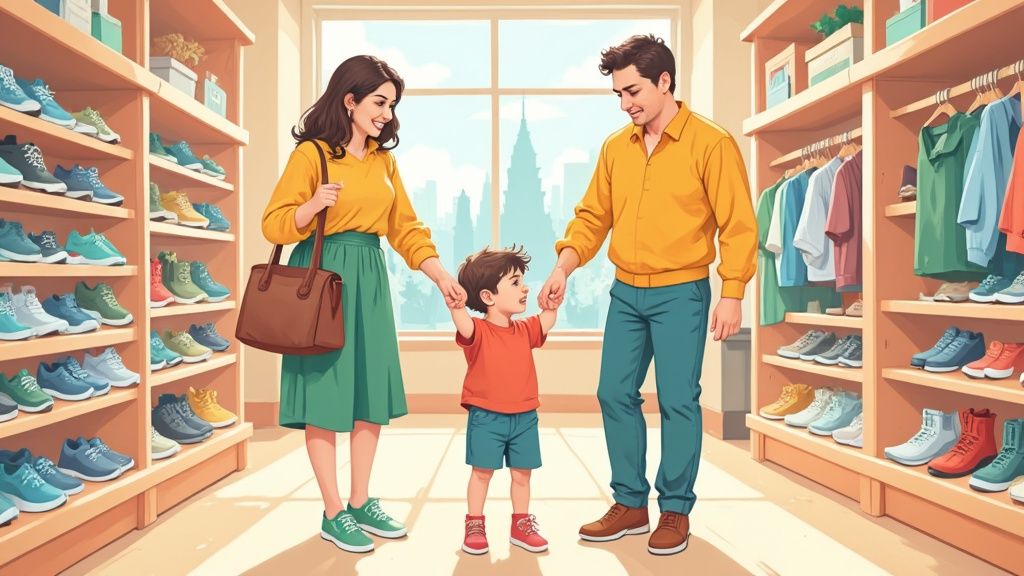
Alright, you’ve measured those tiny feet and you're ready to shop. Let the great shoe hunt begin! Finding that perfect pair of first walking shoes can feel like a quest, but with a few simple tricks up your sleeve, you’ll be a pro in no time.
Here's a fun little tip: try to go shoe shopping in the afternoon. Just like our feet, a toddler’s can swell slightly throughout the day. Trying on shoes later on helps ensure you get a fit that’s comfy from morning playtime all the way to bedtime.
Sidestepping Common Pitfalls
Let’s walk through a few common mistakes parents often make so you can confidently sidestep them.
The first big one is falling for overly rigid shoes. You might see stiff-looking high-tops and think they offer extra ankle support. In reality, they can restrict the natural movement your child needs to build strong ankles. Remember, flexibility is king!
Another tempting shortcut is accepting hand-me-downs. While we all love recycling, shoes are one item you should almost always buy new. A shoe molds to the foot of its first owner, so the support and shape just won't be right for your child. A fresh pair guarantees a perfect fit from day one.
The Takeaway: Resist the urge to grab stiff, "supportive" shoes and always opt for a new pair over hand-me-downs. Your toddler's feet will thank you!
The Great Fastener Debate: Laces vs. Velcro
Now for the age-old question: laces or velcro? Honestly, this just comes down to what works best for your family. There’s no single right answer, but here’s a quick breakdown.
Velcro Straps:
- Speedy Getaways: You can get them on and off in seconds—a total lifesaver!
- Independence Booster: Little ones can learn to put on their own shoes much earlier.
- Easy Adjustments: They make it super easy to get a snug, secure fit.
Traditional Laces:
- The Securest Fit: Laces offer the most customizable and secure fit possible.
- They Stay Put: A well-tied double knot is less likely to come undone at the park.
For many parents, velcro is the clear winner for the first year or two because of pure convenience. As your child gets older, you might find laces offer a more secure fit for all their running and jumping.
Did you know our obsession with footwear goes way, way back? The earliest shoes ever found, the Fort Rock Sandals in Oregon, date back about 10,000 years! They were woven from sagebrush bark—so cool! You can check out more about this on Footwear Magazine. It’s fun to think we’re all part of this long history of protecting our feet.
Caring for Their Shoes and Knowing When to Size Up
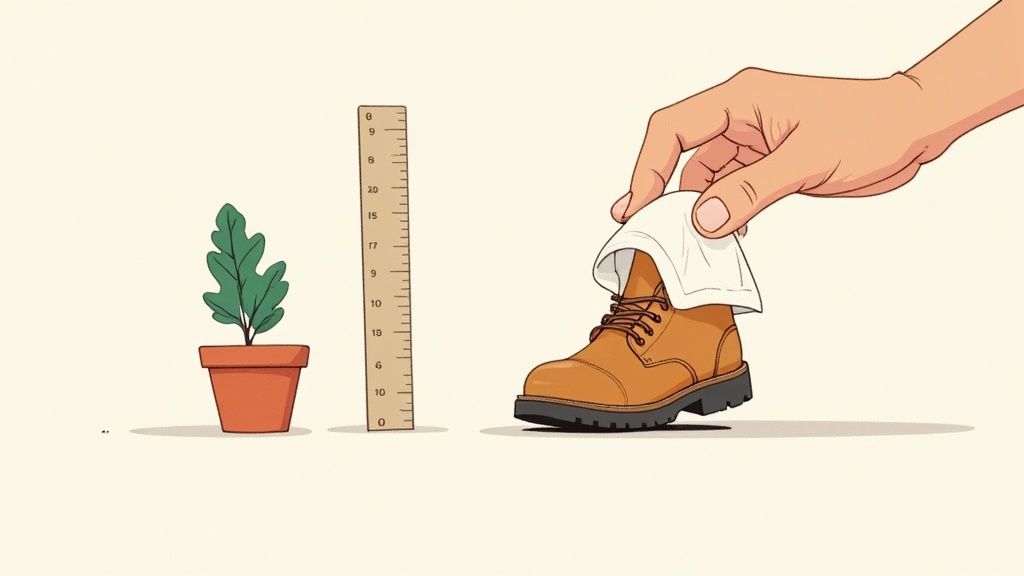
Congratulations, you did it! You’ve found the perfect pair of first walking shoes, and your little one is officially on the move. Now for the next adventure: keeping up with those impossibly fast growth spurts and, of course, the messes.
Keeping them clean doesn’t need to be a major project. For most daily grime, a quick wipe with a damp cloth is all you need. For more stubborn stuff, check out these awesome shoe care instructions that cover everything from leather to machine-washable fabrics.
It’s funny to think about, but people have been caring for their shoes for a very long time. Archaeologists found the shoes of Ötzi the Iceman, who lived about 5,000 years ago, and they were incredibly well-made. It’s a great reminder that protecting our feet is a truly ancient instinct!
Spotting the Signs It’s Time for a New Size
Toddler feet grow so fast it can make your head spin. Since they can’t just tell you, “Hey, these are pinching my toes,” you have to become a bit of a foot detective.
Keep an eye out for these clues:
- Red Marks or Blisters: When you take their shoes off, give their feet a quick look. Any red spots, especially on the heels or toes, are a dead giveaway.
- The Grunt Test: Is getting their shoes on suddenly a wrestling match? If you have to push and grunt to get their foot in, they're probably too small.
- Sudden Shoe Rejection: Is your toddler suddenly ripping their shoes off or flat-out refusing to wear them? This is often their only way of saying, "Ouch!"
Parenting Pro Tip: Don't wait for them to complain! Get into the habit of checking the fit every six to eight weeks. Just press your thumb at the end of the shoe while they're standing. No wiggle room? Time to go shopping!
Staying on top of their sizing means their feet stay comfy and happy as they toddle, run, and explore.
Your First Walking Shoe Questions Answered
Alright, you’ve made it through the measuring and shopping—congrats! But if you’re like most parents, a whole new set of questions is probably bubbling up. Don't worry, we've got you covered.
Here are the most common questions we hear from parents just like you.
How Often Should I Check My Toddler's Shoe Fit?
This is a big one, because those tiny feet grow unbelievably fast! A good rule of thumb is to check the fit of their shoes every six to eight weeks. Seriously. A quick press on the toe is all it takes.
You might be surprised to find you’re buying a new size every two to four months. Staying on top of it is the best way to keep their toes from getting squished.
Parenting Pro Tip: Set a recurring reminder on your phone for the first of every other month to do a quick "shoe check." It's an easy way to stay ahead of those sudden growth spurts!
Are Expensive Toddler Shoes Really Better?
Honestly? Not necessarily. A high price tag isn't a guarantee of a better shoe. What truly matters has nothing to do with brand names.
Instead, keep your focus on these key features:
- A super-flexible sole that bends easily.
- A roomy toe box for wiggling toes.
- Lightweight, breathable materials.
Plenty of affordable brands create fantastic shoes that tick all these boxes. It’s all about the design and fit—not the logo.
Should My Toddler Wear Shoes Indoors?
It's actually best for them to go barefoot indoors as much as possible (as long as it's safe, of course!).
Walking barefoot helps strengthen all those tiny muscles and ligaments in their feet. It also improves their balance and gives their brain important sensory feedback.
Think of shoes as protection for the great outdoors—for navigating hot pavement, chilly grass, or poky gravel. Indoors, letting those little feet be free is the best thing you can do to support their natural development.
Ready to find the perfect pair for your little adventurer? Check out the complete collection of pediatrician-approved first walking shoes at Pediped. From our soft-soled Originals to the sturdier Grip ‘n’ Go, you’ll find the perfect, comfy fit for every single wobbly step. Find your little one’s next favorite pair at https://www.pediped.com.
Leave a comment