


Trying to get a wriggly baby into tiny, complicated shoes can feel like a sport you never signed up for. That's where slip on infant shoes come in—they're a total game-changer for parents. Think of them as the undisputed champions of convenience, here to save you time, tears, and a whole lot of frustration when you’re trying to get everyone out the door.
Welcome to The No-Fuss World of Baby Shoes
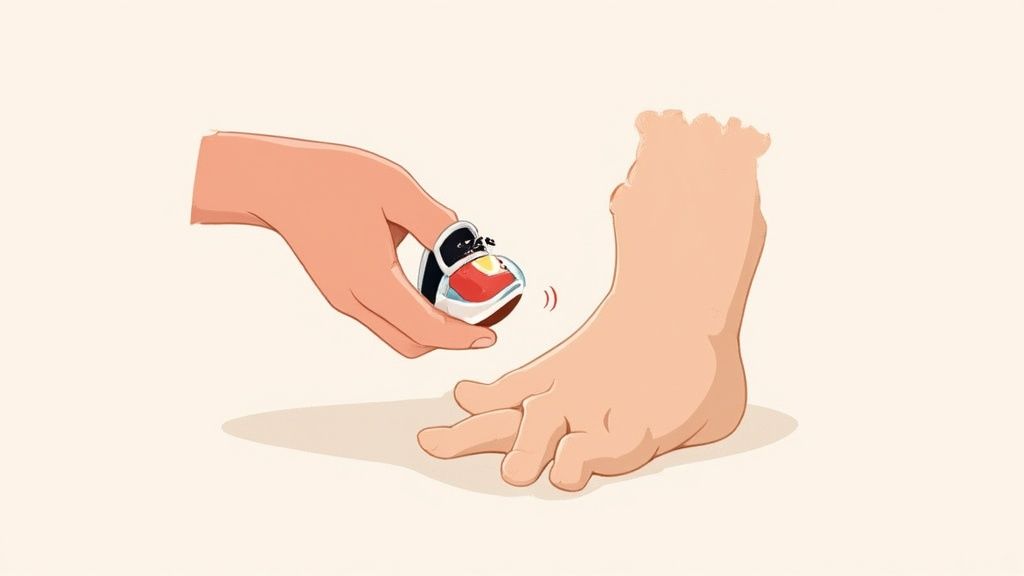
Let’s be honest: the daily whirlwind of getting a baby ready is no small feat. You’ve successfully navigated the diaper change, wrestled them into an adorable outfit, and you're this close to freedom when you spot them... the dreaded lace-up shoes. Suddenly, your calm morning dissolves into a mini-wrestling match.
This is exactly where the magic of slip-on infant shoes comes into play. They swoop in to save the day, bringing a much-needed dose of sanity back into your routine. No laces, no buckles, no fuss—just pure, simple genius designed for busy parents and wiggly babies.
Why Parents Are Obsessed With Slip-Ons
So, what’s the big deal? It turns out parents everywhere are voting for convenience with their wallets. Slip-on styles are a huge part of the baby footwear market because they just make life easier. In fact, shoes with easy closures are a top pick for little feet for a reason!
These shoes aren't just a quick fix; they're about reclaiming precious moments in your day. They represent one less struggle, one more smile, and a lot more time for the good stuff.
Choosing the right first shoes is a big step for your little one's development. It's about finding that perfect balance of protection, flexibility, and, of course, a design that doesn't make you want to pull your hair out.
To give you a clearer picture, here’s a quick rundown of why parents are falling in love with the simplicity of slip-ons.
Why Parents Love Slip-On Shoes: A Quick Look
| Feature | The Parent Win | The Baby Win |
|---|---|---|
| Effortless On-and-Off | Saves time and sanity during hectic mornings. | Less fuss means a happier, more comfortable baby. |
| No Laces or Straps | Nothing to trip over or come untied. | Safe for crawling and early steps without hazards. |
| Snug, Secure Fit | Elastic openings keep shoes on wiggly feet. | The shoe moves with their foot, not against it. |
| Lightweight Design | Easy to pack in a diaper bag without adding bulk. | Feels natural, almost like being barefoot. |
Ultimately, a shoe that’s easy for you is often more comfortable for them, creating a win-win for the whole family.
From Wobbly First Steps to Confident Cruising
Whether your baby is just starting to pull up or is already cruising around the furniture, the right footwear is absolutely key. A great pair of slip-ons can provide the perfect amount of grip and protection without feeling restrictive.
As you navigate this exciting milestone, understanding what makes a shoe truly supportive is a huge help. For more guidance, check out our guide on the best shoes for a baby learning to walk.
Choosing The Right Shoes for Each Wobbly Stage
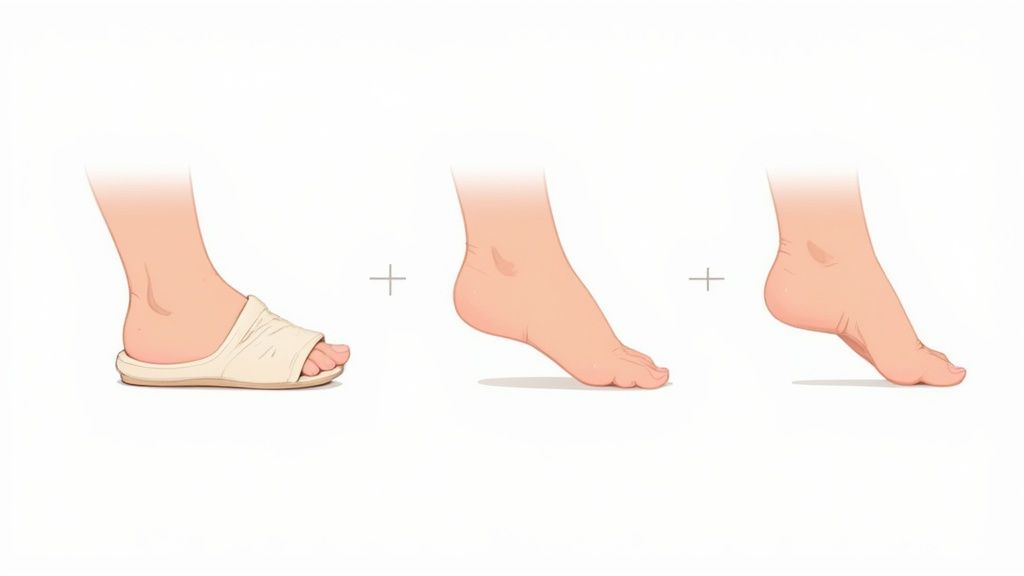
So, when’s the perfect time to introduce your little one to the world of slip on infant shoes? There’s no strict rulebook here. Think of your baby's journey to walking as a series of wobbly, wonderful, and totally unique milestones—the key is matching the right shoe to the right adventure.
For the tiniest explorers—the pre-walkers and sitters—shoes are mostly about keeping those little toes warm and looking cute. At this stage, barefoot is almost always best! It lets them wiggle, stretch, and get a real feel for the world around them.
When they do need a little something, think ultra-soft and cozy. You’re looking for a shoe that’s more like a sock with a mission: gentle, flexible, and completely unobtrusive.
From Cruising Champions to First Steps
Once your baby starts pulling up and "cruising" along the furniture, their needs start to shift. They aren't quite walking, but they're definitely on the move! This is where a well-chosen slip-on really starts to shine.
You'll still want a shoe that’s incredibly flexible. Why? Because feeling the ground helps them build balance and confidence. A shoe’s design directly impacts the sensory feedback babies get, which helps them understand their body in space—a concept known as proprioceptive input.
A soft, thin sole allows their feet to receive all that important sensory information, which is like a secret superpower for learning to walk. The goal is simple: protect them from rough surfaces without getting in the way of that natural, barefoot-like feeling.
A baby's foot isn't just a mini adult foot. It's a bundle of soft cartilage that's still forming, so giving it the freedom to move and grow is one of the best things you can do for their healthy development.
As they go from cruising to taking those first brave, independent steps, the game changes again. Now they need a little more protection for outdoor adventures but still all the flexibility they can get. A great slip-on for a new walker will have:
- A flexible sole: You should be able to bend the shoe easily with your hands. This proves it will move naturally with their foot.
- A wide toe box: Little toes need room to spread out and grip the ground, which is essential for stability.
- A lightweight feel: The shoe shouldn't be heavy or clunky, which can make walking even harder.
This combo offers just enough protection from pebbles and uneven sidewalks while letting their foot muscles do the important work of growing strong. Understanding this is key, and you can learn more about how flexible shoes support toddlers as they become more active.
The right slip-on feels less like a shoe and more like a trusty sidekick for their first big adventures.
Finding The Perfect Fit Without The Fuss
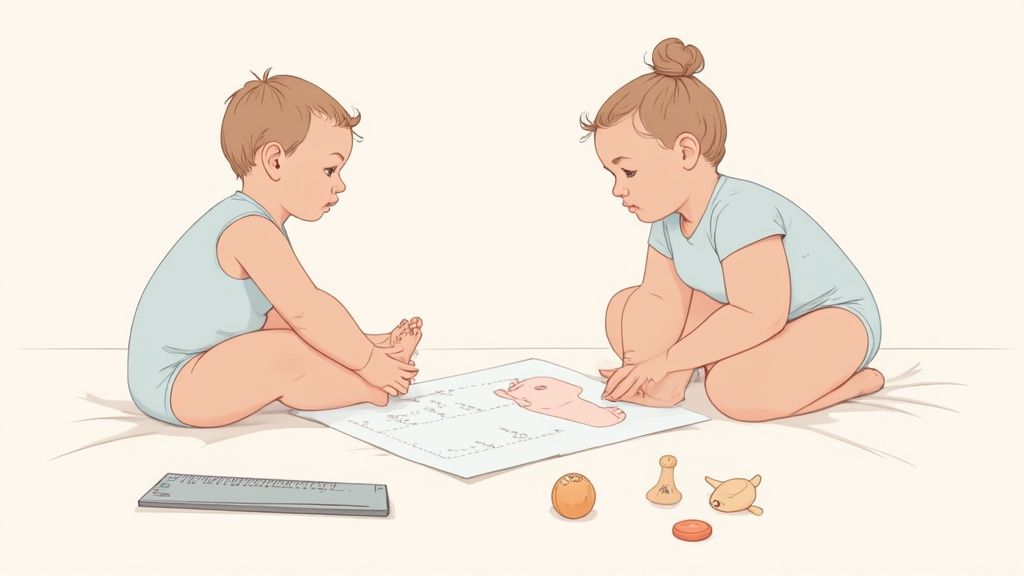
Ah, the "Measure the Baby’s Foot" game. The rules are simple: try to get an accurate measurement of a tiny foot that moves with the speed of a hummingbird's wings. Sound familiar? Sizing infant shoes can feel like a hilarious, slightly maddening puzzle.
But don't worry, we're here to turn this little challenge into a stress-free win. You won't need any fancy gadgets. All it takes is a piece of paper, a crayon, and a baby who’s happily occupied with a favorite toy or snack.
The Great Foot Trace Adventure
Here's your mission, should you choose to accept it. While your little one is sitting down, gently place their foot on a piece of paper and quickly trace the outline. It doesn't need to be a work of art! This little sketch is your secret weapon for finding the perfect pair of slip on infant shoes.
Once you have the tracing, measure from the tip of the longest toe straight back to the heel. Now for the most important part—add about a half-inch (or a thumb’s width) for wiggle room. This extra space isn't just for comfort; it gives their growing feet room to breathe and move naturally.
That little bit of extra space is crucial. It allows their feet to splay naturally when they stand up. Tiny toes need room to spread out and grip, which is a key part of building balance and strength.
Cracking the Sizing Code
With your measurement in hand, you're ready to tackle the wild world of shoe sizing charts. You've probably noticed that one brand's size 4 is another's size 5. It’s like every company has its own secret language.
The key is to ignore the size number and focus on the length in inches or centimeters. This is where your foot tracing becomes your superhero cape. Just compare your measurement to the brand’s specific chart to find the true fit. For a detailed walkthrough, the Pediped sizing guide is an awesome resource that helps you get it right every time.
And if you ever need to demystify the numbers, this comprehensive kids shoe size chart is a fantastic reference.
The Quick Wiggle Check
Once the shoes arrive, here's a quick final fit check:
- Put the shoes on while your baby is standing. Their feet actually spread out a bit when they bear weight.
- Press your thumb between the end of their longest toe and the tip of the shoe. You should feel about a thumb’s width of space.
- Check the heel. A tiny bit of slipping when they walk is normal, but their heel shouldn't pop out completely.
- Watch for red marks after you take the shoes off. Any lasting redness could mean the shoes are a bit too snug or narrow.
With these simple tricks, you’ll be a shoe-fitting pro in no time, making sure every adventure your little one takes starts with happy, comfy feet.
The Best Materials for Happy Little Feet
A baby's foot is one of the softest, most precious things you'll ever hold. It's mostly soft cartilage, full of potential, so what you put on it really, truly matters. Think of choosing slip on infant shoes like you're picking out their favorite cozy blanket—it has to be gentle, soft, and breathable.
Let's talk about shoe materials without putting you to sleep. The absolute best choices for baby shoes are fabrics that let those little feet breathe. You know that stuffy, sweaty feeling your own feet get sometimes? Babies get that too, so materials like soft leather, suede, and canvas are champions. They let air move freely, keeping those tiny toes from getting clammy and uncomfortable.
Flexible is the Name of the Game
Beyond just being breathable, the best materials have to be incredibly flexible. A quick way to check is what I call the "taco test"—if you can easily fold the shoe in half, sole to sole, you've found a good one! This kind of flexibility mimics the barefoot feeling, which is so crucial for their development.
A shoe that bends and moves with their foot helps all those tiny muscles grow strong and lets them actually feel the ground they're toddling on. It's that direct connection to the floor that helps them build balance and coordination. For a deeper look into why this is so important, see what experts say about healthy little feet. A stiff, rigid shoe is like asking them to learn to walk in ski boots—it just doesn't work!
Safe for Baby and Kind to the Planet
It's not just about comfort; it's also about what's in the materials themselves. As parents, we want to be sure that whatever is touching our baby's skin is safe and non-toxic. That’s why we're seeing a wonderful move toward more natural and eco-friendly options.
When you choose materials like natural fibers, you're not just picking a shoe; you're ensuring your baby's sensitive skin is protected from harsh chemicals while also making a choice that’s a little kinder to the earth.
Thankfully, manufacturers are listening to parents who want safer, more sustainable products. You'll find many slip-on infant shoes are now made with materials like recycled fabrics and natural fibers, and often feature non-marking soles for extra safety on indoor floors. Look for labels that mention things like "chrome-free leather" or "non-toxic dyes" for that extra peace of mind.
When to Choose Other Styles of Baby Shoes
We’ve spent a lot of time talking about slip on infant shoes, and for good reason—we think they're fantastic for most of your little one's daily adventures. But are they the only option? Not at all! Think of your baby's shoe collection like a well-stocked toolbox; you wouldn't use a hammer for every single job.
Sometimes, a different style of shoe is simply a better fit for the occasion. It's all about choosing the right gear to keep those tiny feet comfortable, secure, and ready for anything.
The Great Shoe Showdown
Let's break it down. You have your super convenient, easy-on slip-ons. But you also have other great players on the team: classic Velcro shoes, cozy soft-soled booties, and even tiny lace-ups for those extra-special moments.
While slip-ons definitely win the gold medal for speed (especially when you're trying to get out the door in under 30 seconds), other styles have their own unique strengths. It’s a team effort, after all!
Having a few different shoe styles on hand means you’re ready for anything life throws your way—from a messy park playdate to a picture-perfect family gathering. Versatility is your best friend!
This handy little chart can help you decide which material is best for any shoe you choose.
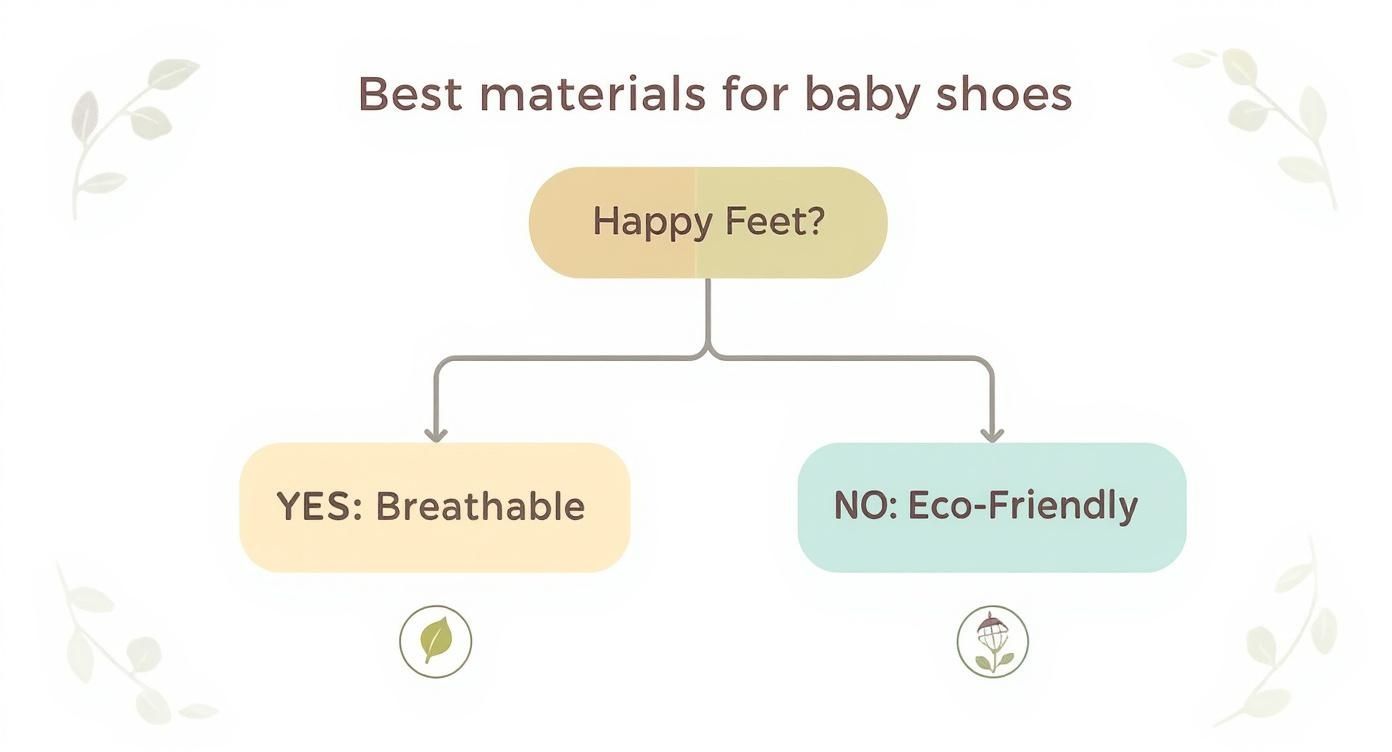
As you can see, the path to happy feet always starts with breathable and eco-friendly materials, no matter the style.
When Velcro or Laces Take the Win
So, when should you reach for something other than a slip-on? Here are a few times when another style might be just the hero your baby’s feet need:
-
Fancy Family Photos: Planning a wedding or a special holiday gathering? A more structured shoe, maybe with classic laces or a sweet buckle, adds that perfect finishing touch to a dressy outfit. They just have a polished look that a casual slip-on can't quite match.
-
Wild Outdoor Adventures: If you're heading out on a bumpy trail or an uneven grassy field, a shoe with Velcro straps or laces offers an extra-snug fit. That added security helps keep the shoe firmly in place and can give a bit more ankle support to a wobbly new walker.
-
Super Wide or Narrow Feet: While many slip-ons are designed to be flexible, some babies just have uniquely shaped feet. For them, a shoe with adjustable Velcro straps can be a game-changer, letting you customize the fit for that perfect "just right" feeling.
-
Chilly Weather Warriors: On those cold winter days, a fleece-lined bootie with a secure closure is your best bet. It locks in warmth and keeps chilly drafts out—which is crucial when your little one can't tell you their toes are getting cold.
Building a small but mighty shoe wardrobe for your baby is all about having options. A great pair of slip-ons will probably be your daily go-to, but having a few other styles ready in the closet means you’re prepared for every adorable adventure that comes your way.
Keeping Those Cute Kicks Looking Fresh
Let’s face it, babies are masters of mess, and their adorable slip on infant shoes are usually right in the line of fire. From pureed sweet potato to sidewalk chalk, those little shoes see it all. But keeping them clean doesn't have to be a major production.
When you’re dealing with a fresh spill or a smudge, a quick spot clean is your best bet. For most fabric or canvas shoes, just grab a damp cloth and a touch of mild soap. A gentle scrub on the trouble spot followed by a wipe with a clean, wet cloth is usually all it takes.
Quick Cleaning Wins for Busy Parents
For shoes that have clearly been on a grand adventure, you might need a slightly deeper clean. Don't worry, this is still super simple.
- Puddle Mishaps: It happens to the best of them. First, gently squeeze out any excess water. Then, stuff the shoes with newspaper or paper towels—this helps them hold their shape and pulls moisture out from the inside. Let them air dry completely, but keep them away from direct heat or sunlight which can cause damage.
- Beating the Stink: If those tiny shoes are starting to smell a bit… well-loved, fresh air is your secret weapon. A few hours in a shady spot outside can work wonders.
- Material Matters: A quick wipe-down with a damp cloth is perfect for leather-like materials. For suede, a soft brush is great for getting rid of dried mud and dirt.
Remember, the goal is "clean enough," not "brand new." These shoes are meant for playing and exploring. A few scuffs are just little reminders of a day filled with fun!
Whatever you do, resist the urge to toss them in the washing machine or dryer unless the manufacturer gives you the green light. The high heat can wreak havoc on the glues and materials, causing the shoes to shrink or fall apart. For more detailed tips specific to different materials, check out these official Pediped care instructions.
Your Top Questions About Slip-On Shoes Answered
Still have a few questions? Perfect! We get it—choosing the right shoes for your little one brings up a lot of things to consider. Let's tackle some of the most common questions we hear from parents just like you.
Are Slip-On Shoes Secure Enough for Active Babies?
This is probably the number one question we get, and the answer is a resounding yes! A well-designed slip-on isn't just loose. It uses gentle, stretchy elastic around the opening to give your baby’s foot a snug little hug.
This creates a secure fit that stays put through living room crawling expeditions, wobbly first steps, and even those surprisingly fast toddler sprints. They’re absolutely built for action.
How Often Should I Check The Fit?
Baby feet grow so fast it can make your head spin! One minute the shoes fit perfectly, and the next, they're too snug. We recommend doing a quick fit check every 4 to 6 weeks.
The easiest way is the "thumb rule." While your child is standing, press your thumb at the tip of the shoe. If you can’t fit about a thumb’s width of space between their longest toe and the end of the shoe, it's time for the next size up.
The most important thing is giving their toes plenty of wiggle room. Happy, unrestricted toes are essential for developing balance and strong little foot muscles.
Can My Baby Wear Them Without Socks?
For sure! This is one of the best parts about slip-ons made from breathable materials like canvas or soft leather. They’re designed to be super comfortable against bare skin.
These fabrics let air circulate, which helps keep their feet from getting sweaty and sticky. It’s the perfect solution for warm, sunny days or for those times when wrestling with a pair of tiny socks feels like one battle too many.
Ready to find the perfect, no-fuss pair for your little adventurer? Explore the full collection of pediatrician-approved slip-on shoes at Pediped, designed for healthy foot development and happy, wiggling toes. Shop the collection now at pediped.com.
Leave a comment