


Get ready for some serious cuteness overload! Your little one is on the move, and those adorable wobbles and determined scoots across the floor are about to get a major upgrade. Baby pre walking shoes are here for this magical phase, acting as cozy, protective sidekicks for tiny feet that are busy exploring the world.
Think of them less as "walking" shoes and more as adventure gear for all that crawling, pulling up, and cruising along the furniture. Let the games begin!
Welcome to Your Baby's First Adventures
This is it! Your little human is officially mobile, and every single day brings a new discovery. One minute they're mastering their crawl, and the next they're bravely hoisting themselves up on the coffee table with a huge, triumphant grin. This pre-walking stage is an incredible explosion of motor development and pure, unfiltered fun.
It's a time filled with the cutest stumbles and surprising bursts of speed. As they navigate new terrains—from the soft living room rug to the cool kitchen tiles—their feet are learning and adapting. This is where the right pair of baby pre walking shoes comes in, offering a gentle barrier without cramping their style or natural development.
What Are Pre Walking Shoes Anyway?
Let’s bust a myth: these aren’t miniature versions of adult running shoes designed to teach a baby how to walk. Nope! They're super-soft, ultra-flexible booties crafted to protect your baby's delicate feet from bumps, rough surfaces, and chilly floors when they aren't barefoot.
The best way to think of them is like a second skin. They provide just enough protection for outdoor adventures or trips to the store, while still allowing those tiny foot muscles to grip, flex, and strengthen naturally. They keep little feet safe without messing with the important sensory feedback babies get from feeling the ground beneath them.
The goal is to support, not restrict. A great pre-walking shoe moves with the foot, offering a sock-like comfort that encourages free movement and confident exploration.
This exciting phase is all about building strength and coordination. Every wiggle, scoot, and stand is a tiny step toward those first independent strides. Choosing the right gear helps create a safe and encouraging environment for them to thrive. You can find a wonderful selection of adorable and pediatrician-approved options in our collection for babies 0-24 months.
And as you prepare for these early milestones, you might also be thinking about how to capture these fleeting moments. For some inspiration on documenting your little one's first days, check out these amazing tips on what to wear for a newborn baby photoshoot. It’s all part of celebrating this incredible journey.
Why Pre-Walking Shoes Matter for Development
Let's be real—your baby’s feet are incredible. As they learn to crawl, pull themselves up, and cruise along the furniture, their feet are constantly sending messages to their brain, building strength and coordination with every wiggle.
Most pediatricians will tell you that barefoot is best when you're indoors. It allows your little one to grip the floor with their toes and feel different textures, which is fantastic for developing balance and muscle.
But what about when their adventures take them outside? Or onto surfaces that aren't so baby-friendly?
Shielding Their Soles From the Big Wide World
Think of pre-walking shoes as a soft, flexible shield for your baby's delicate feet. They aren’t there to force walking; they’re there to protect.
The world is full of new and exciting things to explore, but it can also be a little rough on brand-new feet. Pre-walkers provide a gentle barrier against things like:
- Rough Surfaces: Hot pavement, poky gravel, or splintery wood decks. Ouch!
- Chilly Floors: Cold tile in the kitchen or slick hardwood can be a shock to tiny toes.
- Little Bumps: They offer a light cushion for those inevitable stubs and scrapes.
The best pre-walking shoes are designed to feel almost like being barefoot, but with an essential layer of protection. The soles are paper-thin and super flexible, so your baby can still feel the ground beneath them without getting hurt.
The goal is to give your baby the freedom to explore their world safely. With the right pair of shoes, you won’t have to worry about every little pebble or patch of prickly grass.
Building Confidence and Coordination
Beyond simple protection, a good pre-walker can actually give your baby a little boost of confidence. Those wobbly first attempts at standing and cruising are a huge deal!
A soft, grippy sole provides just enough traction to prevent slips on slick surfaces. This added stability makes them feel more secure as they pull up on the coffee table or take those first tentative side-steps.
When babies feel stable, they're more willing to practice. And practice is what builds the strength and balance they need to eventually take those first amazing steps all on their own. It’s a wonderful cycle: protection leads to confidence, and confidence leads to progress. Before you know it, they'll be off!
How to Find the Perfect Fit for Happy Feet
Alright, let's play a game! It's called "Guess the Shoe Size for the Wiggliest Feet on Earth." Finding the right fit for your little explorer is super important, but it doesn't have to be a puzzle. A perfectly fitted pre-walking shoe feels like a cozy hug, not a tight squeeze, giving them the confidence to cruise.
Getting the size right is crucial because those tiny feet are growing at lightning speed. A shoe that’s too tight can restrict natural development, while one that’s too big can cause trips and tumbles. We want to find that "just right" Goldilocks fit that supports every adorable wobble.
The Famous 'Rule of Thumb'
You've probably heard of the "rule of thumb," and for good reason—it’s a parent’s best friend for a quick fit check. Once the shoe is on your baby's foot, gently press your thumb down on the front, right above their longest toe. You should feel about a half-inch of space, which is roughly the width of your thumb.
This little bit of wiggle room is essential! It ensures their toes aren't squished and have plenty of space to splay out naturally as they stand and balance. It also gives them some much-needed growing room, so you aren't buying new shoes every other week!
To make this process even easier, our quick guide below breaks down the simple steps to measuring, checking, and securing the perfect pre-walking shoes.
As the visual shows, a great fit is about more than just length. It’s a three-step dance of measuring, checking for space, and ensuring the shoe is snug but never tight.
More Than Just Length
Baby feet are famously chubby and cute, which means width is just as important as length! Many pre-walking shoes are designed with a wider toe box to accommodate those sweet, pudgy feet.
A proper fit allows the foot to sit flat and relaxed inside the shoe, without any pinching or pressure on the sides. The heel should be snug, preventing the foot from sliding forward, but the front should be roomy enough for toes to have a party.
Use this simple checklist to ensure you've found the perfect, comfy fit for your baby's first shoes.
Quick Fit Checklist for Pre Walking Shoes
| Check Point | What to Look For | Why It Matters |
|---|---|---|
| Length | About a half-inch of space at the front. | Allows toes to splay and provides room for growth. |
| Width | No red marks or pinching on the sides. | Accommodates the natural chubbiness of baby feet. |
| Heel | Snug fit with no slipping when walking. | Prevents blisters and ensures the foot stays secure. |
| Instep | No visible pressure from the strap or shoe top. | Keeps the shoe comfortable without restricting circulation. |
Remember, a quick check can make all the difference in keeping those little feet happy and healthy on their journey to walking.
To simplify the sizing process, check out our detailed kids' shoe size chart. A key tip is to always measure their feet while they are standing up, as their feet splay out and measure differently than when they’re sitting.
For more brand-specific details, Pediped also offers an easy-to-use sizing guide to help you find the ideal match for your little one. It's all about giving you the tools to choose a shoe that feels like a dream on their feet.
Choosing the Best Materials for Tiny Toes
Think about the difference between a soft, stretchy t-shirt and a stiff denim jacket. You’d pick the t-shirt for a day of running around and playing, right? The same logic applies to your baby's first shoes. The right materials are everything when it comes to keeping their developing feet comfortable, happy, and free to move.
Your baby's feet are incredibly soft and pliable, constantly taking in sensory information from their surroundings. This is why the best baby pre walking shoes are always made from materials that let their skin breathe and their feet flex naturally. Stiff, synthetic fabrics can be a real roadblock, trapping heat and preventing all those tiny muscles from getting the workout they need.
Let Their Feet Breathe
When it comes to pre-walkers, natural materials are the clear winners. They're gentle on that delicate baby skin and allow for plenty of airflow, which is crucial for keeping little feet dry and comfortable. It’s like choosing between comfy cotton socks and sweaty plastic boots on a warm day—the choice is obvious!
Keep an eye out for materials known for being soft and flexible:
- Soft Leather or Suede: These are fantastic choices. They're durable but also incredibly pliable, and they’ll actually mold to the unique shape of your baby’s foot over time.
- Lightweight Canvas: The perfect option for warmer days, canvas is breathable and light, giving your baby that "barely there" feeling they're most comfortable with.
- Eco-Friendly Fabrics: Many modern pre-walkers feature sustainable materials that are kind to your baby's feet and the planet.
A great rule of thumb: the best pre-walking shoe material is one you can easily bend and twist in your hands. If it feels stiff to you, imagine how restrictive it will feel on your little one’s feet.
Opting for shoes made from these kinds of materials ensures your baby’s feet can grip, bend, and balance almost as if they were barefoot, just with an added layer of gentle protection.
Kind to Baby, Kind to the Planet
These days, parents are looking for more than just a good product; they want something that’s safe for their child and for the environment. This has sparked a wonderful shift toward eco-friendly baby footwear, a movement driven by parents who care deeply about the world their little ones will grow up in.
This growing demand for sustainable options is making a real impact. In fact, the baby shoe industry is projected to reach a value of around USD 17.63 billion between 2025 and 2035, largely because of parents like you seeking out environmentally conscious brands. You can explore the full baby shoe market analysis on MarketResearchFuture.com to learn more about these trends. When you choose sustainable materials, you’re not just buying a great pair of shoes—you’re helping build a healthier planet for your baby to explore.
Top Features in Functional Pre Walkers
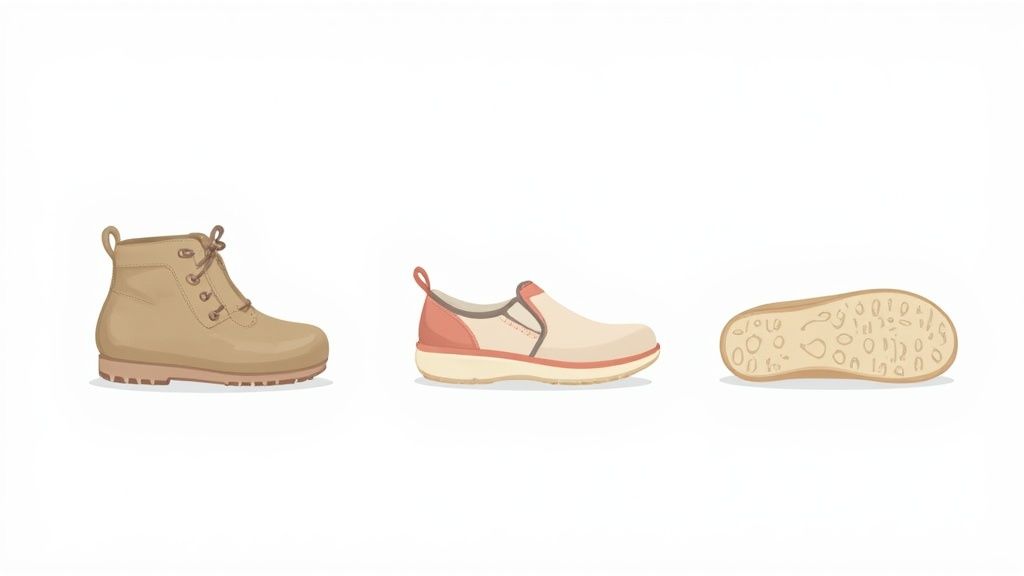
Ready to dive into what makes for a perfectly designed pair of baby pre walking shoes? While it’s tempting to grab the cutest pair you see, the real genius is in the functional details that help your little one’s feet grow strong and healthy.
The best pre-walkers, like those in Pediped's Originals collection, get the thumbs-up from pediatricians for a reason. They focus on what really counts for developing feet. Think of them less like a restrictive shoe and more like a protective second skin—one that shields tiny toes without getting in the way of their natural development.
Soles That Feel Like They're Barely There
The absolute most important feature? An ultra-flexible sole. You should be able to twist and bend the shoe with almost no effort. This incredible flexibility is what mimics the feeling of being barefoot, letting your baby connect with the ground to build up those tiny foot muscles and master their balance.
A soft, pliable sole lets their foot roll, flex, and grip just as nature intended. It’s like trying to learn ballet in hiking boots versus soft, flexible slippers. You want total freedom of movement!
Podiatrists will tell you that a pre-walking shoe's job is simply to protect, not to "correct." The design should follow the foot's natural shape, providing a lightweight shield against poky surfaces without dulling that all-important sensory feedback from the ground.
The Sanity-Saving On-and-Off Design
Let’s be honest, getting shoes on a wiggly baby can feel like a wrestling match. This is where easy-on designs become a parent's saving grace. You want features that make life simpler while still ensuring the shoe stays put.
- Velcro Straps: A true game-changer. They let you get a perfectly snug fit in just a few seconds and easily adjust for those wonderfully chubby baby feet.
- Wide Openings: A shoe that opens up nice and wide makes slipping a foot in completely drama-free. No more struggling!
These small details mean less time wrangling shoes and more time enjoying cuddles and playtime. And as your little one gets bigger, it even helps them feel independent when they start trying to put them on all by themselves!
Once your expert crawler starts cruising along the furniture, their footwear needs start to shift. For those exciting next steps, you'll want to check out options like the Pediped Grip ‘n’ Go line. They offer the perfect combination of flexibility with a little extra grip for their new upright world. It’s all about finding the right shoe for their latest adventure.
Your Top Questions About Baby's First Shoes
Stepping into the world of baby shoes can feel like learning a whole new language. We get it! It's an adorable, but sometimes confusing, new world. We’ve rounded up some of the most common questions we hear from parents to give you clear, simple answers.
Let's demystify the process so you can get back to what really matters: cheering on your little one's every move.
When Does My Baby Need Pre Walking Shoes?
The best time to introduce baby pre walking shoes is right when your little one’s inner explorer kicks into high gear. Think crawling with purpose, pulling themselves up on everything, and starting to cruise along the furniture.
While barefoot time at home is still the gold standard for strengthening those tiny foot muscles, pre-walkers are perfect for adventures outside the nest. For trips to the park, visits to grandma’s house with those cold tile floors, or any surface that isn't baby-proof, these shoes offer a crucial layer of protection and grip.
What’s the Difference Between Pre-Walkers and First Walkers?
Great question! The main difference is all in the sole. It's kind of like comparing a pair of cozy house slippers to a lightweight, flexible sneaker.
- Pre-Walkers: These little shoes have incredibly soft, bendy soles, usually made from suede or a thin leather. The whole point is to mimic the feeling of being barefoot, protecting their feet while letting them feel the ground beneath them.
- First Walkers: Once your toddler is taking confident, unassisted steps, it's time to graduate. First walkers feature a slightly sturdier (but still very flexible) rubber sole. This gives them a bit more durability and support for their newfound upright mobility.
How Often Should I Check My Baby's Shoe Size?
Those little feet grow astonishingly fast. You could blink and miss a growth spurt! We recommend checking their shoe fit every 6 to 8 weeks.
The easiest way is the classic "rule of thumb." While your baby is standing, press down gently on the tip of the shoe. You should feel about a half-inch of wiggle room between their longest toe and the end. If their toes are squished or you see red marks on their feet after taking the shoes off, it's definitely time to size up.
It's all about proactive peeks, not waiting for a complaint. A quick check every couple of months ensures their feet have all the room they need to grow strong and happy without any restrictions.
Are More Expensive Baby Shoes Actually Better?
Not always. A hefty price tag doesn't automatically mean it's a better shoe for your baby's development. What truly matters isn't the brand name, but the shoe's construction.
The best choice will always be a shoe that champions a perfect fit, ultimate flexibility, and is made from breathable, high-quality materials. Look for brands that are pediatrician-approved and designed with a deep understanding of natural foot development. A thoughtfully designed shoe that supports their tiny feet is priceless, no matter the cost.
Ready to find the perfect pair that checks all the boxes for style, safety, and healthy development? Explore the pediatrician-approved collections at Pediped, where every shoe is crafted with your little one’s first adventures in mind.
Shop the full collection of baby pre walking shoes at Pediped.com
Leave a comment