


Welcome to the wild world of tiny, fast-growing feet! If you’re trying to figure out the right shoe size for your little one, you’ve come to the right place. It’s actually way simpler than you might think. The basic idea is to measure their foot while they stand, add about a half-inch for growth, and then match that number to a brand's specific size chart. This little bit of effort ensures their toes have plenty of room to wiggle and grow, keeping them comfy on all their adventures.
Why Getting the Right Shoe Fit Is a Big Deal
Ever found yourself in a shoe store trying to wrangle a squirmy toddler while juggling boxes? We've all been there. One minute, their favorite sneakers fit perfectly; the next, you’re hearing "Ouch, my toes are squished!" right before they dramatically kick them off in the middle of the grocery store.
It’s a whirlwind, and it’s tempting to just guess a size and hope for the best. But getting that perfect fit is more than just avoiding a shopping-trip meltdown—it's super important for their healthy development.
Little feet are not just miniature versions of adult feet. They are soft, squishy, and growing at an incredible pace. The right shoes give them the support and freedom they need to develop strong muscles and arches, setting the stage for a lifetime of happy walking, running, and jumping!
Beyond Just Comfort
Ill-fitting shoes can be more than just a little uncomfortable; they can actually affect how your child walks and plays. Shoes that are too tight can restrict natural movement and lead to pesky blisters or even ingrown toenails. On the flip side, shoes that are too big can be a serious tripping hazard and cause your child to clench their toes just to keep them on.
Finding that "just right" Goldilocks fit is key for their physical health. Think of it this way: their feet are the foundation for their entire body. Proper footwear helps ensure that foundation is strong and stable from the get-go. For more expert-backed insights, you can explore information about healthy little feet and why the right support matters so much.
This importance of a proper fit isn't limited to just shoes, either. Ensuring a good fit is critical for all sorts of baby items to guarantee safety and comfort, which is why resources on understanding sleep sack size charts for safe and sound sleep are also so helpful for parents.
A Surprisingly Common Problem
You might be surprised to learn just how many kids are walking around in the wrong size shoes. One survey revealed that only about 35% of children wear shoes that fit correctly. A shocking 47% of parents admitted to buying shoes that were one size too small.
The good news? You don’t need any fancy gadgets or a degree in podiatry to get it right. With a few household items and a little bit of patience, you can become a foot-measuring pro right in your own living room. Let's get started!
Your At-Home Foot Measuring Adventure
Alright, let's turn what can feel like a chore into a fun little project. I promise you don't need any high-tech gadgets to get a perfect measurement—just a few things you probably already have lying around.
Together, we’ll become at-home sizing pros and nail that perfect shoe fit every single time. Ready?
Your At-Home Measurement Toolkit
Gather these simple items to turn measuring into a fun and easy activity.
| Method | What You'll Need | Best For |
|---|---|---|
| Tracing | Paper, pen/pencil, ruler | A classic method that doubles as an art project |
| Heel-to-Toe | Paper, pencil, ruler, a straight wall | Quick measurements for kids who can't sit still |
| Printable Guide | Printer, paper, ruler | A brand-specific, no-guesswork approach |
With these tools, you're all set to find the perfect fit without ever leaving home.
The Classic Trace And Measure Game
This one is a tried-and-true method for a reason—it’s super accurate and, let's be honest, kids love seeing their foot traced. Grab a blank piece of paper, a pen, and a ruler. Have your little one stand with their full weight on the paper, making sure they’re on a hard floor for the most accurate outline.
Now, just trace around their foot. It doesn’t need to be a work of art! Once you’ve captured the outline, measure the distance from the very back of the heel to the tip of their longest toe. Fun fact: that isn't always the big toe!
Pro Tip: Make a game of it! Tell them you're tracing their "superhero footprint" to see how much their powers have grown. A little bit of fun distraction is my secret weapon for keeping them still.
The Speedy Wall And Ruler Trick
Have a kid who views standing still as a personal challenge? The wall and ruler trick will be your best friend. It’s quick, easy, and gets the job done accurately.
Have them stand on a piece of paper with their heels flat against a straight wall. Check that their toes are pointing forward and they’re standing up nice and tall. Then, just make a little mark on the paper right at the end of their longest toe.
Once you have your mark, they can dash off while you measure the distance from the edge of the paper (the part that touched the wall) to your mark. That's it! You've got the length without any wiggle-induced tracing mistakes.
This simple guide shows how a quick measurement can take you from frustrating, ill-fitting shoes to a healthy, happy fit.
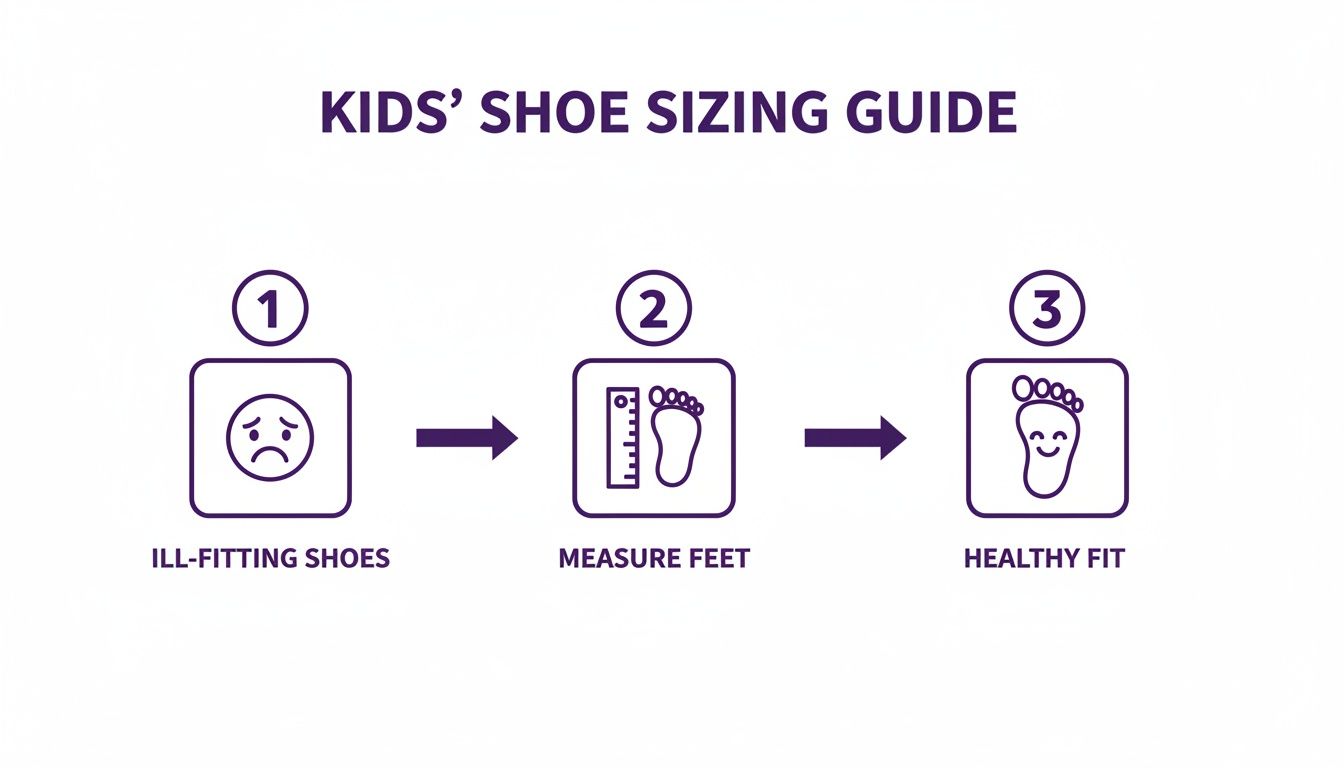
As you can see, a little bit of measuring is the bridge between discomfort and a perfect fit that supports their healthy development.
Using Printable Sizing Guides
Printable charts are fantastic, but they come with one non-negotiable rule: print them to scale! Before you do anything else, check the guide’s instructions and make sure your printer is set to 100% scale. Most will have a little ruler on the page you can check against a real one to confirm it printed correctly.
Once you know it's the right size, the process is a lot like the wall trick. Place the guide on a hard floor, have your child pop their heel on the designated line, and see where their longest toe lands. Many of our favorite brands, including Pediped, have their own tools. You can find a reliable one in the Pediped sizing guide.
Footwear experts often recommend a combination method. After you get that heel-to-toe measurement, add an extra 12-17 mm (about a half-inch) to allow for growth. This is the secret to ensuring their new shoes last for more than just a few weeks! That little bit of wiggle room is crucial for healthy foot movement and development.
From Measurement to Shoe Size: Decoding the Numbers
Okay, you've got your measurement. Now for the fun part: turning that number into an actual shoe size. It can feel a little like cracking a secret code, especially when you’re staring at US, UK, and EU sizes all at once. Don’t worry, this is your official decoder ring.
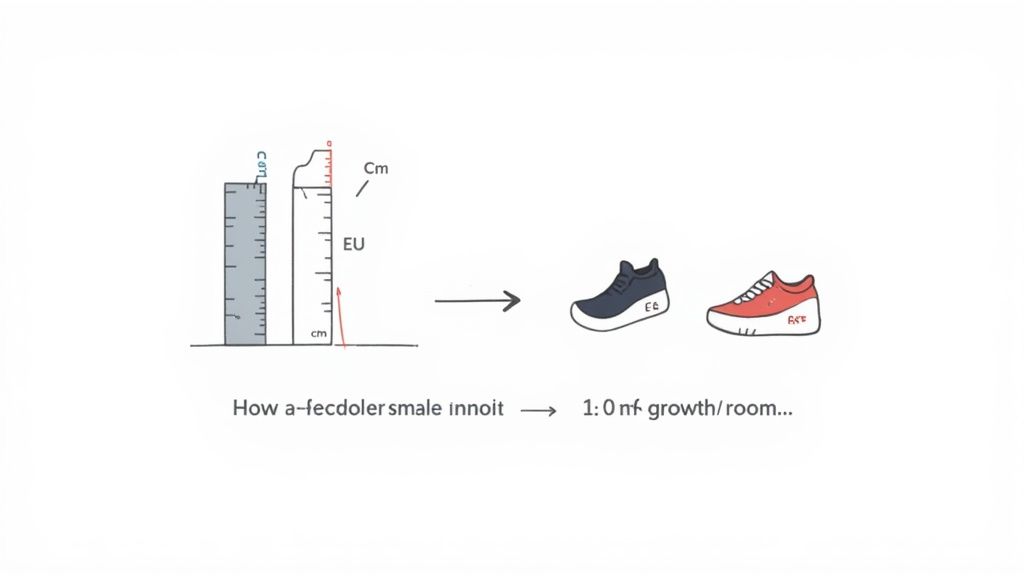
Think of US, UK, and EU sizes as different languages that all mean "perfect fit." A US size 10 is not the same as a UK size 10, and neither is close to an EU 10! This is exactly why getting that measurement in inches or centimeters is so important—it’s the universal number you can use to check against any brand's size chart.
Cracking the Sizing Code
Most of the confusion comes from trying to navigate these different sizing systems. While every shoe brand has its own unique fit, a general comparison chart can be a lifesaver when you're starting your search.
US vs UK vs EU Kids Shoe Size Quick Guide
Here’s a quick cheat sheet to give you a general idea of how the sizes compare. Use this as a starting point, but always double-check with the specific brand you're buying.
| Length (Inches) | US Size | UK Size | EU Size |
|---|---|---|---|
| ~4.7" | 5 | 4 | 20 |
| ~5.4" | 7 | 6 | 23 |
| ~6.2" | 9 | 8 | 25 |
| ~7.0" | 11 | 10 | 28 |
Think of this table as your rough guide. The golden rule of online shoe shopping for kids is to always, always, always check the specific brand’s size chart before you click "buy." It’s a simple step that saves you the massive headache of returns.
If you’re a numbers person, the formula for US kids' sizes is pretty neat. It’s roughly calculated as 3 × foot length (in inches) − 10. This little bit of math is how the industry standardizes sizing across the board.
The All-Important Wiggle Room
Now for the most important rule in the kids' shoe handbook: you have to leave room for growth. A shoe that fits perfectly snug in the store will be too small before you know it. You’re looking for that sweet spot—not so big that they’re tripping over their own feet, but with enough space for those toes to grow.
The magic number is about a thumb's width (or roughly a half-inch) of space between the end of their longest toe and the tip of the shoe.
Parent-tested hack: Once the shoe is on and your child is standing up (this is key!), press your thumb down on the front of the shoe. If you can fit the width of your thumb in that space, you've nailed it.
This extra room isn’t just about getting more wear out of the shoes; it’s critical for healthy foot development. It lets their toes splay naturally as they walk, run, and jump, giving their muscles the space they need to move and strengthen properly.
A great way to see this in practice is to look at collections designed with growing feet in mind. For instance, exploring the variety of Pediped shoe sizes from toddler to big kid shows you how shoes can be built to accommodate that essential wiggle room. With your measurement in hand and this growth-room rule in mind, you're all set to pick the perfect pair with total confidence.
Pro Parent Tips for a Perfect Measurement
So, you’ve got the tracing method down and you’re ready to find that perfect pair of shoes. Awesome! But let's be real—knowing how to measure is one thing. Getting a giggling, wiggling toddler to cooperate is another challenge entirely. It can feel like you’re trying to pin down a tiny, adorable octopus.
Don't worry, we've all been there. This is where the real-world, parent-tested hacks come into play.
Embrace the Wiggles with a Game Plan
Getting a toddler to stand perfectly still can feel next to impossible. My secret weapon? A well-timed distraction. Turn on their favorite show for a few minutes or hand them a special toy they only get during "foot measuring time." This little bit of magic can buy you the precious seconds you need for an accurate trace.
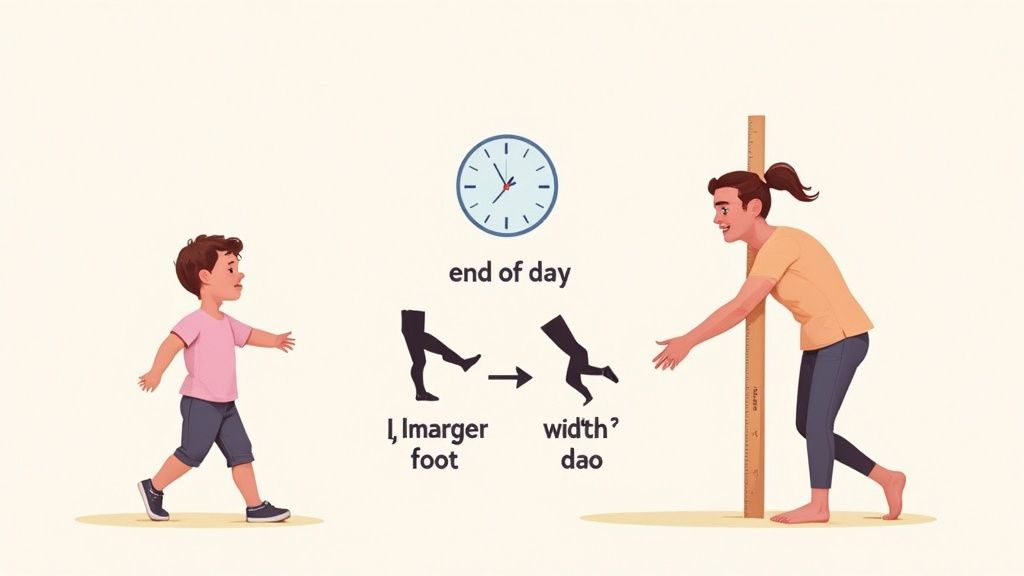
Another crucial tip is to measure at the right time of day.
- When to Measure: Always aim for the late afternoon or evening.
- Why it Matters: Little feet naturally swell as the day goes on. Measuring when they're at their largest ensures the shoes you buy won't feel too tight after a long day of running and playing.
This simple timing trick makes a huge difference in finding a truly comfortable fit.
What About Width and Wonky Feet?
Have you ever noticed that one of your child's feet seems a bit bigger than the other? It's completely normal and incredibly common. In fact, most people have one foot that’s slightly larger.
Always measure both feet and buy shoes to fit the larger foot. This golden rule prevents squished toes on one side and ensures all-day comfort for your little adventurer.
Foot width is another critical piece of the puzzle that often gets overlooked. If you have a child with wonderfully chubby toddler feet or, on the flip side, very narrow feet, length alone won't guarantee a good fit. Some brands offer different width options. If you notice shoes are consistently too tight across the top or have huge gaps on the sides, it might be time to look for brands that cater to different widths.
Finding the right footwear is especially important when they are just starting to explore the world on two feet. For more on this, check out our guide on the best shoes for a baby learning to walk, which offers great insights into supportive first footwear.
Remember, a little preparation and a playful attitude can turn shoe sizing from a stressful chore into a quick and easy win. You've got this!
Keeping Up with Growing Feet
Just when you think you’ve finally found the perfect pair of shoes, poof—they’re too small. If it feels like you’re in a constant race against your child’s growth spurts, you’re not alone. Those little feet seem to grow at supersonic speed, especially in the early years.
Staying on top of their current shoe size is one of the best ways to ensure their feet stay happy and healthy. But how often should you actually whip out that ruler? It really boils down to their age.
How Often to Measure
Here's a simple schedule to keep you one step ahead of the next growth spurt:
- Under 3 years old: Plan to check their size every two to three months. This is when growth is at its absolute peak.
- Ages 4 to 6: You can stretch it out a bit, measuring every four to five months. Growth is still steady but starts to slow down.
- Ages 6 and up: Measuring every six months is usually more than enough to catch any changes.
The most important takeaway? Make measuring a regular, playful routine. Think of it like a fun check-in to see how much they’ve grown, turning a chore into a celebration of them getting bigger and stronger!
Telltale Signs Their Shoes Are Too Snug
Sometimes, your child will give you clues that it’s time for a size up, even if it’s not on your measurement schedule.
Be on the lookout for these signs:
- Red Marks: Notice any sore spots or red marks on their feet after taking their shoes off? That’s a major sign of rubbing and pressure where there shouldn't be any.
- Reluctance to Wear Shoes: If your normally shoe-loving kid suddenly protests putting on their favorite pair, it could be a cry for help from their squished toes.
- Constant Removal: Do they rip their shoes off the second they get a chance? Discomfort is often the real culprit behind that disappearing shoe.
Kids' feet grow incredibly fast—sometimes as much as 2 mm every single month before they turn three. It's a shocking pace! A recent survey even found that 12.5% of kids were wearing shoes at least one size too small, which is why these regular checks are so important.
Keeping up with their growth is especially key for the littlest feet. For new walkers, finding comfortable and flexible footwear is everything, which is why it's great to understand the benefits of toddler soft sole shoes for healthy development.
Parent FAQs About Kids' Shoe Sizing
You've measured, you've decoded the charts, and you're feeling ready to shop. But if you're like most parents, a few more questions are probably popping into your head. Don't worry, we've all been there! Let's tackle some of the most common shoe-sizing head-scratchers together.
Think of this as your final cheat sheet to becoming a foot-measuring champion.
Should I Buy Shoes a Little Big to Grow Into?
It's the age-old question: can I buy a size up to get more bang for my buck? While it’s tempting, and a little wiggle room is essential, going too big can cause more problems than it solves.
Shoes that are overly large can become a serious tripping hazard. They also cause little feet to slide around, leading to painful blisters. To keep the shoes from falling off, kids might unconsciously clench their toes, which can interfere with their natural gait. It’s always best to stick to that sweet spot—about a half-inch of grow room—for the perfect blend of safety, comfort, and longevity.
What's the Best Time of Day to Measure My Child's Feet?
Believe it or not, timing is everything! Try to measure your little one’s feet in the late afternoon or evening.
After a full day of running, jumping, and all-around adventuring, their feet naturally swell and get just a little bit bigger. Measuring at the end of the day ensures you’re getting their largest possible foot size. This simple trick guarantees the shoes you choose will feel comfortable from morning until bedtime.
Are Kids' Shoe Sizes the Same Across All Brands?
Oh, if only it were that simple! Just like with our own clothes, kids' shoe sizes can be all over the map from one brand to another. A size 8 in one brand might fit completely differently than a size 8 in another.
This is exactly why measuring their foot in inches or centimeters is your secret weapon. Always use that specific measurement and compare it to the brand’s size chart before you buy. It’s the single best way to avoid the disappointment (and hassle) of a return.
Of course, parents often have questions that go beyond shoe sizing, including how to choose other essential items for their child's well-being, like understanding weighted blankets for kids to ensure maximum comfort and effectiveness.
Ready to put your new skills to the test? Pediped offers a fantastic collection of pediatrician-approved shoes designed for every stage of your child’s development, with easy-to-use sizing guides to ensure a perfect fit every time. Shop the collection now at https://www.pediped.com.
Leave a comment