


Ready for the cutest pitter-patter you've ever heard? The best good shoes for first time walkers are like a superhero's sidekick—flexible, super lightweight, and just grippy enough to prevent slips without getting in the way. Forget tiny fashion statements for a minute; think of them as your little one's trusty partners for all those wobbly adventures!
While going barefoot indoors is the gold standard for building up those little foot muscles (and so cute!), the right pair of shoes is a must-have for exploring the great outdoors.
Welcome to the World of Wobbly Walks
Get ready, because you're about to witness one of the most exciting (and yes, slightly nerve-wracking) milestones: your little one’s first steps! It’s a truly magical time, filled with determined shuffles, triumphant wobbles, and a few adorable tumbles along the way. This is it—the official start of their grand adventure into mobility, and you’ve got a front-row seat.
As your new explorer starts pulling up on everything, cruising along the coffee table, and finally letting go for a split second, one big question inevitably pops into every parent's mind: what about shoes?
Finding the Perfect Sidekick for Tiny Feet
Choosing your baby's first pair of shoes can feel like a huge deal, but we're here to make it fun and totally stress-free. The goal isn't just to find something that looks cute. It's to find the perfect sidekick for their walking journey—a shoe that protects their precious feet without messing with all that important natural development.
This guide is your friendly roadmap to making a great choice. We’ll break down exactly why the right shoe matters and what key features turn a simple shoe into a developmental superstar.
Fun fact: The American Academy of Pediatrics actually recommends that babies go barefoot indoors as much as possible. This helps them grip the floor with their toes, building the muscle and coordination they need for balance and confident walking.
So, when do you actually need shoes? Simple: for protection when you venture outside or onto surfaces that aren't so baby-foot-friendly. That’s when a fantastic pair of first-walker shoes steps in to save the day! Of course, as your baby starts moving, shoes are just one piece of the puzzle. For a bigger-picture view, you might want to check out these other unexpected things you might need when your baby starts walking.
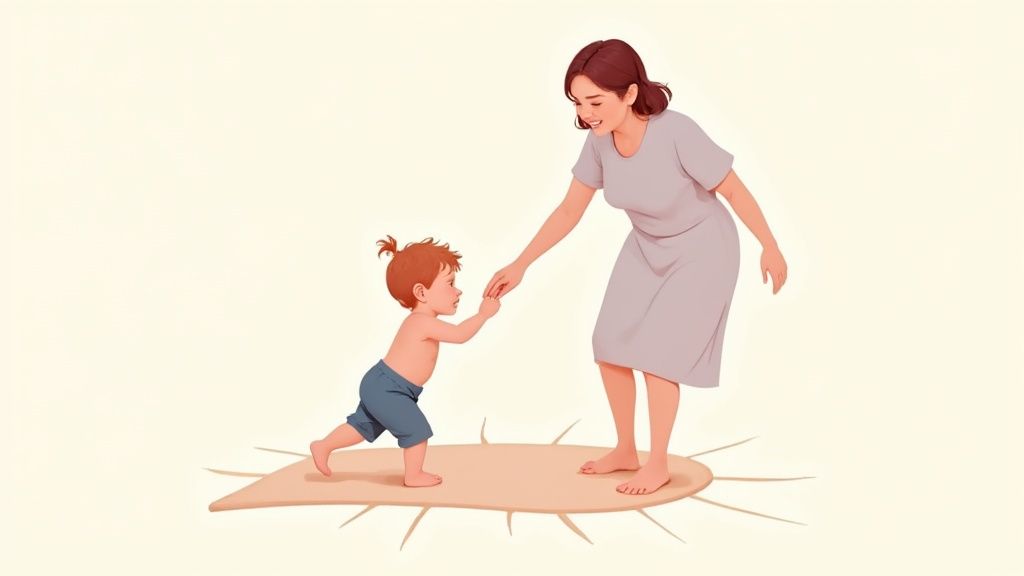
What Makes a Great First Walker Shoe
Alright, let's get into the good stuff—what really matters when you're hunting for that perfect first pair of shoes. It’s easy to get distracted by cute designs, but when it comes to good shoes for first time walkers, the most important features are the ones that support happy, healthy foot development.
Think of their first shoe as a supportive partner for their walking journey—it should protect their feet without getting in the way of learning. Once you know the key ingredients, you'll be able to spot a winner from a mile away.
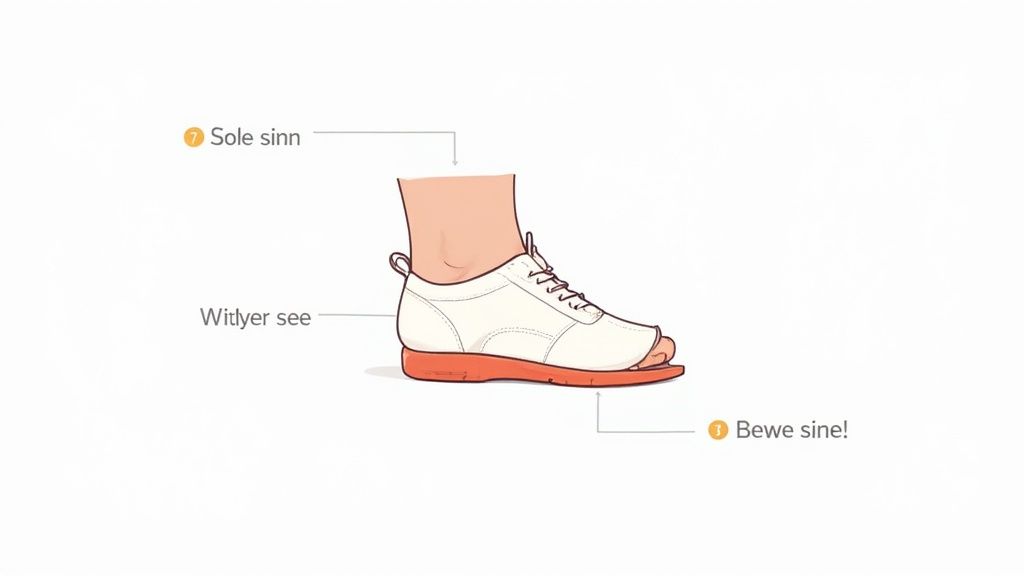
To help you remember what to look for on your next shopping trip, here’s a quick checklist of the must-have features.
First Walker Shoe Feature Checklist
| Feature | Why It Matters For Your Walker | What To Look For in a Shoe |
|---|---|---|
| Flexible Sole | Allows the foot to bend naturally, which is critical for balance and building strength. | A shoe that you can easily bend and twist with your hands. It should feel pliable, not stiff. |
| Lightweight Build | Prevents heavy shoes from weighing your toddler down and causing them to trip or alter their natural gait. | A shoe that feels almost weightless in your hand. Avoid clunky, heavy materials. |
| Grippy Outsole | Provides traction to help prevent slips and falls as they explore different surfaces, from hardwood to grass. | A thin, textured rubber sole. It should offer grip but not be so thick or sticky that it trips them up. |
| Breathable Materials | Keeps little feet cool, dry, and comfortable, reducing the risk of sweat, blisters, and odor. | Soft leather, canvas, or mesh fabrics that allow air to circulate freely. |
| Wide Toe Box | Gives toes room to splay out naturally, which is essential for balance and proper foot development. | A shoe that is rounded and wide at the front, mimicking the natural shape of a foot. |
Each of these elements plays a vital role in ensuring your little one's first steps are confident, comfortable, and healthy.
The Flexibility Factor
Imagine trying to learn a new dance move while wearing stiff wooden clogs. Sounds pretty impossible, right? That’s exactly what a rigid shoe feels like to a new walker.
Their tiny feet need to bend, flex, and feel the ground to build balance, strength, and coordination. This sensory connection is everything! A super-flexible sole lets their foot move just as it would if they were barefoot.
Pro Tip: Give any potential shoe the "bend test." Can you easily fold it in half with one hand? If so, it’s a winner! If it feels stiff, it’s probably too much for your little explorer right now.
The goal here is simple: protection without restriction. For a deeper look at why this is so important, you can learn more about the benefits of flexible shoes for toddlers right here on our blog.
Lightweight and Airy Materials
Your toddler is already working incredibly hard just figuring out how to walk. The last thing they need is a pair of mini-bricks weighing them down! The best first walker shoes are so light that your child will barely even notice they're on.
Look for shoes made from breathable materials like soft leather, canvas, or high-quality mesh. These materials keep their feet from getting sweaty and slippery inside, making for a much more comfortable experience. It's all about keeping things light, breezy, and ready for adventure.
A Grippy (But Not Sticky) Sole
As your little one graduates from cruising on carpet to taking on tricky surfaces like a slick kitchen floor or dewy grass, they need a sole that offers some grip. Think of it as giving them their very own set of tiny traction tires.
A good non-slip sole helps prevent tumbles and builds their confidence with every step. But you don't want a sole that’s too sticky or thick, as that can actually cause them to trip. The sweet spot is a thin, textured rubber sole that gives them just the right amount of grip without getting in the way.
Room for Wiggly Toes
Have you ever noticed how adorably chubby toddler feet are? They’re built that way for a reason! They need plenty of space to spread out. When they stand and walk, their toes splay naturally to help them balance. A narrow, pointy shoe squishes those toes together, which is not only uncomfortable but can also get in the way of healthy foot development.
A wide, foot-shaped toe box is an absolute must. It gives their toes the freedom to wiggle, grip, and grow without feeling cramped. When you look at the shoe, the front should mirror the shape of a real foot—wider at the toes, not tapered.
Choosing the right shoe is a big decision, and it’s one that parents all over the world take seriously. In fact, the global market for baby shoes is projected to be worth around $43.5 billion by 2025. It’s a huge number that shows just how much we all value finding the perfect footwear to support those precious first steps.
How to Measure Tiny Feet for the Perfect Fit
Let’s be honest, measuring a toddler's squirming feet can feel a bit like trying to catch a fish with your bare hands. One second they're still, the next they're off on another adventure! But don't worry, getting that perfect measurement doesn't have to be a battle.
We’ve got a few simple, game-like tricks to make this a fun moment instead of a frustrating one. After all, a shoe that fits just right is the key to happy feet and confident first steps.
Turning Measuring into a Fun Game
Forget trying to pin down a wiggling foot with a cold ruler. The best and most accurate way is to make an activity out of it—by tracing their foot!
- Get Ready: You’ll need a piece of paper, a crayon or marker, and a bit of tape.
- Set the Scene: Tape the paper down on a hard, flat floor. Carpet is too squishy and won't give you an accurate outline.
- Make it Playtime: Ask your little one to stand on the paper. Turn it into a game! "Let's trace your super feet!" or sing a favorite song to keep them engaged and standing still for just a moment.
- Trace Away: Quickly and carefully trace an outline around their foot. The key is to keep the marker straight up and down, not angled, to capture the true shape.
- Measure the Masterpiece: Now that you have their foot's outline, you can easily measure it from the longest toe to the very back of the heel. That's it! You have a perfect record of their current size.
For an even simpler way, we've done the work for you. You can find everything you need in our easy-to-use Pediped Sizing Guide, which makes finding the right fit a total breeze.
The All-Important Wiggle Room Check
Once you have your measurement and you’ve picked out a potential pair of good shoes for first time walkers, it’s time for the final check. This is where the classic "thumb rule" comes into play.
- Length Check: With the shoe on, you should feel about a thumb's width (roughly half an inch) of space between their longest toe and the front of the shoe. This gives them that crucial room to grow!
- Width Check: Gently press on the sides of the shoe. You should feel the sides of their foot, but it shouldn't feel squeezed. Their toes need plenty of space to splay out naturally, which is key for balance.
- Heel Check: Try to slip your pinky finger between their heel and the back of the shoe. A little bit of movement is totally fine, but if their whole heel is popping out with every step, the shoe is too big.
Remember, toddler feet grow at lightning speed—sometimes a half-size in just two to three months! It’s a great idea to check the fit of their shoes every few weeks to make sure their toes aren’t getting cramped.
Finding shoes that fit well is a top priority for parents, and it’s a major driver in the children’s footwear market. In fact, North America's kids' footwear market is expected to be one of the largest in the world by 2025, largely because parents are demanding comfortable, well-designed shoes. The toddler segment is the fastest-growing part of this market, proving just how much we all care about finding the perfect, supportive footwear for those critical early walking years. You can discover more insights about these market trends here.
Matching Shoes to Their Walking Stage
Just as your child masters new skills, their footwear needs to evolve, too. A baby pulling up on the couch for the first time has very different needs from a toddler confidently sprinting across the park.
Thinking about their specific walking stage is the key to picking the perfect pair of good shoes for first time walkers. Let's break down the journey from wobbly first steps to confident running so you can find the right shoe for their mission.
The Wobbly Cruiser Stage
This is where it all begins! Your little one is pulling up, cruising along furniture, and maybe even letting go for a heart-stopping second. Their feet are working hard to feel the ground, build strength, and master balance.
At this point, you want a shoe that’s the next best thing to being barefoot. Look for:
- Ultra-Soft and Flexible: The sole should be crafted from a soft material like suede or a very thin, pliable rubber. You want their foot to bend and move naturally, as if they weren't wearing shoes at all.
- Feather-Light: The shoe shouldn't add any noticeable weight. Heavy, clunky shoes can throw off their delicate balance and make those first steps feel like a major chore.
- Protective, Not Restrictive: The main job is simply to protect their feet from chilly floors or rough surfaces outside, not to offer rigid support.
These shoes act like a second skin, giving them just enough of a buffer while letting their feet do all the important developmental work. To learn more, check out our guide on why soft sole shoes are best for toddlers and this crucial stage.
The Confident Strider Stage
They're officially walking! Those tentative cruises have turned into independent steps, and they're spending much more time on their feet, both inside and out. Their shoes need a slight upgrade to keep up.
Now's the time for a shoe with a bit more substance, but flexibility is still king. You should look for:
- A Soft Rubber Sole: This offers better grip and durability for those first adventures on sidewalks and playgrounds.
- Rounded Edges: Shoes with slightly beveled or rounded edges can help minimize stumbles and trips as they perfect their gait.
- Still Super Flexible: Even with a sturdier sole, the shoe must pass the "bend test." You should be able to easily flex it right where the ball of their foot would be.
This is the classic first-walker shoe—it supports their newfound freedom while staying true to the foundational principles of lightweight, flexible design.
The Pro-Runner Stage
Before you know it, walking has turned into running, jumping, and enthusiastic climbing. Your little adventurer is now a seasoned pro, and their shoes need to withstand all that amazing energy.
This is the stage where durability and traction become even more important, but you still want a shoe that promotes healthy foot motion without being overly stiff or heavy. They need footwear that can keep up with their non-stop exploration.
Shoe Stages For Your Growing Walker
To make it even clearer, here’s a simple table matching shoe types to your child's walking development stage, from early cruising to confident running.
| Walking Stage | What Your Toddler Is Doing | Ideal Shoe Characteristics |
|---|---|---|
| Cruiser / Early Walker | Pulling up, crawling, taking first wobbly steps with support. | Originals: Soft, flexible soles (suede or thin rubber), lightweight, "barefoot feel." |
| Confident Strider | Walking independently, exploring indoors and outdoors. | Grip 'n' Go: Flexible rubber soles, rounded edges, lightweight but more durable. |
| Pro Runner | Running, jumping, climbing with confidence. | Flex: Sturdy yet flexible soles, good traction, durable for active play. |
The perfect shoe evolves with your child. It's not about finding one 'magic' pair, but about providing the right tool for each stage of their incredible journey from crawling to sprinting.
And of course, as they grow, you'll need to keep measuring!
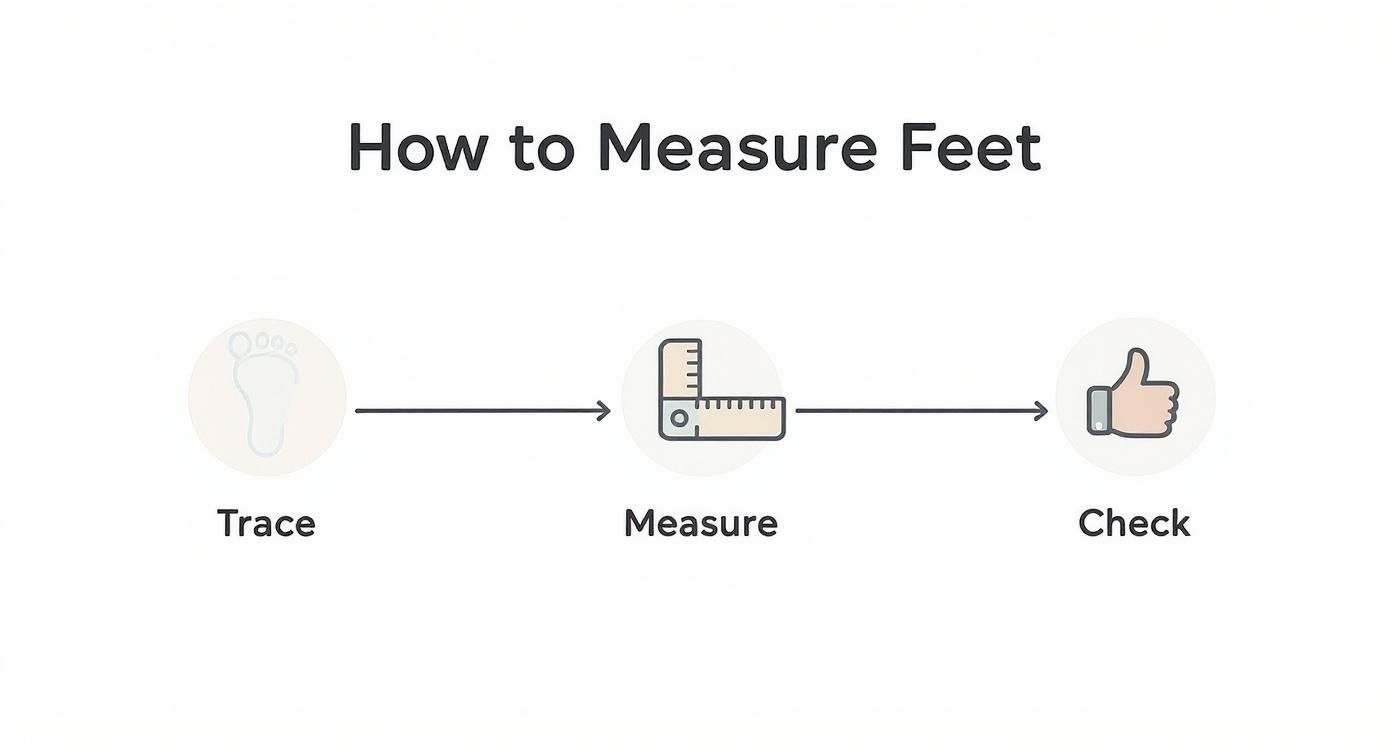
This simple trace-measure-check process is a lifesaver for getting an accurate size at home, which means no more squished toes or shoes that trip them up.
Common Shoe Shopping Mistakes to Avoid
Alright, let's talk about a few shoe-shopping oopsies we all make. It's easy to get overwhelmed in the aisle, but knowing what to sidestep makes the whole process a breeze. Think of this as your friendly guide to getting it right every time.
Navigating the world of tiny shoes is an adventure in itself. By avoiding a few common pitfalls, you can feel confident you're choosing the best pair to support your little one's first big steps.
Ignoring the Fit for Fashion
It’s so easy to do! You spot a miniature version of your favorite sneakers or a pair of glittery boots, and your heart just melts. But when it comes to good shoes for first time walkers, function always, always wins over fashion.
That super-cute pair might be too stiff, too narrow, or way too heavy for a new walker. Remember our checklist? Flexibility, a roomy toe box, and a lightweight design are the non-negotiables for healthy foot development. Don’t worry—plenty of adorable shoes check all the right boxes!
Guessing the Size
We've all been there, thinking, "Eh, that looks about right." But guessing your toddler's shoe size is a recipe for trouble. An ill-fitting shoe can cause blisters, discomfort, or even trip them up just as they're gaining confidence.
Those little feet grow at lightning speed, so what fit last month might already be too snug. Always measure their feet right before you buy, either with our tracing method or a proper sizing guide. It only takes a minute, and it saves you from buying shoes they’ll outgrow in a week.
A proper fit is everything. A shoe that’s too big can cause them to trip and stumble, while a shoe that’s too small can cramp their toes and hinder healthy growth. Taking the time to measure is one of the best things you can do for your new walker.
Falling for the Hand-Me-Down Habit
Hand-me-downs are fantastic for so many things—onesies, toys, jackets—but shoes are one item you should always try to buy new. Here's why: a shoe molds to the unique foot of the child who first wears it, creating a specific wear pattern inside.
When another child wears that same shoe, it can force their foot into a shape that isn’t natural for them. This can affect their gait and overall foot development. Giving your little one a fresh start with their own pair ensures the shoe will mold perfectly to their unique feet, providing support that’s just right for them.
It's clear that parents everywhere are putting foot health first. In fact, this growing awareness is a major reason the global kids' footwear market was valued at $47.76 billion in 2024 and is projected to hit $86.32 billion by 2032. It just shows how much we all care about finding shoes that offer the best in comfort and support. You can read more about these exciting footwear market trends and see why a great fit truly matters.
Keeping Their First Shoes Adventure-Ready
Let’s be real—toddler shoes are basically magnets for mud, grass stains, and the occasional spilled snack. They're built for a life of glorious, messy exploration, and that’s exactly what we want! But keeping those tiny kicks clean and in good shape doesn’t have to be a chore.
Think of it as a quick pit stop between adventures. A little bit of care goes a long way in making sure their favorite pair lasts until that next inevitable growth spurt.
The Quick Clean-Up Crew
Different shoe materials need slightly different TLC, but don't worry, it's all super simple. Most messes can be handled in just a few minutes, keeping those good shoes for first time walkers looking surprisingly fresh.
- Leather Shoes: A quick wipe with a damp cloth usually does the trick for daily grime. For stubborn spots, a little mild soap and water is all you need.
- Canvas or Fabric Shoes: Many of these can be spot-cleaned with a dab of soap and water. Some are even machine washable—just make sure you check the manufacturer’s care guide first!
- Suede Shoes: This one’s a bit more delicate. A specialized suede brush is your best friend here; it gently lifts away dirt without messing up that soft texture.
Pro tip for smelly shoes: Pop a dry tea bag inside each one overnight. It’s a game-changer for absorbing moisture and odors, leaving them fresh for another day of play.
For more detailed guides on specific materials and styles, we’ve put together a complete set of Pediped care instructions that covers everything.
The Regular Wear-and-Tear Check-Up
Those little feet grow in the blink of an eye! Beyond cleaning, it's a great idea to give their shoes a quick inspection every few weeks to make sure they're still fitting well and holding up to all the action.
Just give them a quick once-over. Are the seams and stitching holding strong? Is the tread on the sole wearing down evenly? Catching any major wear early helps you know when it might be time for a new pair. Most importantly, it's the perfect reminder to do a quick fit check and see if they’re ready to size up.
Answering Your Top Questions About First Walker Shoes
Still have a few questions? That’s great! You’re asking all the right things. The world of tiny shoes is surprisingly complex, and we get tons of questions from parents who are right where you are now.
Think of this as your final checklist. We've gathered the most common questions to give you that last boost of confidence before your little one takes off!
When Should My Baby Start Wearing Shoes?
This is the big one! The perfect time to introduce good shoes for first time walkers is right when they start walking on their own outside or on rough surfaces.
For all that indoor practice—cruising along the coffee table, wobbling from couch to chair, and taking those first amazing steps in the living room—barefoot is always best. It lets their feet feel the ground, which is crucial for building balance and muscle strength naturally.
How Often Should I Check Their Shoe Fit?
Kids' feet grow astonishingly fast! We recommend checking the fit of their shoes every 4 to 6 weeks.
It only takes a second. Just press your thumb at the tip of the shoe to check for length and feel around the sides to make sure their toes aren't getting squished. A quick, regular check-in ensures their feet are always comfortable, supported, and ready for adventure.
Are Hard or Soft Soles Better for First Walkers?
For those initial, tentative steps, soft, flexible soles are the undisputed champions. They let your child's foot bend and flex just like it would if they were barefoot, which helps them develop a natural gait.
Once they become a more confident walker and are spending more time on sidewalks and playgrounds, you can transition to a slightly tougher (but still very flexible!) rubber sole for extra grip and durability.
A child’s foot health isn't a single decision, but a journey. Experts agree that the right footwear during these early years plays a massive role in their development. You can learn more about how Harvard experts back healthy little feet and the science that guides our designs.
Why Do Toddler Shoes Need a Wide Toe Box?
Have you ever watched a toddler stand? Their little toes fan out wide to create a stable base for balance. It's not just adorable—it's functional!
A roomy, wide toe box gives their toes the space they need to wiggle and spread out naturally. Shoes that are too narrow can cramp their toes, which can throw off their balance and even interfere with healthy foot growth. Wiggle room is non-negotiable!
Ready to find that perfect pair? At Pediped, we’ve poured all this expertise into designing shoes that act as the perfect partner for every wobbly step and confident stride.
Leave a comment