


Whoa, look at them go! Here come the wiggles, the scoots, and the full-speed-ahead adventures across the living room floor! Finding the best shoes for crawling babies isn't about making a fashion statement—it's about finding a trusty sidekick for their first big explorations.
While barefoot time at home is the absolute gold standard for strengthening all those tiny foot muscles (and let's be honest, it's adorable), a great pair of shoes offers some much-needed protection when you venture out into the big, wide world.
Barefoot Is Best, But Shoes Are Essential Sidekicks
This is such a fun stage! As your little one starts getting mobile, their feet become their primary tools for figuring out balance and coordination. Nothing beats letting them go barefoot on a safe floor to develop those muscles and nerves. Think of it as sensory playtime, just for their feet!
But let's be real—the world outside your home has splinters, hot pavement, and all sorts of mystery gunk. That's when the perfect crawling shoe swoops in to save the day.
Instead of a stiff accessory, you want to think of it as a protective, super-flexible second skin that mimics the freedom of being barefoot. A great pair of crawling shoes should:
- Shield their delicate skin from rough or dirty surfaces.
- Keep those tiny toes safe from bumps and scrapes.
- Allow for the natural, unrestricted foot movement that's so crucial for development.
It's no surprise that parents are catching on to the importance of quality footwear right from the start. The market for baby soft-soled shoes is growing fast, expected to be worth around USD 1.5 billion by 2025. It just goes to show how much more we understand about supporting crawlers and pre-walkers with the right gear. Learn more about the growing baby shoe market.
Ready to find that perfect pair? You can explore a fantastic collection of pediatrician-approved footwear for babies 0-24 months that puts healthy development first.
What Makes a Great Crawling Shoe?
So, what's the secret recipe for the perfect pair of shoes for your little adventurer? It’s not about flashy designs or miniature fashion trends. It’s all about a few simple, but incredibly important, features that help their feet grow strong and healthy. The best shoes for crawling babies are basically a protective hug for their feet—not a stiff cage!
Think of it this way: your baby's feet are learning and feeling the world for the very first time. You want a shoe that lets them do just that, but safely.
The Non-Negotiables for Happy Feet
First up, the "taco test." Can you easily bend the shoe’s sole in half like a taco? If you have to struggle, it’s way too stiff. A super-flexible sole lets your baby push off with their toes and feel the ground, which is a huge part of building their balance and coordination.
Next is the fit. A great crawling shoe needs to be snug enough that it won’t go flying off mid-adventure, but loose enough that it doesn’t squish those adorable chubby feet. Look for adjustable closures like Velcro or soft elastic that keep the shoe secure without getting in the way of movement. Nobody wants to play "find the missing shoe" every five minutes!
The infographic below zeroes in on the three features that really make a crawling shoe stand out.
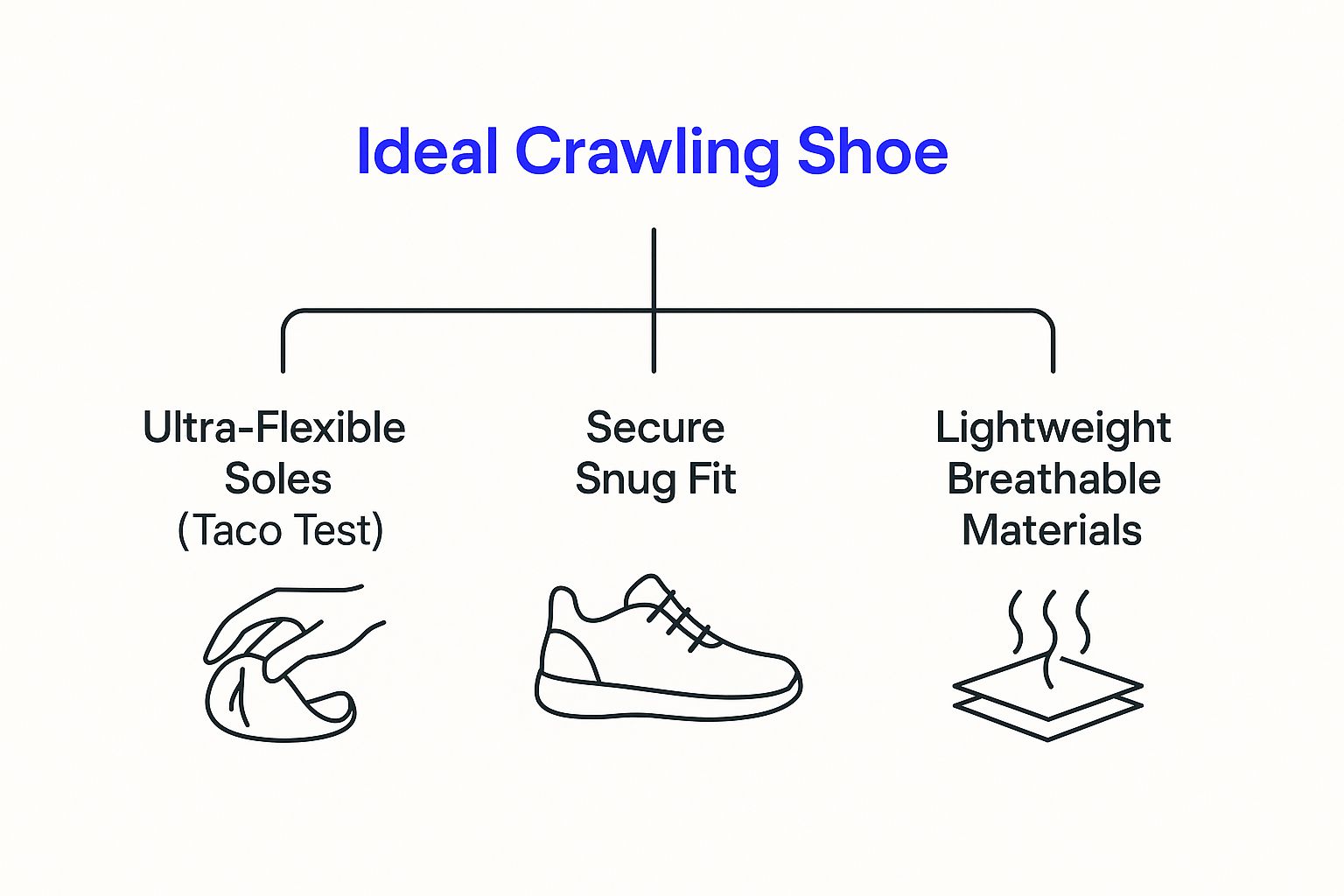
As you can see, it really boils down to flexibility, a secure fit, and breathable materials. These are the three pillars of a fantastic crawling shoe.
Finally, materials matter. Little feet can get surprisingly sweaty! Lightweight, breathable fabrics like soft leather, canvas, or mesh help keep things cool and comfy. Heavy, clunky shoes will only weigh them down, but airy materials make it feel like they're barely wearing anything at all.
To make shopping a little easier, here's a quick checklist to keep in mind.
Crawling Shoe Feature Checklist
Use this quick guide to spot the perfect features when choosing shoes for your crawling baby.
| Feature | Why It Matters for Crawlers | What to Look For |
|---|---|---|
| Flexible Sole | Allows for natural foot movement and helps build muscles in the feet and ankles. It lets them feel the ground. | A sole that bends easily in your hand (the "taco test!"). Soft, pliable materials. |
| Secure Fit | Keeps the shoe on without slipping off during active crawling, but doesn't restrict movement or circulation. | Adjustable closures like Velcro straps or soft elastic. A snug, but not tight, heel. |
| Breathable Fabric | Prevents sweaty, uncomfortable feet and helps maintain a healthy environment inside the shoe. | Soft leather, canvas, or mesh uppers. |
| Lightweight | Doesn't weigh the baby down or make crawling feel like a chore. The shoe should feel like a natural extension of their foot. | Pick up the shoe—it should feel almost weightless. Avoid heavy, clunky rubber. |
| Wide Toe Box | Gives tiny toes plenty of room to wiggle and spread out, which is crucial for balance and proper foot development. | A rounded, roomy front part of the shoe. No pointy or narrow styles. |
At the end of the day, it's about finding a shoe that feels great and supports all their new moves.
Key Takeaway: The goal isn't just to cover their feet. It's to find a shoe that supports natural movement, protects tiny toes, and feels so light and flexible that your baby can focus on the important business of exploring.
As they start transitioning from crawling to pulling up and cruising along the furniture, you might want to look at styles designed for that next exciting stage. The Grip 'n' Go collection offers soft, rubber-soled designs that are perfect for new walkers finding their footing.
Choosing the Best Materials for Tiny Feet
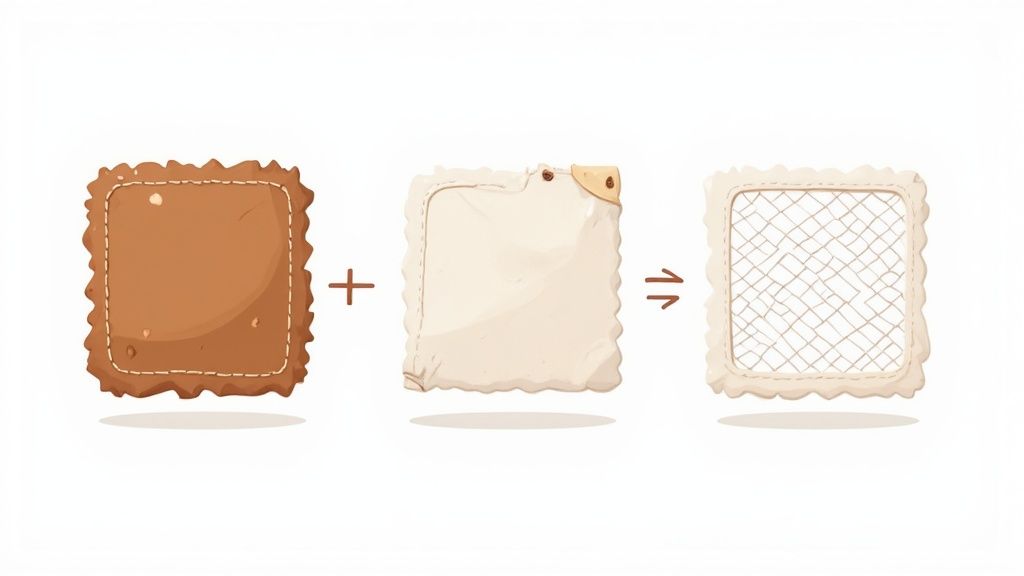
Let's talk about what really makes a great crawling shoe—the materials! Think about it: you wouldn't wear a stiff, scratchy shirt, so why would we want that for our little one's feet? The right fabric is everything when it comes to keeping those tiny toes happy.
Picture a shoe that feels less like a shoe and more like a second skin. That's what you get with materials like genuine leather or soft suede. These guys are the champions of comfort. They’re tough enough to handle some serious floor time but remain incredibly flexible, bending and stretching with every little wiggle and scoot.
They offer a soft, protective layer without getting in the way of natural foot development, which is exactly what we want.
Keeping Things Cool and Comfy
But what about warmer days, or for babies whose feet tend to get a little toasty? This is where breathable materials become an absolute lifesaver. They’re like a built-in air conditioner for your baby's feet.
Lightweight and airy fabrics are perfect for preventing those little feet from getting clammy and uncomfortable. Some of the best options are:
- Canvas: A timeless choice that’s both sturdy and lets air circulate easily.
- Cotton: Incredibly soft and gentle, making it ideal for sensitive skin.
- Mesh Fabrics: Modern mesh is fantastic for maximum airflow, perfect for busy crawlers on the move.
Choosing breathable materials isn't just about comfort—it's about creating a healthy, dry environment for your baby's feet to thrive in. Happy feet, happy explorer!
At the end of the day, picking the right material is all about knowing your baby and your lifestyle. Whether you fall for the buttery softness of leather or the easy-breezy feel of canvas, you’re setting your little one up for a comfortable journey.
How to Find the Perfect Fit for Wriggly Feet
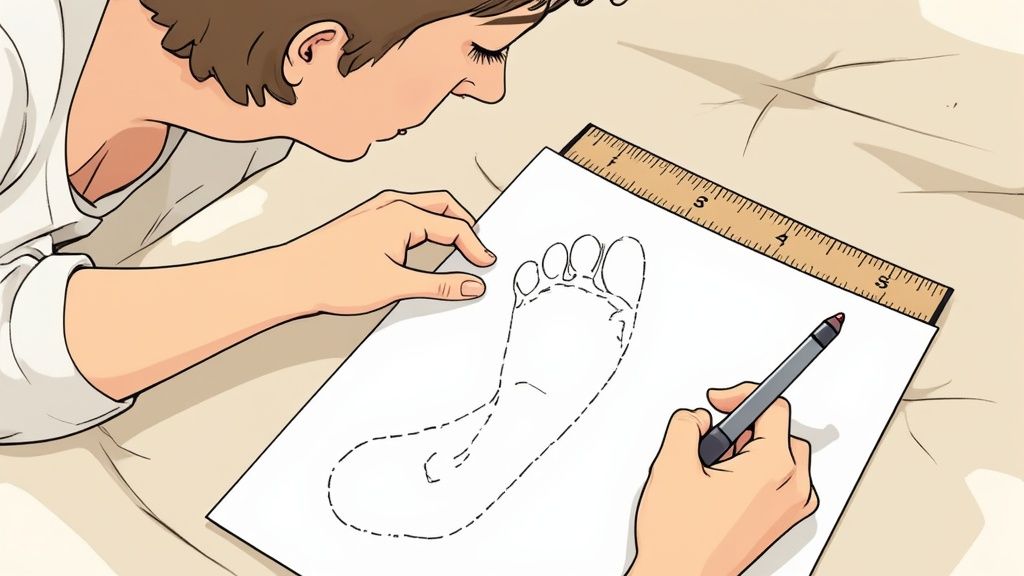
Trying to measure a baby’s foot is like trying to catch a tiny, wiggly fish with your bare hands. It's a real test of patience, but getting it right is crucial! Don't worry, you don't need to be a pro—we have a super simple, stress-free method you can do right at home.
The best trick is the old ‘trace and measure’ technique. Just have your baby stand on a piece of paper (a favorite toy works wonders for a little distraction!) and quickly trace around their foot. Then, measure the outline from the heel to the tip of their longest toe. This gives you a clear number to work with, which makes shopping online so much easier.
The All-Important Thumb Rule
Once you've got the shoes, it’s time for the final check. This is where the famous "thumb rule" comes in. With the shoe on, gently press your thumb down at the tip. You should feel about a thumb's width of space between their longest toe and the end of the shoe.
That little bit of wiggle room is non-negotiable! It gives those fast-growing toes the space they need to spread out and keeps the shoes comfy for more than just a week.
Avoid the classic mistake of just going by the age on the box. Every baby’s foot is totally unique! Taking a moment to measure guarantees a great fit for all their crawling adventures. For a detailed walkthrough and some printable charts, check out this super helpful online sizing guide.
Getting the right shoes for little ones has become a huge focus for parents who care about healthy development. In fact, global revenue from baby shoe sales hit around USD 40.1 billion in 2023, which just shows how much families value getting the right fit for every stage.
Our Top Picks for Crawl-Approved Shoes
Alright, now that we've covered what makes a great shoe for a crawler, let's look at some real-world examples. Seeing these features in action makes it so much easier to spot the good stuff when you're shopping.
First up, you can never go wrong with a classic: the soft-soled leather moccasin. Think of it as the undisputed champion of the "barely-there" feel. These little wonders are incredibly lightweight and flexible, almost molding to your baby’s foot. This allows for all that crucial natural movement and helps them feel the ground, all while keeping their tiny toes safe.
Styles for Every Little Adventure
Beyond the moccasin, a couple of other styles really nail what a crawling baby needs.
-
The Grippy Canvas Explorer: Does your baby treat your hardwood floors like a speedway? This is your shoe. Made from breathable canvas, it keeps feet cool but offers a touch more structure. The real hero here is the sole—it's super flexible but has just enough grip to prevent those little slips and slides.
-
The Breathable Mesh Cruiser: For those warm, sunny days at the park, a mesh shoe is an absolute lifesaver. These are built for maximum airflow, which means no more sweaty, uncomfortable feet. They’re feather-light, so they protect without ever weighing your baby down.
You can see how each of these styles ties back to what we've talked about: flexibility, a snug fit, and quality materials.
At the end of the day, the right shoe is the one that supports your baby's unique journey. Whether it’s a classic moccasin or a grippy explorer, the goal is always the same: protect their feet without getting in the way of their crawling fun!
It’s no surprise that parents are zeroing in on healthy foot development. This focus has fueled massive growth in the baby shoe world. The global market, valued at around USD 4.2 billion in 2024, really shows how much we all care about getting these first pairs just right. You can find more details about the growing baby shoe market on dataintelo.com.
Your Top Questions, Answered!
Jumping into the world of baby gear definitely brings up a lot of questions. When it comes to picking the right shoes for a crawling baby, trust me, you're not the only one with a few things on your mind! Let's clear up some of the usual suspects so you can feel totally confident.
Should my baby wear shoes all day?
That’s an easy one: definitely not! Think of crawling shoes as special equipment for specific adventures—like a trip to the park, exploring the backyard, or navigating a cold grocery store floor.
At home, where the floors are safe, barefoot is best. That freedom is crucial for strengthening all the tiny muscles in their feet and helping them master their sense of balance.
How do I know if the shoes are uncomfortable?
Since your little one can't just tell you, you'll have to play detective. The moment you take their shoes off, give their feet a quick look. See any red marks or little indentations? That's the classic tell-tale sign that the fit isn't quite right.
Also, just watch how they act when the shoes are on. Are they constantly trying to pull them off? Do they seem fussier than usual? That could be their non-verbal way of saying, "Hey, these things are bugging me!"
A great shoe is one they don't even notice they're wearing. If your baby seems irritated by them, trust your parent gut—it's time to double-check the fit.
Are hand-me-down baby shoes okay?
We're all for recycling baby gear, but shoes are the one item you should really buy new for each child. Here's why: a shoe actually molds and shapes itself to the first foot that wears it. A used pair is already conformed to another baby's foot, so it just won't give your little one the unique support they need.
Plus, you have to consider wear and tear. Old shoes often have worn-down soles, which means a lot less grip for a crawler who's just getting the hang of things. A fresh pair guarantees a perfect fit, brand-new grip, and the best support for all their little explorations.
Ready to find that perfect pair that puts healthy foot development first? Check out the pediatrician-approved collections at Pediped and give your little explorer the best possible start for their happy, wiggly feet. Shop Now.
Leave a comment