


Woo-hoo! There’s nothing quite like witnessing those first wobbly steps. One minute they're crawling, and the next, they're pulling themselves up and cruising along the furniture like a little pro. It's a magical milestone! As your little one gets more adventurous, finding the best baby shoes for walking suddenly jumps to the top of your to-do list.
The right pair does more than just look adorable—it protects their delicate feet and supports healthy development as they start to explore the world on two feet.
Your Guide to Happy First Steps
Welcome! Think of this as your friendly, no-fuss guide to picking out that perfect first pair. Watching your baby transition from tiny kicks to determined steps is one of the biggest thrills of parenthood, but the world of baby footwear can feel surprisingly overwhelming. Don't worry, we're here to cut through the noise and make it fun and simple.
You're definitely not alone in wanting the absolute best for those tiny toes. In fact, parents' focus on high-quality, supportive footwear has helped the baby shoe market grow into a massive $12.37 billion industry. That number just goes to show how much we all care about getting this choice right. You can learn more about the growing baby shoe market if you're curious!
Let's dive in and get you feeling super confident about finding the perfect shoes for your little one's next big adventure: walking!
When Does Your Baby Actually Need Shoes?
Let's clear up one of the biggest questions new parents have: when does my little one really need their first pair of shoes? The answer might surprise you—it’s all about letting nature do its thing.
For all those early indoor adventures—the wobbly first steps across the living room, the determined crawls towards the family pet—barefoot is always best! Letting those tiny feet feel the ground helps them build strength, coordination, and that all-important sense of balance. It’s the ultimate sensory experience for their developing muscles.
Think of shoes less as a daily necessity and more as a cool accessory for outdoor exploration. The real signal that it's time for baby shoes for walking is when they start taking confident, independent steps outside the house. This is a big leap from the "cruising" phase where they're still grabbing onto the couch for support. Before they even get to that point, other movements are just as crucial, and many parents find tips on understanding how to encourage crawling incredibly useful.
Once they’re ready to tackle the great outdoors, from the grassy park to the bumpy sidewalk, it's time to protect those precious feet. You can find some fantastic and foot-friendly first walker options that keep them safe without getting in the way of healthy development.
How to Get the Perfect Fit
Let's be honest, measuring a wiggly baby's foot can feel like trying to catch a tiny, adorable eel. But don't worry, we've got a few parent-tested tricks to help you get that perfect fit, which is absolutely essential for their foot health.
The easiest way? Have your little one stand on a piece of paper and trace an outline of their foot. Just measure the tracing from the heel to their longest toe, and you've got your number!
When you're trying shoes on, the golden rule is the "thumb test." You should be able to fit the width of your thumb between their longest toe and the front of the shoe.
This little bit of wiggle room is everything! It lets their toes spread out naturally as they grip and balance, and it gives them some crucial growing space so you're not shoe shopping again next week!
Make sure the heel is snug, too. You don't want their foot slipping around inside, which can lead to nasty blisters or even a frustrating trip-up.
For a little extra help, we've got a fantastic visual guide and some printable charts to take all the guesswork out of the process. You can find everything you need in our handy sizing guide to get it right every single time.
Happy Feet Fit Checklist
Use this quick checklist to make sure you've nailed the fit before you head to the checkout.
| Check Point | What to Look For | Why It Matters |
|---|---|---|
| Toe Room | About a thumb's width of space at the front. | Allows toes to wiggle and spread for balance and growth. |
| Heel Fit | Snug and secure, with no slipping. | Prevents blisters and ensures stable steps. |
| Width | No pinching or red marks on the sides. | Accommodates the natural shape of a baby's foot. |
| Top of Foot | Fastenings are secure but don't dig in. | Ensures comfort without restricting circulation. |
| Walk Test | Baby walks normally, not awkwardly. | Shows the shoe isn't interfering with their natural gait. |
A quick run-through of this checklist gives you the confidence that their new shoes are a perfect match for their tiny, adventurous feet.
What to Look for in a First Walking Shoe
Alright, let's get down to the nitty-gritty of what actually makes a great first walking shoe. When you’re staring at a wall of tiny shoes, it can feel a bit overwhelming, but a few key features will help you zero in on the perfect pair.
First and foremost, check for a flexible sole. Pick up the shoe and give it a gentle bend. If it flexes easily near the ball of the foot, that’s exactly what you want. This mimics the natural movement of barefoot walking, allowing their muscles to develop properly.
Next, think about what the shoe is made of. Materials like soft leather or breathable canvas are your best friends. They help keep those little feet cool and comfortable, preventing the sweaty, fussy situation no parent wants to deal with. The shoe should also feel surprisingly lightweight—after all, your toddler is already working hard to lift those little legs!
And of course, we can't forget about safety. A non-slip grip on the sole is non-negotiable. It provides the traction they need to stay upright as they navigate different surfaces, from slick kitchen floors to bumpy grass in the backyard. For a deeper dive, this guide on how to choose baby's first shoes is packed with fantastic advice.
This simple infographic is a great visual guide to the most important features.
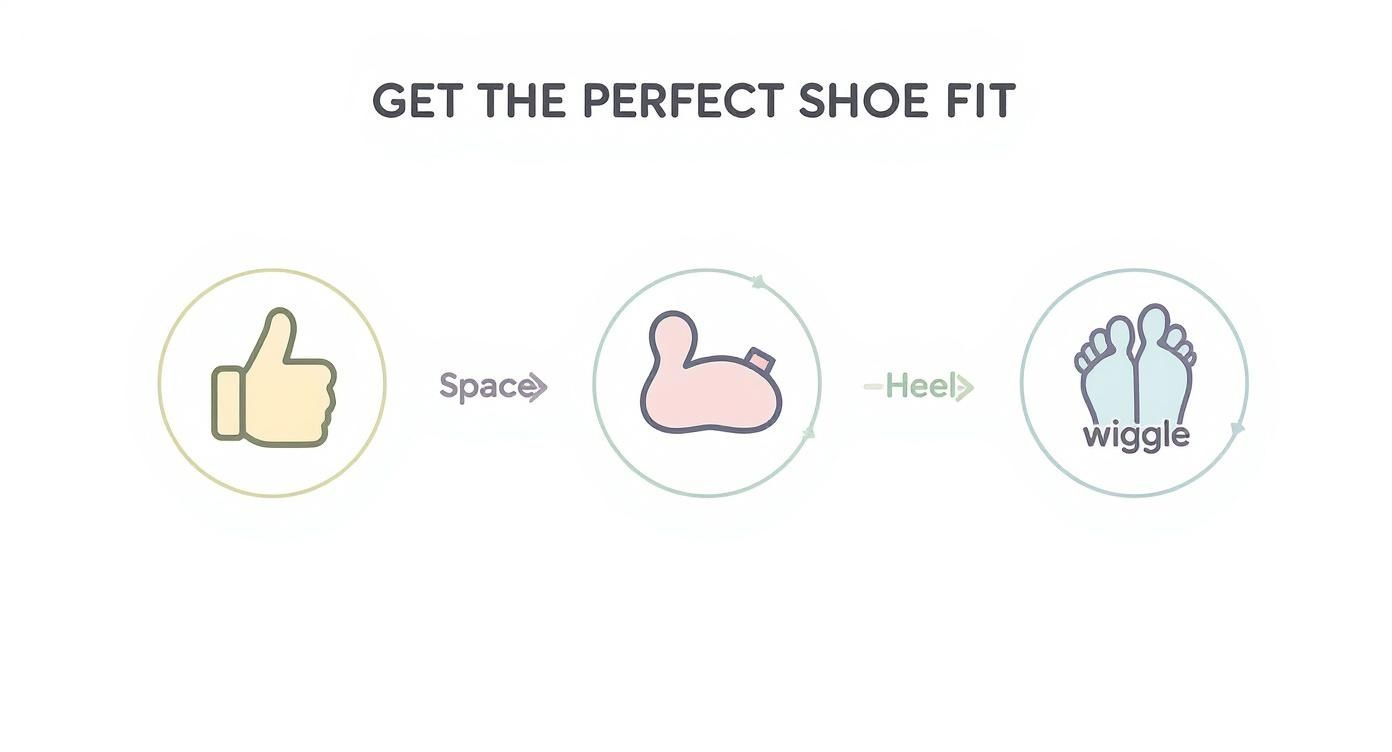
Focusing on these elements of health and comfort is exactly why so many parents prioritize quality, especially during these crucial early walking months.
Popular Shoe Styles for New Walkers
Alright, now for the fun stuff—let's talk style! When your little one is first finding their balance and taking those wobbly first steps inside, the best shoe is one that feels like no shoe at all. Think soft, flexible, and barely there.
Cute leather moccasins or other soft-soled styles are perfect for this stage. They offer just enough protection for tiny feet without interfering with the natural muscle development that's so crucial right now.
Once they've mastered walking and are ready to take on the great outdoors, it's time for an upgrade! This is where sneaker-style baby shoes for walking come in. Look for a pair with a flexible rubber sole that provides more durability and support for all those adventures at the park or on the sidewalk. A great example of this next-level shoe are these fantastic Kopech walking shoes, which are designed specifically for confident little explorers.
When summer rolls around, don't forget sandals! Just be sure to pick a pair with a closed-toe design. It’s a simple feature that does wonders to keep those precious little toes safe from bumps and scrapes.
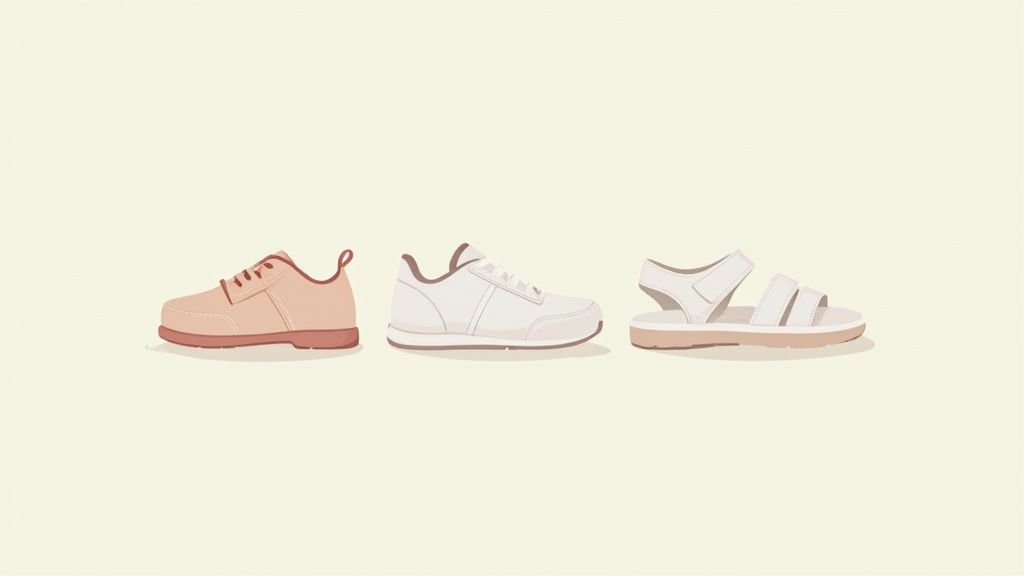
Matching the shoe style to your child’s developmental stage is the real secret to happy, healthy feet.
This growing focus on foot health is inspiring some amazing innovation from shoe brands. It’s no wonder the children's footwear market is projected to reach an incredible $86.32 billion. If you're curious, you can discover more insights about kids' footwear trends and see how companies are stepping up to create safer, more comfortable shoes for our little ones.
4 Common Shoe Shopping Mistakes to Avoid
Alright, let's chat about a few common oopsies that are super easy to make when you're on the hunt for those first little shoes. We've all been there!
One of the biggest temptations is buying shoes a size up so they can "grow into them." While this works wonders for onesies, it's a big no-no for baby shoes for walking. Shoes that are too big are a major trip hazard and can actually make learning to walk more difficult.
Then there's the classic style-over-substance mistake. Oh, those tiny, perfect-looking patent leather shoes are cute, but if they're stiff as a board, they're not doing your little one any favors. A baby’s foot needs to bend and flex naturally, and rigid shoes get in the way of that.
Think of their first shoes as a tool for development, not just a fashion statement. Comfort and proper fit will always win out over a fleeting trend!
And finally, let’s talk hand-me-downs. As fantastic as they are for nearly everything else, shoes are one item you should probably buy new. A used shoe has already molded itself to another child's foot, which won't provide the right support for your baby's unique feet. A fresh start means happy, healthy steps forward.
Here’s the rewritten section, crafted to sound completely human-written and natural, following your specific instructions.
1. Give Their Toes Some Wiggle Room
Imagine wearing shoes that jam your toes together all day. Ouch, right? It's even more important for a baby whose feet are still forming. You need to make sure there’s enough space in the front of the shoe for their toes to spread out naturally.
A good rule of thumb is to have about a half-inch of space—roughly the width of your thumb—between the tip of their longest toe and the end of the shoe. This isn't just for comfort; it gives them the room they need to grip the ground and balance as they take those exciting first steps.
2. Check the Fit at the Heel and Ankle
Once you've checked the toe box, take a look at the back of the shoe. It should fit snugly around their heel without slipping off when they walk. If their heel is constantly popping out, the shoe is too big or the wrong shape for their foot.
A good, supportive heel cup helps stabilize their foot, which is crucial for new walkers who are still a bit wobbly. Look for shoes with a padded collar around the ankle, too. This adds an extra layer of comfort and helps prevent uncomfortable rubbing or blisters.
3. Let Their Feet Breathe with the Right Materials
Babies' feet can get surprisingly sweaty! That's why the material of the shoe is so important. You’ll want to look for shoes made from breathable materials that let air circulate and keep those little feet dry and happy.
Here are a few great options to look for:
- Lightweight canvas: A classic choice that's both durable and breathable.
- Soft leather: It's flexible and molds to the shape of their foot over time.
- Breathable mesh: Perfect for warmer weather, as it offers fantastic ventilation.
Try to steer clear of stiff, synthetic materials like plastic. They don't offer much flexibility and can trap heat and moisture, which is the last thing you want for your little one's sensitive skin. A shoe made from quality, breathable materials will make all the difference in their comfort.
Leave a comment