


Ready to hit the trails with your tiny adventurer? Awesome! Before you head out, let’s chat about one of the most important pieces of gear: their shoes. Toddler hiking boots are way more than just mini versions of grown-up boots; they're the secret ingredient for happy, safe, and whine-free adventures. They give little feet the crucial support, grip, and protection that their everyday sneakers just can't handle on a bumpy trail.
Why Happy Feet Make For Happy Hikes
Welcome to the wonderful, slightly chaotic, and totally magical world of hiking with your toddler! If you're dreaming of those epic family photos with a mountain in the background, you're on the right track. But the real key to those frame-worthy moments isn't just the scenery—it's what’s on your little one’s feet.
Choosing the right toddler hiking boots is the first step toward unlocking confident, joyful adventures together. Think of them less as shoes and more as your toddler's first real piece of adventure equipment. They help turn wobbly first steps into steady, powerful strides, keeping your little explorer safe, comfortable, and upright.
From Backyard Stumbles To Trail Triumphs
A real hiking boot has a very important job: to tackle the great outdoors. Unlike the flat sneakers that are perfect for the playground, these boots are built for the wild and wonderful messiness of a trail. They’re engineered to do a few things really, really well:
- Prevent Slips and Tumbles: Grippy soles are like monster truck tires for tiny feet, grabbing onto dirt, rocks, and roots.
- Support Wiggly Ankles: A slightly higher cut gives a gentle "hug" around the ankle for much-needed stability on wobbly ground.
- Protect Precious Toes: Sturdy toe caps are like tiny helmets for their feet, shielding them from stubbed toes on hidden rocks.
- Keep Feet Dry and Comfy: Many boots are water-resistant, which is a total lifesaver for surprise puddles!
Happy feet are the engine of a happy hike. When your toddler feels secure and comfy, their focus shifts from their feet to the incredible world around them—the fuzzy caterpillar, the cool-shaped leaf, or the giant "dinosaur" rock.
This focus on specialized, protective gear for kids isn't just a trend; it's a movement. The global market for kids' outdoor boots is growing fast and is projected to reach about $3.1 billion by 2033. That just means more and more families are getting outside and realizing how important quality gear is for their youngest members.
Why Regular Sneakers Don't Cut It On The Trail
Here's a quick peek at why dedicated toddler hiking boots are a total game-changer for outdoor fun.
| Feature | Everyday Sneakers | Toddler Hiking Boots |
|---|---|---|
| Ankle Support | Nope! (low-cut) | Higher cut for stability |
| Traction | Flat, flexible soles | Deep, rugged lugs for grip |
| Protection | Soft, cloth toe boxes | Reinforced toe and heel caps |
| Durability | Made for pavement | Built for rocks, dirt, and mud |
| Water Resistance | Gets soaked easily | Often water-resistant or waterproof |
Ultimately, the right boots build confidence. They empower your child to say "I can do it myself!" as they climb a small hill. That newfound independence is what turns a simple walk in the woods into a core memory.
Happy feet are essential for happy hikes, and knowing family-friendly trails can make all the difference. For some inspiration, you can discover the 12 best hikes in the Smoky Mountains for all skill levels. You can also learn more about how the right footwear choices support healthy little feet, a philosophy backed by Harvard experts.
What Makes a Great Toddler Hiking Boot?
Walking into a shoe store can be a lot, especially when you're on a mission for the perfect toddler hiking boots. But don't worry—once you know what to look for, spotting the right pair is a piece of cake. It's all about a few key parts that work together to protect those little feet.
Think of a good hiking boot as a complete support system for your kid's outdoor adventures. Every piece has a special job to do!
Grippy Soles for Stable Steps
Let's start from the ground up: the outsole. This is where the boot meets the trail, and it's a huge deal. Unlike the smooth bottoms of regular sneakers, a hiking boot needs deep, rugged treads—often called lugs.
These grooves are like the tires on an off-road vehicle, digging into loose dirt, gripping onto rocks, and keeping your little one steady on uneven ground. Better grip means more confidence and fewer "oops-a-daisy!" moments on the trail.
This diagram shows how all the key features come together to make every hike safer, more comfortable, and a whole lot more fun.
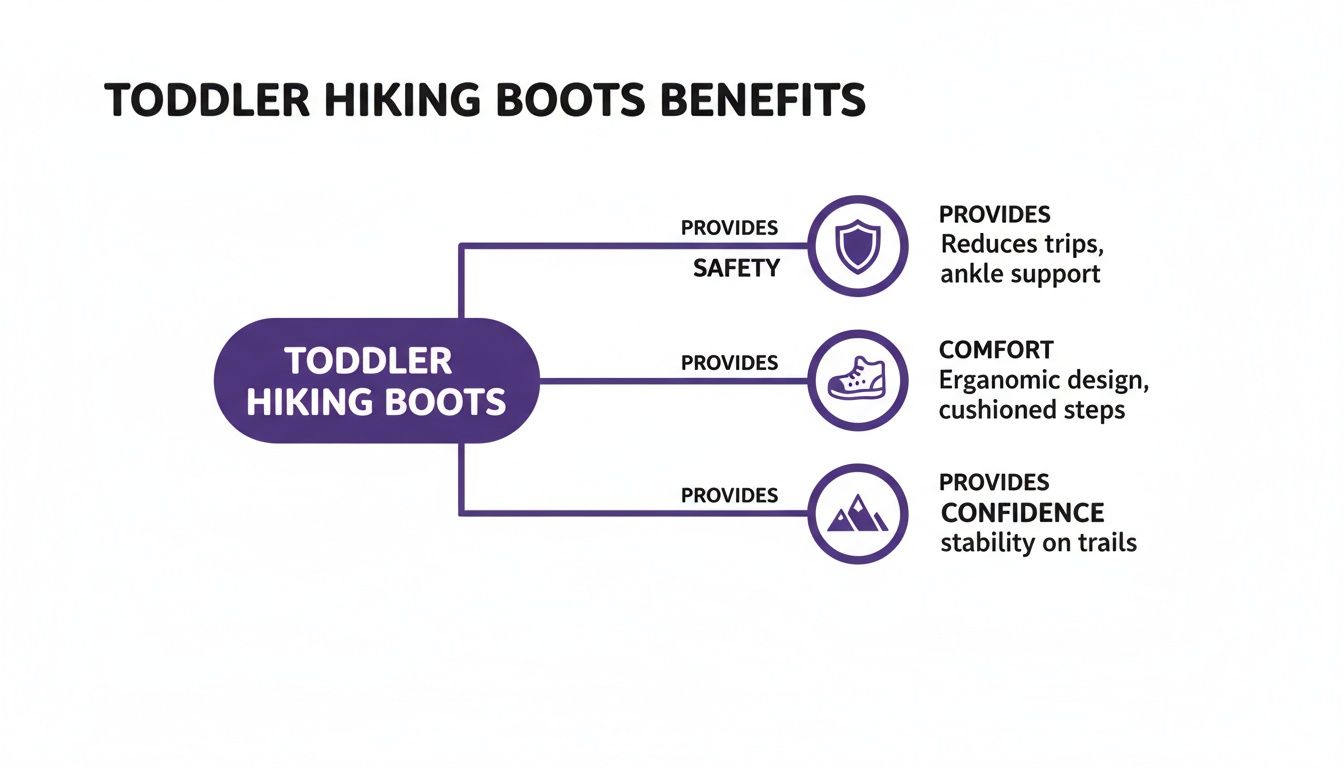
As you can see, the right boot does more than just cover their feet—it builds a foundation for a super positive experience outdoors.
Support and Protection Where It Counts
Growing ankles need a little extra help, especially on wobbly paths. That’s why many toddler hiking boots have a higher cut that offers gentle ankle support. It’s not about being stiff; it’s about providing stability to help prevent twists and give your kiddo a more secure feeling with each step.
Of course, this support must be balanced with natural movement. For more on this, our guide to flexible shoes for toddlers is a great resource.
And what about those inevitable stumbles? We all know toddlers can trip over thin air! A reinforced toe cap acts like a little helmet for their toes, protecting them from bumps against rocks and roots.
A great hiking boot isn't just a shoe; it's a piece of protective gear. It’s the shield that guards against stubbed toes and the trusty sidekick that keeps feet dry through every puddle-stomping escapade.
Weather-Ready Materials and Smart Design
Is it even a hike if there isn't a puddle to splash in? To keep their feet dry and spirits high, look for boots made with water-resistant or waterproof materials. This one feature can be a game-changer, turning a potentially soggy, miserable outing into a fun-filled adventure.
Finally, there’s a small but brilliant feature to look for: a gusseted tongue. It sounds fancy, but it’s a simple idea with a huge impact.
- The Problem: On a regular shoe, the tongue is separate, leaving gaps on the sides where dirt, rocks, and twigs can sneak in. Ugh!
- The Solution: A gusseted tongue is attached to the sides of the boot, creating a seamless barrier that keeps all that annoying stuff out.
This clever design means you won’t have to stop every five minutes to empty out a shoe full of pebbles. It’s a tiny detail that makes a world of difference.
Finding The Perfect Fit For Wiggling Feet
Welcome to one of the classic challenges of toddler life: finding shoes that are not too tight, not too loose, but just right. Sizing those adorable, constantly wiggling feet for toddler hiking boots can feel like a puzzle, but trust me, it’s easier than it looks. We’ll get you through it!
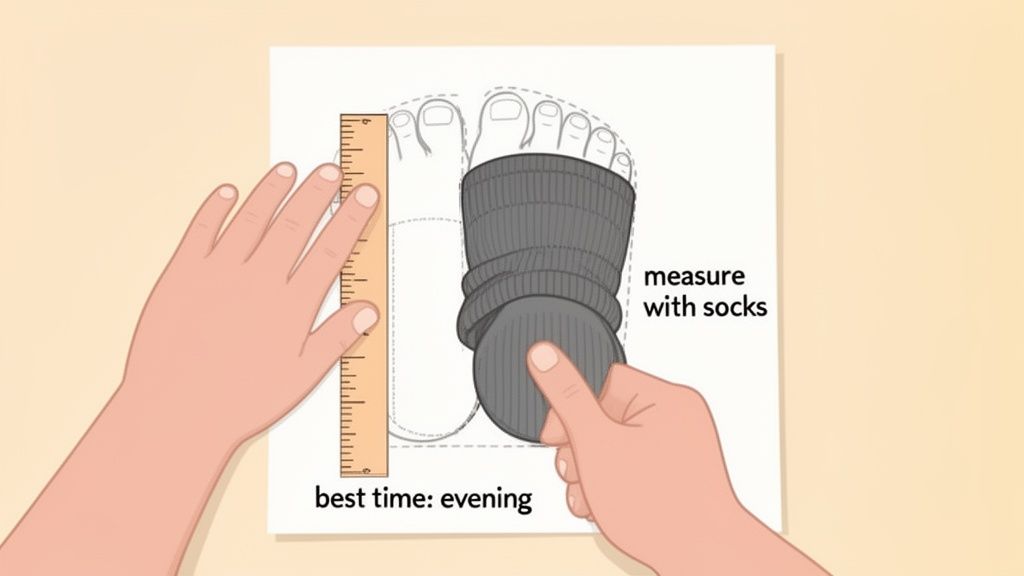
Getting the fit right is a really big deal. A boot that’s too snug can cause blisters, while one that’s too big can lead to trips and won’t give their growing feet the support they need. Let's find that Goldilocks fit.
Your At-Home Sizing Mission
Ready to measure your toddler’s feet at home? It's simple. You just need paper, a pencil, a ruler, and your little helper.
Step 1: Get Your Gear Ready
Grab a sheet of paper and tape it to a hard floor so it won't slide around. This little step prevents any accidental paper-surfing!
Step 2: Trace Those Toes
Have your child stand on the paper, making sure their heel is against a wall. Gently trace around their foot, keeping the pencil straight. If they’re feeling extra squirmy, make it a game—"Let's draw your super-foot!"
Step 3: Measure Up
Use your ruler to measure from the back of the heel to the tip of their longest toe. Here's a pro tip: measure both feet! It’s totally normal for one foot to be a bit bigger than the other. Always use the measurement of the bigger foot.
Sizing Tips From The Pros
Measuring is just the first part. A few extra tricks will ensure those new boots are adventure-ready.
- The Sock Secret: Have your toddler try on new boots while wearing the thick socks they'll use for hiking. Good hiking socks can easily take up half a shoe size!
- The Thumb Rule: Once the boot is on, you should be able to fit about a thumb's width (around half an inch) between their longest toe and the end of the boot. This "wiggle room" is super important.
- Timing Is Everything: Feet swell a little bit throughout the day. For the best fit, measure their feet or try on new boots in the late afternoon or evening.
Finding the right size isn't just about a number; it's about creating a comfortable home for their feet on the trail. The perfect fit gives them the freedom to explore without a single "ouch!"
If you're looking for more guidance, Pediped has a super helpful resource. Check out the official Pediped sizing guide for charts and extra tips.
The Final Test
Once you’ve bought the boots, have your little one wear them around the house for a while. Watch them walk, jump, and play. This quick "break-in" period helps you spot any problems before you hit the trail. Look for any red marks on their feet after you take them off. A well-fitting boot should feel good from the start!
Supporting Healthy Foot Development On The Trail
A toddler’s foot is on a massive mission: growing! Those feet are still soft, squishy, and figuring things out. Choosing the right toddler hiking boots isn’t just about new gear; it's about giving them a supportive teammate for healthy development.
Think of their foot as a tiny, brilliant machine. A super-stiff, heavy boot is like putting that machine in a cast—it restricts movement. The best boots work with their feet, offering protection without getting in the way.
Flexibility Is Your Superpower
If there’s one must-have feature, it's flexibility. A great toddler hiking boot should bend and twist easily, especially at the ball of the foot. This lets their feet move the way nature intended, which is crucial for building tiny muscles and arches.
When a boot is flexible, it allows their foot to grip the ground almost as if they were barefoot. This sensory feedback is a huge deal! It helps them improve balance, coordination, and confidence. They can actually feel the trail, teaching their brain and body how to react.
To learn more about how early freedom of movement builds a foundation for healthy feet, check out our guide on toddler soft-sole shoes.
The goal of a great hiking boot is to feel like it’s barely there. It should provide a protective shield while still letting your child’s foot do what it was born to do: flex, grip, and explore!
Parents are increasingly focused on smarter, healthier footwear. The global children’s footwear market is projected to grow by about USD 19.6 billion between 2025 and 2029, driven by designs that prioritize both comfort and proper function. You can dive into more insights about this growing market on technavio.com.
The Great Ankle Support Debate
Okay, let's tackle a big question: high-cut or low-cut boots? Which one is better? The real answer is… it depends entirely on your adventure!
-
High-Cut Boots: These are your best friend for more rugged, uneven trails. That extra material around the ankle provides a gentle "hug" of support, which can help prevent twists.
-
Low-Cut Boots (or Trail Shoes): These are fantastic for well-maintained paths or shorter family hikes. They offer more freedom and are usually lighter, which is a huge plus for little legs.
At the end of the day, there isn't one perfect answer. What matters most is that the boot is flexible, lightweight, and fits perfectly, giving your little one the confidence to lead the way.
Choosing The Right Footwear For Your Adventure
Okay, adventure-planners! You’ve got the snacks packed. But before you head out, there's one last big decision: is it a "boot day" or a "shoe day"?
Not every outdoor adventure calls for the full might of toddler hiking boots. Let’s figure out when to bring out the big guns and when a sturdy pair of shoes is all you need. Think of it like picking an outfit. You wouldn't wear a snowsuit to the beach, right? The same logic applies here!
The Great Shoe Vs. Boot Showdown
Imagine your little one is a superhero, and their shoes are their special power-up gear. You just need to pick the right power for the mission!
A simple trip to the playground? That’s a mission for Super-Shoes! They’re lightweight and perfect for running and jumping on familiar ground.
But what if the mission is more epic? A hike on a rocky, uneven trail with a few mystery puddles? That’s when you call in the reinforcements: the mighty Hiking Boots! They offer the extra grip, ankle hugs, and puddle-proof powers needed for unpredictable terrain.
Boot Or Shoe: Your Adventure Cheat Sheet
To make it even easier, here's a quick cheat sheet. Just find your activity, and you'll know what your little explorer needs.
| Activity Type | Best Choice | Why It's a Great Fit |
|---|---|---|
| Playground & Park Visits | Regular Shoes | Perfect for flat surfaces. They’re light and won't slow down their sprint to the swings! |
| Short, Paved Nature Walks | Regular Shoes | A walk on a smooth path doesn't require heavy-duty traction. Comfort is key. |
| Uneven, Rocky Trails | Toddler Hiking Boots | This is boot territory! The tough treads grip onto rocks and dirt for stability. |
| Muddy or Wet Conditions | Toddler Hiking Boots | Puddle stomping ahead! The water-resistant features will keep their feet dry and happy. |
| Longer Family Hikes | Toddler Hiking Boots | For longer treks, the added support and protection will help prevent tired feet. |
This little guide should help take the guesswork out of gearing up!
The best footwear is the kind your toddler forgets they're even wearing. When their feet are comfortable and secure, they can focus on the real mission: discovering the magic of the outdoors.
Choosing the right gear is the first step to creating those amazing family memories. Once you've chosen the perfect pair of toddler hiking boots, you'll be ready to explore incredible destinations, like the top hiking trails in Slovenia.
Ultimately, you know your child and your local trails best. Having both great everyday shoes and trusty hiking boots in their closet means you're prepared for any adventure that comes your way.
Keeping Your Boots Ready For Action
Splish! Splash! Stomp! Adventures get messy, and honestly, that’s a huge part of the fun. A well-loved, mud-splattered pair of toddler hiking boots is a sign of a fantastic day. A little TLC will keep those trusty boots going for many more adventures to come.
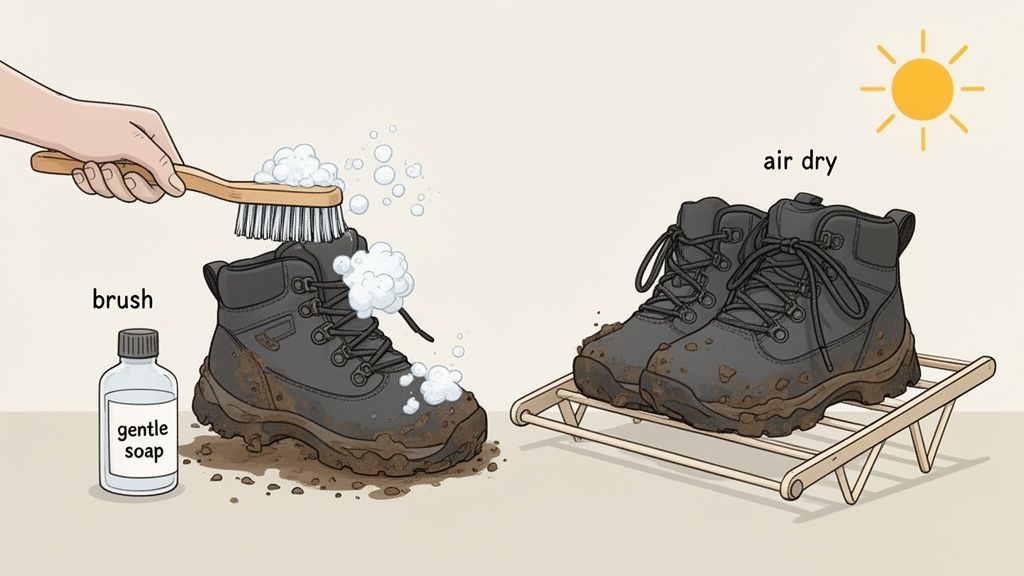
Don’t worry, you don't need any fancy equipment. A few simple tricks are all it takes to fight off the grime and keep those boots ready for the next call to the wild.
The Great Post-Hike Clean-Up
That caked-on mud might look like a badge of honor, but it's best to send it packing. Dried mud can make boot materials stiff over time. Plus, who wants dried dirt all over the car?
Here’s your super-simple, two-step cleaning mission:
- Brush Away the Big Stuff: Once you’re home, clap the boots together outside to knock off loose dirt. An old toothbrush is your secret weapon for getting into all the nooks and crannies.
- A Gentle Bath: Mix a little bit of mild soap with warm water. Dip your brush or a cloth in the soapy water and give the boots a gentle scrub-down. Wipe them clean with a damp cloth afterward.
Keeping boots clean isn't just about looks—it's about making them last. A quick wipe-down prevents grit from wearing down seams, meaning more hikes in the same trusty pair of boots.
The Not-So-Secret Drying Trick
Now for the most important part: drying them properly. Tossing wet boots near a heater might seem like a quick fix, but intense heat is a boot’s worst enemy. It can cause materials to shrink, crack, or become misshapen.
Instead, here’s the game plan for happy, dry boots:
- Open Them Up: Loosen the laces and pull the tongue forward to open the boot up as much as possible.
- Stuff ‘Em: Ball up some old newspaper or paper towels and stuff it inside. This magic trick absorbs moisture from the inside out.
- Find a Breezy Spot: Place the boots in a well-ventilated area away from direct heat and let them air-dry naturally.
This simple routine will help them keep their supportive shape. For more specific advice, you can always find great info in the official Pediped care instructions. With a few minutes of care, your toddler’s hiking boots will be primed and ready for whatever adventure you dream up next.
Answering Your Top Toddler Hiking Boot Questions
Still have a few questions rolling around? You're not the only one. Getting into the world of toddler hiking boots can feel a bit overwhelming at first. But don't sweat it—we've got answers to the most common questions from parents just like you.
Let's clear up those last few details so you can get back to the fun part: planning your next family adventure!
How Do I Break In New Hiking Boots?
This is where the good news comes in! Modern toddler boots are made from soft, flexible materials that are comfy right from the start.
The best "break-in" strategy is just to let your little one wear them around the house for a bit. A few indoor play sessions are usually all it takes for you to spot any potential rubbing before you hit the trail. Easy peasy!
How Often Will I Need To Buy A New Pair?
Ah, the classic question for any parent! A toddler's feet can grow a half-size every 2 to 4 months, which is shockingly fast. This means you’ll want to check the fit of their boots at least once a month.
A quick heads-up: Don't wait for your toddler to complain that their shoes are too tight. They often won't say a thing! Use the good old "thumb test" to check the fit regularly.
As a general rule, you can probably expect to buy a new pair every season or two, depending on their growth spurts. I know it feels frequent, but well-fitting shoes are so important for their comfort.
Can My Toddler Wear Their Hiking Boots Every Day?
While they're amazing for the trail, hiking boots aren't really meant for everyday wear at daycare or the playground. They're typically a bit heavier than standard sneakers, which can feel clunky for all the running and playing on flat ground.
Think of them as special gear for a special activity. For daily running around, a more lightweight and flexible sneaker is a much better fit. Save the rugged hiking boots for your awesome outdoor missions!
Ready to find that perfect pair that’s tough enough for the trail but flexible enough for growing feet? The collection at Pediped is built with healthy foot development as the number one priority, making sure every step your explorer takes is a happy one. See all the adventure-ready styles at https://www.pediped.com.
Leave a comment