


Welcome to the club! If you've ever found yourself in a shoe store, trying to gently coax a chubby little foot into a shoe that's clearly not having it, you're in the right place. Finding great shoes for kids with wide feet can feel like a mission, but I'll let you in on a secret: it's not nearly as hard as it seems.
Let's Celebrate Those Adorable Wide Feet!
First things first, let's give a high-five to the wide-foot crew! A wider foot isn't a problem we need to solve; it's just a sign of healthy, natural growth. Those sweet, pudgy feet are the foundation for every wobbly first step, playground adventure, and living room dance party. Our job isn't to squeeze them into a certain shape, but to find shoes that love them just the way they are.
Think of this guide as your treasure map to stress-free shoe shopping. We're leaving behind the days of shoes that pinch, rub, or mysteriously get "lost" in the car two minutes after you leave the store. Let's make this a fun and confident adventure!
Why a Good Fit Is a Superpower
You know that feeling when you're wearing shoes that are just a little too tight? Ugh, the worst. Now, imagine that on a toddler who's still figuring out how to walk, or a big kid trying to rule the monkey bars. The right fit is so much more than comfort—it's about freedom to play!
A great fit helps with a few key things:
- Wiggle Room: It gives their toes room to spread out and grip, which is a huge part of learning good balance and coordination.
- Healthy Growth: Feet that are crammed into tight shoes can't grow properly. The right fit supports their natural development.
- Happy Adventures: When their feet feel good, kids are free to run, jump, and explore without anything holding them back.
The goal is simple: find shoes that feel like they aren't even there. We want your kiddo to focus on the fun, not their footwear.
So, let's officially ditch the shoe-shopping dread. You're about to become a pro at finding the perfect pair, making sure every step they take is a happy one. Ready to get started? Let's go!
How to Measure Wiggly Feet at Home (Without Losing Your Mind)
Alright, let's turn what can be a tricky task into a fun little game. Measuring a kid's foot, especially a wiggly toddler's, sometimes feels like trying to catch a greased-up hamster. But trust me, with a few parent-tested tricks, we can get an accurate measurement without any fuss. All you need is a piece of paper, a pencil, and your little one.
First, let's set the stage. Instead of announcing, "I need to measure your foot," try turning it into an activity. Something like, "Hey, let's trace your superhero footprint!" or "Want to be my foot model for a minute? There might be a sticker in it for you!" A little playfulness goes a long, long way.
This handy little visual breaks down the journey from frustrated shopper to confident parent.
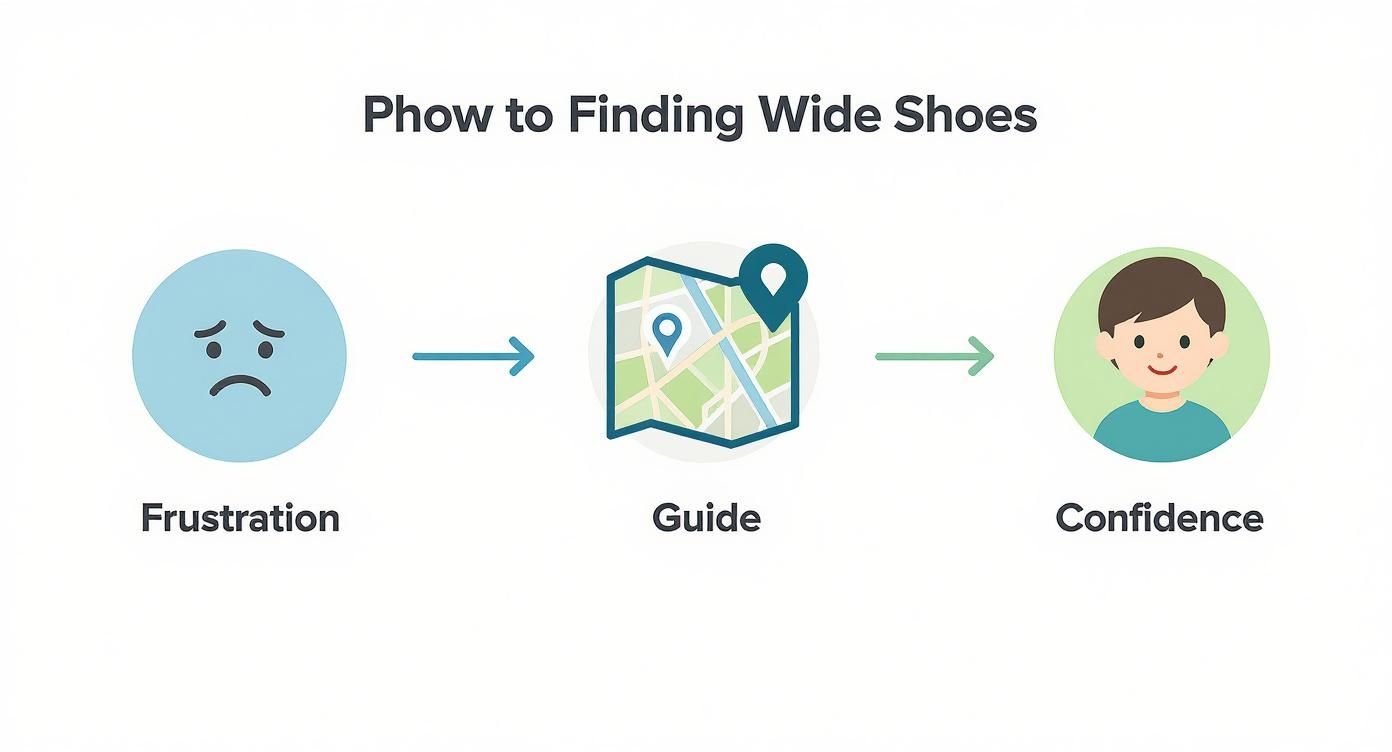
It’s all about swapping that initial confusion for a clear guide, which ultimately leads to happy, comfy feet.
Let the Tracing Begin!
Have your child stand on the paper. This part is key—their foot needs to be bearing weight to get a true measurement. To keep things steady, make sure their heel is snug right up against a wall.
Now, trace around their foot! If they start to giggle and wiggle, just go with it. A slightly squiggly line is a lot better than a full-on meltdown. Once you're done, you'll have a perfect little footprint to work with.
Finding the Length and Width
With your masterpiece traced, grab a ruler. Draw a straight line from the very tip of the longest toe down to the back of the heel. That’s your length.
Next up is the width, the most important part when you’re looking for shoes for kids with wide feet. Find the two widest points on the tracing—usually right around the ball of the foot—and draw a straight line connecting them. Voila! That's your width.
Parent Pro-Tip: Don't forget to measure both feet! It's super common for one foot to be slightly larger than the other. Always buy shoes that fit the bigger foot.
And you’re definitely not alone in this wide-foot quest. Market data shows that 10-20% of kids have feet that are classified as 'wide' or 'extra wide.'
Now that you have your numbers, you're armed with the exact info you need. You can confidently compare these to size charts, like our super helpful Pediped Sizing Guide. This will help you translate your at-home measurements into the perfect fit, every time.
Spotting the Best Features for Wide Feet
Alright, you’ve got the measurements. Welcome to the club! Now for the fun part: figuring out what actually makes a shoe a superstar for wide little feet. It’s not just about sizing up; it’s about spotting the specific design features that give those feet the freedom they need.
Let's break down the secrets to the perfect fit.
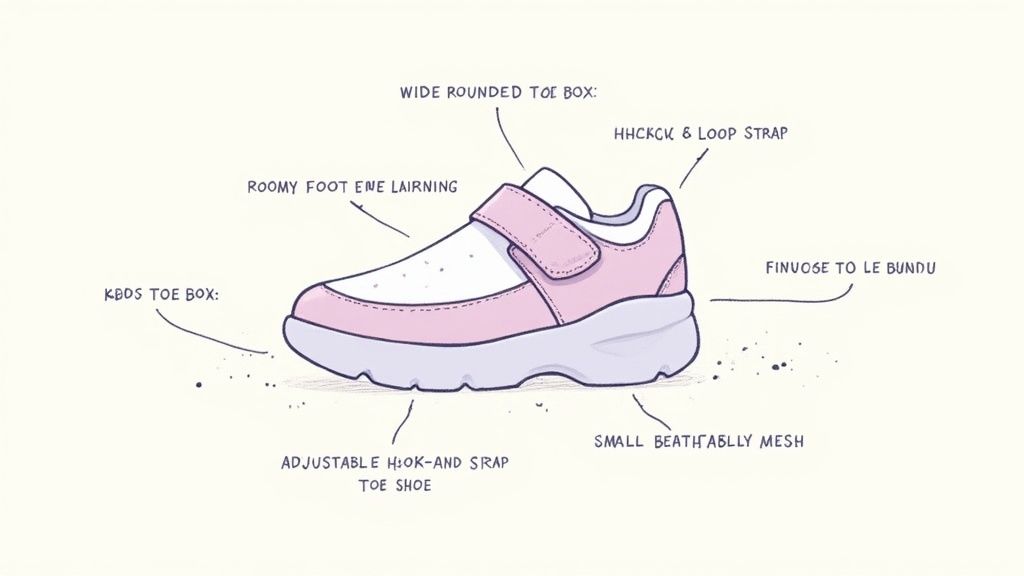
Our goal is to find a shoe that acts less like a box and more like a cozy, protective sock that moves with them, not against them.
The All-Important Toe Box
First up, let’s talk about the front of the shoe, or the toe box. From my experience, this is the single most important feature. You're looking for a toe box that is wide, deep, and rounded—never tapered or pointy.
Why is this so critical? A narrow toe box squishes those toes together, which can hinder their stability.
The perfect shoe lets those little piggies wiggle, dance, and spread out as much as they want. A roomy toe box is the number one sign of a truly wide-foot-friendly design.
The Magic of Adjustable Straps
Next on our checklist are the closures. Those adorably chubby feet often come with a high instep (the top part of the foot), which can turn getting shoes on into a real workout. This is where adjustable straps become your absolute best friend.
Look for shoes with closures that allow for a custom fit. They are total game-changers for getting shoes on and off without a fuss.
A few great options to look for:
- Hook-and-loop straps (Velcro): These are the gold standard. You can tighten or loosen them as needed, and they empower little ones to start putting on their own shoes!
- Bungee laces: These stretchy laces offer great flexibility without the hassle of tying.
- Wide openings: A shoe with a tongue that opens up nice and wide makes the whole process so much easier.
Super Soles and Breathable Materials
Finally, let's talk about what's underneath. The sole of the shoe should be incredibly flexible. You should be able to bend and twist it easily in your hands. A flexible sole allows your child to feel the ground beneath them, which is essential for developing good balance.
Materials matter, too. Kids' feet can get surprisingly sweaty! I always recommend looking for breathable materials like genuine leather, canvas, or mesh. They help keep feet cool and dry, preventing blisters and general discomfort.
Here's a quick cheat sheet for your shopping trips.
Wide-Foot Friendly Shoe Feature Checklist
| Feature To Look For | Why It's a Game-Changer | Parent Tip |
|---|---|---|
| Wide, Rounded Toe Box | Allows toes to splay naturally for better balance. | Flip the shoe over! The sole at the front should look foot-shaped, not pointy. |
| Adjustable Closures | Accommodates high insteps and ensures a secure, customized fit. | Hook-and-loop (Velcro) straps are your best friend. |
| Flexible Sole | Promotes natural foot movement and helps build strong muscles. | If you can't easily bend the shoe with your hands, it's too rigid. |
| Breathable Materials | Keeps feet cool, dry, and comfortable. | Stick to natural materials like leather or canvas. |
| Padded Collar & Tongue | Adds extra comfort and prevents rubbing around the ankle. | The ankle opening should feel soft and cushioned. |
With this checklist, you'll be able to spot the perfect pair in no time.
Choosing the Right Shoe for Every Age and Stage
As our little ones grow, their shoe needs seem to change in the blink of an eye. Let’s walk through the best styles for each stage, especially when you’re on the hunt for great shoes for kids with wide feet.
It's a big deal! The children’s footwear market is booming and expected to hit nearly $59 billion USD by 2033. This growth means more brands are finally creating fantastic wider options. Find out more about the growing children's footwear market.
This is wonderful news for us parents, because a comfy, well-fitting shoe sets the foundation for happy, healthy feet for life.
The First Steps Crew (0-24 Months)
Oh, the baby stage! For those first wobbly steps, think less is more. The best shoes for this age are incredibly soft and flexible—almost like a cozy pair of socks with a little extra protection.
You’re looking for soft-soled shoes that mimic the feeling of being barefoot. Our collection of shoes for babies 0-24 months is designed with exactly this in mind, offering that perfect blend of freedom and gentle support.
Pro-Tip: At this age, a shoe’s main job is to protect their feet from ouchies outside. Indoors, barefoot is still best!
Toddlers on the Move (1-3 Years)
Welcome to the toddler tornado! Now that they’re running and jumping on everything, durability and grip become your new best friends. The ideal toddler shoe has a flexible rubber sole that can handle playground adventures but still bends easily.
Here’s what to look for:
- Great Grip: A textured rubber sole is a must-have to help prevent slips and slides.
- Easy-On Closures: Wide openings and simple hook-and-loop straps are a lifesaver.
- Durable Materials: Toddlers are tough on their shoes! You need quality materials that can withstand the park.
Big Kids Taking Charge (4+ Years)
Once they hit preschool and beyond, their footwear needs to keep up with their non-stop energy. This is where supportive athletic shoes and comfy everyday sneakers really shine. The toe box should still be wide and roomy, and a flexible sole remains super important.
Sometimes, footwear choices go beyond typical growth. For instance, when supporting children with developmental coordination disorder, the right shoes play a vital role in providing stability and aiding confident movement.
For most school-age kids, you’ll want a shoe that can go from the classroom to the playground without missing a beat.
The Final Fit Check: You're Almost There!
You did it! You’ve found a pair of shoes that looks absolutely perfect. But before you do a victory dance, let’s do one last, super-quick check to make sure they’re as comfy as they are cute.
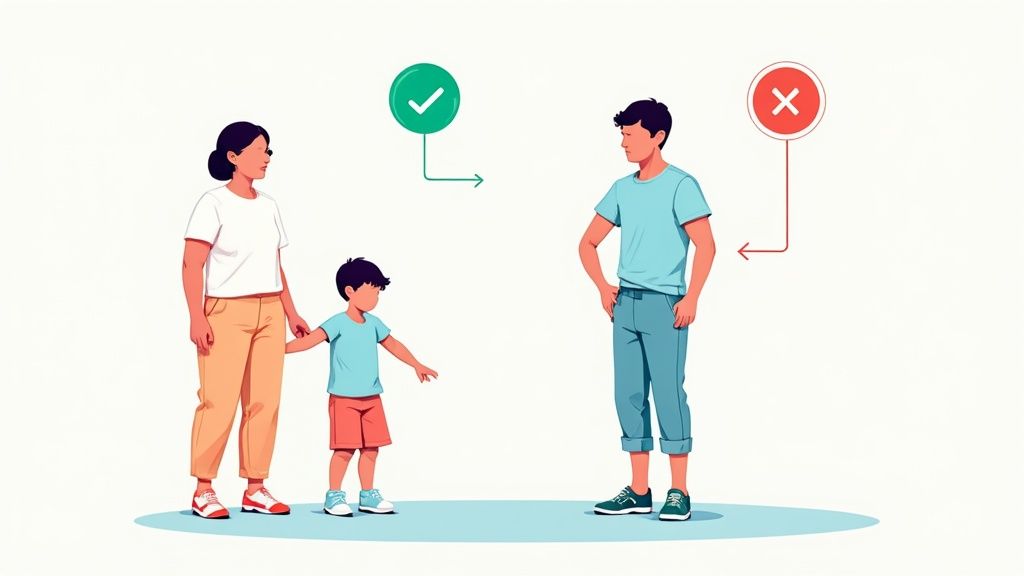
This is the fun part—your "Are we really sure?" moment that guarantees happy feet on every adventure.
Mastering the Thumb Test
First up is the classic thumb test. With the shoe on, have your child stand up straight. Gently press your thumb down on the front of the shoe, right above their longest toe. You’re looking for about a thumb's width of space between their toe and the end of the shoe.
Why is this wiggle room so important?
- Growing Room: It gives their feet space to grow, so you aren't shoe shopping again next month!
- Movement Space: It allows their foot to flex naturally as they run and jump.
This is a fundamental step in ensuring comfort and a huge win for happy feet!
The perfect fit isn't just about length. Check the width, too! The shoe should feel snug, but you should never see their foot bulging over the sides of the sole.
Spotting Red Flags
Once the shoes come off, give those little feet a quick inspection. A perfectly fitting shoe shouldn't leave a trace. If you spot any red marks or irritated spots, that’s a clear sign the shoe is too tight.
To help get the fit right the first time, especially when shopping online, you might even look into tools like virtual try-on apps. These can help you visualize how a shoe might fit before you even commit.
Finally, never forget how fast those little feet grow! It’s smart to re-measure them every two to three months. You’re now officially equipped to nail that final check every single time!
Common Questions From Parents
It’s totally normal to have a few questions when you’re hunting for the best shoes for kids with wide feet. Here are some quick answers to the things we hear most often.
Do I Just Need To Buy A Bigger Size?
Nope! It might seem easier to grab the next size up, but that extra length can cause tripping and stumbles. A shoe that's too long won't bend in the right place, making it harder for them to walk naturally.
Look specifically for styles labeled wide or known for a roomy fit. That way, you’re matching both length and width perfectly.
How Often Should I Be Checking Their Shoe Size?
Kids’ feet grow like weeds! As a guideline, measure their feet every two to three months, especially during growth spurts.
Tip: If shoes suddenly start getting tossed off or your child complains about their feet after a day of play, it’s a clear sign it’s time for a size check!
Are “Barefoot” Style Shoes A Good Option?
Absolutely! More parents are turning to barefoot or minimalist designs, and for good reason. These shoes usually feature a wide, foot-shaped toe box and super flexible soles. That combo lets little toes spread out and encourages healthy foot development from the very first step.
For more on sizing, shoe care, and other parent-approved tips, visit our complete FAQ page. We’ve gathered all the answers so you can shop with confidence.
Ready to treat your little one’s feet to a perfect blend of support and style? Explore the full Pediped collection and let those tiny toes play, run, and leap all day long. Shop now at https://www.pediped.com.
Leave a comment