


When your little one starts pulling up on everything in sight, it's go-time! Your first instinct might be to rush out and grab the cutest pair of tiny sneakers, but hold on a second. For those first wobbly steps indoors, experts agree that the best "shoes" are no shoes at all. Yay for barefoot!
Letting them go barefoot is the most natural (and fun!) way for them to build the strength, balance, and confidence they need to master walking.
Why Barefoot Is Best for First Steps
Welcome to one of the most exciting (and let's be real, nerve-wracking!) milestones. As your little one starts cruising along the furniture, you’re probably wondering when to introduce shoes. But what if I told you the best tool for the job is already attached to their legs? Yep, those ten tiny toes!
Keeping your baby barefoot indoors is like sending their feet to walking school. When they can feel the floor directly, their feet send all sorts of important signals back to their brain. This sensory feedback is super important for learning to grip, balance, and adjust to different surfaces.
Think of it as sensory play for their feet! Every step on carpet, hardwood, or tile helps them develop the small muscles and arches that will support them for a lifetime. It’s all about building that solid foundation, one adorable, shoeless step at a time. Of course, you can't always go barefoot. I highly recommend reading what Harvard experts say about healthy foot development for even more great insights.
Finding Shoes That Feel Like Barefoot
When it's time to head outside and you need to protect those little feet, the goal is simple: find a shoe that comes as close to that barefoot feeling as possible. It's a philosophy more and more parents are adopting. In fact, the baby walking shoes market was valued at around USD 2.5 billion in 2025 and is only expected to grow from there.
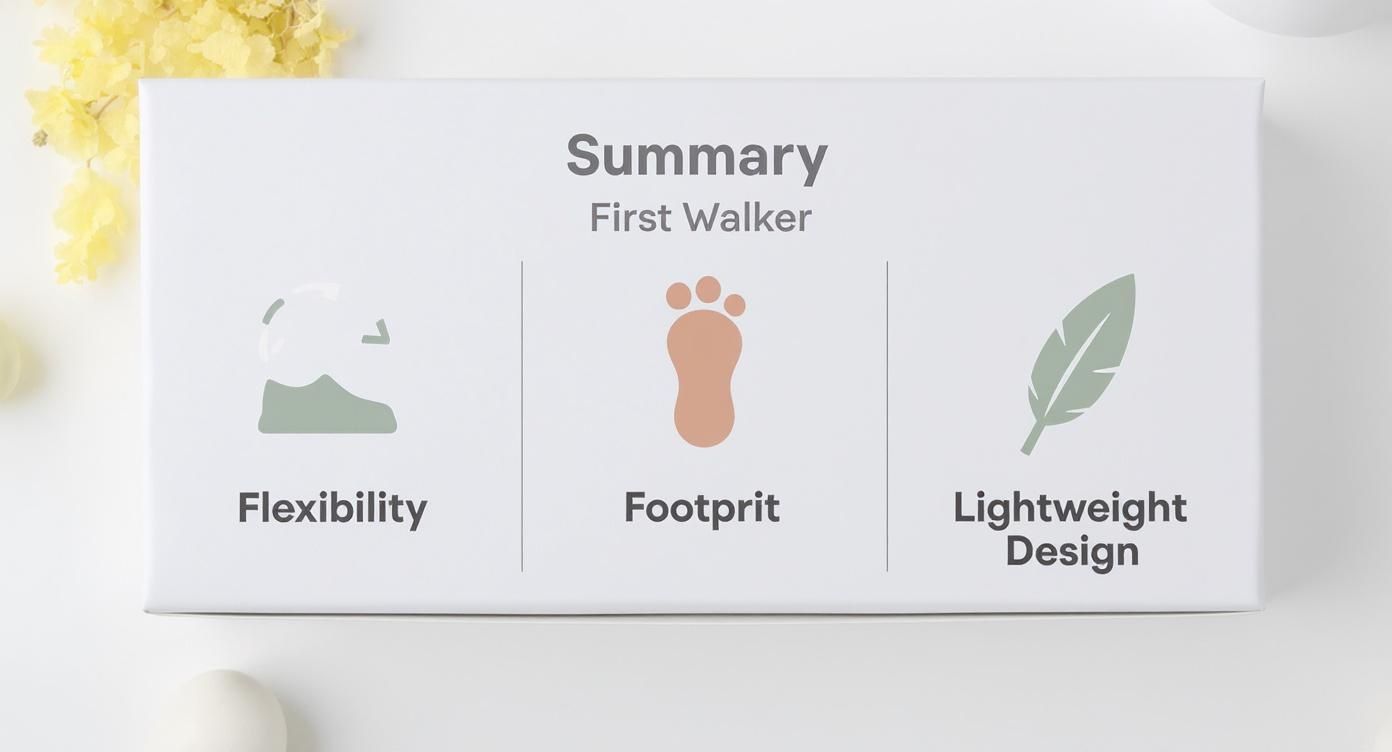
So, what should you be looking for? Here are the three non-negotiable features every first walker shoe must have.
First Walker Shoe Feature Cheat Sheet
Feeling a bit overwhelmed by all the options? I get it. This little cheat sheet breaks down what really matters when you're on the hunt for that perfect first pair.
| Feature | Why It's a YES! | What to Avoid |
|---|---|---|
| Flexible Sole | Allows natural foot movement and helps them feel the ground. | Stiff, rigid soles that restrict movement. |
| Wide Toe Box | Gives those little toes room to wiggle, grip, and spread out naturally. | Narrow or pointed shoes that squish toes together. |
| Lightweight Material | They'll barely notice they have shoes on, preventing tripping. | Heavy, clunky shoes that weigh them down. |
At the end of the day, it's all about finding a shoe that lets your baby's foot do its thing.
The best shoes for infants learning to walk are the ones they forget they’re even wearing. Keep it flexible, wide, and feather-light.
Choosing Shoes for Outdoor Adventures
While barefoot is brilliant for indoor practice, outdoor explorations are a whole new ball game! This is where the perfect pair of shoes for infants learning to walk comes into play.
Think of them less as walking aids and more like a soft, flexible shield. They’re there to protect those precious feet from sharp twigs at the park, hot pavement in the summer, or chilly ground on a crisp autumn day.
The real mission is to find footwear so comfy and lightweight that your baby barely even notices they have them on. It's all about striking that balance between barefoot freedom and the practical safety needed for their first real-world adventures.
What Makes a Great Outdoor Shoe
When you're on the hunt, the goal is to find a shoe that mimics the natural movement of a bare foot as closely as possible. A shoe should never force the foot into an unnatural shape or restrict its movement.
Instead, a great outdoor shoe will have a few key features:
- A Super Flexible Sole: Can you easily bend the shoe in half, toe to heel? If it folds up with little effort, you've found a winner! This flexibility lets them feel the ground and build strength in their feet.
- A Wide, Roomy Toe Box: Those little toes need space to wiggle, spread out, and grip the ground to maintain balance. It's a hard pass on any narrow shoes that might squish their toes together.
- A Secure but Gentle Closure: Velcro straps are a parent's best friend. They make getting shoes on a squirmy toddler much, much easier and allow for a snug, adjustable fit that can adapt as their feet grow.
Remember, the best outdoor shoe is a "barely-there" shoe. It should protect their feet without changing how they naturally walk, run, and play. The goal is protection, not correction.
Finding that perfect pair means your little explorer can safely satisfy their curiosity, from the playground sandbox to the grassy backyard, all while supporting their healthy foot development. Happy adventuring!
How to Get the Perfect Fit Every Time
Let's be honest, trying to measure a squirming, giggling baby's foot is a special kind of parenting challenge. But getting that "just right" fit is super important for their comfort and healthy development as they start to explore the world on two feet.
Don't sweat it. With a few pro tips, you'll have this down in no time, ensuring your little one has happy, comfy feet for every new adventure.
First things first: always measure their feet while they are standing up. Their feet naturally spread and lengthen when they bear weight, so measuring while they're sitting can lead to a size that's too small. A fun way I've found to do this is to have them stand on a piece of paper and quickly trace around each foot.
The Ultimate Fit Checks
Once the shoes are on, it’s time for a few quick checks. These are my go-to moves to make sure we’ve found the perfect pair of shoes for infants learning to walk.
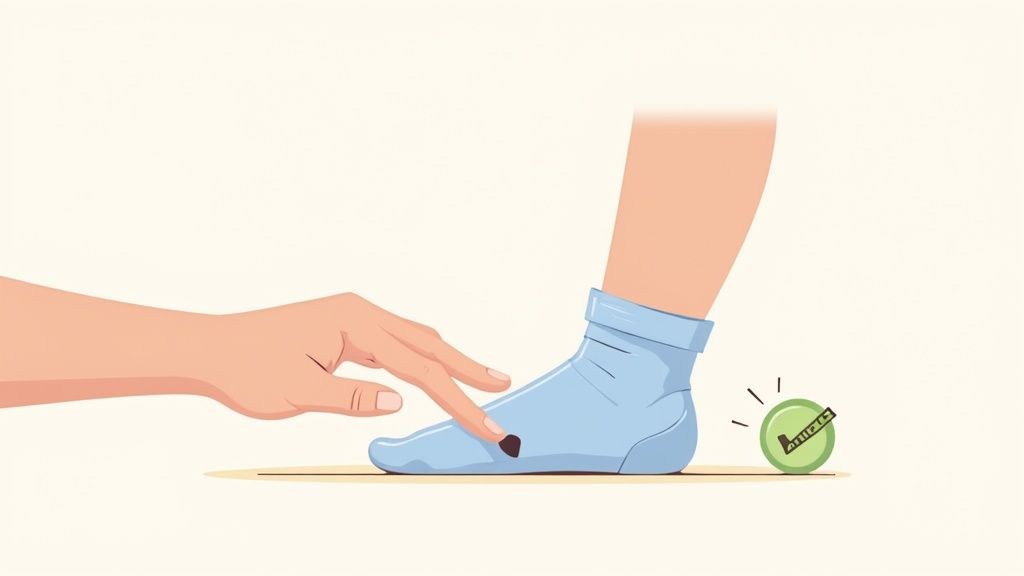
- The Thumb Test: Press your thumb down at the front of the shoe, just over their longest toe. You want to feel about a thumb's width—roughly half an inch—of space. This gives them room to wiggle and grow.
- The Pinky Test: Try to slide your pinky finger between your baby's heel and the back of the shoe. It should feel snug, but you shouldn't have to force it. If there's too much of a gap, the shoe is too big and could become a tripping hazard.
- The Squeeze Test: Give the sides of the shoe a gentle squeeze. You're looking for a secure fit that doesn't cause the sides to bulge or look like they're digging into their little foot.
After their first time wearing a new pair, I always do a quick spot-check. When you take the shoes off, look for any red marks or indentations. Those are a dead giveaway that the fit is a bit too tight in certain spots.
Staying Ahead of Growth Spurts
Babies' feet grow astonishingly fast. We're talking a half-size every few months! Because of this, it's a good habit to check the fit of their shoes every six to eight weeks. This helps you catch those sudden growth spurts before their toes get cramped.
For a little extra guidance, many brands offer printable sizing tools. You can find an incredibly helpful chart in this pediatrician-backed sizing guide that makes at-home measuring so much easier.
Decoding Shoe Materials and Styles
Stepping into the world of baby shoes can feel like learning a whole new language. You'll see terms like leather, canvas, and mesh, but what does it all really mean for your little walker? Let's cut through the jargon and get straight to what matters: breathability and flexibility.
Think about wearing a stiff pair of boots on a hot day—that’s what rigid, stuffy shoes feel like on tiny, active feet! You want soft, pliable materials that allow for that crucial natural foot movement and keep their feet from getting all sweaty and uncomfortable.
The Material Showdown
When you're looking at shoes for infants learning to walk, the material is everything. You need something durable enough for those early playground adventures but soft enough to support healthy, growing feet.
Here’s a quick rundown of my favorites:
- Breathable Mesh: This stuff is a lifesaver in warmer weather or for any kid whose feet seem to run hot. It lets air flow freely, keeping everything cool and dry.
- Soft Leather or Suede: These are classic for a reason. They're wonderfully flexible and actually mold to your baby's foot over time, creating a near-custom fit. Plus, they hold up really well to daily wear and tear.
- Lightweight Canvas: Super light and easy to clean (a huge win!), canvas shoes are a practical and fun choice that won't weigh your new walker down.
My go-to trick is the "bend test." If you can't easily fold the shoe in half with one hand, it’s probably too stiff for those little developing feet.
Finding the Perfect Closure
Okay, let's talk about the part that's really for you: how the shoe stays on. This might seem like a small detail in the store, but it becomes a huge deal when you're wrestling with a wiggly toddler.
Velcro straps are an absolute game-changer. They make getting shoes on and off a thousand times easier and let you get a perfectly snug fit in seconds. Slip-on styles can also be great for quick trips, but just make sure the elastic is gentle and keeps the shoe secure without digging into their ankle.
It’s all about finding that sweet spot between security and simplicity.
Alright, you're armed with your checklist and know exactly what to look for in a great shoe. So, where do you actually find these perfect first walkers? Let's break down the best spots.
Finding the Perfect Pair: In-Store vs. Online
Nothing quite beats the hands-on experience of a specialty children’s shoe store. Having an expert measure those tiny, wriggly feet and guide you through a professional fitting is invaluable. Seriously, it's a huge stress-reliever. These pros have seen it all and can spot subtle fit issues that are easy for the rest of us to miss.
But let's be realistic—sometimes, life calls for shopping from the sofa. Online shopping for baby shoes is a lifesaver for busy parents, offering convenience and a seemingly endless selection. You can find incredible, expertly designed shoes for infants learning to walk, like the podiatrist-approved styles for babies 0-24 months, without ever leaving home.
Mastering the Online Shoe Hunt
Shopping for baby shoes online doesn't have to be a shot in the dark. The way parents buy shoes has shifted dramatically, with online sales expected to account for 45% of total sales by 2033. This means online retailers have gotten much better at helping you nail the perfect fit from afar. Find out more about baby shoe market trends here.
The number one rule for buying baby shoes online? Always, always check the return policy. A flexible, hassle-free return process is non-negotiable. It lets you order a couple of sizes to try and send back whatever doesn’t fit, stress-free.
Here are a few more pro tips for your online search:
- Consult the Size Chart: Every brand fits a little differently. Don't skip this step! Take a moment to read their specific sizing guide and measuring instructions.
- Read Parent Reviews: Real-world feedback is gold. Parents will often leave priceless comments on whether a particular style runs narrow, wide, or true-to-size.
- Double-Check That Return Policy: Yes, it’s important enough to mention twice! Look for stores that offer free and easy returns to make your life easier.
With these pointers, you can click "add to cart" with total confidence, knowing you’re well on your way to finding that perfect pair.
Your Top Questions Answered
Got a few questions still bouncing around? I get it. When it comes to something as big as your baby's first steps, it's completely normal to have a long list of "what ifs." You're definitely not alone!
I’ve pulled together some of the most common things I hear from parents, with simple answers to help you feel confident picking out that very first pair of shoes.
When Do They Actually Need Shoes?
This is the number one question, and for good reason! It’s so tempting to buy those adorable tiny sneakers the moment your baby starts pulling up on the furniture.
But hold off just a little longer. The best time for their first real pair of shoes is when they're walking confidently on their own and are ready for outdoor adventures where their little feet need protection.
For all that indoor practice—cruising along the couch, wobbling from one parent to the other, and taking those triumphant first steps—barefoot is the way to go. It helps them feel the ground beneath them and build up all those tiny, important foot muscles.
What About Shoes With Stiff Ankle Support?
You might remember baby shoes from your own childhood being super stiff and high-topped. The thinking on this has done a complete 180! Today, pediatric physical therapists and experts strongly recommend soft, flexible shoes that let the ankle move and strengthen on its own.
Think of it this way: you want a shoe that lets your baby's foot do its job, not one that does the job for it. The old-school, rigid shoes can actually hinder muscle development. Freedom of movement is everything.
How Often Will I Need to Buy New Shoes?
Get ready, because those little feet grow at lightning speed! It’s a great habit to check the fit every 6-8 weeks.
During these early years, you'll probably find yourself sizing up every two to four months. It might feel like you just bought them, but it’s just another sign that your little one is growing healthy and strong!
As you navigate this exciting time, many parents also look for ways to celebrate these milestones, from first steps to first birthdays. It's common to explore ideas for thoughtful new mom gifts that honor the journey. It's all part of welcoming a new little person into your world.
At Pediped, we're here to support every wobbly step with shoes designed for healthy development and happy feet. Explore our collection of pediatrician-approved first walkers today at https://www.pediped.com.
Leave a comment