


Ready, set, wobble! Figuring out how to encourage your baby to walk is all about creating a super fun, supportive space for them to explore. The secret? Focus on play and praise, turning your living room into an exciting playground where they feel brave enough to take those first wobbly steps.
Your Fun Guide to Those First Wobbly Steps
Welcome to one of the most exciting milestones ever! Watching your baby gear up for their first steps is a front-row seat to pure magic. It’s a hilarious mix of wobbly determination, adorable tumbles, and the biggest, proudest smiles you've ever seen.
Our goal here isn’t to rush things, but to make it an absolute blast. Forget strict timelines and what the other babies are doing; this is all about celebrating your little one’s unique journey. Every tiny shuffle, every brave stand, and every little victory is worth a round of applause. Let's dive into how you can become the best walking coach and cheerleader your baby could ask for!
Setting the Stage for Success
The journey to walking is a marathon, not a sprint, and every baby crosses the finish line at their own awesome pace. The average age for walking is around 12 months, but the "normal" window is wonderfully wide, stretching from 9 to 18 months. Most little ones start taking steps a few months after they’ve mastered standing.
So, how do we get this party started? It's way easier than you think. This guide is your playbook for turning the path to walking into a game you both love. We'll focus on:
- Creating a safe 'cruising' highway for confident exploring.
- Turning practice into playtime with games that build strength and balance.
- The power of bare feet and why flexible shoes are key for outdoor adventures.
Remember, this is all about building confidence, not pressure. Your happy energy and playful encouragement are the best tools you have. Every cheer and clap lets your baby know they're doing something amazing!
As you get ready for those first outdoor strolls, finding the right footwear is a big deal. A great shoe supports natural foot development without getting in the way. For ideas on what to look for, check out our guide on adaptive shoes for kids that perfectly blend comfort and style.
Create a Safe Playscape for Walking Practice
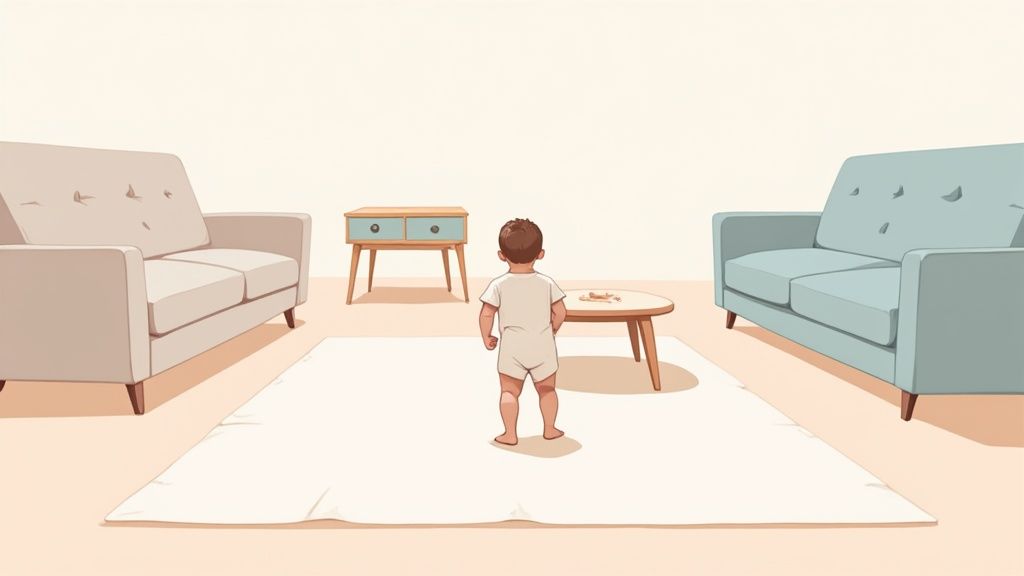
Before your little one can become a walking pro, they need a safe place to practice—and fall. And fall again! Your mission is to turn your living space into the ultimate walking academy, a “yes” zone where they feel secure enough to take those wobbly first steps.
Think about creating a ‘cruising highway.’ I always tell parents to place sturdy furniture like the sofa and a coffee table just far enough apart. That little gap encourages your baby to let go for a second to reach the next spot—a huge win on the road to walking!
Make It Adventure-Proof
Let's get that cruising course ready for action! The goal is to create a space where you don't have to follow them around saying "no!" every two seconds. When you're relaxed, they'll feel more confident to explore.
- Soften the Edges: Pop some soft corner guards on sharp furniture corners.
- Clear the Path: Tuck away loose rugs and clear any clutter that could trip them up.
- Secure the Big Stuff: Make sure heavy furniture like bookcases are anchored to the wall.
You might also think about your flooring. A soft landing spot is key! Options like artificial playground turf for a safer play space can turn any area into a super kid-friendly zone.
Let them go barefoot indoors! Feeling the floor helps babies grip with their toes, which is a huge part of learning to balance. It’s the best way to encourage your baby to walk naturally.
When it's time for outdoor adventures, their little feet need protection, but you still want that barefoot feeling. A flexible, soft-soled shoe is perfect. It mimics the natural movement of the foot while keeping them safe. We dive deeper into this in our post about healthy little feet and proper footwear.
Turn Walking Practice into Playtime
Let's be real, "walking practice" sounds like a chore. So let's make it the most exciting game in the house! The best way to encourage those first steps is to weave skill-building into pure, giggle-filled fun. When your baby is playing, they're getting stronger without even realizing it.
Think of your living room as an adventure zone just waiting to happen. These simple games are perfect for strengthening those little leg muscles, building confidence, and making some awesome memories.
Fun Games to Inspire First Steps
Forget drills. It's time to get creative with activities that get your little one excited to move.
-
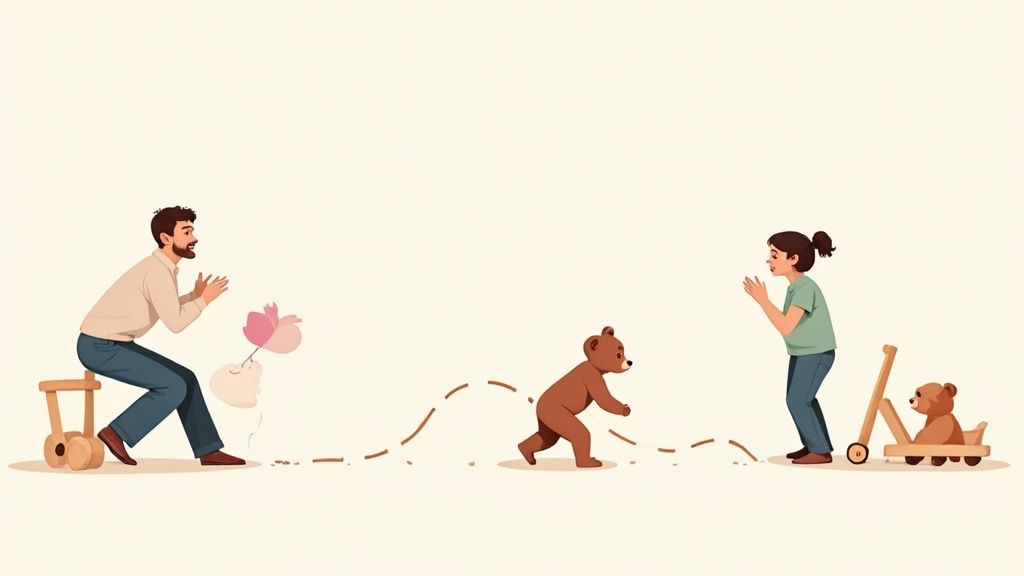
The Toy Trail: Create a tempting path by lining up their favorite toys between the sofa and the coffee table. You’ll be amazed at how determined they get when their favorite squeaky giraffe is just a few cruises away!
-
The Two-Parent Pass: This one’s a classic for a reason! Sit on the floor a few feet away from a partner. Gently encourage your little one to walk from one of you to the other. Every successful trip ends with big hugs and cheers, turning wobbly steps into a wonderful journey between their favorite people.
Parent Pro-Tip: Keep these games short and sweet. A few minutes of fun are way better than a long, frustrating session. Always end on a high note to build a happy, positive vibe around walking.
A sturdy push toy can also be a total game-changer. It gives them just enough support to feel confident moving forward. It’s like a trusty sidekick on their grand walking adventure, helping them master balance in a super playful way.
Understanding Your Baby's Unique Timeline
Watching your friend’s baby zip across the room while yours is still happily sitting can make you wonder. Take a deep breath. Every single baby moves at their own pace, and there's a beautiful, individual rhythm to their journey to walking.
Some babies are born explorers, ready to launch themselves into the world on two feet. Others are little observers, carefully calculating every move before they feel ready to let go. Neither way is better—they’re just different, and both are perfectly normal.
Personality and Pace
A huge piece of the puzzle is your baby's personality. Is your little one more cautious? They might spend weeks perfecting their cruising skills, mastering their balance before taking that big, independent step.
On the other hand, a go-getter baby might try walking earlier, which often means more tumbles. But that's all part of how they learn!
Trust their process! This pre-walking phase is so special. Celebrating their current stage—whether it's super-fast crawling or expert-level cruising—is the best way to build their confidence.
Believe it or not, genes play a role too! Studies have shown that a big chunk of when a baby starts walking can be linked to genetics.
Ultimately, remember that your baby’s path to walking is all their own. Understanding the broader importance of early childhood education can help you create a nurturing space for their overall development. For now, enjoy every roll, crawl, and cruise. Those first independent steps are just around the corner.
It’s fascinating how different parenting styles around the globe can influence when a baby takes those first steps. It’s a great reminder that there's no single timeline for walking.
In some cultures, parents actively “practice” walking with their babies, holding their hands and guiding them forward from an early age. This hands-on approach often means babies start walking a bit earlier.
In other parts of the world, babies spend more time snuggled in slings, which is amazing for bonding. These little ones often start walking a bit later, and that is perfectly fine.
A Global View on Pacing
Cultural norms can really shift the timeline. For instance, some infants who spend lots of time in traditional cradles often start walking months later than the global average.
But here’s the cool part: research shows they completely catch up to their peers by age four. It’s a great lesson in trusting your child’s unique journey. You can find more details on these fascinating cultural influences on walking at Science News.
The real takeaway here is that there's no "correct" way to learn to walk. As long as your little one is happy, healthy, and has plenty of chances to move, they are on their own perfect schedule.
This global perspective helps us relax and celebrate every baby's individual pace. Whether they’re an early walker or taking their sweet time, each step is a victory worth cheering for. So, let go of the comparison game and just enjoy the ride!
Your Top Questions About Baby's First Steps
Watching your little one get ready to walk brings up a million questions, right? You're not alone. Let's tackle some of the most common ones so you can enjoy this milestone with total confidence.
Are Baby Walkers a Good Idea?
This is probably the number one question parents ask. While those sit-in walkers look like fun, most pediatric experts say it's best to skip them. They can get in the way of your baby developing the right walking muscles and can be a safety hazard.
A much better choice is a stationary activity center or a fun push toy. These let your baby stand on their own two feet and practice moving forward, which is exactly what they need.
Should I Worry About All the Tumbles?
Tumbles are totally normal! In fact, they’re a necessary part of learning. Think of every little wobble as a mini-lesson in balance.
Your job is to be the calm, reassuring cheerleader. A quick cuddle and a happy, "Oopsie! You're okay!" is all they need. As long as you've baby-proofed their practice space, these falls are just bumps on their journey to walking.
The most important thing is to trust the process. Your baby is learning an incredibly complex skill, and your calm, positive reactions show them it’s safe—and fun—to keep trying.
What Are the Best Shoes for New Walkers?
Indoors, the best shoes are no shoes at all! Going barefoot lets your baby feel the ground, use their toes to grip, and build up all those tiny foot muscles.
When it's time to head outside, you'll want shoes that protect those little feet while still feeling as close to barefoot as possible.
Here's what to look for:
- Lightweight and super flexible—the shoe should bend and move with their foot.
- A soft, non-slip sole that helps prevent slips.
- A nice, wide toe box so their little toes can spread out and wiggle.
Getting the size just right is key. To make sure you're picking the perfect fit, our easy-to-use sizing guide can help you measure with confidence.
At pediped, we work with pediatricians to design shoes that support healthy foot development from day one. Come see our collection of flexible, comfy shoes that are just right for those first incredible steps.
Leave a comment