


Picking the right shoes for your toddler isn't just about style—it's about fueling every wobble, jump, and wild discovery! The best pair has a super-flexible sole, a perfect fit with plenty of wiggle room, and is made from breathable stuff to keep those busy little feet happy and fresh.
Your Super-Fun Guide to Happy Toddler Feet
Welcome to the great toddler shoe adventure! One minute they’re crawling, and the next, they’re sprinting in directions you didn't even know existed. Whew! Just keeping up is a workout, and finding the right gear for their tiny, fast-moving feet can feel just as intense.
But don't you worry! I'm here to turn a tricky shopping trip into a simple, maybe even fun, activity.
This guide cuts through all the noise and gets right to what really matters for their growing feet. We'll skip the confusing jargon and jump straight to the good stuff: easy, real-world tips to make sure those little feet are healthy, comfy, and ready for whatever playtime throws their way.
Why the Right Shoe is a REALLY Big Deal
Choosing the right shoes goes way beyond just protecting their feet from pesky pebbles and puddles. It’s about building a strong foundation from the ground up! Good shoes let toddlers feel the ground beneath them, which is a huge deal for learning balance, strength, and coordination.
The goal is to find a shoe that acts like a second skin—protective but not pushy. It should support their natural foot movement, not force it into a weird shape.
And if you're feeling a bit overwhelmed, you're not alone. The baby shoe world is booming, with parents just like you putting their child's comfort first.
When you're picking out those adorable little sneakers, remember that you're dressing your child for success in their daily adventures. Choosing the right clothing for mental health and wellbeing can have a real impact on their happiness and confidence, and comfy shoes are a huge part of that puzzle.
Let's make sure those feet are ready for action!
The Ultimate Toddler Shoe Comfort Checklist
Shopping for toddler shoes can feel like a guessing game. To make it a whole lot easier, here’s a quick checklist to run through when you're checking out a potential pair. These are the non-negotiables for happy little feet.
| Feature | Why It's a Must-Have | Quick & Easy Tip |
|---|---|---|
| Flexible Sole | Lets their foot bend and move naturally, which is key for finding their balance. | Try the "taco test"—if you can easily bend the shoe in half, it’s a winner! |
| Breathable Fabric | Keeps feet from getting all sweaty and stinky, preventing blisters and fussiness. | Look for materials like canvas, mesh, or soft leather. Steer clear of stiff plastics. |
| Room to Grow | Toddler feet grow at warp speed! A little extra space makes the shoes last longer. | Aim for about a thumb’s width of space between their longest toe and the end of the shoe. |
| Wide Toe Box | Gives their toes plenty of room to wiggle and spread out, which is vital for stability. | Squeeze the front of the shoe. It should feel roomy, not tight and pointy. |
| Secure Fastener | Keeps the shoe firmly on their foot during playtime, preventing trips and tumbles. | Velcro straps are awesome for independence! Laces are secure but a bit trickier. |
Think of this table as your secret weapon. If a shoe ticks all these boxes, you’re on the right track to finding a pair that will keep your toddler comfy and supported through all their big adventures.
Getting the Perfect Toddler Shoe Fit
Alright, let's crack the code on the mysterious art of toddler shoe fitting! We all know they need "wiggle room," but how much is too much? Getting this right is a total game-changer, turning those wobbly first steps into confident strides.
Think of it as the "Goldilocks" fit—not too tight, not too loose, but just right for every single adventure. A common mistake is buying shoes way too big for them "to grow into." While it seems smart, oversized shoes can actually make walking harder and cause them to trip. Oops!
The Super-Simple Three-Step Fit Check
Mastering the fit test is easier than it sounds. It’s all about a few quick checks that will make you a shoe-fitting pro in no time. Forget the guesswork; these simple moves will tell you everything you need to know.
First up is the classic thumb test. While your toddler is standing (this part is key!), press your thumb down between the end of their longest toe and the tip of the shoe. You’re looking for about a half-inch of space. This gives their toes room to move and allows for those sudden growth spurts.
Next, it’s time for the width pinch. Gently pinch the material on both sides of the widest part of their foot. The shoe should feel snug, but you shouldn't be able to grab a big bunch of extra material. A snug fit here stops their foot from sliding around, which can cause ouchy blisters.
Finally, check the heel. The back of the shoe should be snug and not pop out when they walk. No one has time for a lost shoe at the park!
For a visual guide, this simple breakdown is perfect.
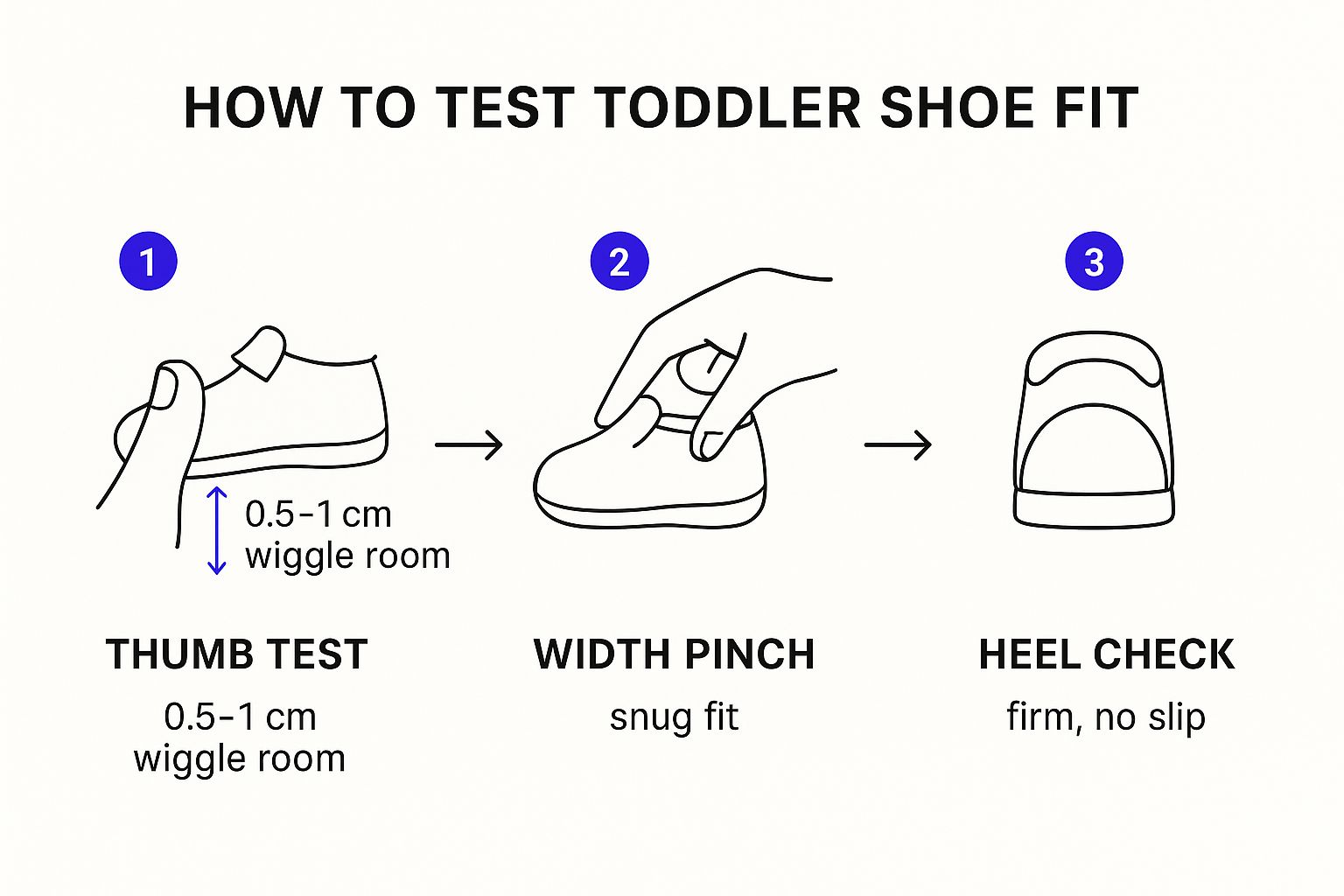
This quick process ensures a perfect balance of space, security, and comfort. And if you're ever in doubt, using a brand's specific chart can be a lifesaver. You can learn more about how to measure their feet with an expert sizing guide to get it just right.
Choosing Materials That Let Their Feet Breathe
Let's be real: toddler feet can get really sweaty after a long day of running, jumping, and exploring. The right shoe material is your secret weapon against sweaty, grumpy feet, which can quickly lead to a full-blown meltdown.
Think of it like picking the perfect outfit, but for their feet!
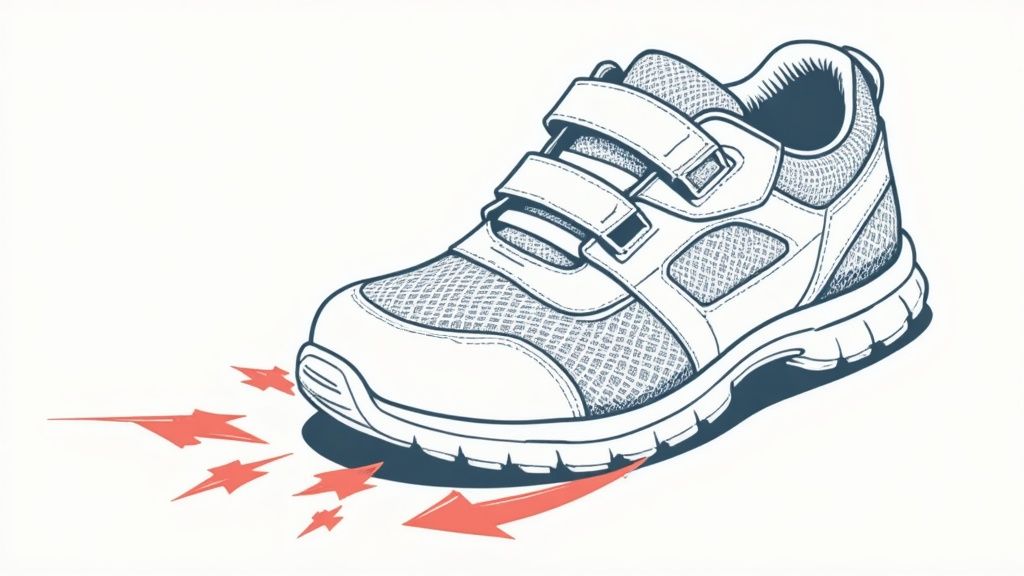
When you're heading to the park on a warm day, you'll want shoes made from soft, airy fabrics that basically give their feet a built-in AC system.
- Canvas: A classic for a reason! It's lightweight and lets air flow freely, which is exactly what you need to keep those little feet cool and dry.
- Mesh: You'll see this a lot in sporty shoes. Mesh is fantastic for maximum airflow, making it an ideal choice for toddlers who never, ever stop moving.
Beyond the Basics: What Else to Look For
Flexible leather is another awesome choice. It's tough enough to handle all the rough-and-tumble play, but it also softens and molds to their unique foot shape over time. This creates a comfy, custom-like fit that just gets better with every adventure.
And here’s a pro tip: don’t forget to check the inside of the shoe! Run your finger along the lining. A soft, seamless interior is so important for preventing rubbing and irritation on their sensitive skin.
The outside of the shoe might look amazing, but it’s the inside that decides if your toddler will wear it for five minutes or five hours. Always go for a smooth, soft interior!
Knowing these little details helps you spot the difference between shoes built for all-day play and those that just look cute. And when those perfect shoes inevitably get covered in mud, having a simple cleaning routine is a lifesaver. For some great tips, check out these easy shoe care instructions.
The Big Deal About Flexible Soles
Let's get one thing straight: a toddler shoe is not just a tiny adult sneaker. Their feet are still developing, learning to balance, and building strength. To do all that, they need to feel the ground beneath them. That’s why the sole of their shoe is the most important part!
A stiff, rigid sole is a huge no-no. It actually works against their natural gait, making it harder for them to walk properly. You're looking for a shoe that bends and moves right along with their foot.
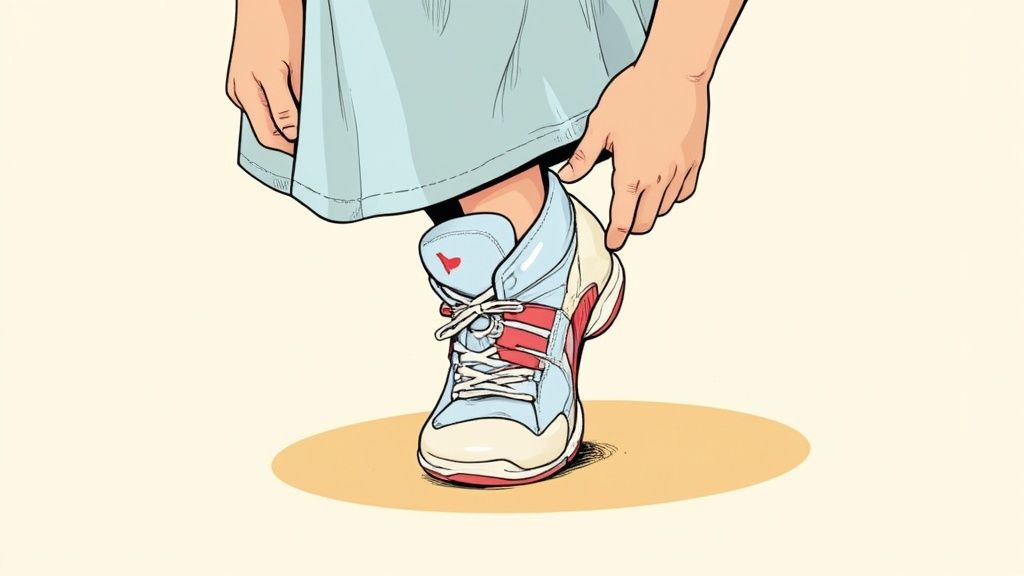
How to Test a Shoe's Sole
So, how do you spot a good sole? I always tell parents to do the "bend test." It’s exactly what it sounds like. Pick up the shoe and try to bend it where the ball of the foot would be. If it folds easily, you've got a winner! If it feels stiff, put it back. That flexibility is what allows for that natural, almost-barefoot movement we want.
The other must-have is grip. Toddlers are magnets for slippery surfaces—wet grass, kitchen spills, you name it. A textured, non-slip rubber sole is your best friend for giving them the traction they need to explore confidently without constant tumbles.
A shoe's sole has two simple jobs: protect little feet from sharp objects and let them feel the world. If it can't do both, it's not the right shoe.
This focus on developmental footwear is becoming a major priority. More brands are emphasizing features that support natural foot movement, which is awesome news for parents everywhere!
If you want to see shoes designed specifically for this, the pediped Flex collection is a great place to start. They're built to support the steps of confident little walkers.
Making Shoe Shopping Fun for Everyone
Let's be honest—taking a toddler shoe shopping can feel like trying to wrangle a tiny, very stubborn CEO. But it doesn't have to end in a meltdown in aisle three! With a few tricks up your sleeve, you can turn this chore into a surprisingly fun outing.
First off, timing is everything. Plan your trip for that golden window right after a nap and a snack. A happy, well-fed toddler is a much more cooperative shopper! Once you're in the store, turn it into a game. Ask them to "stomp like a dinosaur" or "tiptoe like a mouse" to test out new pairs. This little bit of playfulness makes it feel like an adventure.
Shopping Smart and Stress-Free
If you're shopping from the couch, you can make it just as interactive. Grab a piece of paper and a crayon, and trace their foot while they're standing up. It becomes a mini art project that just so happens to give you the exact measurement you need.
Here’s a pro tip that has saved me countless times: give them a choice. Instead of asking, "Do you like these?" (which usually gets a "no"), present two parent-approved options.
"Do you want the cool blue shoes or the speedy red ones?" This simple switch gives them a sense of control and makes them genuinely excited to wear their new kicks.
Little strategies like these make a world of difference. As the children's toddler shoes market keeps growing, brands are catching on and focusing more on creating a positive shopping experience. You can find more insights on how brands are targeting families on archivemarketresearch.com.
By making it a fun, positive experience, you're doing more than just buying shoes. You're creating a happy memory and showing them that getting ready for life's adventures can be fun, too!
Your Top Toddler Shoe Questions, Answered!
Feeling pretty confident but still have a few questions rattling around? You're not alone! Let's tackle some of the most common things parents ask when they're on the hunt for the perfect pair of toddler shoes.
Think of this as the final piece of the puzzle. Let's get these last few questions cleared up so you can shop like a pro.
How Often Should I Check My Toddler’s Shoe Size?
This is a big one, because toddler feet grow at the speed of light! It’s a great habit to check their shoe fit every two to three months.
Now, that doesn't mean you'll be buying new shoes that often, but a quick check helps you catch a growth spurt before their little toes get all squished. The easiest way is still the thumb test: have them stand up straight and press your thumb at the tip of the shoe. If you can't feel about a half-inch of wiggle room, it's time to start thinking about the next size up.
Are Hand-Me-Down Shoes Okay for Toddlers?
While passing down adorable outfits is a fantastic way to save money and be more sustainable, shoes are one item where it's generally best to get a fresh pair.
Here’s why: a used shoe has already molded to another child's foot, and the important support inside is likely worn down. It's like trying to get comfy on a memory foam pillow that's already been broken in by someone else. A new pair ensures the shoe forms perfectly to your toddler's foot, giving them the right support as they master walking and running.
Every child's walk is unique. Giving them their own new shoes is one of the best ways to support their individual journey and help them build a strong, stable foundation from the ground up.
What's the Difference Between Pre-Walker and First Walker Shoes?
Great question! They can look super similar, but they're designed for two very different stages.
- Pre-Walkers: These are for babies who are still mostly crawling or just starting to pull up on furniture. Think of them as super soft, flexible slippers. Their main job is to protect tiny feet from rough surfaces without getting in the way.
- First Walkers: Once your toddler is up and actively taking steps, it's time to graduate to first walkers. These shoes offer a bit more structure (especially around the heel) and a more durable—but still flexible!—sole for tackling different terrains. They're still incredibly lightweight to keep your little one from tripping.
Ready to find a pair that checks all the boxes? The team at Pediped has spent 20 years perfecting shoes for every single stage, from those first wobbly steps to confident playground sprints. Their pediatrician-approved designs are built from the ground up to support healthy foot development—and they happen to be incredibly cute, too.
Explore the full collection and find your toddler's new favorite shoes at Pediped.com
Leave a comment