


Cue the confetti and happy dances—your little one is taking their first wobbly steps! This is one of parenting’s biggest, most heartwarming milestones. When it comes to finding the best shoes for early walkers, the answer is simple: think barefoot-but-better. The ideal pair is lightweight, super flexible, and shaped like your baby's foot to let them feel the ground beneath them.
Welcome to the First Steps Adventure
Watching your baby pull up, cruise along the furniture, and finally let go is pure magic. Each teetering step is a huge leap in their development, building muscle, coordination, and a whole lot of confidence. It’s a thrilling time, but it also brings up a million questions, starting with: "What do I put on their adorable little feet?"
If you're picturing stiff, high-ankled baby boots, it's time for a playful plot twist! Modern podiatry and developmental experts have flipped the script. Today, it’s all about letting your child’s feet develop as naturally as possible.
The goal of a first walker shoe isn't to force the foot into a certain position; it's to protect it from the elements while allowing it to move, bend, and grow without restriction.
This new approach has created a huge demand for developmentally friendly footwear. It’s no surprise that the global baby shoe market was recently valued at over $12 billion and is expected to keep growing. Parents everywhere are seeking out shoes that support, rather than hinder, this incredible journey. You can dive deeper into the baby shoe market trends to see how big this movement has become.
Shifting from Stiff to Squishy
So, what does this "barefoot-but-better" philosophy actually look like?
- Maximum Flexibility: Imagine a shoe that can bend and twist almost like a sock. This allows your baby's foot to grip and balance naturally.
- Feather-Light Feel: Early walkers are still mastering their movements. A heavy, clunky shoe can throw off their gait and make walking harder than it needs to be.
- Room for Wiggles: A wide toe box is non-negotiable! Little toes need space to splay out, which is essential for stability.
In this guide, we'll be your friendly co-pilot, navigating the exciting world of first-walker shoes. Let’s make sure those first steps are happy, healthy, and full of joy.
What to Look for in a First Walking Shoe
Alright, let's get into the nitty-gritty of picking out those first tiny shoes. It can feel like a huge decision, but I promise it's simpler than it looks. Once you know what to look for, all the marketing noise fades away.
When it comes to the best shoes for early walkers, you really only need to focus on three key things. Think of the shoe as a safe little bubble for your baby's feet to explore the world—it needs to be supportive but never restrictive.
The Super-Flexible Sole
First things first: the sole. You should be able to take that little shoe and bend it easily. A super-flexible sole isn't just a neat feature; it’s fundamental for healthy foot development. It allows your child’s foot to move and flex just as it would if they were barefoot.
This flexibility is what lets them feel the ground beneath them—the soft grass, the hard pavement, the bumpy carpet. That sensory feedback is critical, sending signals to their brain that help them learn to balance and walk with confidence. A stiff, rigid shoe completely blocks that connection, almost like making them walk on tiny planks of wood.
A Roomy Toe Box for Wiggles
Next up, let's talk about toe room. A baby's foot is naturally widest at the toes, and those little digits need plenty of space to spread out and do their job. Look for a wide, foot-shaped toe box. When a new walker takes a step, their toes splay out to create a stable foundation, which is a massive part of mastering balance.
A narrow shoe squishes their toes together, which can mess with their stability and even get in the way of their foot muscles strengthening properly. The shoe should always respect the natural, chubby shape of a baby's foot!
This handy visual breaks down the three must-haves for a great first-walker shoe.
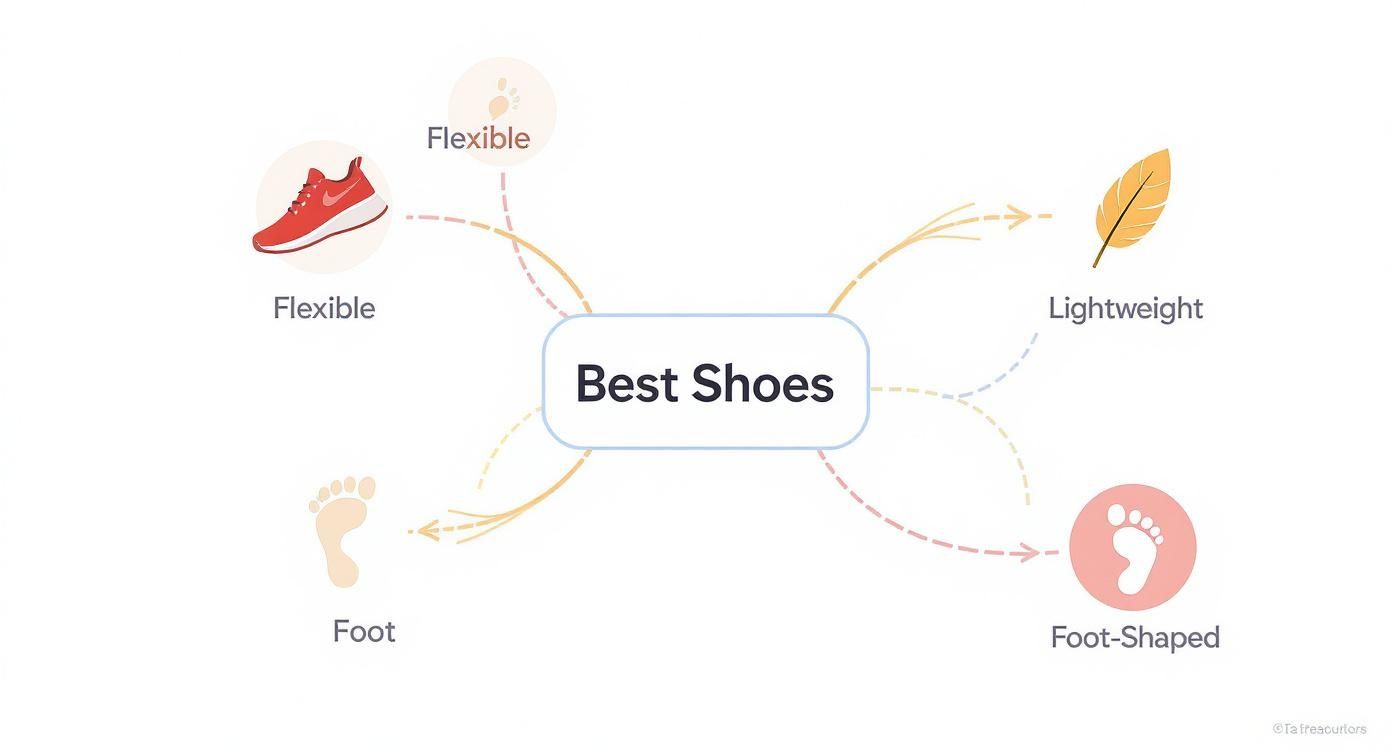
As you can see, it's the combination of flexibility, a feather-light feel, and a foot-shaped design that truly supports healthy development.
Feather-Light Materials
Last but not least, pick up the shoe. Does it feel like you're holding almost nothing? Perfect. Your toddler is already working hard enough just figuring out how to lift their legs and coordinate everything. A heavy, clunky shoe is only going to make that harder, leading to an awkward, unnatural gait.
The goal is a shoe that acts like a protective second skin, not a pair of tiny anchors. If you want to dive even deeper into the specifics of how to choose baby's first shoes, that's a great next step. But honestly, if you just remember these three rules—flexible, roomy, and light—you'll be able to spot the perfect pair every time.
Why Barefoot Time Is Still the Gold Standard
You’ve probably heard it from other parents or read it online, and it’s one piece of advice that’s absolutely spot-on: when it comes to healthy foot development, barefoot is best.
Letting your little one roam shoeless at home is like a workout for their feet. It’s the single best way to build strong arches, strengthen tiny ankle muscles, and get all that rich sensory feedback from the ground beneath them.
Think of it like their feet are learning to "read" the world through touch. Every new texture, from a plush rug to cool kitchen tile, sends vital information to their brain. This helps them master balance and coordination in a way that’s completely natural, setting the stage for a lifetime of confident steps.
From the Living Room to the Great Outdoors
Of course, life doesn’t just happen in the living room. The real world is full of hot pavement, sharp little rocks, and slippery surfaces. This is precisely where the best shoes for early walkers become so important. It’s time to stop feeling guilty about putting shoes on your child and start seeing them for what they are: essential protective gear for their big adventures.
The goal is to find a healthy rhythm. Barefoot time is for training and strengthening at home. The right shoes are their trusty sidekicks for safely exploring everywhere else. This practical balance gives your child the best of both worlds.
The perfect first shoe doesn’t try to replace the benefits of being barefoot. Instead, it aims to mimic that freedom of movement while adding a crucial layer of protection against the unpredictable world.
This balanced philosophy is really catching on. The market for thoughtfully designed baby shoes is expanding fast—in fact, the baby walking shoes segment is projected to grow by over 6% annually, reaching an estimated $3.01 billion by 2033. This growth is fueled by parents demanding innovative designs that put flexibility and safety first.
The Best of Both Worlds
So, how do you actually strike this perfect balance? It’s simpler than it sounds.
Encourage as much shoeless playtime as you can indoors. When it's time to head out, slip on a pair of flexible, lightweight shoes that allow their feet to keep moving and feeling the ground naturally. This simple routine ensures they get all the developmental perks of being barefoot while staying safe on their explorations.
With this approach, you're not just buying shoes; you're supporting every wobbly, wonderful step. You can read more on why healthy little feet are backed by Harvard experts.
How to Measure for the Perfect Fit
Okay, let's be real—measuring a wiggly toddler's foot can feel like trying to solve a puzzle during an earthquake. But trust me, getting that perfect fit is way easier than you think. We've got a few fun, tear-free tricks to turn you into a measuring pro in no time.
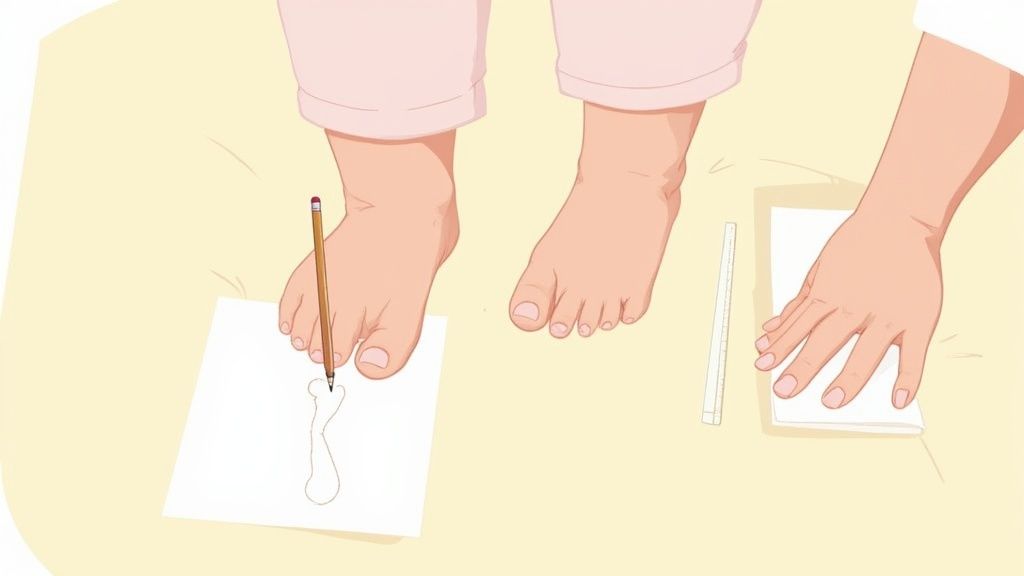
The single most important thing is to measure their foot while they are standing up. When they put weight on their feet, their little toes splay out and their foot actually gets a bit longer and wider. If you measure while they're sitting, you're almost guaranteed to get an inaccurate size.
A super simple and fun way to do this is the old-school tracing method. Grab a piece of paper, a crayon, and distract them with their favorite toy or snack. While they're standing, quickly trace around their foot—tickles are totally allowed!
The Famous Rule of Thumb
Once you have the shoes on their feet, it’s time for the ultimate fit check: the "rule of thumb." This is a classic for a reason!
Gently press your thumb on the front of the shoe to feel where their longest toe is (it's not always the big toe, by the way!). You should feel about a thumb's width—roughly half an inch—of space between the end of their toe and the end of the shoe.
Why is this little bit of wiggle room so important? It gives their foot the space it needs to move naturally as they walk and provides just enough room for their next growth spurt. Without it, their toes can get scrunched, which is uncomfortable and can hinder proper development.
A common mistake is buying shoes a full size or two bigger to "grow into." While it seems economical, oversized shoes can be a tripping hazard and actually make walking more difficult for a new learner. A proper fit is all about safety and stability right now.
Easy At-Home Sizing Steps
Ready to get an accurate measurement in just a few minutes? Let’s make it a game!
- Trace the Foot: Have your little one stand on a blank piece of paper. Trace an outline of each foot—it’s totally normal for one to be slightly bigger!
- Measure Length: Grab a ruler and measure the tracing from the very back of the heel to the tip of the longest toe.
- Add Wiggle Room: Add about a half-inch (or 1.25 cm) to that measurement. This accounts for that crucial growing space.
- Check the Chart: Use this final measurement to find their perfect size. For a super helpful tool, check out Pediped's printable sizing guide that makes this whole process a breeze.
With these simple tips, you can skip the shoe-store stress and confidently find the best shoes for early walkers that fit just right, turning a tricky task into a fun and successful part of your day.
Top Shoe Styles for New Little Walkers
Ready for the fun part? Now that you know exactly what to look for in a first-walker shoe, let's explore some of the best styles for your little adventurer.
We’re not just talking about a boring list. Think of these as different "personalities" that match every kind of activity your toddler will get into, from playground missions to backyard explorations.
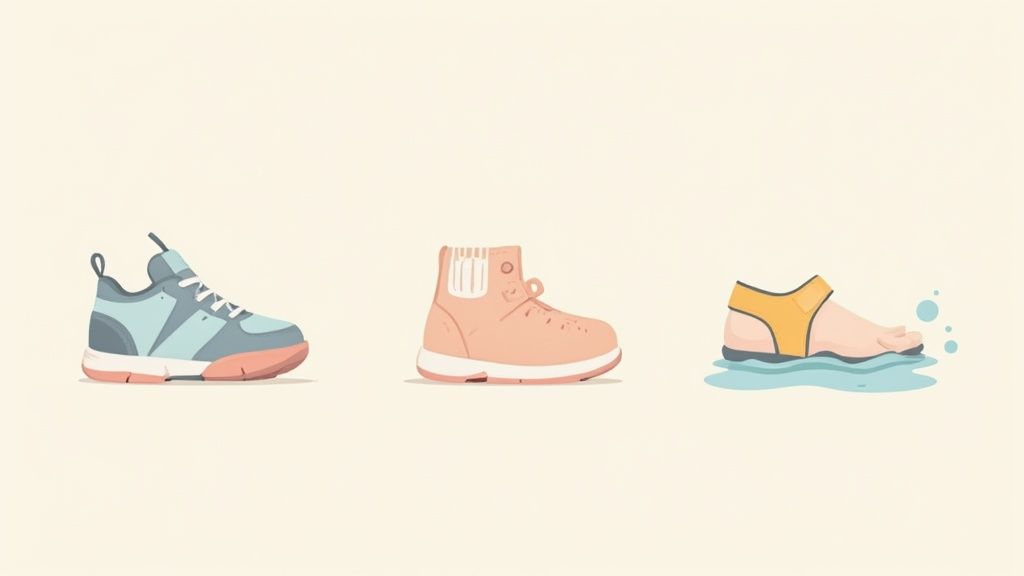
Each of these archetypes nails the fundamentals we've covered, like having plenty of wiggle room for toes and super-flexible soles. The difference lies in what they're designed for—whether it's a sunny day, a special occasion, or just everyday play.
The Everyday Explorer Sneaker
First up is the classic, can't-go-wrong sneaker—the workhorse of any toddler's shoe collection. This is the shoe they'll live in for trips to the park, visits to Grandma's, and all the daily discoveries in between.
A great first sneaker has a durable but bendy rubber sole that lets your child feel the ground, whether they're on grass, pavement, or carpet. Look for easy-on features like velcro straps; they’re a lifesaver for getting shoes on chubby feet and also give independent little ones a chance to try doing it themselves. It's truly one of the best shoes for early walkers for just about any day.
The Barefoot-Feeling Softie
Next, we have the minimalist "Softie." These are often moccasin-style shoes with incredibly thin, flexible soles designed to give your toddler that essential barefoot feeling.
This style is perfect for those early days of walking, especially when transitioning from being barefoot inside to taking those first tentative steps outdoors. It offers just enough protection from pokes and scrapes without getting in the way of the sensory feedback that builds strong, balanced feet. It's a gentle and brilliant introduction to wearing shoes.
The Summertime Splasher Sandal
When the sun comes out and the sprinklers turn on, you’ll want a great "Splasher" sandal. These are your go-to for beach days, poolside fun, and any warm-weather adventure.
The most important feature here is a closed-toe design, which is crucial for protecting those little toes from stubs. A top-notch summer sandal should also be made from quick-drying materials and have a grippy, flexible sole to prevent slips on wet surfaces. This style is proof that even summer footwear can be built right for healthy foot development.
The perfect shoe style isn’t just about looks; it's about matching the shoe's features to your child's daily adventures. A park day might call for a sturdy sneaker, while a trip to the beach requires something totally different.
Matching Shoe Styles to Your Toddler's Day
To make things even easier, here's a quick guide to help you pick the right shoe for any activity on your calendar.
| Shoe Style | Best For... | Key Feature |
|---|---|---|
| Explorer Sneaker | Daily wear, daycare, parks, and playgrounds | Durable, flexible rubber sole and easy-on straps. |
| Barefoot-Feeling Softie | Indoor play, early outdoor use, light activity | Ultra-flexible sole for maximum ground-feel. |
| Splasher Sandal | Beach, pool, splash pads, and hot weather | Closed-toe protection and quick-drying materials. |
Choosing the right pair means your little one is ready for anything. You can explore a fantastic variety of styles that check all these boxes in the collection of Kopech walking shoes from Pediped.
Alright, you've made it this far, which means you're well on your way to becoming a first-shoe aficionado. But let's be real—a few nagging questions are probably still bouncing around in your head. No problem at all.
Let's clear those up right now so you can feel completely confident about this next big step.
When Should My Baby Actually Start Wearing Shoes?
This is the big one, isn't it? The answer is simpler than you might think: hold off on shoes until your little one is consistently walking on their own, especially when you're heading outside. Before that milestone, barefoot is best. It's how they build up all those tiny muscles and develop that crucial sense of balance.
Once they're ready to explore the great outdoors—think pavement, grass, or the playground—that's your green light. A protective, flexible first shoe becomes their best friend. Until then, cozy socks or some soft-soled crib shoes are perfect for keeping those little feet warm.
How Often Will I Need to Buy New Shoes?
Get ready, because toddler feet grow at a mind-boggling pace. Just when you think you've found the perfect pair, they're suddenly snug. Here’s a quick (and sometimes shocking!) look at what to expect:
- Under 15 months: You might be sizing up every two to three months. Seriously!
- 15 to 24 months: Things slow down just a tad. Expect a new size every three to four months.
- 2 to 3 years: You can finally catch your breath a little. At this age, a new pair is usually needed every four to six months.
Because this growth happens in sudden spurts, it's a good habit to check their shoe fit about once a month. Just a quick press of your thumb at the toe is all it takes to make sure there's still plenty of wiggle room.
It's always tempting to accept hand-me-downs or buy used shoes, but it's really best to start with a fresh pair. Shoes mold to the unique shape of the first child's foot, and that pre-formed footprint might not give your little one the specific support they need.
Are High-Tops Better for Ankle Support?
It's one of the most common myths out there—that new walkers need stiff, high-top shoes to support their ankles. The truth is actually the opposite. To learn how to balance and walk with a natural gait, a baby's ankles need to be able to move freely. A rigid shoe can actually hinder their muscle development.
Instead of focusing on height, look for a shoe with a great closure system. Something like adjustable velcro straps will keep their heel locked in place, preventing their foot from sliding around, all while giving their ankle the complete freedom it needs to get stronger.
Feeling ready to find that perfect first pair? Pediped has designed an entire collection of pediatrician-approved shoes that check every box—flexible, lightweight, and oh-so-cute.
Explore the collection and give your little one the best start for their walking journey at https://www.pediped.com.
Leave a comment