


Ready for an adventure? The best first walker shoes are like a trusty sidekick for your toddler's feet—super flexible, light as a feather, and with a roomy toe box that lets them wiggle and grip. That's why top brands like Pediped Originals and Stride Rite Soft Motion are the talk of the playground, getting rave reviews from parents and pediatricians. Their soft, grippy soles are perfectly designed to support healthy little feet as your new walker takes on the world.
Those Wobbly First Steps Are Pure Magic!
There it is! That heart-stopping, camera-fumbling moment when your little one lets go, wobbles for a second, and takes their very first triumphant step. It's pure joy! One minute they’re crawling faster than you can keep up, and the next, they're off on a brand new upright adventure. This is one of those parenting milestones that really does feel like magic, kicking off a fun (and fast-paced!) new chapter.
As they graduate from cruising along the couch to toddling across the living room, a new question inevitably pops into every parent's mind: what about shoes? Suddenly, that tiny footwear aisle starts to look a whole lot more intimidating.
Why Shoes Suddenly Matter So Much
While barefoot is definitely best for building strength and balance on safe, indoor surfaces, their new mobility means they’ll soon be exploring the great outdoors. This is where finding the best first walker shoes becomes so important. You’re not just covering their feet—you’re protecting them and, crucially, helping their healthy development along.
Think of their first pair as a cool sidekick for all their grand adventures. They need to be flexible enough to let them feel the ground but sturdy enough to shield them from poky twigs or hot pavement. Making the right choice helps ensure every new step is a confident and happy one.
This guide is here to turn any shoe-shopping stress into pure excitement. We’ll walk you through everything, making it simple and fun. As you soak in this amazing phase, you might also want to explore other crucial childhood development milestones your toddler will be hitting soon.
Finding that perfect first pair is less about strict rules and more about understanding what helps your little one move freely and happily. It's all about cheering on that amazing newfound independence!
Getting this right sets the stage for healthy feet for life. Choosing supportive, well-designed footwear helps them build the balance and coordination they need for all the running, jumping, and playing ahead. Ready to become a first-walker shoe expert? Let’s get started! And if you’re eager for even more tips, check out our other guide on the best shoes for a baby learning to walk.
What to Look for in a First Walker Shoe
Alright, let’s get down to the fun stuff. What exactly separates a truly great first walker shoe from just another tiny piece of footwear? It's not about making a mini version of an adult sneaker; it’s about creating the perfect environment for your kiddo's feet as they learn to navigate the world.
Think about it—their feet are soft, pudgy, and just starting to figure out this whole walking thing. The right shoe acts as a supportive partner, not a clunky obstacle. It needs to protect their feet on new adventures while still letting them feel the ground beneath them. That sensory feedback is how they build balance and confidence!
So, what are the absolute must-haves?
Flexibility Is Your Superpower
First and foremost, the shoe has to be incredibly flexible. Here's a quick test: if you can't easily bend the shoe in half with your own hands, it's way too stiff for a new walker. A rigid sole is like asking them to learn to walk in ski boots—it forces their feet into an unnatural stride and stops those tiny muscles from getting the workout they need to grow strong.
A flexible shoe moves with their foot, allowing it to bend, grip, and push off naturally, almost like they’re barefoot. This freedom of movement is crucial for developing strong arches and ankles. To learn more about this, check out our guide on why flexible shoes are so important for toddlers.
A Grippy Sole for Super Traction
Next, flip the shoe over and check out the sole. Let's be real, new walkers aren't exactly known for their graceful moves. They stumble, they lurch, and they change direction on a dime. A good first walker shoe needs a sole with just the right amount of grip to keep up.
You're looking for a texture that gives them traction on all kinds of surfaces, from the slick kitchen floor to a bumpy sidewalk, but isn't so sticky that it trips them up. This grippy-but-not-tacky sole helps prevent slips and gives them the stability they need to feel secure with every new step.
The All-Important Roomy Toe Box
Imagine being squeezed into a tight space—it’s awful, right? The same goes for your toddler's toes. One of the most critical features of any first walker shoe is a wide, roomy toe box. As they stand and take steps, their little toes need to spread out, or "splay," to grip the ground and maintain their balance.
A shoe that’s too narrow at the front scrunches their toes together, which can hinder proper foot development and make walking feel unstable. Always look for a rounded, spacious front that gives those piggies plenty of room to wiggle and move freely.
Parents agree this is a big deal. In a survey of 350 parents by The Bump, soft, flexible soles were named a top priority, with many caregivers recommending them to support natural foot development. You can discover more insights about parent preferences on TheBump.com.
Secure Closures for a Snug Fit
Last but not least, you need a shoe that actually stays on! Look for secure and adjustable closures like Velcro straps or buckles. These are a parent’s best friend because they make getting shoes on a squirming toddler so much easier, and they let you customize the fit. Since little feet can seem to grow overnight, that adjustability is key to making sure the shoe is snug without ever being too tight.
First Walker Shoe Features Checklist
Feeling a little overwhelmed? No worries. Here’s a quick checklist to take with you when you're shopping. It breaks down the most important features to look for in your little one’s first pair of shoes.
| Feature | Why It's a Game-Changer for Your Toddler | What to Look For |
|---|---|---|
| Flexible Sole | Allows for natural foot movement and muscle development. | A shoe you can easily bend in half with your hands. |
| Grippy, Non-Slip Sole | Provides traction to prevent slips and build confidence. | A textured rubber or leather sole that isn't too sticky. |
| Roomy Toe Box | Lets toes splay naturally for better balance and growth. | A wide, rounded front with plenty of wiggle room. |
| Breathable Materials | Keeps little feet dry, comfy, and happy. | Genuine leather, canvas, or mesh fabrics. |
| Adjustable Closure | Ensures a secure, customized fit as their feet grow. | Velcro straps, buckles, or adjustable laces. |
| Lightweight Design | Prevents the shoe from weighing them down or altering their gait. | A shoe that feels light and doesn't feel clunky. |
Keep these points in mind, and you'll be well on your way to finding that perfect pair that protects their feet while letting them explore the world with confidence.
How to Get the Perfect Fit Every Time
Okay, let's tackle the age-old parental challenge: measuring a wiggly toddler’s foot. It can feel a lot like trying to dress a cat for a snowstorm, can’t it? But getting that fit just right is truly one of the most important things you can do for your little one's walking journey.
A shoe that doesn’t fit well isn't just a minor annoyance—it can actually slow down their progress. Shoes that are too snug can cramp growing bones and muscles, while shoes that are too big turn into instant trip hazards. We’re looking for that “Goldilocks” fit: not too tight, not too loose, but just right.
Make Measuring a Game
Instead of a struggle, let’s turn this into a fun little activity. Ditch the wrestling match and grab a piece of paper and a crayon.
- Trace Their Foot: Have your toddler stand on the paper. A well-timed snack or a favorite toy can work wonders for getting them to stay still for a few seconds! Quickly trace an outline around their foot. Be sure to do this for both feet, since one is often a little bigger than the other.
- Measure the Masterpiece: Once they've toddled off, you can measure the tracing from the back of the heel to the tip of their longest toe. This gives you a stress-free measurement.
- Check the Brand's Chart: Every shoe brand fits a little differently, so always compare your numbers to the company's own sizing chart. Brands like Pediped have super helpful, detailed charts to make it easy. For a perfect match, you can check out the official Pediped sizing guide.
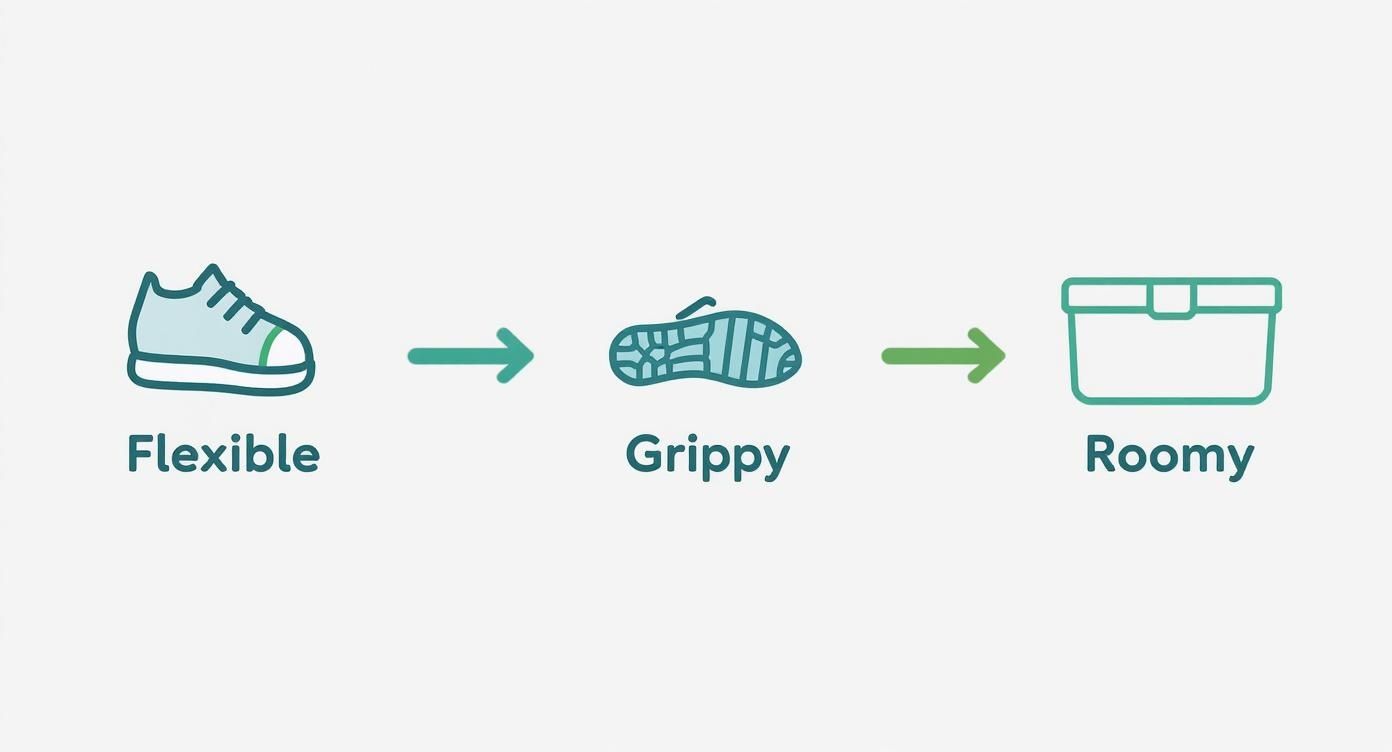
Ultimately, finding a shoe with the right flexibility, grip, and roominess gives your child the confidence to explore their world on their own two feet.
The Foolproof Thumb Test
Once the new shoes arrive, there's one last quick check to make sure the fit is spot-on. It's the classic thumb test, and it works every time.
Have your child stand up with the shoes on, and then press your thumb down at the very front of the shoe, right over their longest toe. You should feel about a thumb's width of space between the end of their toe and the end of the shoe. That little bit of wiggle room is essential for natural movement and gives their feet space to grow.
Remember, toddler feet grow incredibly fast! It's a great habit to do a quick fit-check every month or so just to make sure their shoes are still comfortable.
It might be surprising, but getting the size right is a huge hurdle for many families. Some studies show that as many as two-thirds of children are walking around in the wrong size shoes. This is why it’s so important to measure, check, and re-check as they grow.
Understanding the Different Shoe Stages
Ever find yourself staring at a wall of tiny shoes, totally bewildered by the difference between a "crib shoe" and a "first walker"? You are definitely not alone! It can feel overwhelming, but think of it like this: your child's feet have different needs as they hit new milestones, and their shoes should level up right along with them.
To make things super simple, we can look at the Pediped footwear system. They’ve neatly sorted early childhood shoes into three distinct stages: Originals, Grip ‘n’ Go, and Flex. Once you get the hang of this simple progression, you’ll have a fantastic roadmap for picking out any brand of shoe you come across.
Level 1: The Cruiser Stage (Pediped Originals)
Welcome to the cruising stage! This is that adorable phase when your little one is pulling up on everything, shuffling along the furniture, and maybe, just maybe, taking those first shaky, assisted steps. Right now, their feet need protection, not rigid support.
Think of these shoes as super-cozy, protective socks with a bit more substance. You’re looking for an ultra-flexible, soft leather sole that lets your baby feel the ground, wiggle their toes freely, and build up all those tiny, crucial foot muscles. They aren't meant for a long hike in the park, but they are absolutely perfect for keeping little feet safe from splinters at home or when you're out running errands. You can dive deeper into why this stage is so important and see some great examples of toddler soft-sole shoes that are ideal for this phase.
The goal here is simple: "barefoot, but better." A soft-soled shoe perfectly mimics that barefoot feeling—which is the absolute gold standard for developing balance and coordination—while adding just a light layer of protection.
Level 2: The New Walker Stage (Pediped Grip ‘n’ Go)
And just like that, you have a walker! They’re up on their own two feet, toddling around with purpose, and covering more ground every single day. Now that they're exploring more, they’ve officially graduated from soft soles to needing something with a bit more durability.
This is the true "first walker" stage. The shoe still needs to be incredibly flexible, but now you’ll want a thin, grippy rubber sole. This gives them the traction they need to navigate different surfaces—from slippery kitchen floors to bumpy sidewalks—without tripping them up. The Grip ‘n’ Go line, for example, adds that essential rubber sole while keeping the shoe lightweight and including smart features like a rounded toe to help prevent stumbles.
- Key Feature: A thin but durable rubber sole for awesome traction.
- Flexibility: Still a top priority; the shoe should bend with their foot easily.
- Purpose: To support confident, independent steps across all sorts of new terrain.
Level 3: The Pro Walker Stage (Pediped Flex)
Before you know it, your toddler’s wobbly first steps have transformed into confident running, jumping, and climbing. They are no longer a beginner—they’re a seasoned pro on the move! This is when they need a shoe that can truly keep up with their boundless energy.
At this level, you’ll be looking for a shoe with a more durable, rugged rubber sole that still offers fantastic flexibility. These shoes are built to handle the playground, preschool, and all the non-stop action that comes with being an active kid. The Pediped Flex line, for instance, is designed as the perfect next step, providing the sturdiness needed for endless play while continuing to promote healthy foot development. This stage-based approach takes the mystery out of shoe shopping, ensuring you're always choosing the best first walker shoes for your child’s unique journey.
Our Top Picks for the Best First Walker Shoes
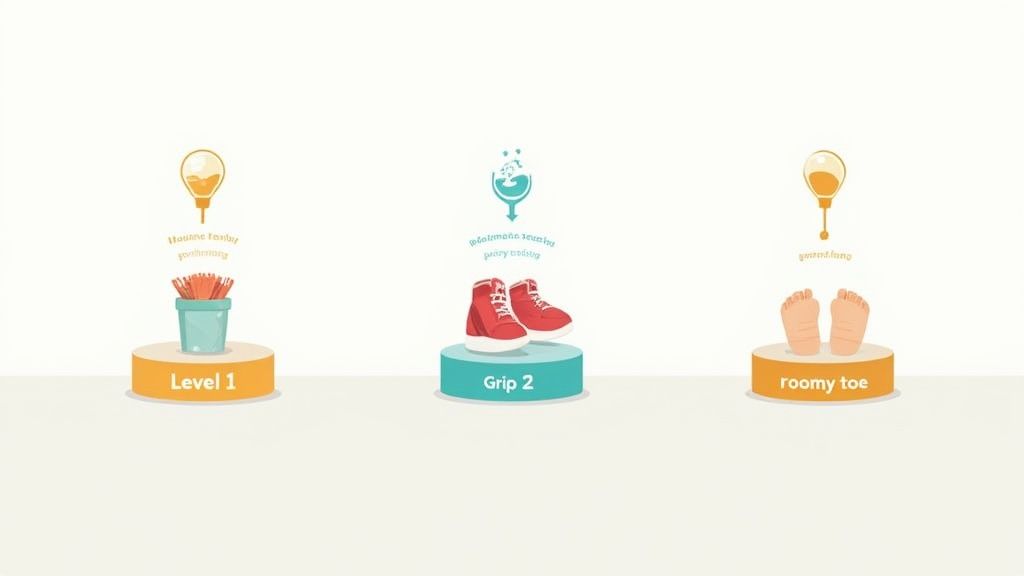
Okay, we’ve covered all the must-know details on fit, flexibility, and developmental stages. Now for the fun part! What do the best first walker shoes actually look like? Let’s bring all that advice to life with a few of our favorite examples.
Think of this as your hand-picked starting lineup. Each shoe we spotlight here shows off the key features we've been talking about, so you can see why they’re so good for your little one's feet. Let’s dive in!
The Ultimate Flexible Friend
For those brand-new walkers who are still finding their balance, a shoe that feels just like being barefoot is the absolute best. A perfect example is any style from the Pediped Originals line. Their claim to fame is an ultra-soft, all-leather sole that bends effortlessly with every tiny step and wiggle.
This design is a total game-changer for a few reasons:
- Maximum Ground Feel: The thin sole lets your child feel the texture of the floor, which is a massive help for improving their balance and coordination.
- Unrestricted Movement: That buttery soft leather lets their tiny foot muscles get a proper workout, building strength naturally without any stiff materials holding them back.
- Feather-Light: They’re so lightweight your toddler will barely even notice they have them on—a huge win for avoiding that awkward, clompy "new shoe" walk.
The All-Terrain Adventurer
Once your toddler has walking down and starts exploring the great outdoors (hello, playground wood chips and dewy grass!), you’ll want a shoe with a little more grip. This is where a style like the Pediped Grip 'n' Go really shines. It keeps that amazing flexibility we love but adds a thin, grippy rubber sole.
This shoe is the perfect transitional sidekick. It offers just enough traction to prevent slips on slick kitchen floors or outside, all while being flexible enough not to mess with their natural stride. It’s the ideal partner for confident walkers ready for bigger adventures.
It's clear that parents are tuning into the importance of foot health. The global baby shoe market was valued at about $12.37 billion in 2024 and continues to climb, showing just how much we all care about getting those first steps right. You can read more about the growing baby shoe market on marketresearchfuture.com.
The Ready-for-Anything Runner
Before you know it, those tentative toddles turn into full-blown sprints across the park. For the active, expert walker, you need a shoe that can keep up! The Pediped Flex line is built for exactly this stage, offering a more durable rubber sole that can handle non-stop action.
Even though these shoes are tougher, they never sacrifice flexibility—a total non-negotiable for healthy foot development. They’re proof you can have durability without the shoe becoming a stiff, restrictive brick.
These shoes often come in awesome sneaker styles perfect for preschool, playdates, and endless running around. When your little pro is ready for the next level, you can check out the full Pediped Flex collection for styles that can stand up to serious play.
Your First Walker Shoe Questions Answered
Alright, you've made it through the crash course on finding the best first walker shoes! You're practically a pro on flexibility, grip, and sizing. But it's totally normal if a few last-minute questions are still bubbling up.
Think of this as your final, friendly checkpoint. We’ve rounded up all those common "wait, what about...?" questions that parents ask. Let's tackle these last few queries so you can feel 100% confident when you snag that perfect first pair for your little explorer.
When Should My Baby Start Wearing First Walker Shoes?
This is the number one question on every parent’s mind! The best time to introduce shoes is when your little one is taking steps consistently on their own, especially when you're heading outside.
Indoors, barefoot is still king. It helps them feel the ground, strengthen tiny foot muscles, and really nail their balance. Think of first walker shoes as their adventure gear—perfect for protecting their feet from hot pavement, poky grass, or whatever else the great outdoors has in store. There’s no rush, so let them become confident walkers at home first.
How Do I Know If the Shoes Are Too Big or Too Small?
Your toddler probably can’t tell you their shoes are bugging them, but their feet will drop plenty of clues. It's time to play detective!
- Too Small: Look for red marks or indentations on their feet after you take the shoes off. If you see any, the shoes are likely too snug. You might also notice them trying to yank their shoes off more often.
- Too Big: Does their heel pop out when they walk? That's the classic sign of a shoe that's too large. This can also lead to more trips and stumbles because their foot is sliding around inside.
The sweet spot is about a thumb's width of space between their longest toe and the tip of the shoe. This gives them that all-important wiggle room for movement and growth.
A little pro tip: Set a monthly reminder on your phone for a quick "fit check." Little feet are in hyper-growth mode, and this simple habit will help you stay ahead of those sudden growth spurts!
Are Soft Soles or Hard Soles Better for a New Walker?
For a brand-new walker, soft, flexible soles are the undisputed champions. Think of it this way: you wouldn't learn to ride a bike with training wheels made of concrete, would you? A stiff, hard sole makes it tough for a toddler to feel the ground and move their foot naturally.
Bendy, soft soles mimic that "barefoot is best" feeling. This allows their feet to grip, flex, and balance just as nature intended, which is key for building strong muscles and coordination. Once they're a walking pro, you can transition to a slightly firmer—but still very flexible—rubber sole for better durability on all their adventures.
How Often Will I Need to Buy New Toddler Shoes?
Okay, brace yourself, because this one surprises a lot of parents! Toddler feet grow at an incredible pace. You can expect to buy a new pair of shoes every 2 to 4 months. Yes, you read that right!
While it might seem frequent, keeping up with their growth is one of the most important things you can do for their long-term foot health. Wearing shoes that are too small can get in the way of proper development. So, embrace the quick turnover—it’s just a sign your little one is growing and thriving! This is exactly why that monthly fit check is your secret weapon.
You’ve done it! You're now armed with all the knowledge you need to find the perfect pair of shoes to support your little one’s amazing journey into walking. At Pediped, we’re passionate about creating shoes that aren't just adorable but are also pediatrician-approved to support healthy foot development at every single stage.
Ready to find that perfect pair? Explore our collection of flexible, comfy, and oh-so-cute first walker shoes today!
Leave a comment