


On the hunt for the best children's shoes for flat feet? You can officially stop stressing! Finding awesome, supportive shoes for your little one is probably way easier than you think. The secret is knowing what to look for: shoes with a friendly arch hug, a sturdy heel, and tons of toe room are your new best friends. Let's give their feet a happy foundation for every hop, skip, and jump!
So, What's the Deal with Flat Feet in Kids?
First things first, if you've noticed your kiddo's feet look a little flat, don't panic! You’ve just spotted a super common—and usually totally normal—part of their amazing growth journey. This isn't a problem that needs "fixing," but a fun stage that just needs the right support.
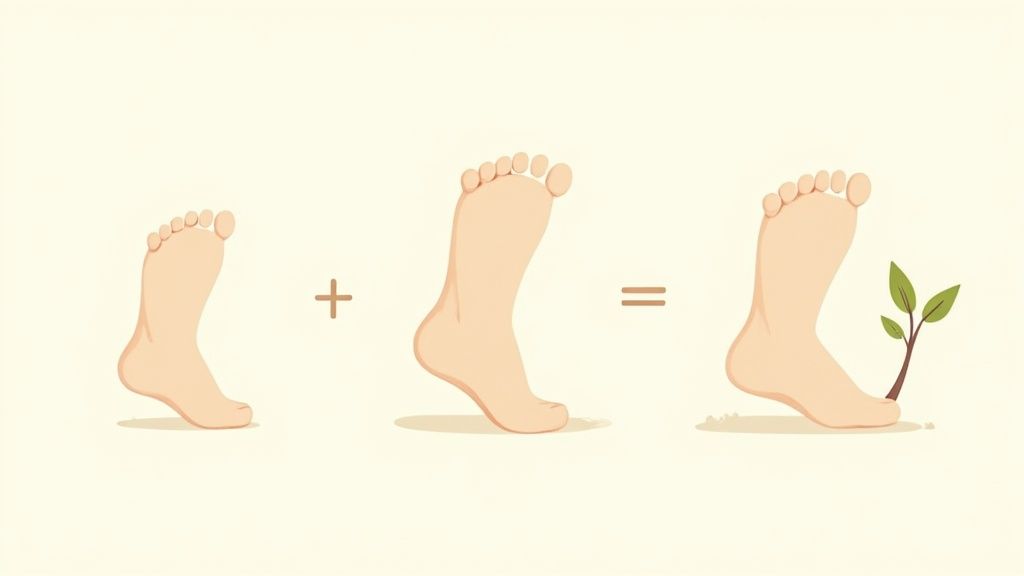
Think of a child's foot like a tiny sprout. It starts out a bit wobbly, with a cute, fatty pad right where you'd expect an arch to be. This "baby fat" is exactly why most toddlers look like they have no arches at all!
As they get more adventurous—running, jumping, and climbing all over the furniture—the muscles in their feet start putting in the work. Over time, usually between ages 3 and 6, that awesome arch begins to pop up all on its own.
It’s Way More Common Than You Think
You're definitely not alone in this! For young children, flat feet are the norm. Research shows just how common it is, with one study noting a 44% prevalence in kids aged 3 to 6. That number naturally goes down as they grow, with most kiddos sporting arches by their teen years.
So, what’s your job in all this? It's not to worry, but to create a happy environment for their feet to grow naturally. This really boils down to two things:
- Lots of Playtime: Encourage games that get those little foot muscles firing! Walking on different textures like sand or grass is amazing, and even fun challenges like picking up toys with their toes can help build strength.
- Supportive Footwear: This is where the right shoes come in to save the day! They provide gentle stability without getting in the way of the foot's natural growth and wiggle room.
The goal is to support the foot's natural adventure, not force it into a shape it isn't ready for. The right shoe works with your child's foot, giving it a stable high-five while allowing for flexibility and strength-building.
Choosing the best shoes for your child's flat feet is less about correcting a problem and more about cheering them on. If you’d like to dive deeper, we’ve put together a guide on healthy little feet backed by Harvard experts that you might find helpful.
The Secret Recipe for a Great Supportive Shoe
Ready to become a shoe-spotting superhero? Finding the best children's shoes for flat feet is a lot like baking cookies—it’s all about having the right ingredients. Once you know what to look for, you'll be a pro in no time.
Let's break down the key features that make a shoe truly awesome for your little one's developing feet.
The All-Important Arch Hug
First up: arch support. But don't picture a big, hard bump inside the shoe. For kids, we're looking for something much gentler, like a friendly "arch hug."
This feature gives a soft lift right where their arch is forming. It doesn’t force the foot into a shape; instead, it gently guides it into a more balanced position. This helps distribute their weight evenly, taking pressure off their little ankles and knees during a long day of play. A good arch hug is the gentle guide that says, “Hey foot, let’s stay balanced and strong!”
A Sturdy Heel for Super Stability
Now, let's talk about the back of the shoe. The heel counter is the firm part that wraps around your child's heel. Think of it as a little throne for their heel—it keeps it snug, secure, and right where it should be.
A strong heel counter is super important because it provides the stability needed to keep their foot and ankle aligned.
Quick Parent Tip: You can test this in the store! Gently pinch the back of the shoe where the heel sits. If it feels firm and doesn't squish easily, you've found a great heel counter. It’s a small detail that makes a huge difference!
A Wide Toe Box for Wiggly Toes
Imagine trying to play with your fingers all squished together. No fun, right? Same for toes! A wide toe box is a must-have for healthy foot development.
This just means the front of the shoe is nice and roomy, giving their toes plenty of space to spread out, wiggle, and grip. This natural splay is key for building balance and strengthening the tiny muscles in their feet.
- Promotes Balance: Spreading their toes helps them stay steady.
- Encourages Strength: Allowing the toes to grip helps strengthen foot muscles.
- Prevents Ouchies: A roomy toe box prevents discomfort and means fewer complaints about sore feet!
The Perfect Sole: Flexible Yet Firm
The sole of the shoe has to do a tricky balancing act. You want it to be flexible enough for natural movement but firm enough for protection. Think of it like a yoga mat—it bends with you but still gives you a stable base.
Here's how to find that sweet spot:
- Flexibility Check: The shoe should bend easily at the ball of the foot.
- Firmness Check: The middle of the shoe shouldn't twist like a wet towel.
This combo ensures the shoe moves with your child's foot, not against it.
Just the Right Amount of Cushioning
Finally, cushioning. While a super-soft, marshmallowy shoe might seem comfy, it often lacks stability. The goal is to find cushioning that absorbs impact without sacrificing support.
Look for a shoe that provides responsive cushioning—it should feel comfy and absorb the shock of running and jumping, but still provide a stable platform. Finding shoes that meet these criteria can be a game-changer, and if you're looking for more guidance, you can explore some ideas on adaptive shoes for kids that combine style and comfort. It's all about that "just right" feeling.
Choosing Shoes for Every Age and Adventure
Just when you’ve mastered one stage, they grow again! It’s the same with their shoes. The perfect pair for a wobbly toddler won't be right for a preschooler who treats the playground like an obstacle course.
As kids leap from one stage to the next, their footwear needs a fun little upgrade. Matching their shoes to their age is the secret to keeping those little feet happy and ready for anything.
Tiny Toddlers Teetering and Exploring (Ages 1-3)
Welcome to the age of wobbly first steps! For toddlers, the best shoes are all about feeling the ground while staying protected.
Think of their shoes as a second skin—lightweight, super flexible, and designed to let their feet move naturally. When they’re out and about, a soft, flexible sole lets them feel different textures, which helps build coordination. We’re not looking for aggressive arch support here. To learn more about this stage, check out our guide on finding wonderfully flexible shoes for toddlers.
This image breaks down the essential features to look for in any supportive shoe.
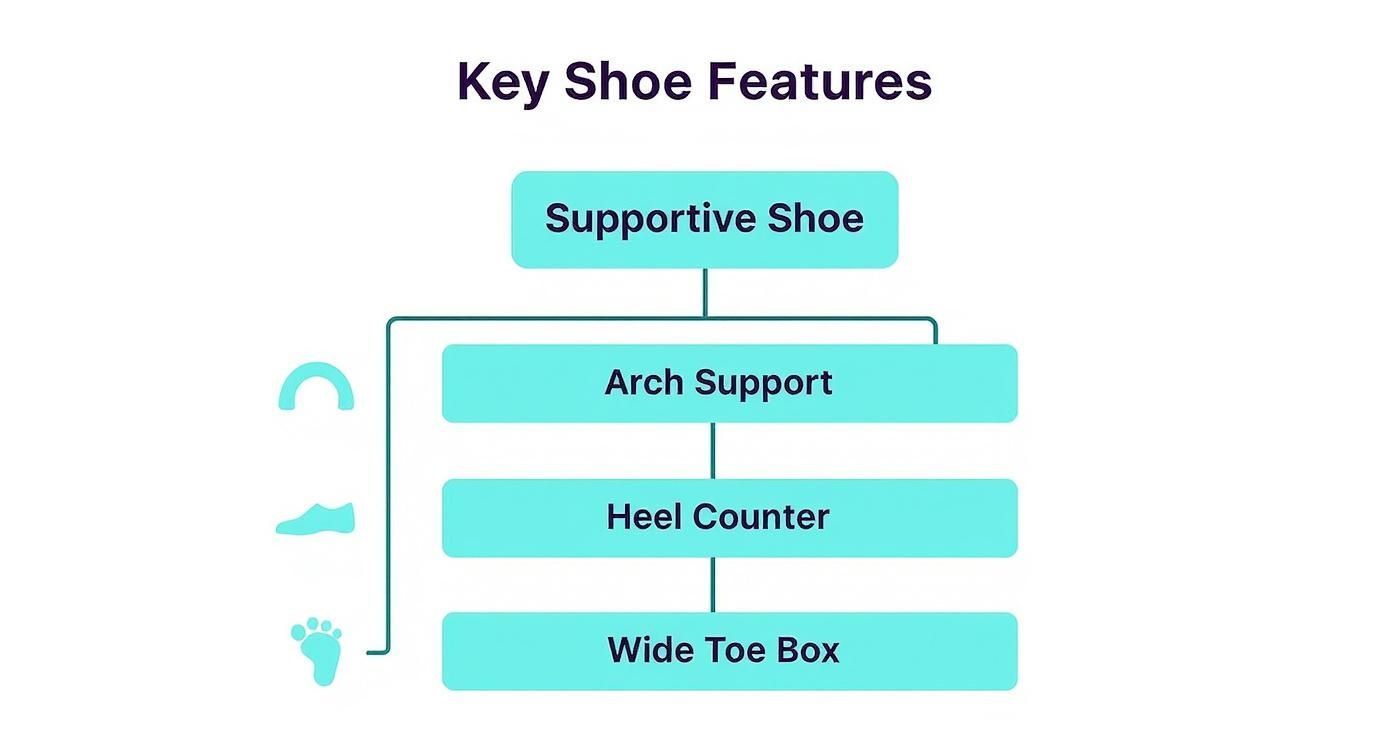
The key takeaway? A great shoe is a team effort. It’s all about the arch support, a solid heel counter, and a roomy toe box working together.
Preschool Powerhouses Running and Jumping (Ages 3-5)
Preschoolers are pure energy! Now’s the time to introduce a bit more structure. Their shoes need to keep up!
- A Hint of Arch Support: We’re graduating to shoes with more defined, yet gentle, arch support.
- A Firmer Heel Counter: All that running calls for a sturdier heel to keep their ankles stable.
- Durable Soles: Look for soles that are still flexible but offer more shock absorption for playground fun.
This is also the age where flat feet are most noticeable, which is totally normal. Providing the right supportive shoe during these active years is a huge help.
Big Kids on the Move (Ages 6+)
Once they hit school age, kids need shoes that are true workhorses. Their feet are more developed, but they still benefit from a supportive foundation.
Look for these key features:
- Robust Support: A well-defined arch support and a rock-solid heel counter are essential.
- Enhanced Cushioning: More running means their joints need more protection.
- Tough Materials: From reinforced toes to durable rubber outsoles, school-age kids need shoes built to last.
Our Top Shoe Picks for Happy Feet
Alright, now for the fun part—the shoes! We've put together a few of our favorite styles that check all the right boxes, turning your shoe-shopping mission into a total breeze.
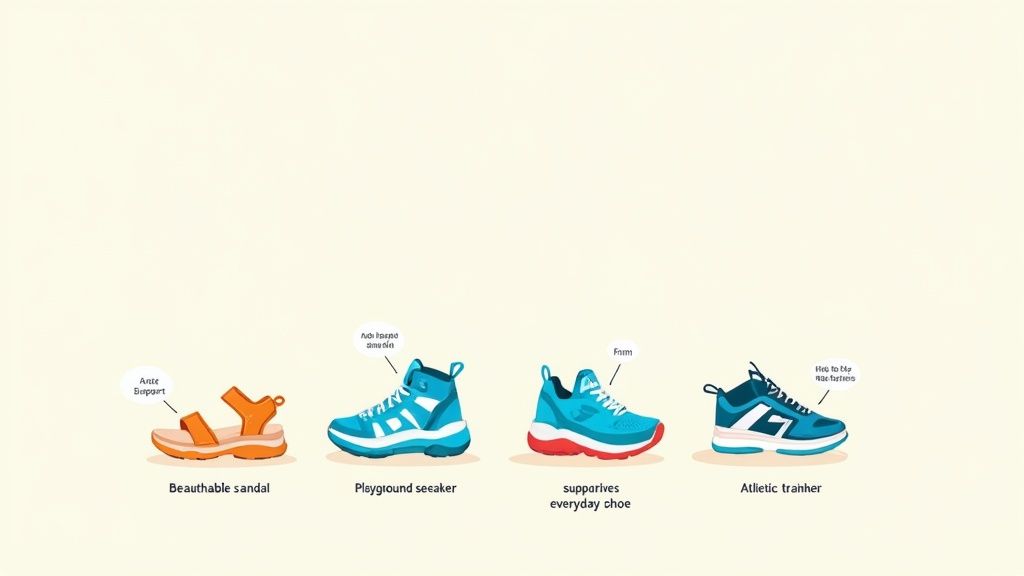
Think of this as your parent-friendly shortlist for shoes that will support every adventure. Let's find a pair your little one will actually be excited to wear!
The Perfect Playground Sneaker
For all the running and jumping, a solid athletic sneaker is non-negotiable. What makes a sneaker a superstar?
- A Rock-Solid Heel Counter: This is your secret weapon for keeping their ankle from rolling.
- Supportive Cushioning: Cushioning that absorbs shock but remains firm is the perfect balance.
- A Durable, Grippy Sole: Good traction is key to preventing slips and slides.
A great everyday sneaker acts like a reliable teammate for your child's feet, ensuring they can focus on the fun, not their feet.
The Awesome Everyday Shoe
For school and everything in between, you need a comfy and reliable everyday shoe. A great one should feature a gentle, built-in arch support and a flexible sole that bends where their foot does.
For the littlest adventurers, Pediped’s Grip ‘n’ Go line is a game-changer. These shoes are made for toddlers who are getting steady on their feet, with a soft rubber sole and a roomy toe box. You can learn more in our guide to the best shoes for a baby learning to walk.
The Superb Summer Sandal
When it warms up, you need a sandal that can keep up! So many sandals are flat and flimsy, but supportive ones are not a myth!
The best sandals for kids with flat feet will have:
- A Contoured Footbed: Look for a footbed with a molded shape and a visible arch bump.
- Adjustable Straps: Straps around the ankle and over the foot are crucial for holding it securely.
- A Protective Toe Guard: For active kids, a closed-toe design is a lifesaver for preventing stubbed toes.
With these features, their feet will get the stability they need for happy, pain-free summer fun.
Your Ultimate Checklist for the Perfect Fit
You’ve found shoes that look great and check all the support boxes—awesome! But you’re not done yet. Making sure they fit perfectly is the final mission.
Even the best shoe won’t do any favors if it’s too tight or slipping off. This quick checklist will ensure every new pair is ready for adventure.
The Can't-Miss Fitting Checklist
Ready for a flawless fit? Just run through these simple steps every time.
-
Shop in the Afternoon: Feet naturally swell a little as the day goes on. Measuring in the afternoon helps avoid that "they were fine this morning!" tightness.
-
Bring Their Go-To Socks: Always have your child try on shoes with the same type of socks they’ll wear every day.
-
The Famous 'Rule of Thumb': Once the shoe is on, press down on the front. You should feel about a half-inch of space—roughly your thumb's width—between their longest toe and the end of the shoe.
-
Check for Heel Slippage: Have them take a walk. A tiny bit of movement is normal, but it shouldn't be popping out.
If you need extra help, check out our super-handy pediped sizing guide to get it right every time.
Why the Right Fit Is So Important
A great fit isn't just about comfort—it’s crucial for your child’s foot health.
Shoes that are too tight can restrict development, while shoes that are too big can be a tripping hazard. Getting it just right gives them the confidence to run, jump, and explore.
A great fit is the final, essential ingredient. It ensures all the amazing features—the arch support, the stable heel, the flexible sole—can do their job properly.
Recent research highlights that physical activity and shoe types can influence the development of flat feet. In fact, being inactive was linked to an increase in flat feet, reinforcing that movement is medicine for growing feet! For more on these findings, you can read the full research about children's foot health.
When to Chat with a Foot Expert
First, let's take a deep breath. Most of the time, those sweet, flat little feet on your toddler are a totally normal part of growing up. Think of them less as a "problem" and more as a phase!
That said, sometimes our parent radar pings for a good reason. There are a few signs that might mean it's time for a friendly chat with your pediatrician. This is just a helpful check-in, not a reason to panic.
Listening to Their Little Feet
Your child knows their body best. If they start dropping hints that something feels off, it's worth paying attention. Here are the main things to watch for.
- Complaints of "Ouchies": If your little one often complains that their feet, ankles, or legs are hurting, it's a good idea to have them checked.
- Noticeable Stiffness: If their ankles seem stiff or your child has a tough time flexing their feet, an expert can take a closer look.
- One Foot Looks Different: If one foot is much flatter than the other, it's worth bringing up with a doctor.
Peace of mind is priceless. Seeking an expert opinion is just a positive step to make sure your child can play comfortably. It’s all about getting information and support!
Ultimately, you know your child best. If you have a gut feeling that something isn’t quite right, making that call is always the right move. An expert can offer simple solutions to ensure your little one is happy, comfortable, and ready for their next big adventure.
Your Top Questions About Kids' Flat Feet
Still have a few questions buzzing around? Awesome! Let's tackle some of the most common things parents ask.
Will my child's flat feet develop an arch on their own?
For most kids, the answer is a big, resounding YES! As kids run and play, those tiny muscles in their feet get an incredible workout, helping those arches take shape, usually between ages 6 and 10. The right shoes are there to cheer them on!
Are expensive orthopedic shoes always needed?
Nope, not usually! For most kids with happy, pain-free flat feet, a great-quality, supportive shoe from a trusted brand is all they need. Focus on finding shoes with the wonderful features we've talked about—like a gentle "arch hug" and a stable heel.
A high-quality, well-fitting shoe is often the perfect tool for the job. It strikes the ideal balance of support and flexibility.
How often should I check my child's shoe size?
Those little feet grow at lightning speed! Do a quick fit-check every 2-3 months for toddlers and every 4-5 months for older kids. Use the "rule of thumb" we mentioned earlier—you're looking for about a half-inch of space at the front of the shoe.
Can going barefoot help flat feet?
Absolutely! Barefoot time is fantastic for building strong feet. When kids walk on safe, varied surfaces like grass or sand, the muscles in their feet have to work harder to grip and balance. It's like a fun, natural gym session for their arches!
Ready to put all this knowledge into action? At Pediped, we design shoes that are not only approved by pediatricians but also loved by kids. Explore our collections of supportive, stylish footwear that makes every step a happy one. Find the perfect pair for your little adventurer at https://www.pediped.com.
Leave a comment