


Welcome to the wild, wonderful, and totally adorable world of baby shoes! Picking out that first pair is a blast, but it always comes with one BIG question: what size do they even wear? A baby shoe size chart is your new best friend, turning guesswork into a "we got this!" moment.
Your Guide To Happy Little Feet
Let's make this shoe-shopping mission a super simple win. Those tiny feet are doing some serious work, from adorable wiggles to wobbly first steps. Getting the shoe size right isn’t just about looking cute—it’s about giving them the comfy support they need for healthy foot adventures.
A shoe that’s too tight can squish their delicate, soft toes (no fun!), while one that’s too loose can trip up your new little explorer. Think of the perfect shoe as a cozy hug for their feet; it gives them just enough room to grow and move naturally. This ensures every adventure, big or small, starts on the right foot.
The goal is to find a shoe that protects their feet while feeling like they’re barely there. This lets them wiggle and strengthen all those tiny muscles in their feet and ankles.
Ready to find that perfect first pair? The right fit makes all the difference. To get you started, you can explore a fantastic collection of shoes designed just for babies from 0-24 months that are all about style and healthy growing feet.
Why A Good Fit Matters So Much
Choosing the right shoe is more than just a purchase—it's an investment in happy, comfy steps. Nailing the fit is a game-changer for a few key reasons:
- Supports Natural Growth: A well-fitted shoe gives their foot the space it needs to develop without being smushed.
- Encourages Confident Steps: Comfy, secure shoes help little ones feel stable as they learn to balance and walk. Hooray!
- Prevents Discomfort: Say goodbye to blisters and red marks! A proper fit means happy, pain-free playtime, and a much happier baby.
How to Measure Wiggly Baby Feet
Ready for a fun little challenge? Let's be real, measuring a baby's foot can feel like trying to catch a speedy crawler—they’re all wiggles! But don't you worry. I've got a few tricks to get that measurement without any fuss, turning a potential struggle into a quick, easy win.
The Classic Trace-the-Foot Method
My personal favorite is the classic tracing method. You can even turn it into a mini art project!
Grab a piece of paper and have your little one stand on it. A tasty snack or a favorite toy works wonders for distraction here. Quickly trace around their foot, making sure their toes are flat—not curled up! Curled toes are the number one culprit for a wonky measurement.
The Quick-and-Easy Ruler Technique
If your baby is more of a sitter than a stander, the ruler technique is your best friend.
While they're happily occupied, just gently place a ruler or measuring tape against the bottom of their foot. Measure from the back of their heel all the way to the tip of their longest toe. Pro tip: it’s often best to measure at the end of the day when their feet might be a little swollen from all that crawling and exploring.
This handy infographic breaks it all down, from checking their age to measuring and finding the right size on a baby shoe size chart.
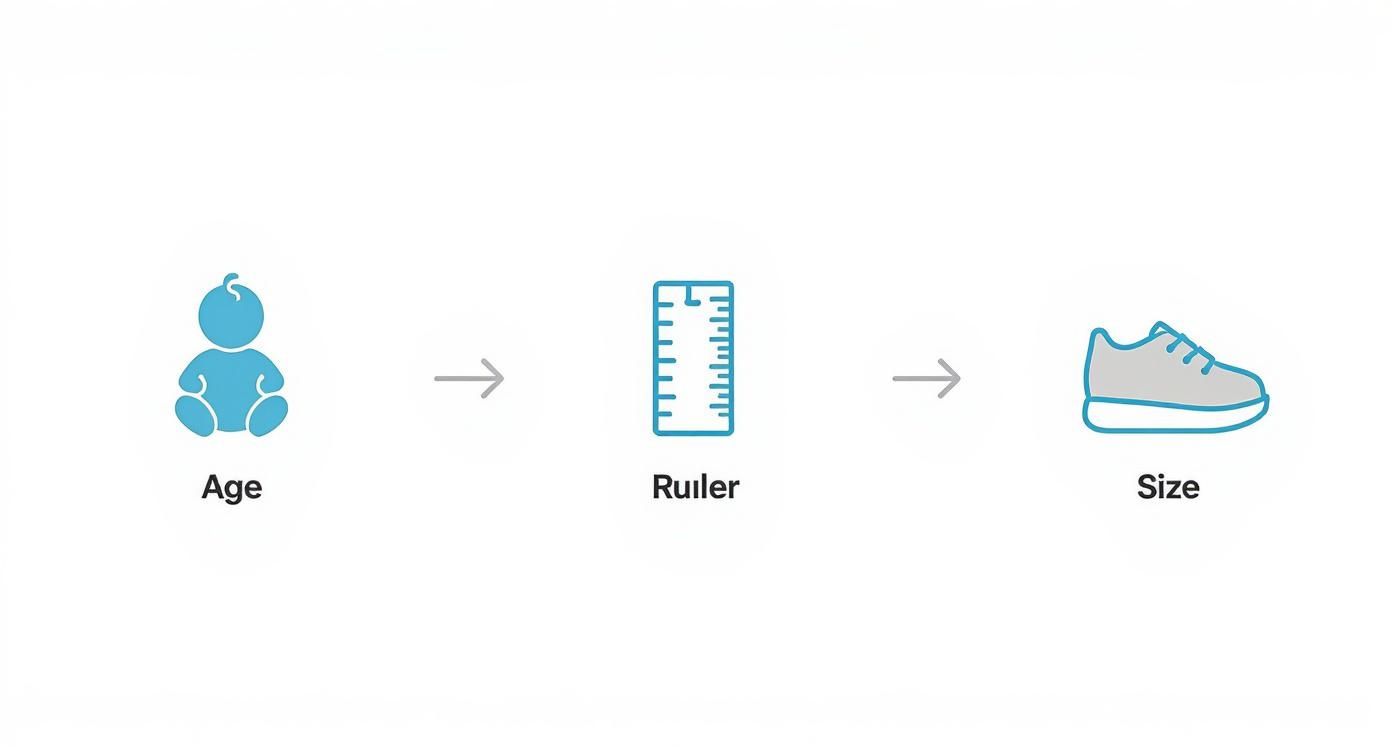
As you can see, this visual guide makes the fitting journey a piece of cake, showing how age, measurement, and the final shoe size all connect in just a few easy steps.
Once you have that magic number, you’re ready to conquer any baby shoe size chart! Always remember to measure both feet, as it's totally normal for one to be a bit bigger. When in doubt, go with the larger size to ensure there's plenty of room for happy wiggles.
Decoding Different Baby Shoe Sizes
Ever felt like you're trying to crack a secret code when you see a European shoe size? You're not alone! Let's break down the differences between US, UK, and EU sizing so it all makes sense.
Imagine finding the perfect pair of tiny shoes online, only to realize they're from a UK brand. No biggie! Understanding how these sizes translate gives you the confidence to shop for baby shoes from anywhere in the world.
This is where a good baby shoe size chart becomes your new BFF.
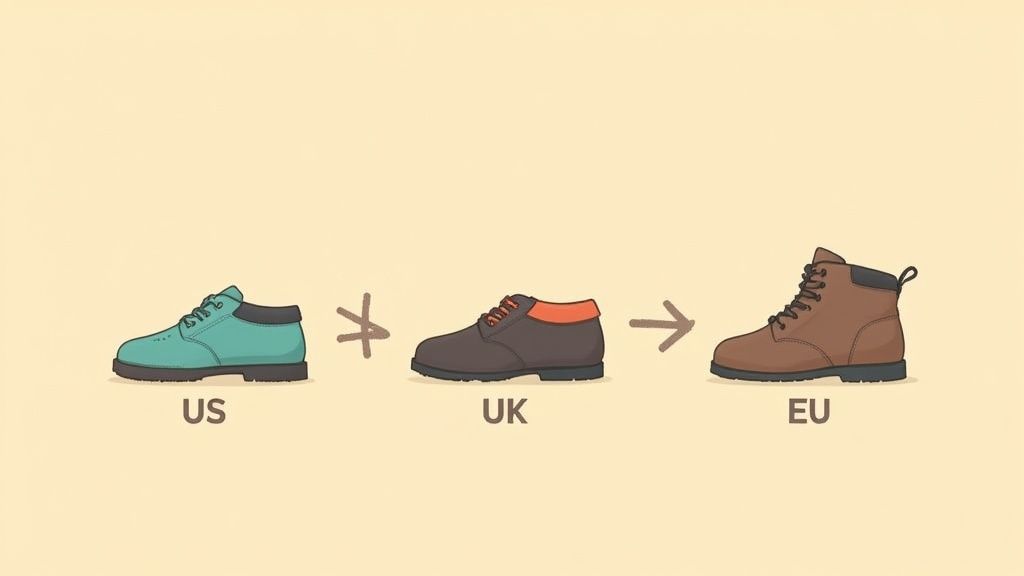
A Quick Guide to Global Sizing
The most important thing to remember is that these systems don't line up one-for-one. A US size 2 infant shoe isn't a size 2 everywhere else.
For example, that US size 2 is roughly a UK 1.5 and an EU 18. It can get even more confusing—in Mexico, that same shoe would be a size 10! This is why guessing often leads to a frustrating return.
Remember, the goal is to get it right the first time. A quick look at a conversion chart can save you the headache of waiting for shoes that are way too big or comically small.
Knowing how to convert these numbers means you can find the perfect fit, no matter where your shoe shopping adventures take you. For a really detailed look at how specific brands handle this, check out this great pediped sizing guide. It helps to see it all laid out!
Tips for a Comfy Fit and Happy Toes
You've measured those little feet and you’ve got the baby shoe size chart pulled up. Awesome! But the job isn't quite done. Getting that perfectly snug—but not too snug—fit is a bit of an art, and I've got a few tricks that make all the difference.
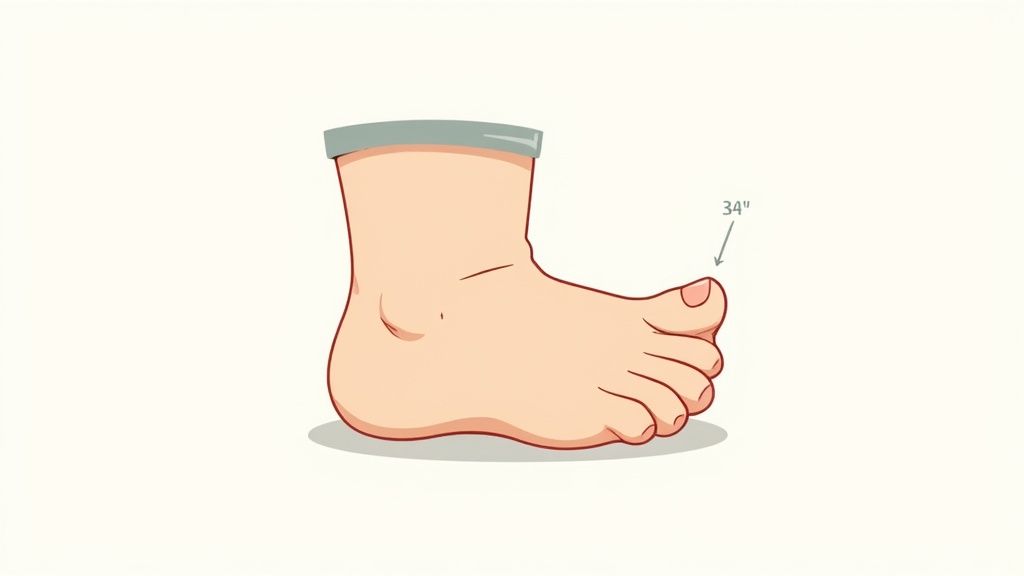
First up is the classic 'thumb rule.' It’s a classic for a reason! After you slide that tiny shoe on, press your thumb down at the tip, just above their big toe. You're looking for about a thumb's width of space. That little gap is everything; it’s the wiggle room they need for comfort and natural movement as they play.
But don't forget about width! Baby feet are famously soft and chubby, and a shoe that’s the right length but too tight on the sides is a recipe for unhappy toes. Check to make sure their foot isn’t bulging over the sole.
Matching Shoes to Their Stage
The right shoe for your baby really depends on what they're up to. Their needs change so fast!
- Crawlers & Pre-Walkers: Think soft and flexible. At this stage, you want a shoe that protects their feet but doesn't get in the way of them feeling the ground.
- New Walkers: Once they're taking those first wobbly steps, look for a sole that's still flexible but offers a bit more protection. It needs to bend easily to help them balance.
Pro Tip: In the store, pick up a shoe and try to bend it in half. If it folds easily, it's got the right kind of flexibility for a new walker finding their footing.
At the end of the day, finding the perfect pair is about balancing function, comfort, and, of course, a little bit of style. With these tips, you’re ready to find a shoe that will keep those little feet happy on all their adventures.
Why the Right Shoe Fit Really Matters
Those tiny shoes might look like just another cute accessory, but they play a surprisingly big role in your little one’s development. Let's get into the "why" behind obsessing over the perfect fit—it’s a bigger deal than you might think!
Think of properly fitting shoes as your baby's first little teammates. They support the natural, healthy growth of their feet, give them a stable base as they figure out this whole walking thing, and protect those tender soles. A good fit means no painful blisters or red marks, making sure those first wobbly steps are happy ones.
More Than Just a Number
It’s easy to get lost in the world of baby shoes. The global market is huge, pulling in around US$40,122 million in 2023. But here’s the wild part: studies suggest only about a third of children are actually wearing the right size. That's a lot of squished toes! These stats, which you can dig into more over at RunRepeat.com's look at the kids' shoe market, really show how common sizing mistakes are.
Think of yourself as your baby's personal shoe-fitting expert. Taking a moment to measure and check the fit against a baby shoe size chart gives their feet the best possible start for a lifetime of exploring.
You're not just buying shoes. You're laying a foundation of comfort for all the big adventures to come. You've got this!
Quick Answers To Your Baby Shoe Questions
You’ve sized those tiny toes and stared at a dozen charts, but you still might have a few questions. No problem!
Consider this your go-to cheat sheet for becoming a baby shoe size chart guru. We’ve gathered the most common questions and served up clear, friendly answers so you can shop with total confidence.
How Often Should I Measure My Baby's Feet?
Little feet grow super fast! To stay on top of it, try this rhythm:
- Infants: every 6 to 8 weeks
- Toddlers (on the move): every 3 months
That quick check keeps you ahead of surprise growth spurts and guarantees a comfy fit.
Key Takeaway
It’s not about a strict schedule—just a simple habit that prevents pinched toes and unhappy feet.
Can I Just Buy A Bigger Size For Them To Grow Into?
It’s tempting to grab a size up, but oversized shoes can be risky:
- Tripping hazards for new walkers
- Lack of proper support
- Can cause blisters and instability
Aim for about ½-inch of wiggle room at the toe—enough space to grow without being a trip hazard. For even more pointers, check out the comprehensive pediped FAQ page.
When Should My Baby Actually Start Wearing Shoes?
Barefoot is best for building balance and muscle strength indoors. Let those little toes roam free!
Once you head outside, it's time for a solid pair of first walkers. Good outdoor shoes will:
- Shield against sharp objects and hot pavement
- Offer traction on grass and other surfaces
- Keep feet cozy when it gets chilly
Before that, soft booties or grippy socks are perfect for indoor wiggles.
Ready to put your new expertise to the test? Browse pediped’s pediatrician-approved collections and discover the perfect fit at every growth stage. Find your little one’s next favorite pair at Pediped Shoes.
Leave a comment