


Welcome to the amazing, wobbly world of your baby's first steps! This guide is here to walk you through the essentials of baby orthopedic shoes, cutting through all the confusing jargon. Let's just have a simple, friendly chat about how the right pair of shoes can be the perfect little sidekick for their big adventures.
Your Guide to Happy and Healthy Little Feet
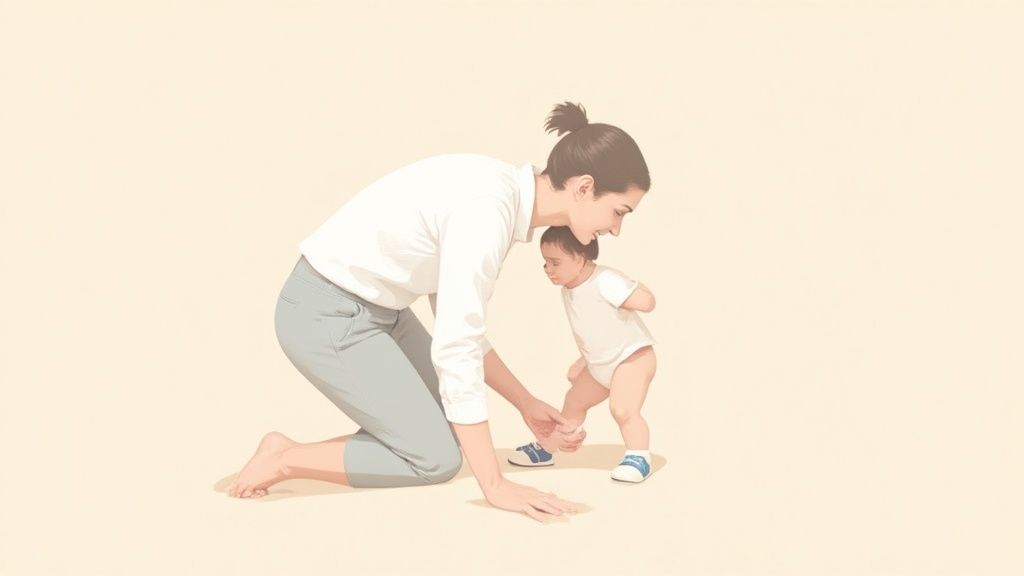
There’s nothing quite like watching your little one take those first tentative steps. It’s pure magic! Every stumble and triumphant toddle is a huge moment, and as they start to explore, you want to give them the best possible foundation—literally, from the ground up.
Those adorable, chubby feet are still a work in progress, full of soft bones and arches just beginning to form. Giving them the right support now is a bit like giving a young plant a sturdy stake to help it grow tall and strong. It’s all about creating the perfect environment for their feet to develop just as nature intended.
Why Foot Support Matters
Picking out baby shoes is about so much more than just style; it’s all about function. The right shoes can make a huge difference in your child's comfort and confidence as they figure out how to navigate their world. If you want to dig deeper, you can learn more about healthy little feet backed by Harvard experts.
Here's a quick peek at why paying a little extra attention to their footwear goes such a long way:
- Encourages Proper Alignment: Good shoes gently guide their feet into a natural, healthy position.
- Builds Confidence: When they feel stable on their feet, there are fewer tumbles and a lot more happy exploring!
- Supports Natural Development: The right footwear allows their foot muscles to strengthen correctly, setting them up for success.
Together, we'll figure out how to give them the best support for a lifetime of happy, healthy adventures.
So, What's the Big Deal With These Little Shoes?
Let's get right to it—what exactly are baby orthopedic shoes? Imagine a young tree sapling. To grow tall and straight, sometimes it needs a small stake to guide it. That’s the perfect way to think about these shoes. They’re not a rigid cast, but a gentle, supportive guide for your little one's developing feet.
Unlike the average pair of baby shoes, which are often more about looking cute than providing real support, orthopedic shoes are built with a specific job in mind. They’re all about giving wobbly ankles extra stability, encouraging the bones to align properly as they grow, and making sure those tiny toes have enough space to spread out and grip the ground.
The goal isn’t to force a healthy foot into a certain shape. It’s about creating a stable foundation that can help prevent common problems, like severe overpronation (where the ankle rolls too far inward), and give your toddler a boost of confidence as they learn to walk.
This added support is a game-changer when they're moving from crawling to taking those first incredible steps.
A Closer Look at the Design
So what's the magic inside? While designs vary, genuine orthopedic-friendly shoes share a few key features that set them apart. These aren’t just miniature adult shoes; they’re carefully engineered for the unique anatomy of a toddler's foot.
Here’s a breakdown of what you’ll typically find:
- Firm Heel Support: A strong, structured heel counter gently cups the back of the foot. This keeps the ankle from rolling and prevents their foot from sliding around inside the shoe.
- Flexible-Yet-Sturdy Soles: The sole needs to bend easily to let your child feel the ground and maintain balance. At the same time, it has to be firm enough to protect their feet from sharp objects or uneven surfaces.
- Wide Toe Box: This is non-negotiable! A roomy toe box allows their toes to splay naturally, which is critical for developing balance and strengthening the small muscles in their feet.
Every one of these details works together to support your child as they graduate from wobbly first steps to unstoppable running.
Signs Your Toddler Might Need Extra Foot Support
Every little one develops their own unique "walking language," complete with those adorable wobbles and determined toddles. But sometimes, their tiny feet might be trying to tell you they need a little more help. Tuning into these cues isn't about worrying—it's about feeling empowered to give them the best support on their big adventure!
So, how do you know if your toddler could benefit from the extra stability of baby orthopedic shoes? It's often simpler than you think. You're the expert on your child, and the first step is just noticing small, consistent patterns. Think of yourself as a foot detective on a fun mission!
Learning Their Walking Language
Keep an eye out for a few common signals. These aren't necessarily red flags, but they are great conversation starters for your next pediatrician visit.
Here are a few things to watch for:
- Frequent Tumbles: All toddlers take a spill now and then, but if tripping seems to be a constant companion on flat, even surfaces, it could be a sign of instability.
- Ankles Rolling Inward: Take a peek at their feet from behind. If you notice their ankles seem to collapse or roll significantly inward (a condition called overpronation), it might mean their arches need more support.
- Unusual Walking Patterns: Does your little one consistently walk on their tiptoes? Or do they turn their feet far inward or outward? These unique gaits are worth noting.
It's all about observation, not diagnosis. Seeing one of these signs is just an invitation to pay a little closer attention or have a chat with a professional. Feeling informed is the goal!
It’s clear parents are prioritizing foot health more than ever. The global children's footwear market was valued at about USD 42 billion in 2023 and is projected to climb to USD 68 billion by 2032. You can learn more about the growth of the children's footwear market on datahorizzonresearch.com.
Sometimes, the need for extra support goes beyond typical development, especially for children with specific needs. If you're looking for footwear that combines style and function, check out our guide on adaptive shoes for kids to find the perfect fit. Remember, supporting their feet is just another way of cheering them on as they explore the world.
So, What Makes a Great Orthopedic Shoe?
Alright, let's get down to the nitty-gritty. Shopping for baby orthopedic shoes can feel a bit overwhelming, but once you know what to look for, it's actually pretty straightforward. Think of it less like a chore and more like picking out the perfect gear for your little explorer's biggest adventures.
Let's start at the back. The heel counter—that’s the part that cups the heel—should be firm. Give it a squeeze; it shouldn't collapse easily. This structure is crucial for giving your baby's heel a stable home base, preventing their ankles from rolling inward as they find their footing. It's a small detail that makes a huge difference.
Now, check out the sole. You're looking for the Goldilocks of soles: not too hard, not too soft, but just right. It needs to be flexible enough to bend where their foot naturally bends, but sturdy enough to protect them from whatever’s on the sidewalk. A sole that’s as stiff as a board completely restricts natural movement, and that’s the last thing we want.
The Non-Negotiables for Tiny Feet
When you're comparing different pairs, keep this checklist in mind. These are the core features that truly support healthy foot development.
- A Roomy Toe Box: Those little toes need to splay out and grip! A wide, spacious toe box gives them the freedom to do just that, which is essential for developing balance and strength.
- Supportive Ankle Structure: Look for shoes that come up a little higher on the ankle or have a nice, padded collar. This gives that extra bit of stability for wobbly first steps and confident running.
- Breathable Materials: Little feet get surprisingly sweaty. High-quality, breathable materials like leather or mesh are a must to keep their feet dry, comfortable, and healthy.
Sometimes, it's the little things you notice at home that hint your toddler could benefit from more supportive shoes. This infographic breaks down a few common signs, like frequent tripping or ankles that seem to roll inward.
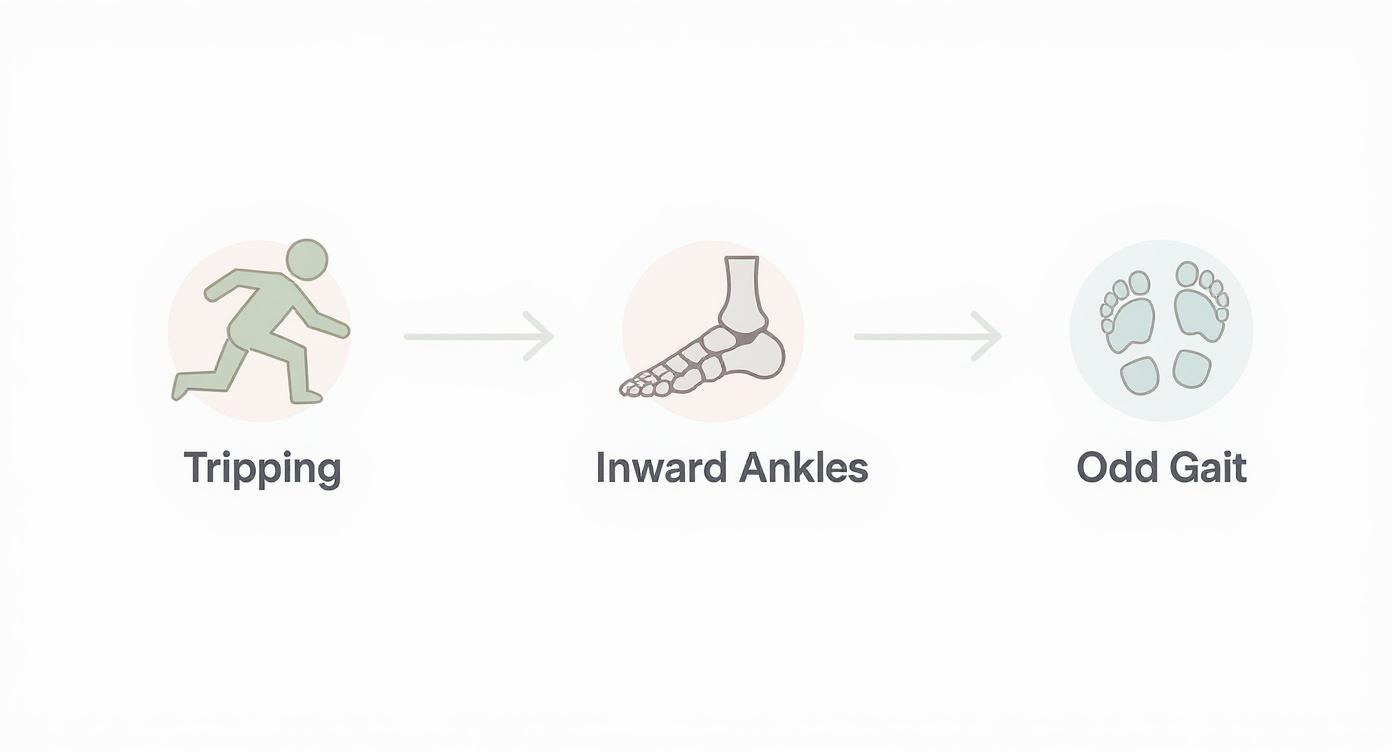
It’s all connected—stability, gait, and confidence. The good news is that parents have more great options than ever. The global orthopedic shoes market was valued at around USD 304 million in 2024, and it’s growing fast. New designs are using fantastic materials like memory foam and EVA—making up over 60% of the market—to create shoes that are both incredibly supportive and comfortable. You can dive deeper into these orthopedic shoe market trends if you're curious!
Key Features Of Baby Orthopedic Shoes vs Standard Shoes
So, what's the real difference when you put a supportive orthopedic shoe next to a standard baby shoe you might grab off the shelf? Let's break it down.
| Feature | What To Look For (Orthopedic) | What You Might Find (Standard) |
|---|---|---|
| Heel Counter | Sturdy and firm to stabilize the heel. | Often soft, collapsible, and more for looks. |
| Arch Support | Built-in, gentle contouring to guide foot alignment. | Usually flat as a pancake. |
| Sole Flexibility | Bends easily at the ball of the foot, not in the middle. | Can be overly stiff or flimsy all over. |
| Toe Box Shape | Wide and anatomically shaped for toe splay. | Tapered or narrow, squishing those little toes together. |
| Ankle Support | Higher cut or padded collar for extra stability. | Low-cut, offering minimal to no ankle support. |
| Fastening System | Secure and adjustable (think Velcro or sturdy laces). | Slip-on styles or decorative (but flimsy) fastenings. |
As you can see, every element of an orthopedic shoe is designed with a specific purpose in mind—to support, stabilize, and promote a healthy walking pattern for your little one.
How to Find the Perfect Fit for Wriggly Feet
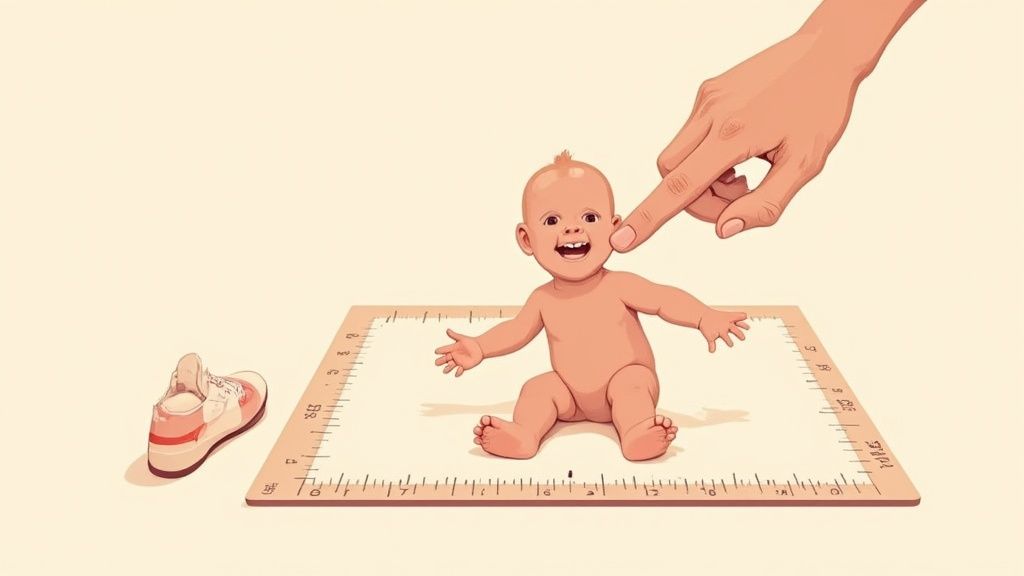
Trying to measure a baby's foot can feel like trying to dress a tiny, wriggly octopus in a snowsuit! But finding the right fit for their baby orthopedic shoes doesn't have to be a wrestling match. The goal is simple: you want a shoe that’s snug enough to offer support but still has room for their feet to grow.
A great way to check is with the classic "thumb rule." Once the shoe is on your little one's foot, press your thumb down at the tip. You should feel about a half-inch of space between their longest toe and the end of the shoe. This little bit of wiggle room is crucial for handling those sudden growth spurts!
And here’s a pro tip: always check the fit while they’re standing up. A baby’s foot naturally splays out and gets a bit longer when they put weight on it. Having them stand gives you the most accurate measurement and a true feel for how the shoe will fit when they're on the move.
Making the Fitting Fun
You can turn shoe fitting into a playful moment with a few simple tricks.
- Trace their foot: Grab a piece of paper and have them stand on it while you quickly trace an outline. It’s a fun little art project that also creates a perfect template to take with you when shopping!
- Try the insole test: If the shoe has a removable insole, pull it out and have your child stand right on it. This gives you a crystal-clear view of exactly how much space their toes have.
- Check the width: Gently feel along the sides of the shoe. It should feel snug, but never tight. If you see major bulging or red marks on their feet after taking the shoes off, they're too narrow.
Don't forget to re-measure those little feet every two to three months! It’s incredible how fast they grow, and a shoe that was perfect last season could be far too snug now.
Especially in the early stages, choosing shoes that mimic barefoot walking is a fantastic strategy. There's a reason the soft sole baby shoe market was valued at USD 1.2 billion in 2024 and is projected to more than double by 2033. More and more parents are realizing just how important flexibility is for healthy foot development. For more detailed guidance, you can also check out our guide on how to properly size your child’s shoes.
Answering Your Top Questions
Still have a few questions? We get it. When it comes to our kids, especially their health and development, we want to get it right. Let's tackle some of the most common things parents ask about baby orthopedic shoes so you can feel confident.
Does My Baby Need Orthopedic Shoes If Their Feet Look Normal?
This is probably the number one question we hear. For most babies, the best thing for their developing feet is going barefoot as much as possible, or wearing soft, super-flexible shoes when they need protection.
Think of baby orthopedic shoes as a specific tool for a specific need. A doctor might recommend them if a child needs a little extra help with issues like significant flat feet, wobbly ankles, or other gait concerns. If you have any worries at all about how your little one is moving, your first and best stop is always your pediatrician. They can give you advice tailored exactly to your child.
How Long Should My Baby Wear Orthopedic Shoes Each Day?
This is a "follow the expert's advice" situation. Your child's doctor or physical therapist will create a personalized schedule based on what their little feet need.
For some kids, they might recommend wearing the shoes for most of the day to ensure consistent support. For others, it might just be during active playtime. The key is to stick to the plan they give you—they know precisely what will help your child thrive and will create a routine that works without being uncomfortable.
Aren't Baby Orthopedic Shoes Clunky And Expensive?
I know what you're picturing—heavy, unattractive shoes from decades ago. But thankfully, modern orthopedic footwear for kids has come a long way! Designers today understand that function has to go hand-in-hand with style. You can find options in all sorts of fun colors and designs that look just like any other cute sneaker.
While they do represent a bigger investment than typical baby shoes because of the specialized design and materials, many brands now focus on creating shoes that are surprisingly lightweight and flexible. Your child gets the support they need without sacrificing style or comfort.
It’s all about finding that perfect balance. The goal is happy, healthy feet ready for every adventure, from those first tentative steps to running full-speed at the park.
Ready to find a pair that offers pediatrician-approved support and a style you'll both love? Explore the full collection at Pediped and give your little one a great foundation for every step they take.
Leave a comment