


Welcome to the wild, wonderful, and often confusing world of baby shoes! If you've been searching for the official "12 month shoe size," you've come to the right place. Spoiler alert: there's no single magic number, but most one-year-olds wear a US size 4 or 5. The most important thing to remember is that every tiny foot is on its own unique adventure.
Your Guide to Happy Little Feet
Get ready for one of the cutest milestones ever: your baby’s first steps! This wobbly, wonderful phase is where the real fun begins, and finding the perfect pair of shoes is a bigger deal than you might think.
It’s not just about finding an adorable style (though that’s a huge plus!). It’s about giving your little explorer the support they need to build balance, confidence, and healthy feet for a lifetime of adventures.
Think of this as your friendly cheat sheet to kick off your shoe-shopping journey with a huge smile. We’re here to demystify everything from sizing to fit, turning what can feel like a guessing game into an easy, playful experience.
Why the Right Fit Is a Game-Changer
A great fit does more than just look good; it's the foundation for confident first steps and happy adventures.
Here’s what the right shoe provides for your 12-month-old:
- Supports Healthy Foot Growth: Little feet are soft and flexible, so they need shoes that allow them to develop naturally without being squished.
- Builds Balance and Confidence: The right sole helps them feel the ground, which is crucial for learning to balance and navigate new terrain.
- Keeps Them Comfy and Happy: No one likes uncomfortable shoes, especially a toddler who is busy exploring!
The term ‘12-month shoe size’ isn’t a standard category you'll find in stores, but don’t worry, the infant footwear market is well-established. In the U.S., babies up to age 2 typically wear sizes 0 to 5, with sizes 4 and 5 being the sweet spot for many one-year-olds.
Because those feet grow so fast, data shows that 60–70% of parents buy 3–4 pairs of shoes in the first 18 months alone. You'll likely need a new size every few months to keep up!
Finding the perfect footwear is an exciting part of watching them grow. As you prepare for their first adventures and celebrate these milestones, you might also be looking for other ways to mark the occasion. For inspiration, check out this helpful a guide to personalized gifts for young children that offers creative ideas for special moments.
And for more specific advice on footwear that supports those initial wobbly steps, you might be interested in our guide on the best shoes for a baby learning to walk.
How to Measure Wiggly Feet at Home
Ready for a little mission? Your objective: measure the wiggliest feet on the planet. Don't worry, you won't need any special gadgets—just a piece of paper, a pen, and maybe a few of your best distraction techniques!
Measuring your baby's feet at home can feel like trying to wrangle a tiny octopus, but I promise it can be easy and even a little fun. The trick is to make a game out of it. The most accurate measurement happens when your little one is standing, since their foot naturally splays out under their weight.
The Trace and Measure Technique
Let's get this mission started. This simple method is your best bet for finding that perfect 12 month shoe size.
- Prep Your Station: Grab a piece of paper, a pen or pencil, and a ruler. It helps to tape the paper to a hard floor to keep it from sliding around.
- Get Them Standing: Encourage your little one to stand right on the paper. This is the perfect time to sing a song, hand them a favorite toy, or even use a little screen time to keep them still for just a moment.
- Trace Those Toes: Quickly trace an outline around each foot. It doesn’t need to be a work of art! Just capture the basic shape. Here's a pro tip: it’s totally normal for one foot to be slightly bigger, so always measure both!
- Measure the Masterpiece: Now that your little model is free to go, use your ruler to measure the distance from the very back of the heel to the tip of the longest toe on each tracing.
Always use the measurement from the bigger foot when you're shopping for shoes. This simple step is the key to avoiding shoes that pinch and ensuring a comfy fit for both feet.
This quick visual guide shows how a typical 12 month shoe size translates across different global sizing systems.
As you can see, a US size can be quite different from a UK or EU size, which is why measuring in inches or centimeters first is always the most reliable way to go.
The Secret to the Perfect Fit
Once you have your measurement, it’s time for the final, crucial step—adding a little wiggle room! You'll want about a half-inch (or a thumb’s width) of space between their longest toe and the end of the shoe. This gives them the room they need to grow and move comfortably without any restrictions.
For a super simple and printable way to get this done, check out the official Pediped printable sizing guide. It makes the whole process a breeze. Mission accomplished
Cracking the Code on Baby Shoe Size Charts
Ever feel like you need a secret decoder ring to figure out baby shoe size charts? Let's solve that puzzle together. One look at the tags and you'll see US, UK, and EU sizes all having a party, and it’s easy to feel a little lost.
Think of this as your ultimate translator. Just because your baby's foot measures out to a US size 4 doesn't mean a UK or EU size 4 will fit—in fact, it definitely won't! These systems use completely different scales, which is why that quick foot measurement we did earlier is your golden ticket to getting it right.
This is also why one brand's size 4 might fit perfectly, while another feels way too snug. Brands sometimes have their own unique take on sizing, so a quick peek at their specific size chart online can save you a world of hassle and returns.
To make things crystal clear, here’s a handy chart that lays it all out.
Baby Shoe Size Conversion Chart
| US Size | UK Size | EU Size | Foot Length (Inches) | Foot Length (CM) |
|---|---|---|---|---|
| 4 | 3 | 19 | 4.5" | 11.4 |
| 4.5 | 3.5 | 20 | 4.75" | 12.1 |
| 5 | 4 | 20 | 4.875" | 12.4 |
| 5.5 | 4.5 | 21 | 5.125" | 13 |
With this by your side, you can easily switch between sizing systems no matter where you're shopping.
It's About More Than Just Length
Okay, so we’ve cracked the code on length, but what about those adorably chubby baby feet? This is where shoe width comes into play, and it’s a total game-changer for comfort and healthy development.
Most baby feet are naturally wide with a sweet little fat pad right on top. A shoe that’s too narrow can squish their toes, feel uncomfortable, and even make walking feel awkward. The best shoes for new walkers will always have a nice, wide toe box that lets their toes spread out naturally as they grip the ground.
You'll typically see a few options:
- Standard (M): This is the most common width you'll find.
- Wide (W): A fantastic choice for babies with those classic, pudgier feet.
- Extra Wide (XW): Perfect for extra-chubby feet that need the maximum amount of wiggle room.
When in doubt, always choose a shoe that accommodates the width of your baby's foot. Squeezing into a narrow shoe is no fun for anyone, and a comfortable baby is a happy, confident explorer!
Making Shopping a Breeze
Now you're armed with all the knowledge you need to shop with total confidence! You can walk into any store or browse any website, see a size chart, and know exactly what you’re looking for. No more guessing games or crossing your fingers that the shoes you ordered will actually fit.
When you're ready to find that perfect pair, you can explore a wonderful selection of footwear for this exciting stage in our collection of shoes for sizes 12-24 months, all designed with healthy foot development in mind. With your new sizing superpowers, you’ll be able to pick the perfect pair every single time, ensuring your little one is ready for their next big adventure.
Knowing When It Is Time to Size Up
Blink, and those little feet have grown again! It seriously feels like you just bought those adorable shoes, and suddenly, they're feeling a bit snug. Babies' feet grow at a mind-boggling pace, so staying one step ahead of the next growth spurt is the name of the game.
Don't worry, you don’t need a crystal ball to figure out when it's time for a new pair. Your little one will give you plenty of clues that their shoes are getting too small. You just need to know what to look for!
Think of yourself as a super-sleuth on a mission for happy feet. The signs are often subtle, but once you know them, you’ll be a pro at spotting a shoe that's on its last adventure.
The Tell-Tale Signs of a Snug Shoe
Is your toddler suddenly a bit more clumsy or tripping over their own feet? It might not just be a classic case of the wobbles; it could be their shoes getting in the way.
Here’s a quick checklist of things to watch for:
- Red Marks or Indentations: When you take their shoes off, check for any little red spots or pressure marks, especially around the toes and heels. This is the number one sign that things are getting too tight.
- The Shoe Is a Struggle: If getting their shoes on has suddenly turned into a wrestling match, that’s a big red flag. A well-fitting shoe should slide on with relative ease.
- They Take Them Off Constantly: Is your little one always trying to pull off their shoes? While sometimes it’s just for fun, it can also be their way of saying, "Hey, these are bugging me!"
Your best friend for a quick fit check is the classic 'Thumb Test.' Once their shoe is on and they're standing up, press your thumb down between the tip of their longest toe and the very front of the shoe. You should feel about a thumb’s width of space—roughly half an inch—for wiggle room.
Staying Ahead of Growth Spurts
Babies’ feet can grow a half-size or more in just a couple of months, so checking the fit regularly is absolutely key. Make it a fun little ritual to do the thumb test and check for any red marks every few weeks.
Keeping up with a growing baby's 12 month shoe size and beyond can feel like a race, but you’ve got this! By knowing these simple signs, you can ensure their tiny feet are always comfortable, supported, and ready for whatever new discoveries the day brings. Happy exploring
What to Look for in First Walking Shoes
You've got the right size—now for the fun part! Picking out their very first pair of walking shoes is a huge milestone, but what really makes a great shoe? It's about so much more than a cute design.
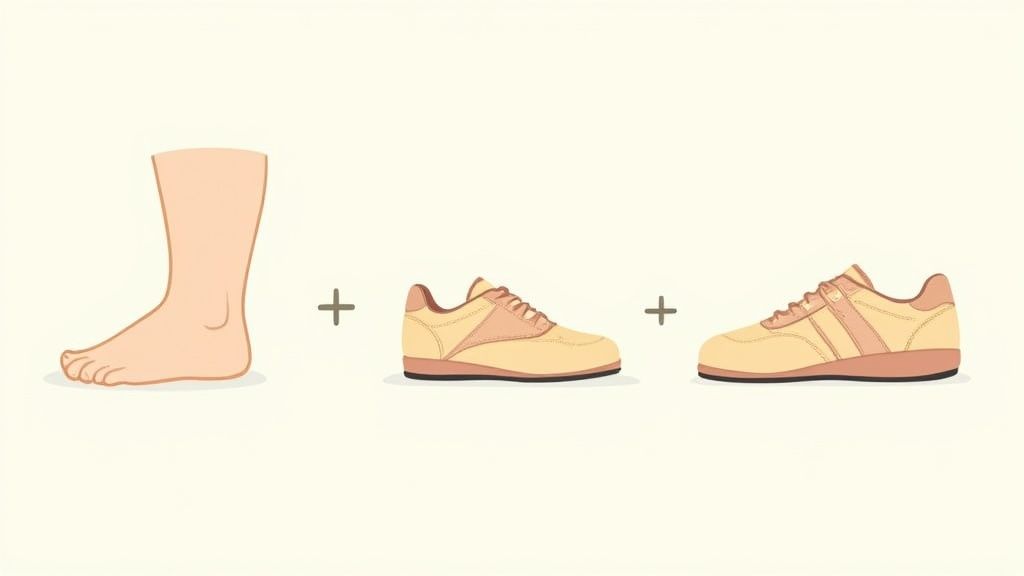
When you're supporting those first wobbly steps, there are three things that truly matter: Flexibility, Fit, and Flat Soles. Getting these right is the secret to a happy, confident little walker.
Flexibility Is Your Best Friend
Imagine trying to walk in a pair of stiff wooden clogs. Sounds impossible, right? That’s exactly what a rigid shoe feels like to a new walker. They need to be able to feel the ground to build balance and strengthen their muscles.
A soft, bendy sole is an absolute must-have. It lets their foot move naturally, mimicking the feeling of being barefoot while still providing a layer of protection. This connection to the ground is crucial for developing strong feet and ankles.
Quick Tip: Always do the bend test! A good first walking shoe should be easy to twist and bend in your hands. If you’re struggling to fold the sole in half, it’s far too stiff for your little one.
Finding that perfect level of flexibility is one of the most important things you can do for them. You can learn more about why it's so critical in our article on flexible shoes for toddlers.
Let Those Piggies Breathe
Little feet can get surprisingly sweaty! That's why breathable materials are so important for keeping their feet cool, dry, and comfortable all day long.
Here are a few of our favorite materials:
- Leather: Soft, durable, and naturally breathable. It even molds to the shape of their foot over time, creating a near-custom fit.
- Canvas: A great lightweight and airy option, perfect for playtime on warmer days.
- Mesh: Often used in athletic-style shoes, mesh offers maximum airflow to keep those tiny feet from getting too hot.
Choosing the right material helps prevent blisters and discomfort, ensuring their first steps are happy ones.
Make Getting Dressed a Breeze
Let’s be honest, getting shoes on a wiggly toddler can feel like a workout. Do yourself a favor and look for shoes with parent-friendly fasteners.
Velcro straps are a lifesaver! They’re quick, secure, and make it easy to adjust the fit as their feet grow. Laces, on the other hand, can be a tripping hazard and are a hassle to tie on a moving target.
For the 12-month-old crowd, easy-on, easy-off is the only way to go. It makes your life simpler and helps them feel independent when they eventually want to try putting on their own shoes.
Your Top Baby Shoe Questions, Answered
Still have a few questions buzzing around? Perfect. Let's tackle them. We've covered how to measure, decode size charts, and spot the signs of a growth spurt. Now, let’s dive into some of the most common curiosities that pop up for parents on this shoe-shopping adventure.
Think of this as your official cheat sheet to becoming the family's shoe-fitting expert.
Should My 12-Month-Old Wear Shoes All the Time?
That's a fantastic question. While shoes are crucial for protecting those precious feet outdoors, experts agree that barefoot time is amazing for their development.
When you’re at home on safe surfaces like carpet or grass, letting your baby go shoeless is like "tummy time" for their feet! It helps them strengthen all those tiny muscles in their feet and ankles, which is a huge deal for improving balance and coordination.
So, save those adorable new kicks for stroller rides, trips to the park, and walking on any rough or chilly surfaces.
What's Better for a New Walker: Laces or Velcro?
For the sanity of parents everywhere, Velcro is almost always the winner! It makes wrestling shoes onto a squirming, giggling toddler about a million times easier. Plus, it lets you get a perfectly snug and adjustable fit every single time.
Laces can be tricky and have a magical ability to come untied at the worst moments (like when you’re halfway through the grocery store). While lace-up shoes offer a very secure fit, the sheer convenience and safety of Velcro are hard to beat for the 12-month-old crowd.
Can I Use Second-Hand Shoes for My Baby?
It’s so tempting, especially with how ridiculously fast their feet grow, but it's generally best to buy new shoes for your little one. A shoe molds to the unique shape of its first wearer’s foot, and a hand-me-down means your baby's foot is trying to fit into a shape that wasn't made for it.
This can sometimes affect their gait and overall comfort. New shoes provide the specific support and un-molded cushion your baby needs to develop a healthy, natural walking pattern. It’s one of those few baby items where starting fresh really does make a difference.
How Do I Know if the Shoe Width Is Right?
This is a super important point, especially for those adorably chubby baby feet! After you've put the shoe on and have your little one stand up, gently press on the sides. You shouldn't feel a big bulge pushing over the edge of the sole.
You can also try to pinch a tiny bit of the material on top of their foot. If you can't grab any, the shoe is likely too tight. Many brands, like Pediped, are designed with a wider toe box to give those little piggies plenty of room to wiggle and spread out naturally.
Have more questions popping into your head? You're not alone! For even more answers to common parent puzzles, from cleaning tips to return policies, you can always explore the official pediped Frequently Asked Questions page for a wealth of friendly advice.
Ready to put your newfound knowledge to the test? pediped has a fantastic collection of shoes designed specifically for every stage of your little one's walking journey, from those first wobbly steps to confident running and jumping. Find the perfect, pediatrician-approved pair to support their next big adventure at https://www.pediped.com.
Leave a comment